
NVIDIA Lyra 2.0 is NVIDIA’s new framework for turning a single image into a persistent, explorable 3D world. Instead of stopping at a short novel-view demo, NVIDIA Lyra 2.0 generates camera-controlled walkthrough video and then lifts that generated sequence into explicit 3D assets such as Gaussian splats and surface meshes.
This guide uses NVIDIA’s official Lyra 2.0 research page, the arXiv paper, the GitHub repository, and the Hugging Face model card as the primary sources. In practical terms, NVIDIA Lyra 2.0 is one of the more ambitious 2026 world-generation releases, but it also has a major caveat many readers will miss at first glance: the source code is public under Apache 2.0, while the released model weights are restricted to internal scientific research and development use rather than broad production deployment.
NVIDIA Lyra 2.0 at a glance

- NVIDIA Lyra 2.0 was released in April 2026 by NVIDIA’s Spatial Intelligence Lab.
- It starts from a single image and a user-defined camera trajectory.
- The system generates long-horizon, camera-controlled walkthrough video rather than a single short clip.
- It is designed to keep scenes consistent even when the camera revisits earlier regions.
- NVIDIA says it addresses two major failure modes: spatial forgetting and temporal drifting.
- The generated video can be reconstructed into 3D Gaussian splats and surface meshes.
- NVIDIA demonstrates exporting scenes into Isaac Sim for robot simulation.
- The framework is built on a Wan 2.1-14B video diffusion backbone.
- NVIDIA also reports a distilled variant that cuts per-step generation time sharply for interactive use.
- The public release is best understood as a research framework, not an unrestricted commercial model.
Why NVIDIA Lyra 2.0 matters
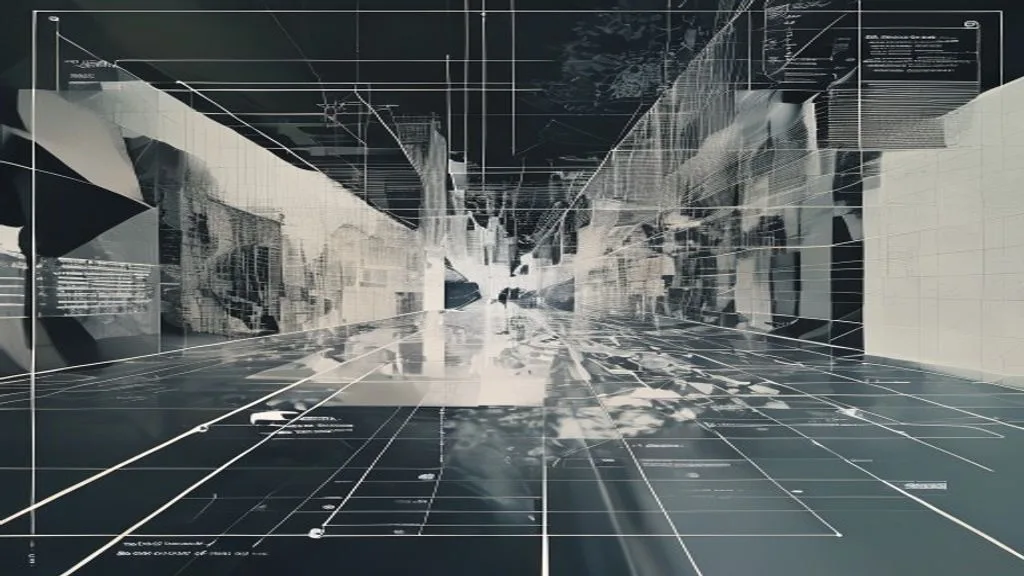
A lot of 3D AI demos look impressive in a short clip but break down as soon as you try to keep moving through the space, revisit a hallway, or convert the output into something usable in a simulation engine. That is the gap NVIDIA Lyra 2.0 is trying to close.
The important shift here is not just better image quality. It is the move from pretty generated views toward persistent environments that can be explored, reconstructed, and exported into real downstream tools. That matters for robotics, embodied AI, simulation, and synthetic environment creation. As more companies invest in workflow automation and more teams start thinking seriously about autonomous AI agents that operate in physical or semi-physical settings, the value of faster world generation becomes easier to understand.
In other words, NVIDIA Lyra 2.0 matters because it is not positioned as just another image model feature. It is positioned as part of a larger pipeline for generating testable 3D worlds from minimal input.
7 key facts about NVIDIA Lyra 2.0
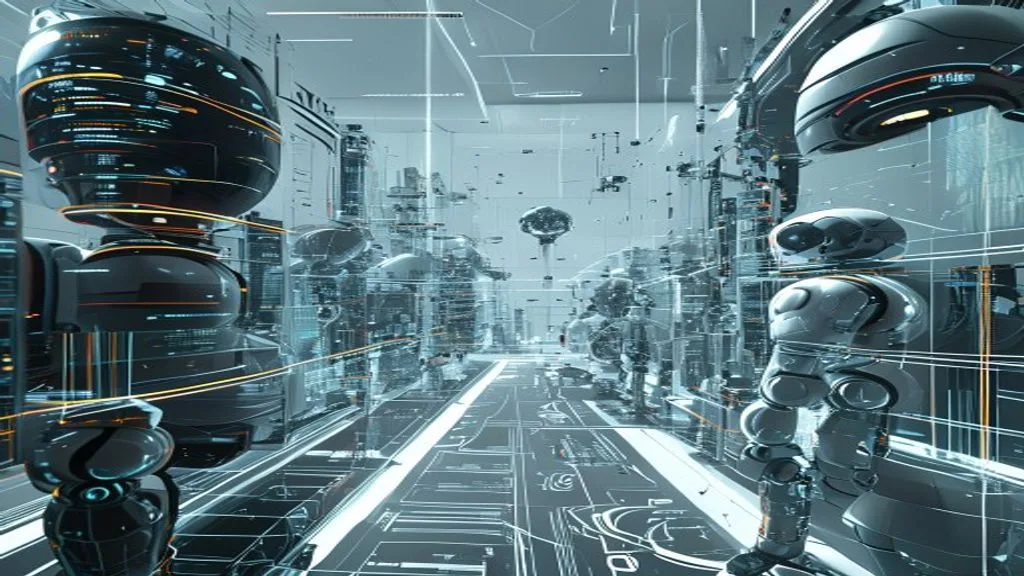
1. NVIDIA Lyra 2.0 is a world-generation pipeline, not just a video model
The simplest way to understand NVIDIA Lyra 2.0 is to see it as a pipeline with two linked stages.
First, the system takes a single input image and a prescribed camera trajectory and generates a long camera-controlled video that behaves like a scene walkthrough. Second, that generated video is lifted into explicit 3D representations that can be rendered, explored, and exported. NVIDIA also says users can provide an optional text prompt to guide outpainting during exploration.
That distinction matters. NVIDIA Lyra 2.0 is not merely trying to create a nice orbit video around a static frame. It is trying to create a navigable environment that keeps expanding as the user moves.
2. NVIDIA Lyra 2.0 is designed to solve spatial forgetting
One of the central problems in long-horizon scene generation is what the paper calls spatial forgetting. As the camera keeps moving, older views eventually fall outside the model’s temporal context window. When the system later revisits those regions, weaker models often hallucinate new structures instead of preserving the earlier layout.
NVIDIA Lyra 2.0 addresses this by keeping per-frame 3D geometry as a memory structure. That geometry is not used as the final rendered answer. Instead, it is used for information routing: retrieving the most relevant earlier frames and establishing dense correspondences with the new target view.
This is a useful design choice because it treats geometry as a guide rather than as a rigid final constraint. The goal is to help the model remember where it has been without locking it into visibly broken warps or artifact-heavy conditioning images.
3. NVIDIA Lyra 2.0 also targets temporal drifting
The second big failure mode is temporal drifting. In long autoregressive generation, small errors accumulate. Colors shift, geometry bends, textures wobble, and the scene slowly drifts away from the starting image.
NVIDIA says Lyra 2.0 fights this with self-augmented training. Instead of always conditioning the model on perfect historical frames during training, the framework sometimes conditions on its own degraded outputs. That teaches the model to recover from imperfect context instead of assuming every previous frame is clean.
This is one of the more important details in the release because it shows NVIDIA is treating long-horizon generation as a stability problem, not just a prompt-following problem. If a model cannot stay coherent over time, it is much less useful for real scene exploration.
4. NVIDIA Lyra 2.0 turns generated video into explicit 3D assets
Another key point is what happens after the video generation stage.
According to NVIDIA, the generated walkthrough can be reconstructed into 3D Gaussian splats and then converted into surface meshes. The research page explicitly shows these outputs being exported into NVIDIA Isaac Sim for physically grounded robot navigation and interaction.
That makes NVIDIA Lyra 2.0 more relevant than a pure media model. The value is not only in seeing a plausible camera move. The value is in getting a usable 3D scene representation that can feed simulation, world-building, or interactive exploration workflows.
5. NVIDIA Lyra 2.0 uses per-frame geometry for routing instead of one fused global point cloud
This is one of the architectural choices that separates the system from some earlier long-video memory approaches.
Rather than fusing all history into one global point cloud and conditioning future generation directly on rendered geometry, NVIDIA Lyra 2.0 keeps the geometry for each frame separately. The paper argues that this reduces error amplification because depth estimation on generated frames is noisy, and a single accumulated global structure can become corrupted over long horizons.
Lyra 2.0 instead retrieves relevant views, builds dense correspondences, and injects those signals into the diffusion transformer while still relying on the generative model for appearance synthesis. In plain English, it tries to remember spatial structure without forcing the model to copy flawed geometry literally.
6. NVIDIA reports state-of-the-art quality and a much faster distilled mode
The paper positions NVIDIA Lyra 2.0 as state of the art for single-image to long-video generation and for large-scale 3D scene generation. On the reported DL3DV and Tanks and Temples evaluations, NVIDIA says Lyra 2.0 achieves the best results across nearly all metrics compared with methods such as GEN3C, CaM, VMem, SPMem, Yume-1.5, and HY-WorldPlay.
NVIDIA also describes a distilled variant trained with distribution matching distillation. According to the paper, the full model uses 35 denoising steps and takes about 194 seconds per 80-frame autoregressive step on a single GB200 GPU, while the distilled version runs in 4 steps and cuts that to about 15 seconds per step. That is roughly a 13x speedup, which matters if the goal is interactive exploration rather than offline batch generation.
The important caveat is that these are vendor-reported results on the paper’s chosen benchmarks. They are meaningful, but they still need real-world validation from outside NVIDIA’s own release pipeline.
7. The code is public, but the Lyra 2.0 model is not broadly open for production use
This is the fact many readers should pay the most attention to.
The official GitHub repository for Project Lyra is public and released under Apache 2.0. That is a real positive for researchers and developers who want to inspect the implementation. But the Hugging Face model card states that the Lyra 2.0 model is released under the NVIDIA Internal Scientific Research and Development Model License.
The model card also says the model and derivative models may not be distributed, deployed, or used in a production environment, and may not be used to generate works for sale or distribution. So while NVIDIA Lyra 2.0 is publicly accessible, it should not be described carelessly as a normal open commercial model. It is much closer to a research-release framework with public code and restricted weights.
Where NVIDIA Lyra 2.0 could matter most

Embodied AI and robot simulation
The research page leans heavily into this use case, and for good reason. If you can generate a persistent scene from a single image and export it into Isaac Sim, you lower the cost of building test environments for robot navigation, interaction, and physical AI experiments.
3D content prototyping
NVIDIA Lyra 2.0 could also matter for teams exploring early-stage environment design. It will not replace traditional 3D pipelines overnight, but it can make ideation and world prototyping faster when the goal is to expand a still image into a navigable spatial concept.
World-model and controllable-generation research
For researchers, the framework is also important as a systems paper. It combines controllable video generation, memory retrieval, 3D reconstruction, and simulation export into one end-to-end story. Even teams that never use the exact release may borrow the anti-forgetting and anti-drifting ideas.
Limitations and deployment considerations
A balanced view of NVIDIA Lyra 2.0 needs the caveats as well.
- The system currently focuses on static environments rather than dynamic scenes with moving objects or people.
- The paper notes that photometric inconsistencies in training data can still produce artifacts in reconstructed scenes.
- The Hugging Face card frames the release for internal scientific research and development use, not normal production deployment.
- Preferred operating system support is Linux, and NVIDIA hardware is effectively part of the intended stack.
- NVIDIA says the model is optimised for GPU-accelerated systems such as H100 and GB200, with support focused on NVIDIA microarchitectures.
- The model card recommends a 480 x 832 input image and roughly 81 frames of camera parameters as part of the standard setup.
So the right way to think about NVIDIA Lyra 2.0 today is as a high-value research release for physical AI and world-generation work, not as a drop-in production API for every 3D use case.
NVIDIA Lyra 2.0 FAQ

What is NVIDIA Lyra 2.0?
NVIDIA Lyra 2.0 is a framework that takes a single image, generates a long camera-controlled walkthrough video, and reconstructs that result into explorable 3D assets such as Gaussian splats and meshes.
Is NVIDIA Lyra 2.0 open source?
The source code is public on GitHub under Apache 2.0, but the released model weights are not open in the usual unrestricted commercial sense. The Hugging Face model card places the model under NVIDIA’s Internal Scientific Research and Development Model License.
Can NVIDIA Lyra 2.0 be used in production?
Based on the public model card, no. NVIDIA explicitly says the model may not be deployed in a production environment under the released license terms.
What does NVIDIA Lyra 2.0 output?
It outputs long-horizon camera-controlled video that can then be reconstructed into explicit 3D scene representations, including 3D Gaussian splats and surface meshes.
What is NVIDIA Lyra 2.0 best suited for right now?
NVIDIA Lyra 2.0 is best suited for researchers and physical AI developers working on scene exploration, embodied AI simulation, controllable world generation, and experimental 3D reconstruction workflows.
Final thoughts on NVIDIA Lyra 2.0
NVIDIA Lyra 2.0 looks important because it pushes the conversation beyond short camera-controlled demos and toward persistent worlds that can be navigated, reconstructed, and tested inside simulation pipelines. That makes it more strategically interesting than a standard image-to-video announcement.
The release is also a reminder to read AI licensing details carefully. NVIDIA Lyra 2.0 combines a strong research story, public code, and compelling demos, but the public model is still framed for research and development rather than open commercial deployment. For researchers, robotics teams, and physical AI developers, it is one of the more interesting 3D world-generation releases to watch in 2026.
More AI coverage: explore Progressive Robot's AI Models, Tools & Releases hub — hands-on reviews, setup guides and benchmarks in one place.










