

TRELLIS.2 is important because it points to a more practical future for image-to-3D generation. Instead of treating 3D assets as simple meshes with flat textures, it focuses on compact structured latents that can preserve geometry, appearance, and physically based material details in one workflow.
That matters for teams building games, product visuals, digital twins, spatial apps, and immersive experiences. A designer can start from an image, a researcher can test new 3D representations, and a technical team can evaluate whether automated asset creation is becoming realistic enough for production pipelines.
This release is still a research project, so it should not be treated as a turnkey commercial product. However, the model introduces ideas that are worth understanding now: O-Voxel representation, Sparse Compression VAE, native 3D compression, PBR materials, and high-resolution asset generation. For organizations updating an AI strategy, it is a useful signal of where 3D AI is heading.
TRELLIS.2 at a glance

TRELLIS.2 is a 4B-parameter image-to-3D model described by Microsoft as an open-source research system for generating high-fidelity 3D assets. The official TRELLIS.2 project page says it can produce up to 1536³ PBR textured assets using native 3D VAEs with 16× spatial compression.
The short version is simple: the model converts a source image into a compact internal 3D representation, then reconstructs detailed geometry and materials. That is different from workflows that only create a rough mesh, a low-resolution texture, or a visual approximation that needs heavy cleanup.
Its core promise is not just speed. The larger goal is richer structure. If a 3D model can keep precise shape, transparency, roughness, metallic response, alpha, and texture information together, downstream artists and engineers get a more useful starting point.
The release also matters because it continues the direction started by the earlier TRELLIS research, which explored structured 3D latents for scalable asset generation. The new version is more focused on native, compact 3D representations that can make high-resolution generation more efficient.
Why TRELLIS.2 matters for 3D generation

Most AI image tools became useful before AI 3D tools did because images are easier to represent, preview, and evaluate. 3D content is harder. A useful asset needs shape, topology, scale, normals, materials, textures, lighting response, and clean export behavior.
The model matters because it addresses that bottleneck at the representation level. It is not only trying to guess the outside shape of an object. It is trying to encode geometry and appearance in a way that can survive compression and still reconstruct into useful 3D output.
This is especially relevant for Artificial Intelligence (AI) and Machine Learning (ML) teams that are moving from demos to production systems. A flashy 3D preview is not enough. Teams need assets that can move into engines, viewers, simulation tools, and review pipelines.
For creative teams, the benefit is faster exploration. The system could help artists generate base assets, compare forms, test materials, and move from concept images toward interactive objects. For technical teams, the benefit is a new research path for compact 3D generation at higher fidelity.
How O-Voxel and Sparse Compression VAE work

The most important technical idea in the project is the O-Voxel representation. Microsoft describes O-Voxel as a field-free sparse voxel structure designed to encode precise geometry and complex appearance at the same time.
That matters because many 3D pipelines split shape and surface appearance into separate steps. The architecture attempts to keep geometry and material signals closer together. Its geometry side uses a flexible dual-grids representation intended to handle arbitrary topology while preserving sharp edges.
The appearance side supports PBR attributes, including base color, metallic, roughness, and alpha. Those attributes are crucial because modern rendering engines rely on physically based materials, not just flat color maps.
After O-Voxel conversion, the system uses a Sparse Compression VAE. The VAE compresses voxel data into a compact structured latent space. The project page describes 16× downsampling and roughly 9.6K latent tokens for a 1024³ asset, which helps explain why the model can target detailed 3D output without treating every voxel as a brute-force burden.
What high-resolution PBR assets mean in practice

The phrase 1536³ PBR textured assets sounds technical, but the practical meaning is straightforward. The model is aiming at higher-resolution assets with material properties that can react more convincingly in modern renderers.
PBR is important because a plastic toy, a metallic robot, a glass object, and a rough ceramic surface should not behave the same way under light. If a generated asset includes base color, metallic, roughness, and alpha information, it becomes more useful for visualization, games, and spatial computing.
Resolution matters too. Low-detail 3D generation can look acceptable in a thumbnail but fail when users rotate, zoom, inspect edges, or place the asset in a scene. The release is notable because it frames quality around detailed textured assets, not only around a pleasing still render.
That does not remove the need for human review. Artists may still need to retopologize meshes, adjust materials, reduce triangle counts, clean artifacts, or align scale. But this approach suggests that AI-generated assets may start closer to a usable first pass than older image-to-3D methods.
Use cases for product, game, and spatial teams

The system is most interesting for workflows where 3D iteration is expensive. Product teams could use image-to-3D generation to explore packaging, devices, furniture, accessories, or visual merchandising ideas before committing to manual modeling.
Game and animation teams could use the model as a concept-to-blockout tool. A generated asset may not replace a production model, but it can help teams test silhouettes, props, environments, and material directions quickly. The value is speed at the exploration stage.
Spatial computing teams could also benefit. AR, VR, and mixed-reality products need large numbers of believable 3D objects. The project shows how compact asset generation could support faster prototyping for immersive interfaces, training scenes, and virtual showrooms.
The business value connects closely with workflow automation. If asset intake, generation, review, cleanup, and export become repeatable steps, creative operations can move faster while still keeping humans responsible for final approval.
Hardware and workflow limits to plan for
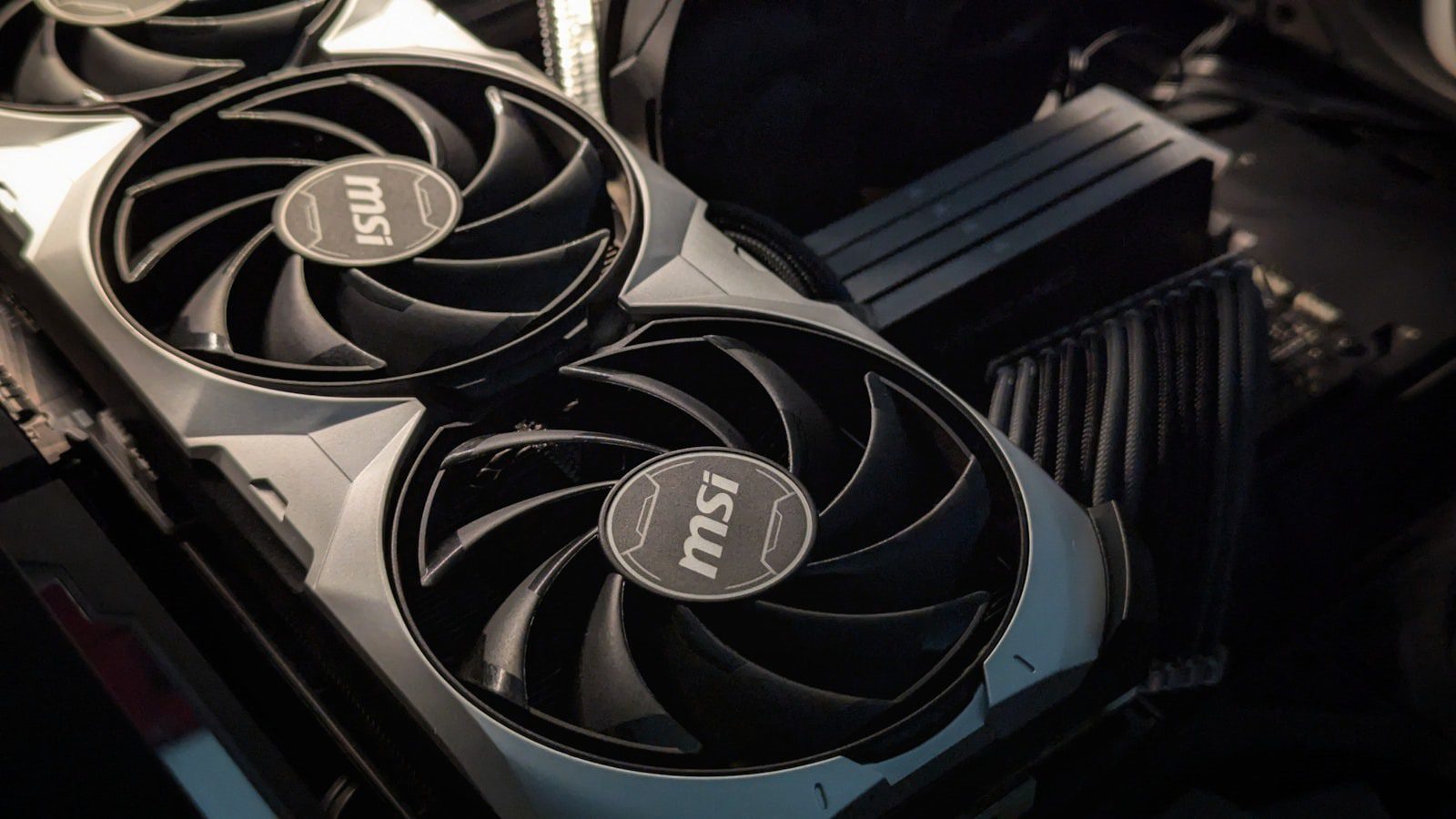
This research should be evaluated with realistic expectations. A 4B-parameter image-to-3D model is not the same as a lightweight browser filter. Teams need to understand compute requirements, model availability, inference speed, memory needs, and deployment constraints before planning adoption.
The earlier TRELLIS repository notes that its code was tested on Linux and requires an NVIDIA GPU with significant memory. The newer model may improve representation efficiency, but teams should still assume that serious 3D generation requires GPU planning, storage planning, and engineering support.
Workflow integration is another constraint. A model output is only useful if it fits asset management, version control, engine import, review, rendering, and optimization steps. The system can generate promising assets, but the surrounding pipeline determines whether those assets save time.
Teams should also plan for evaluation metrics. Look at geometry quality, material accuracy, transparency handling, thin structures, interior details, scale consistency, export formats, editing effort, and failure cases. A model that succeeds on simple objects may still struggle with mechanical parts, text, logos, or complex assemblies.
Licensing, safety, and responsible use

TRELLIS.2 is presented as an academic and research project. The project page includes a material disclaimer stating that the materials are provided for academic and research purposes and are not intended for commercial exploitation or use. That distinction matters for business teams.
Before using TRELLIS.2 in a commercial workflow, legal and procurement teams should review the model license, code license, dataset notes, generated-output policy, and any restrictions on demo materials. Research availability does not automatically mean unrestricted enterprise use.
Responsible use also matters. 3D generation can reproduce biased datasets, create unsafe objects, imitate protected designs, or generate assets that look usable but have hidden structural issues. Teams using AI governance platforms should register AI 3D tools, document risks, and define approval rules.
Security teams should ask what inputs are uploaded, where inference runs, how long assets are retained, and whether proprietary product images are exposed. TRELLIS.2 is exciting, but excitement should not bypass policy.
Evaluation checklist before adoption
A practical TRELLIS.2 evaluation should start with a small benchmark set. Choose objects your team actually creates: consumer products, furniture, props, buildings, characters, industrial parts, or training-scene assets. Avoid only testing clean demo images.
For each result, score geometry, texture fidelity, PBR material behavior, topology quality, file size, export reliability, cleanup time, and fit with your target engine. TRELLIS.2 should be judged by pipeline value, not by screenshots alone.
Next, measure human effort. How long does it take to prepare the image, generate the asset, inspect the output, repair problems, optimize geometry, and approve the final file? A tool that looks impressive but requires hours of cleanup may not be faster than existing modeling workflows.
Finally, create a governance playbook. Define approved inputs, prohibited content, review steps, storage rules, attribution practices, and escalation paths. TRELLIS.2 can be part of a modern business process automation plan only if the asset workflow remains controlled and auditable.
TRELLIS.2 FAQ

What is TRELLIS.2?
TRELLIS.2 is a Microsoft research model for image-to-3D asset generation. It uses native and compact structured latents to help generate detailed 3D assets with geometry and PBR material information.
Is TRELLIS.2 open source?
Microsoft describes TRELLIS.2 as an open-source research project and links to code from the project page. Teams should still review the exact repository license, model terms, dataset notes, and material disclaimer before commercial use.
What makes TRELLIS.2 different from older TRELLIS work?
The earlier TRELLIS work focused on structured 3D latents for scalable and versatile 3D generation. TRELLIS.2 emphasizes native 3D VAEs, compact O-Voxel latents, 16× spatial compression, and high-resolution PBR textured assets.
Does TRELLIS.2 replace 3D artists?
No. TRELLIS.2 is better understood as a research signal and potential acceleration tool. Artists, technical artists, and engineers still need to review quality, optimize assets, control style, and integrate outputs into production pipelines.
What teams should watch TRELLIS.2 first?
Game studios, product visualization teams, AR and VR developers, design agencies, robotics simulation teams, and digital twin groups should watch TRELLIS.2 because they already deal with expensive 3D asset workflows.
What is the biggest risk?
The biggest risk is assuming that a plausible 3D preview is production ready. Generated assets can contain geometry artifacts, material errors, licensing uncertainty, scale problems, and hidden cleanup costs.
What is the main takeaway?
The main takeaway is that TRELLIS.2 shows 3D AI moving from impressive demos toward more structured asset generation. Teams should learn the technology now, but evaluate it with clear quality, licensing, and governance checks.
More AI coverage: explore Progressive Robot's AI Models, Tools & Releases hub — hands-on reviews, setup guides and benchmarks in one place.