
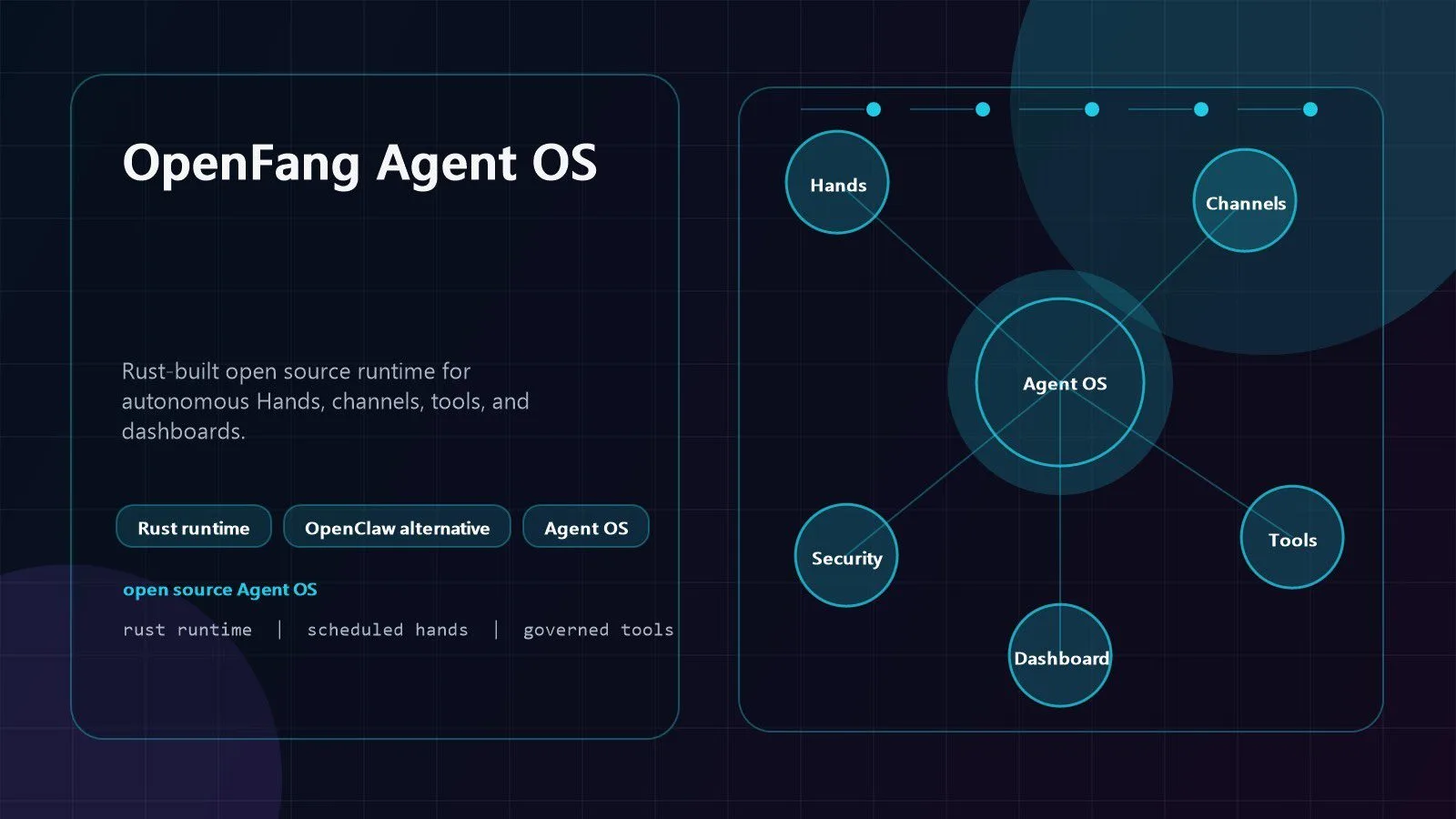
OpenFang is getting attention because it makes a bold claim: autonomous agents need more than another chatbot framework or lightweight wrapper around a language model. The project presents itself as an open source Agent Operating System, built in Rust, for agents that can run on schedules, use tools, work across channels, build knowledge, and report activity to a dashboard.
That positioning matters for teams already comparing agent infrastructure. OpenClaw showed how useful persistent agents can be, and KiloClaw turned that idea into a hosted path for users who do not want to self-manage the stack. OpenFang pushes the story in another direction: a compact, open source runtime that treats agents like background workers with permissions, tools, and operational boundaries.
This review is based on public project material, including the OpenFang GitHub repository and the official OpenFang site. It also connects the tool to broader Progressive Robot guidance on AI strategy, workflow automation, DevOps services, and the earlier KiloClaw review.
| Question | Practical answer |
|---|---|
| What is it? | An open source Agent OS for scheduled autonomous agents |
| What is it built with? | Rust, with a single-binary deployment story |
| Why compare it with OpenClaw? | It targets a similar persistent-agent problem but emphasizes a from-scratch runtime approach |
| Who should evaluate it? | Builders testing agent automation, monitoring, lead generation, research, and multi-channel workflows |
| What is the main caution? | Treat it like infrastructure, not a toy assistant, because tool access and autonomy require governance |
What OpenFang changes about agent operating systems
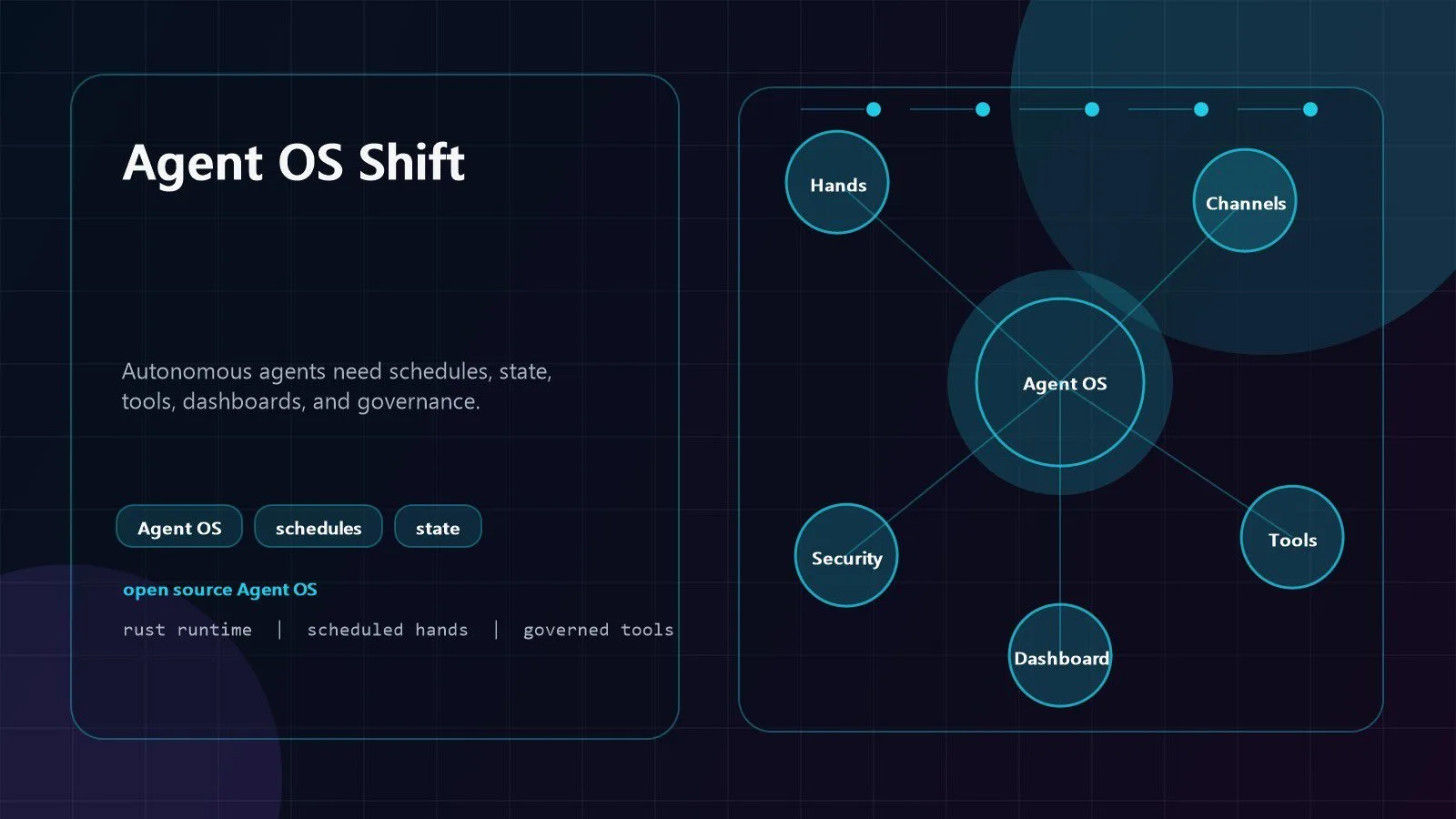
OpenFang changes the conversation by framing agent software as an operating-system layer rather than a prompt product. That may sound like branding, but the difference is practical. A chat app waits for input. A real agent runtime needs schedules, state, tools, secrets, channels, logs, and recovery behaviour.
The Agent OS label is useful because it reminds teams that autonomy is not only about model intelligence. It is also about lifecycle control. Can an agent start and stop reliably? Can it run on a schedule? Can it use a browser or API tool without exposing unnecessary permissions? Can it report what it did in a way that humans can audit?
That is why the project is more interesting than a generic assistant demo. It points toward a future where agents behave more like managed services. They may monitor competitors, produce research briefs, watch inboxes, collect leads, enrich data, summarize changes, or trigger workflows. Each of those tasks requires operational design, not only better prompts.
For business teams, the lesson is simple: do not evaluate agent platforms only by the quality of a single answer. Evaluate the runtime model, permission system, integration surfaces, and monitoring story. Those are the parts that decide whether a demo becomes useful daily automation.
How OpenFang compares with OpenClaw
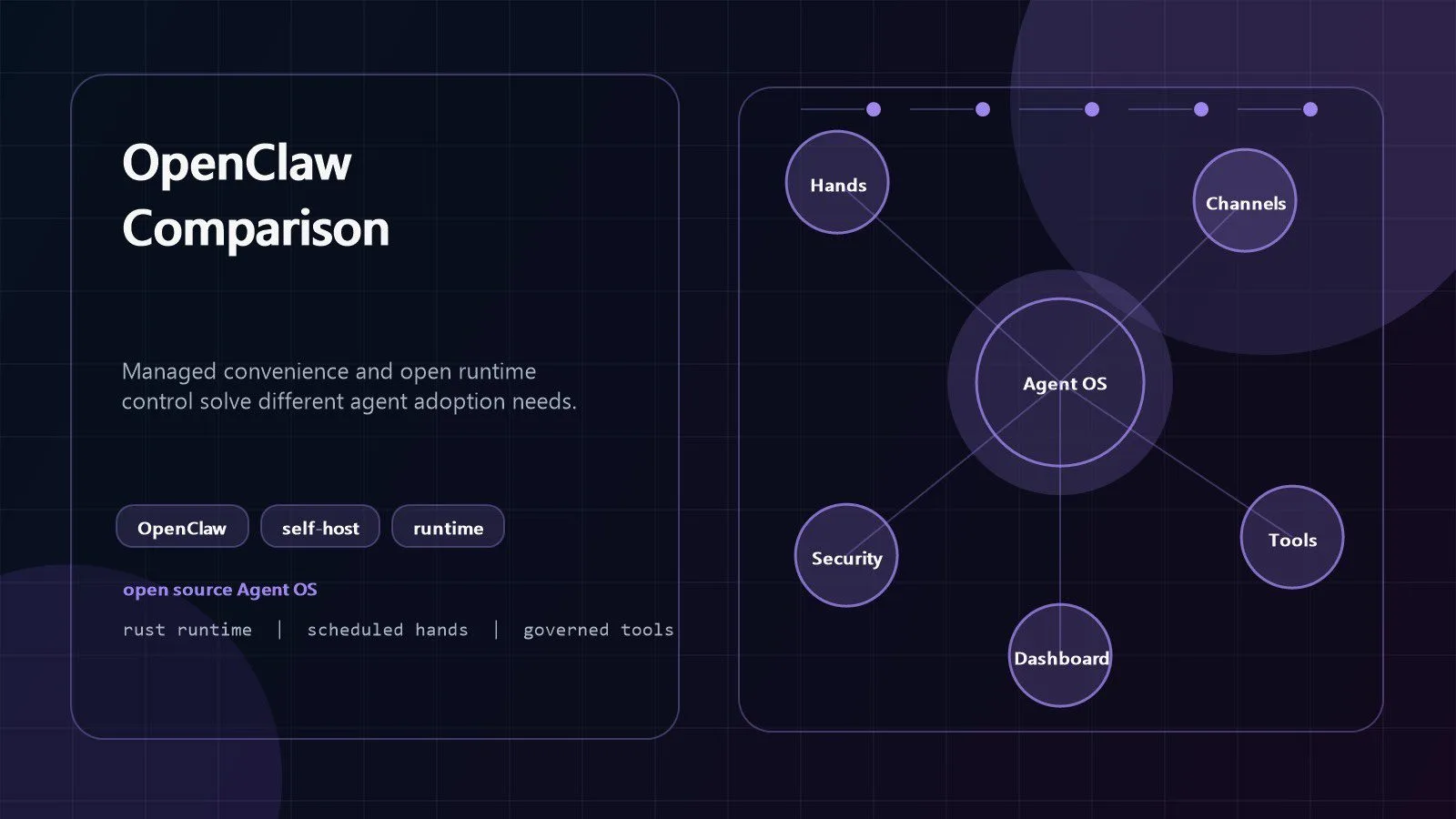
OpenFang is often discussed as an OpenClaw alternative because both projects sit in the same broad category: persistent agents that can act across tools instead of merely answering in chat. The important distinction is architecture and operational philosophy.
OpenClaw has been visible through the Kilo ecosystem, especially through hosted options that reduce setup friction. That makes it attractive for people who want a managed experience. A user can focus on connecting tools, selecting models, and trying workflows without becoming responsible for every infrastructure detail.
OpenFang takes a more infrastructure-native path. The project emphasizes open source code, Rust implementation, a small binary footprint, scheduled operation, channel adapters, built-in tools, and security systems. In plain language, it appeals to builders who want more direct control over the runtime and who are comfortable evaluating a younger open source stack.
That does not automatically mean it replaces OpenClaw for every team. A hosted OpenClaw path can still be better when buyers value convenience, support, and fast onboarding. The new option is more compelling when teams want self-hosting, low-level transparency, portability, or a platform they can inspect and adapt.
The right comparison is not hype versus old technology. It is managed convenience versus open runtime control. Teams should choose based on governance, integration needs, security review, deployment model, and the amount of operational responsibility they are willing to carry.
Why Rust, one binary, and schedules matter
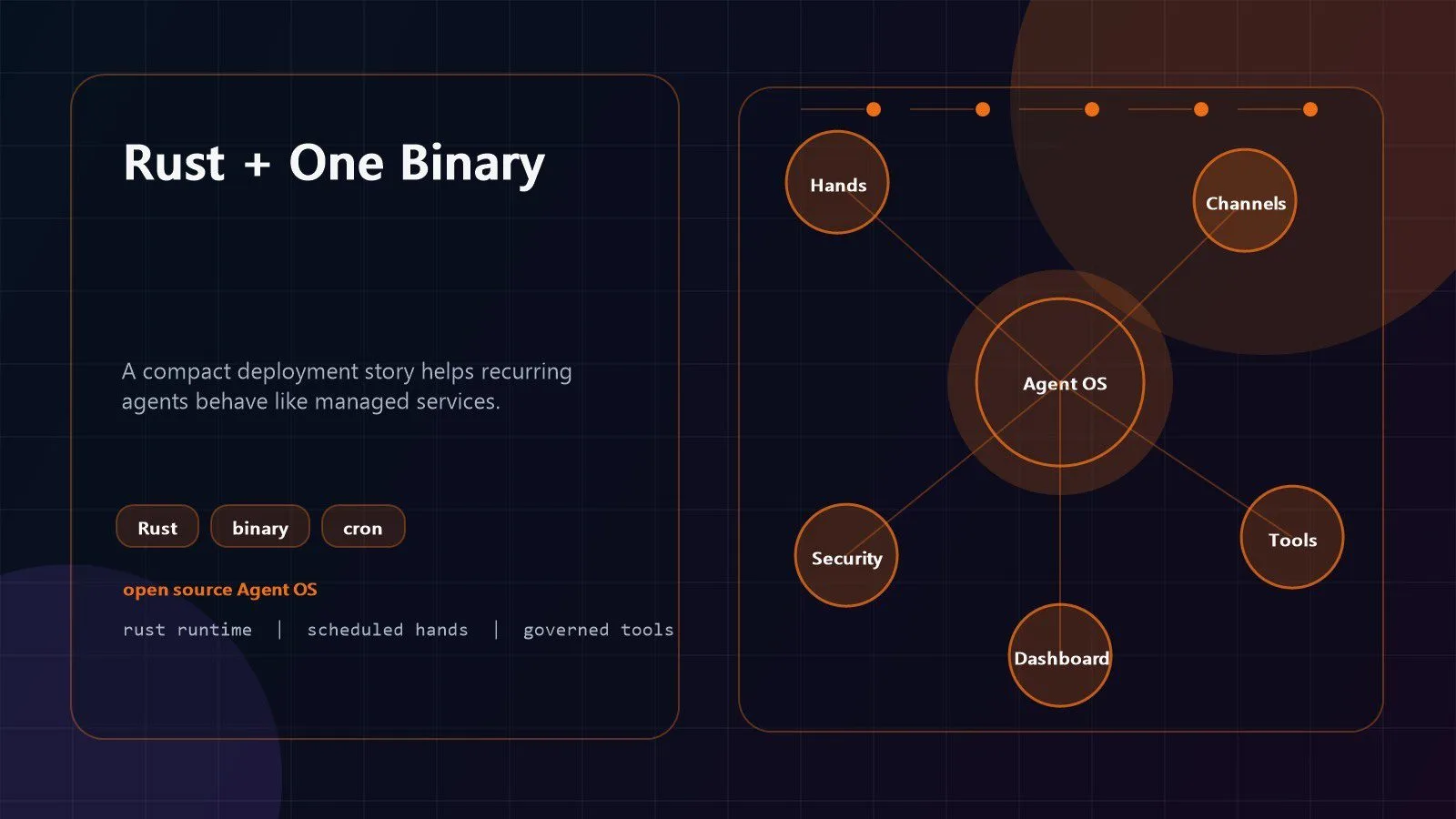
OpenFang highlights Rust and a single-binary deployment story because agent operations can become messy quickly. Many prototype stacks depend on Python environments, Node.js packages, browser dependencies, vector databases, queues, workers, and several configuration files. That complexity is manageable for developers, but it can block repeatable rollout.
A Rust-native runtime does not automatically make an agent safer or smarter. It can, however, support a deployment style that is easier to package, move, and monitor. If a system can run as a compact binary on a laptop, server, or small cloud instance, teams have more options for pilots and edge-like automation.
Scheduling is just as important. Many valuable agent jobs are not interactive. They run every hour, every morning, or when a condition changes. Lead research, social monitoring, feed summarization, status reporting, data cleanup, and competitive intelligence all depend on recurring execution more than chat polish.
This is where the Agent OS idea becomes useful. The runtime is not simply waiting for a person to ask a question. It is expected to supervise work over time. That makes logs, failure modes, retries, and status reporting part of the product, not secondary details.
For teams with mature DevOps services, the opportunity is to treat autonomous agents as services with deployment discipline. Version them, test them, limit their permissions, monitor their outputs, and make human escalation explicit.
Core capabilities: Hands, channels, tools, and security
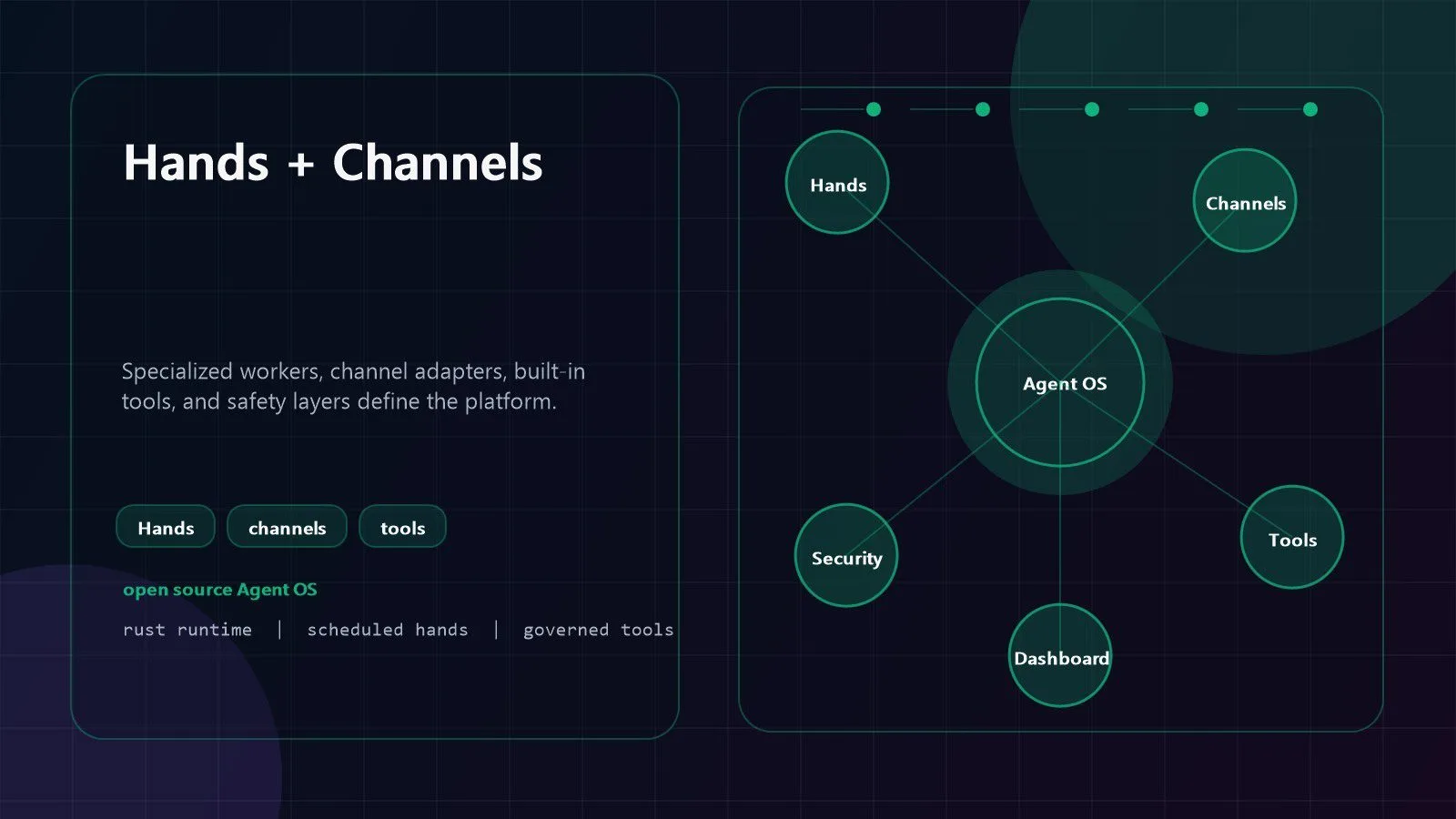
OpenFang public materials describe a system built around autonomous Hands, channel adapters, built-in tools, LLM provider support, dashboards, and security systems. The exact implementation should be verified against the live repository before production use, but the product direction is clear: this is designed for action across multiple surfaces.
The Hands concept is useful because it suggests specialised workers rather than one giant assistant. A research worker, social worker, lead worker, monitoring worker, or reporting worker can each have a narrower mission. That makes governance easier than giving one broad agent every tool and asking it to improvise.
Channel adapters matter because real automation rarely lives in one interface. Teams may need agents to read signals from web pages, chat tools, email, forms, feeds, databases, GitHub, or messaging platforms. A useful agent runtime needs connectors that are boring, reliable, and observable.
Built-in tools are equally important. Browsing, search, file handling, structured extraction, notifications, and API calls turn an agent from an answer generator into a workflow participant. But tool power also raises risk. Every tool needs scope, secrets handling, logging, and a way to stop bad behaviour quickly.
That is why the security story deserves close inspection. A project can list many safety systems, but buyers should still ask how permissions are represented, how credentials are stored, what audit trails exist, how destructive actions are limited, and how prompt injection is handled when agents browse untrusted content.
Best use cases for teams evaluating OpenFang
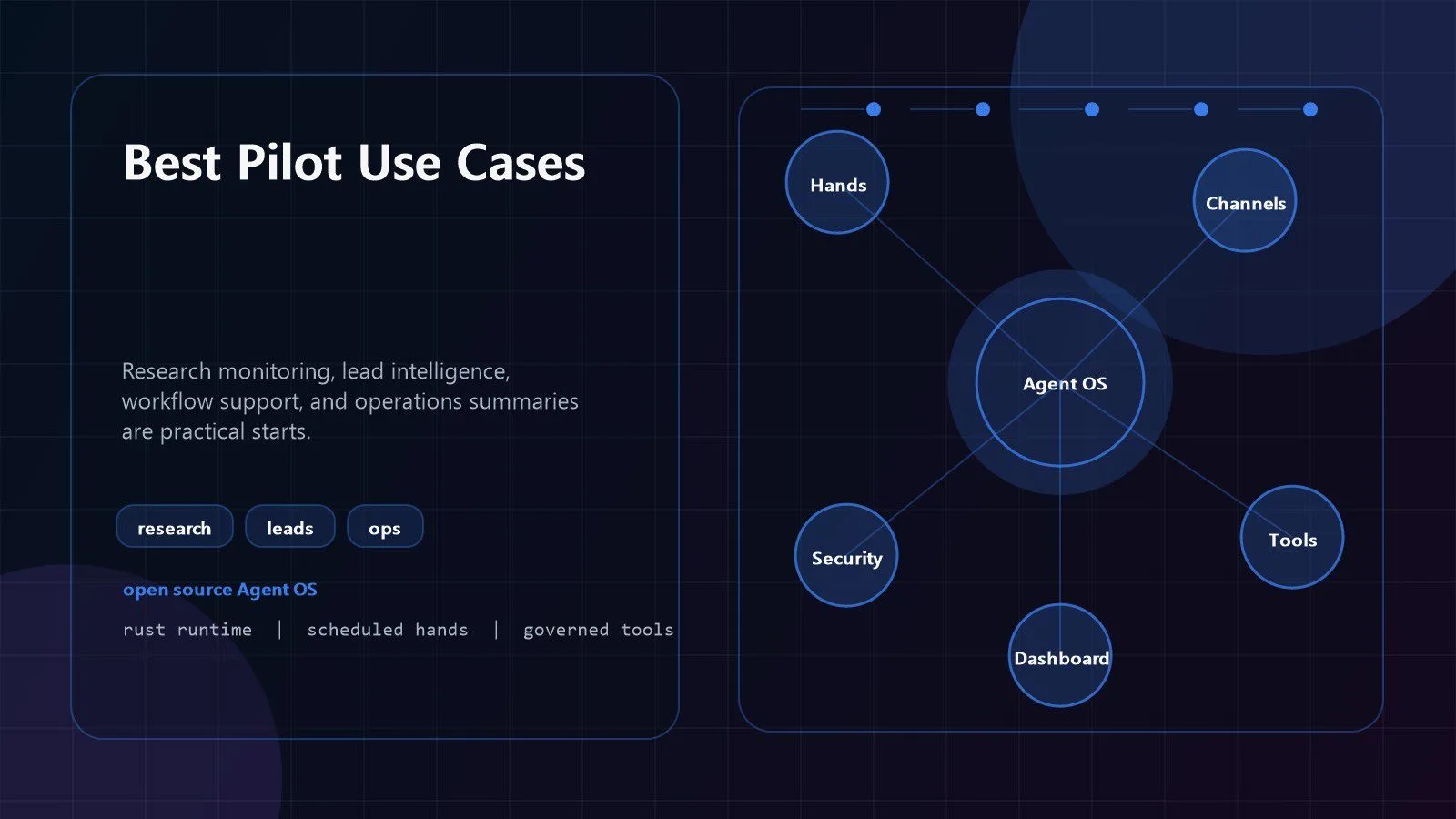
OpenFang makes the most sense when a team wants persistent, recurring agent work and is willing to run or inspect the infrastructure. The best early pilots should be valuable but low-risk, with clear success measures and obvious human review points.
A strong first use case is research monitoring. An agent can track public sources, summarize changes, tag findings, and produce a daily briefing. That is useful for market intelligence, competitor tracking, technology scouting, and policy monitoring, especially when paired with a human analyst.
A second fit is lead and account intelligence. Agents can collect public company signals, enrich lists, prepare outreach notes, and flag accounts that match a buying pattern. This should not become fully automated spam. It should become better prep work for humans.
A third fit is internal workflow support. A team can use the runtime to check queues, summarize tickets, draft status updates, monitor docs, or prepare recurring reports. That aligns well with workflow automation because the agent becomes a helper inside a governed process rather than a free-roaming experiment.
A fourth fit is technical operations. Agents can watch release notes, inspect public incidents, summarize repository activity, or draft runbook updates. These tasks benefit from scheduling and tool access while still allowing humans to approve changes before anything sensitive is modified.
Risks to check before replacing OpenClaw
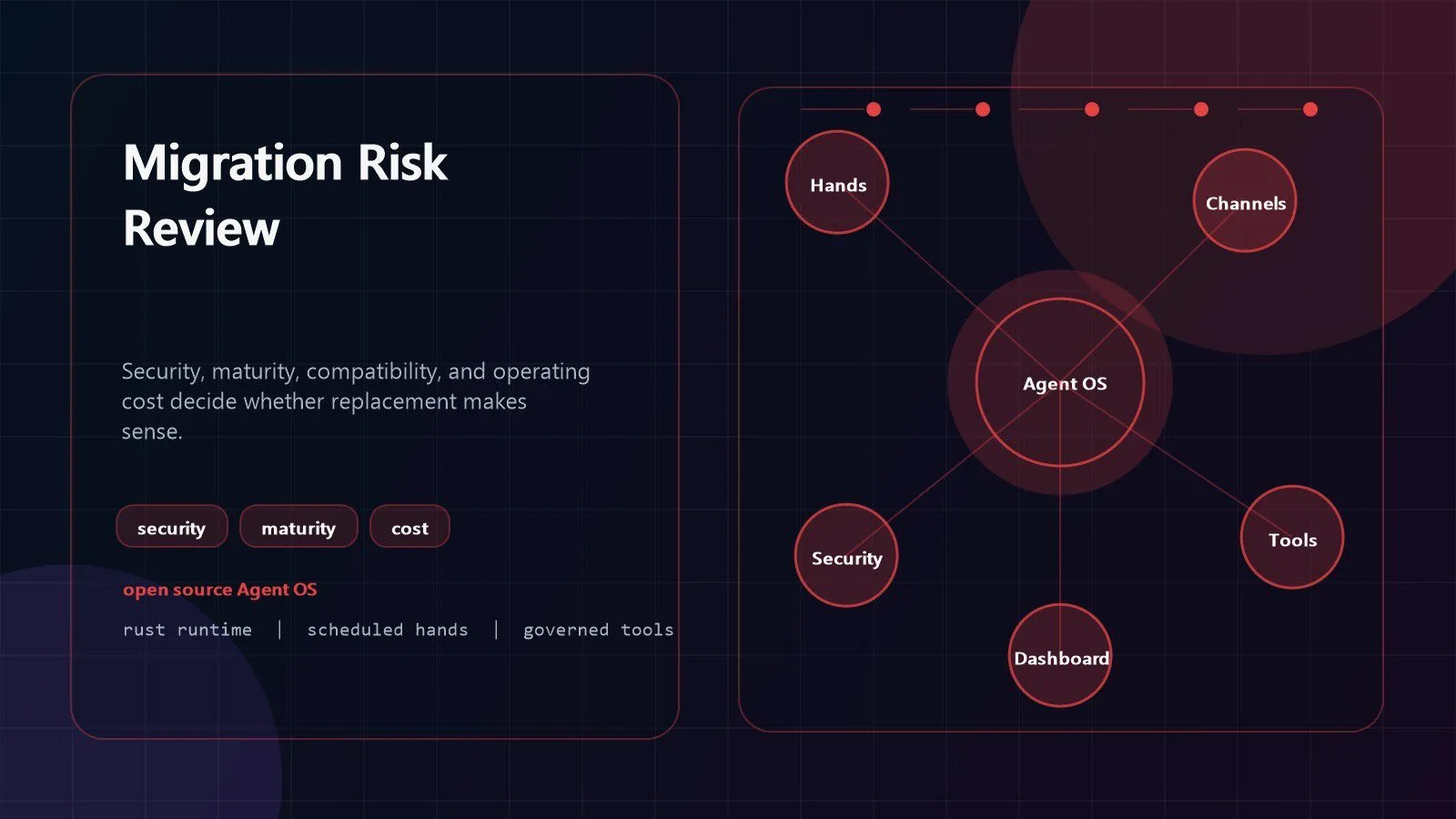
OpenFang should be evaluated carefully before any team claims it has replaced an existing OpenClaw setup. Replacement is not only a feature checklist. It is a migration decision involving operations, security, cost, workflows, and support expectations.
Start with maturity. Open source projects can move quickly, but production teams need release stability, documentation quality, issue response, security posture, and predictable upgrade paths. A promising repository is not the same as a supported platform.
Next, test compatibility. Existing OpenClaw workflows may depend on specific integrations, hosted controls, model routing, recipes, or user habits. A new runtime might be stronger in some areas while requiring rebuilt automations in others. Migration cost should be measured, not guessed.
Security review is non-negotiable. Autonomous agents can browse hostile websites, read sensitive data, call APIs, and make decisions based on model output. Before replacing anything, teams should review secrets management, sandboxing, tool permissions, network access, audit logs, and human approval gates.
Finally, compare total operating cost. A self-hosted runtime can reduce subscription dependence, but it can also shift work to internal teams. Hosting, monitoring, updates, incident response, and model usage all count. The winner is the option that delivers reliable business value with acceptable risk, not simply the option that sounds more open.
OpenFang FAQ
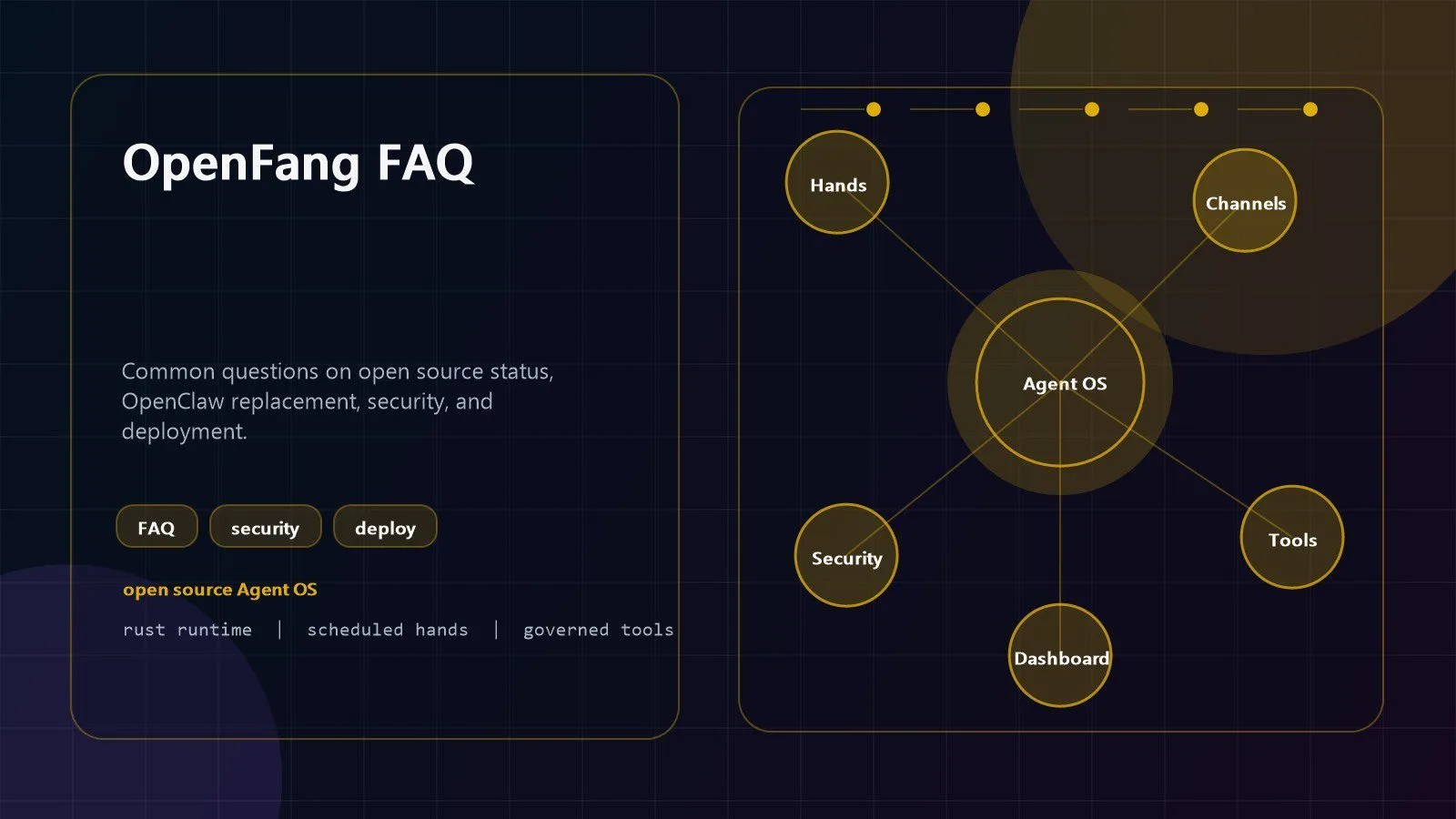
Is OpenFang really an operating system?
OpenFang uses the Agent OS label to describe a runtime for autonomous agents, schedules, channels, tools, and dashboards. It is not a traditional desktop or server operating system like Windows or Linux.
Is OpenFang open source?
Yes. The project is presented as open source, and the public GitHub repository is available for inspection. Teams should still review the current license, release state, and codebase before enterprise use.
Does OpenFang replace OpenClaw?
It can replace some OpenClaw-style use cases when a team wants an open, self-controlled runtime. It may not replace a hosted OpenClaw service when convenience, managed operations, or support are the priority.
Who should try OpenFang first?
Technical teams, automation builders, AI researchers, and operations groups are the best first evaluators because they can inspect the runtime, define safe pilots, and measure recurring agent work.
What should buyers verify before deployment?
Verify security controls, secrets handling, tool permissions, logging, supported integrations, model routing, schedule reliability, and whether the project is mature enough for the intended environment.
OpenFang is important because it shows where agent platforms are heading. The next wave is not just smarter prompts. It is persistent, scheduled, tool-using automation that needs runtime discipline, observability, and security.
For teams exploring agent infrastructure, the right move is to test small, measure honestly, and compare the open runtime path against hosted options like KiloClaw. If your organisation needs help deciding where autonomous agents fit, contact Progressive Robot to design a practical AI automation roadmap.
More AI coverage: explore Progressive Robot's AI Models, Tools & Releases hub — hands-on reviews, setup guides and benchmarks in one place.