
The short version is simple. Fashion Diffusion is trying to compress the path from fashion idea to market-ready visual. It promises faster concepting, fewer physical samples, lower photography costs, and more experimentation across garments, fabrics, models, and campaign scenes. The important caution is that most of the time, cost, and sell-through numbers on the site are vendor claims rather than independently validated public benchmarks.
Fashion Diffusion at a glance
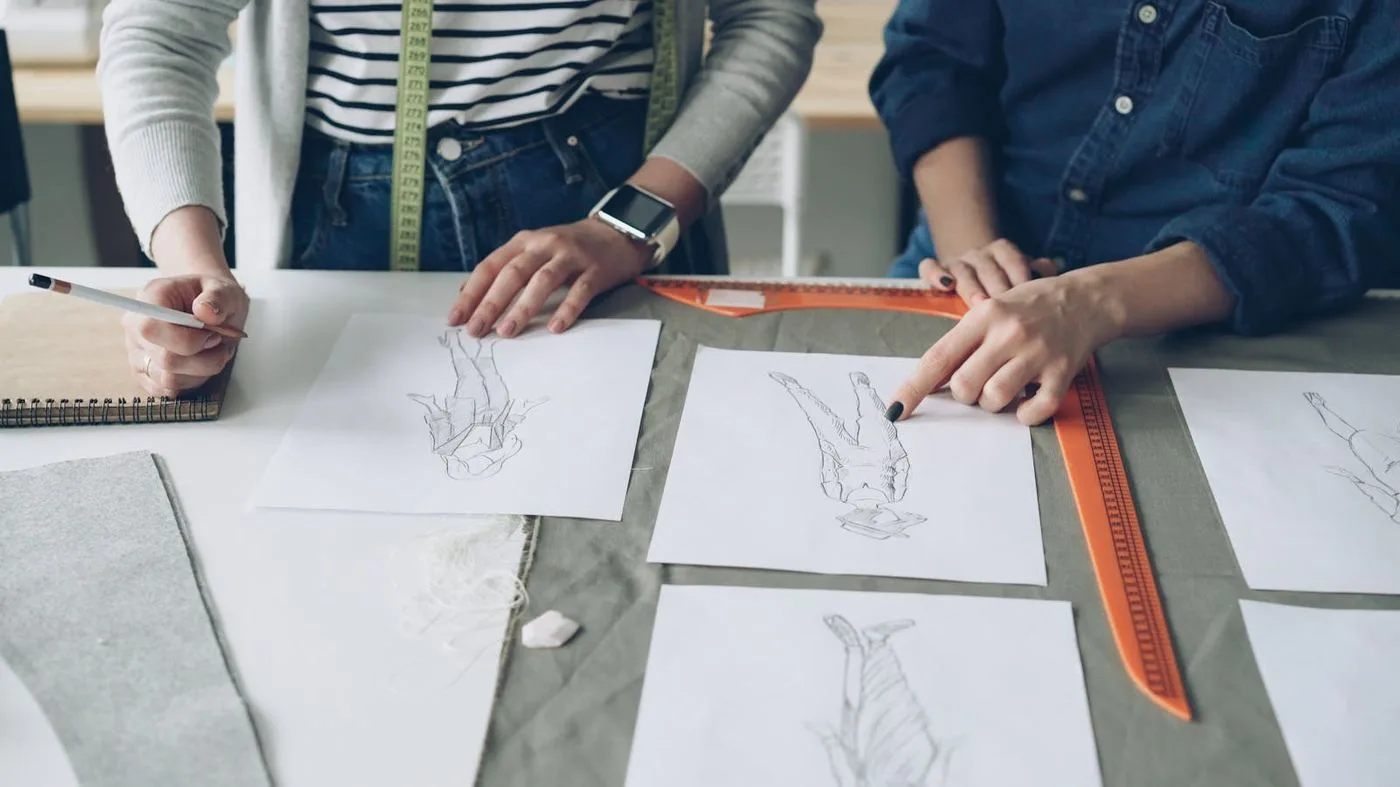
Fashion Diffusion can be summarized in a few practical points.
Fashion Diffusion is an AI fashion design and visual creation platform built for fashion brands, designers, agencies, e-commerce teams, and creators who want to move from early concept to polished visuals faster. The product is positioned less like a general-purpose image generator and more like a fashion workflow layer that combines sketch generation, sketch-to-render, virtual try-on, recoloring, fabric application, AI model creation, and image-editing tools in one place.
This explainer draws on Fashion Diffusion’s official homepage, its public pricing page, its official about page, and the company’s own article on AI fashion photo workflows as the main sources.
The short version is simple. Fashion Diffusion is trying to compress the path from fashion idea to market-ready visual. It promises faster concepting, fewer physical samples, lower photography costs, and more experimentation across garments, fabrics, models, and campaign scenes. The important caution is that most of the time, cost, and sell-through numbers on the site are vendor claims rather than independently validated public benchmarks.
Fashion Diffusion at a glance

Fashion Diffusion can be summarized in a few practical points.
- Fashion Diffusion is a fashion-specific AI platform rather than a generic text-to-image tool.
- The product combines sketch generation, sketch-to-render, virtual try-on, recolor, fabric application, and AI image editing.
- The workflow is designed to help teams move from concept sketches and flat-lay inputs to campaign-style visuals.
- Fashion Diffusion also pitches itself as a replacement or partial substitute for expensive fashion photoshoots.
- The public pricing page shows monthly plans from $12 to $199 with different credit limits.
- The company says the platform is trusted by 3,000+ brands and agencies and built on a dataset of more than one million annotated fashion images.
- The public site is strong on workflow coverage and marketing outcomes, but lighter on deep technical detail about model architecture and benchmarking.
Why Fashion Diffusion matters

Fashion Diffusion matters because the fashion workflow is not only about generating a single image.
Design teams often need to move across several stages quickly: idea generation, sketching, material exploration, on-model visualization, campaign mockups, product imagery, and channel-ready asset preparation. That makes Fashion Diffusion interesting because it packages several adjacent jobs into one fashion-specific interface instead of asking users to stitch together unrelated tools.
That broader workflow angle puts the product at the intersection of the power of multimodal AI and the operational realities of machine learning in retail.
In other words, Fashion Diffusion is not just pitching prettier AI outputs. It is pitching faster fashion operations.
7 practical things to know about Fashion Diffusion

1. Fashion Diffusion is positioned as a fashion workflow platform, not a general AI art tool
The first thing to understand about Fashion Diffusion is the product framing.
The official homepage repeatedly describes it as an all-in-one AI fashion design platform and an AI-powered fashion design and visual creation platform. That wording matters because it tells you the company is not trying to compete only on raw image generation. It is trying to own a narrower but more commercially useful category: fashion creation and fashion visualization.
That category focus is important for buyers. A general model can produce a striking garment image, but a fashion team usually needs more than a single render. It needs repeatable workflows around design iteration, colorways, model presentation, and campaign output. Fashion Diffusion is clearly designed around that broader use case.
2. The product starts upstream, with concept generation and sketch-based design workflows
Fashion Diffusion is not limited to final-image polishing. The official product pages show a strong emphasis on early-stage design exploration.
Publicly listed tools include text-to-sketch, image-to-sketch, and sketch-to-render workflows, plus style innovation, style fusion, recolor, and apply fabric. That suggests the platform is meant to help fashion teams explore variations before they commit to physical sampling or more expensive downstream production.
This is one of the more important parts of the pitch. Many AI fashion tools sound impressive when they generate polished editorial images, but the bigger operational value often sits earlier in the process, where teams are still testing silhouettes, materials, and aesthetic directions. Fashion Diffusion appears to understand that.
3. Virtual try-on is one of Fashion Diffusion’s central product bets
If you read the homepage and related blog content, virtual try-on is not a side feature. It is one of the platform’s main pillars.
Fashion Diffusion says users can run virtual try-on on realistic AI models or uploaded images, use swap-face features, and customise models across different body types, demographics, and regions. The site also lists related tools for jewelry, earrings, bags, and wedding dresses, which suggests the company is trying to widen the try-on concept beyond a single clothing workflow.
That matters because virtual try-on is one of the clearest commercial bridges between fashion design and e-commerce performance. It is not only about visual creativity. It is about testing presentation, styling, and consumer-facing imagery before a brand commits to full production or full photoshoot spend.
4. Fashion Diffusion also pushes hard into AI fashion photography and merchandising imagery
Another important point is that Fashion Diffusion is not presented as a pure design suite. It is also presented as a commercial photography assistant.
The official homepage and blog content highlight remove-background, change-background, upscale, AI model generation, and other image-enhancement tools designed to create professional-looking fashion visuals without a traditional studio setup. The company’s own AI fashion photo article goes even further, framing the product as a way to create virtual studios, generate tailored visuals, and reduce dependence on conventional photoshoots.
That kind of workflow matters because fashion images do not live in isolation. They feed merchandising, search, marketplace listings, and downstream product catalogue management. For larger teams, they also create pressure on PIM and DAM processes that have to keep product data and approved visuals synchronised.
That makes Fashion Diffusion relevant for more than designers. It also becomes relevant for content teams, catalogue teams, performance marketers, and brands trying to understand how online shopping apps can boost sales through better product presentation and faster visual testing.
5. Pricing is straightforward on the surface, but the model is still credit-based
Fashion Diffusion’s public pricing page is clearer than many AI-tool pricing pages, but it is still important to read it as a credit system rather than a flat unlimited SaaS plan.
At the time of writing, the site lists four monthly plans:
- Starter at $12 per month for 50 credits
- Creator at $29 per month for 160 credits
- Pro at $59 per month for 380 credits
- Studio at $199 per month for 1,400 credits
The page also frames value using approximate cost-per-image language. That makes the pricing more legible, but it also means real cost depends on how credit-heavy a team’s actual workflows become. For a brand using multiple revisions, several model variants, and campaign-style image passes, effective cost can look different from the headline plan price.
6. Fashion Diffusion’s strongest business claims are meaningful, but they should be treated as vendor claims
The company makes several concrete performance and cost statements across its public pages.
On the homepage, Fashion Diffusion says users can save 3 to 5 hours per design, reduce sample costs by 30%, save up to 3 months per year, and increase sell-through by 12%. On the pricing and about pages, it also describes studio-quality output at 95% lower cost and up to seven hours faster per design than traditional workflows.
Those claims are directionally plausible for a workflow built around digital sampling, AI models, and background generation. But they are still company claims. The public site does not provide the kind of benchmark methodology, customer study detail, or independent validation that would let an outside team treat those numbers as universally proven.
So the right reading is not that the numbers are fake. The right reading is that Fashion Diffusion is telling you its value thesis in quantified form, and you should test that thesis inside your own workflow.
7. The public story is broad and commercially ambitious, but it leaves some technical questions open
Fashion Diffusion’s public-facing materials are strong on outcomes, tool breadth, and workflow speed. They are less detailed on the deeper technical and governance questions that more serious buyers may ask.
For example, the about page says the platform is built on a Fashion-Diffusion dataset of over one million high-quality annotated fashion images, but the site does not publicly explain model architecture, dataset sourcing detail, evaluation methods, or benchmark comparisons in depth. The public pages also emphasise accessibility and speed far more than enterprise concerns such as governance, auditability, or integration depth.
That does not mean the product is weak. It means the public site is optimised for adoption and conversion, not for deep technical due diligence. Teams considering Fashion Diffusion for production use should evaluate output consistency, brand control, rights and approvals, workflow fit, and privacy expectations before they treat it as core infrastructure.
What Fashion Diffusion looks best at, and where it stops

Fashion Diffusion looks strongest when the job is visual acceleration.
It appears well suited for:
- early concept exploration from text, images, or sketches
- testing colors, fabrics, and style variations quickly
- creating on-model visuals without running a full photoshoot
- generating cleaner product and campaign imagery for commerce workflows
- helping smaller teams produce more fashion visuals with less manual setup
It appears less proven, or at least less clearly documented in public, when the job requires:
- final production validation of real-world fit and material behaviour
- detailed technical garment development or manufacturing-grade specification work
- independently benchmarked ROI claims before purchase
- deep public documentation around architecture, governance, or enterprise controls
- a complete replacement for human creative direction and brand judgment
So the best way to think about Fashion Diffusion is as a design and merchandising accelerator. It can likely shorten several visual steps. It does not eliminate the need for taste, production judgment, and operational review.
Fashion Diffusion FAQ

What is Fashion Diffusion?
Fashion Diffusion is an AI-powered fashion design and visual creation platform that combines sketch workflows, render generation, virtual try-on, recolor, fabric application, and AI photography tools for fashion teams and creators.
Is Fashion Diffusion only for professional fashion designers?
No. The company says the platform is suitable for designers, brands, e-commerce teams, content creators, and beginners. Its public positioning emphasizes that no AI expertise is required.
Does Fashion Diffusion include virtual try-on?
Yes. Virtual try-on is one of the product’s main features. The official site also highlights related tools such as swap face, AI model generation, and several accessory-specific try-on workflows.
How much does Fashion Diffusion cost?
The public pricing page currently lists plans from $12 per month to $199 per month, with credit limits ranging from 50 to 1,400 credits per month.
Can Fashion Diffusion replace traditional fashion photoshoots and sampling?
It can probably reduce some of that work, especially for concepting, variation testing, and marketing visuals. But the public claims about cost savings and speed should still be treated as vendor claims, and most brands will still need human review and some level of real-world validation.
Final thoughts
Fashion Diffusion is interesting because it treats AI fashion as an operational system instead of a novelty image generator.
The strongest part of the story is the workflow breadth. Fashion Diffusion spans sketch ideation, garment variation, virtual try-on, AI model presentation, and commercial image finishing in one platform. That gives it a clearer business shape than many AI creative tools that stop at impressive demos.
The main caveat is that the public materials are more persuasive on product vision than on technical proof. For teams evaluating Fashion Diffusion, that means the correct question is not whether the marketing sounds good. The correct question is whether the platform reliably improves your own design, merchandising, and visual production pipeline.
More AI coverage: explore Progressive Robot's AI Models, Tools & Releases hub — hands-on reviews, setup guides and benchmarks in one place.










