
AI chip startup Cerebras files for IPO in a market that is once again rewarding large artificial intelligence infrastructure stories, but the filing is more interesting than a simple Nvidia-rival headline. The new S-1 and Cerebras press release show a company trying to turn explosive growth in inference demand into a public-market case built on revenue expansion, large strategic customers, and a big OpenAI relationship.
The short version is that Cerebras wants to list on Nasdaq under the ticker CBRS, reported $510.0 million in revenue for 2025, and tied much of its recent momentum to a multi-year OpenAI deal valued at more than $20 billion. But the filing also shows unusually high customer concentration, a complicated capital structure, material weaknesses in internal controls, and a second IPO attempt after the first one was delayed and withdrawn.
That is why AI chip startup Cerebras files for IPO matters beyond one more AI listing. It is an early public-market test of whether investors will back a fast-growing alternative AI chip story when the growth is real but the dependencies and governance questions are also unusually clear.
This article draws on Reuters’ report on Cerebras revealing its IPO filing, Cerebras’ official IPO press release, the company’s Form S-1 filing, Reuters’ report on the company’s OpenAI deal, and Reuters’ earlier report on the CFIUS-related IPO delay.

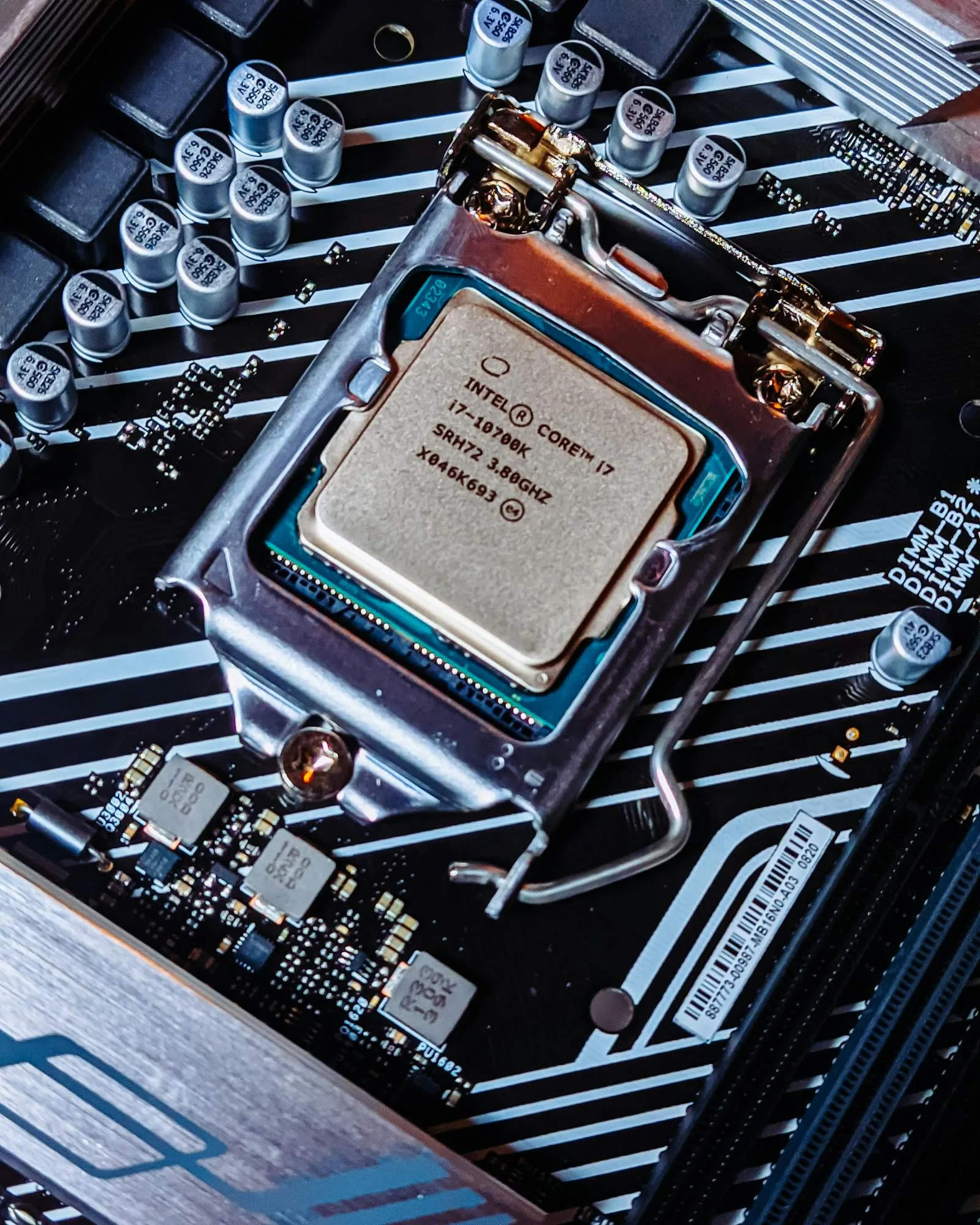
- AI chip startup Cerebras files for IPO on Nasdaq under the ticker
CBRS. - Cerebras says Morgan Stanley, Citigroup, Barclays, and UBS Investment Bank are the lead underwriters, with Mizuho and TD Cowen as bookrunners.
- The S-1 shows revenue rising from $290.3 million in 2024 to $510.0 million in 2025, or 76% year-over-year growth.
- Cerebras reported GAAP net income of $237.8 million in 2025 after a $481.6 million net loss in 2024, but it also reported non-GAAP net loss of $75.7 million for 2025.
- The filing says MBZUAI accounted for 62% of 2025 revenue, while G42 accounted for 24% of 2025 revenue and 85% of 2024 revenue.
- Reuters says Cerebras has a multi-year OpenAI deal valued at more than $20 billion, and the S-1 says OpenAI agreed to deploy 750 megawatts of Cerebras AI compute.
- This is Cerebras’ second IPO attempt after it withdrew its prior filing in October 2025 following delays tied to a U.S. national security review of G42’s investment.

AI chip startup Cerebras files for IPO at a moment when the market is trying to decide which AI infrastructure businesses are real platform companies and which are still just momentum stories. Cerebras has more evidence than many private peers because the filing shows real revenue growth and named strategic relationships, not only product claims and benchmark marketing.
It also matters because Cerebras is not pitching itself as a generic GPU alternative. The company is leaning into fast inference, wafer-scale hardware, and large compute partnerships, especially with OpenAI. If public investors accept that story, it strengthens the case that the next phase of AI infrastructure will reward more specialised architectures, not only the dominant incumbent stack.
That makes this filing relevant beyond equity markets. The same infrastructure race sits underneath enterprise workflow automation and more capable autonomous AI agents. If Cerebras can convince investors that demand for inference-heavy AI compute is durable, it would support the wider argument that fast AI infrastructure is becoming a core enterprise layer rather than a temporary model-cycle trade.

1. This is Cerebras’ second attempt to go public
Reuters reported that Cerebras previously filed for an IPO in 2024, then postponed and ultimately withdrew that filing in October 2025. The main reason was a national security review connected to Abu Dhabi-based G42’s investment in the company.
Reuters also reported that the review centered on G42’s prior ties to Huawei and on the political sensitivity around foreign investment in advanced U.S. AI infrastructure. Cerebras said in 2025 that it had obtained clearance, which cleared the way for this second attempt.
That history matters because investors are not looking at a first-time clean filing. They are looking at a company returning to market after a geopolitical delay that exposed how sensitive advanced AI hardware has become.
2. The growth numbers are strong, but the profitability story needs careful reading
The strongest argument in the filing is revenue growth. Cerebras says revenue increased from $24.6 million in 2022 to $78.7 million in 2023, then to $290.3 million in 2024, and then to $510.0 million in 2025.
The company also reported GAAP net income of $237.8 million in 2025 after a GAAP net loss of $481.6 million in 2024. On the surface, that makes the business look like it has already crossed into sustainable profitability.
But the filing also says Cerebras recorded non-GAAP net loss of $75.7 million in 2025. That makes the picture more complicated. The business is clearly scaling fast, but investors still need to understand how much of the GAAP improvement came from underlying operating leverage versus accounting items and deal structure effects.
3. Customer concentration is one of the biggest risks in the entire filing
This is the part public-market investors will focus on immediately. The S-1 says MBZUAI accounted for 62% of total revenue in 2025. The same filing says G42 accounted for 24% of 2025 revenue and 85% of 2024 revenue.
The concentration risk also shows up in receivables. The filing says one customer, G42, accounted for 91.0% of accounts receivable as of December 31, 2024.
That means Cerebras is not yet a broadly diversified infrastructure platform from a revenue-base perspective. It is a fast-growing company whose headline numbers still depend heavily on a small group of very large counterparties.
4. The OpenAI relationship is central to the IPO case
Reuters says Cerebras has a multi-year deal with OpenAI valued at more than $20 billion. The S-1 says OpenAI agreed to deploy 750 megawatts of Cerebras high-speed AI compute, and that OpenAI and Cerebras agreed to co-design future models for future Cerebras hardware.
The filing also discloses an OpenAI warrant. As of December 31, 2025, Cerebras had 33,445,026 shares of Class N common stock issuable upon exercise of the OpenAI warrant at an exercise price of $0.00001 per share, subject to vesting conditions.
That is important because the OpenAI tie-up is not just a customer contract. It is part of the company narrative, part of its growth engine, and part of its capital and control story.
5. Cerebras is pitching a specific thesis against Nvidia, not just a generic rivalry
Reuters describes Cerebras as a Nvidia rival, but the actual filing is more specific. Cerebras says it is focused on wafer-scale systems and on accelerating both training and inference, with particular emphasis on high-speed inference without dependence on high-bandwidth memory bottlenecks.
That positioning matters because inference demand is becoming a larger part of the AI infrastructure conversation. If the market believes that inference economics will matter as much as raw training scale, Cerebras can present itself as a differentiated architecture play instead of a second-tier imitation of Nvidia.
6. Governance and capital structure are real investor questions
Cerebras is not coming public with a simple one-share-one-vote structure. The filing says the company will have three classes of authorized common stock after the offering: Class A, Class B, and Class N.
Class A carries one vote per share. Class B carries 20 votes per share and can convert into Class A. Class N is non-voting and can convert into Class A. For investors, that means this IPO offers access to the business, but not clean public-market control.
That is not unusual in modern tech IPOs, but it still matters. When a company also has strategic warrants, major customer concentration, and a still-evolving operating model, governance structure becomes a bigger part of the investment debate.
7. The filing includes risk flags that go beyond normal execution risk
Cerebras says it identified material weaknesses in internal control over financial reporting. The filing says those material weaknesses relate in part to inadequate or missing resources with the right expertise to review reconciliations and apply GAAP in several financial statement areas, including revenue.
That is a serious disclosure for a company coming to market on a complex, fast-growth story. It does not automatically disqualify the IPO, but it does mean investors need to be more cautious about the controls around a business that is already handling large strategic contracts and unusual capital arrangements.
Add in export-license sensitivity, dependence on a handful of customers, and the earlier G42 review, and the result is clear: Cerebras has a compelling growth story, but it is not a simple low-risk public listing.

If this IPO moves forward successfully, it will say a few important things about the market.
- Public investors are willing to fund AI infrastructure businesses that are smaller than Nvidia if the revenue growth is strong enough and the technical differentiation is clear enough.
- Inference-focused compute is becoming important enough to support public-market narratives, not just private fundraising decks.
- Strategic customer concentration may be tolerated in the near term if investors believe those customers anchor a much larger future platform.
- Governance complexity and geopolitical exposure will probably stay part of the valuation discussion for AI chip companies, especially where sovereign customers and cross-border investment are involved.
If the IPO struggles, the lesson will be different. Investors may decide that even strong AI demand is not enough when revenue concentration, control issues, and geopolitical baggage are all visible in the same filing.

What does Cerebras actually sell?
Cerebras sells AI infrastructure built around its wafer-scale processors and related systems for training and inference. In this filing, the company is emphasising fast inference and large-scale AI compute deployments.
What ticker does Cerebras plan to use?
Cerebras says it intends to list its Class A common stock on the Nasdaq Global Select Market under the ticker CBRS.
Why was the earlier IPO delayed?
Reuters reported that the earlier IPO process was delayed by a U.S. national security review tied to G42’s investment in the company and broader scrutiny of G42’s prior links to Huawei.
Is Cerebras already profitable?
Cerebras reported GAAP net income of $237.8 million in 2025, but the filing also reported non-GAAP net loss of $75.7 million for the same year. The safest reading is that growth is strong, but the profitability picture is not as simple as a single net-income line.
How dependent is Cerebras on a few customers?
Very dependent right now. The S-1 says MBZUAI accounted for 62% of 2025 revenue, while G42 accounted for 24% of 2025 revenue and 85% of 2024 revenue.
Why does the OpenAI deal matter so much?
Because it is both a demand signal and a dependency risk. Reuters says the deal is valued at more than $20 billion, and the filing says OpenAI agreed to deploy 750 megawatts of Cerebras AI compute and received warrant-related economics tied to the relationship.
More AI coverage: explore Progressive Robot's AI Models, Tools & Releases hub — hands-on reviews, setup guides and benchmarks in one place.










