
FlashProve is the name Anthropic gave an open-source system it is building to answer a question most people never think to ask: how do you know which AI model actually produced the answer in front of you? The company published details on Tuesday, describing a method for “provable inference” — a cryptographic guarantee, not a vibe check, that a given output really came from a specific model.
The stakes are larger than they sound. FlashProve is explicitly designed to catch labs themselves swapping models — quietly downgrading to a cheaper one to save money, or upgrading to a bigger one only when benchmarks are running. Here is how the system works, what it takes to adopt it, and where it still falls short.
- What FlashProve Actually Does
- How Provable Inference Works
- The Impostor Problem FlashProve Is Built to Catch
- Why Enterprise AI Buyers Should Pay Attention
- Where FlashProve Sits in the Trust Toolkit
- The Limits: What a Proof Cannot Fix
- What Labs and Regulators Should Do Next
- Where Model Provenance Goes Next
- References
What FlashProve Actually Does
The Tuesday Announcement in Plain English
Anthropic said it is working on an open-source system to verify which AI model produced a given output. The system, FlashProve, provides what its researchers call provable inference: a mathematical guarantee that an answer came from the model the user believes they used. Think of it as the difference between a handshake and a notarized document.
The comparison the researchers lean on is email signing: just as cryptographic signatures let a recipient confirm a message came from its claimed sender, FlashProve would let a user confirm a response came from a claimed model. The twist is who the system distrusts — even the lab that built and runs the model could not forge its way past the checks.
FlashProve at a Glance
The table below captures what was announced, what is finished, and what is still in progress.
| Item | Status |
|---|---|
| What it is | An open-source system for provable inference about model outputs |
| Who announced it | Anthropic researchers, in a blog post on Tuesday |
| What it proves | That a specific output came from a specific AI model |
| What it needs from labs | A published fingerprint per released model — no model weights exposed |
| Where verification runs | Designed to be light enough for a local device |
| Deployment plans | None — research is ongoing at this stage |
Working Code, Not Just a Whiteboard
Anthropic released a detailed technical specification and working code for various parts of FlashProve under an open-source license on GitHub. The researchers were blunt about the project’s stage, publishing the work as intermediate progress rather than a finished agenda — an invitation for others to take it and improve it.
Why Tuesday, and Why Now
Timing is not accidental. Model routing — sending easy requests to cheap models and hard ones to flagships — is now standard practice across the industry, and providers rarely disclose which route a given answer took. FlashProve lands as that opacity is getting commercial attention, and as regulators in Europe begin asking what evidence a model claim should carry. A system that turns “which model did this?” into a checkable artifact is useful in exactly this market moment.
How Provable Inference Works
Fingerprints Without the Recipe
The scheme requires AI labs to publish a fingerprint for each model they release. That fingerprint can later be matched against specific outputs and verified cryptographically. The clever part is what the fingerprint is not: it does not reveal a model’s weights — the internal numbers that define how a model behaves and that closed labs guard as their most valuable asset.
Because FlashProve’s fingerprints keep weights private, the system can work with commercial models as well as open ones. Anthropic and OpenAI could both publish fingerprints and keep their models locked in the vault. Verification stays possible even though the models themselves are opaque — which is precisely the compromise commercial AI has needed.
Verification You Can Run Locally
The system is deliberately lightweight, so checking a proof does not require trusting some third-party server — a user’s own device can perform it. That matters because the alternative is trading one blind trust for another: asking a neutral referee whether a model was honest is a weaker guarantee than doing the math yourself.
What the Math Actually Anchors To
A FlashProve proof ties an output to a fingerprint, and the fingerprint to a published model. Break either link — an unpublished variant, a fingerprint hosted sloppily — and verification fails loudly instead of quietly. Fail-loud behavior is the entire product: silent ambiguity is what makes today’s model claims unverifiable.
One Scheme, Many Model Providers
Because the fingerprint format is public and decoupled from any single vendor, FlashProve is positioned as infrastructure rather than an Anthropic feature. A developer could verify outputs from several providers inside one workflow, each checked against that provider’s published fingerprints. That cross-vendor posture is why the open-source license matters more here than in most releases: a trust system written by one competitor will not be adopted quietly by the others, so neutrality had to be designed in from the first commit.
What Engineers Will Argue About Next
Cryptographers will want the guarantees stated more formally, and engineers will want the integration burden described more honestly. Fingerprint hosting needs the same care as a certificate authority, key rotation needs a policy, and proofs need a retention story that fits real logging systems. None of that is exotic engineering — it is the ordinary work of turning a paper into plumbing, and it is exactly the phase where open-source projects either mature or stall.
The Impostor Problem FlashProve Is Built to Catch
Why a Lab Would Lie About Its Model
The researchers spell out the two temptations FlashProve is built to police. An AI company could secretly swap in a cheaper model to cut costs while billing for the flagship. Or it could swap in a more expensive model to inflate performance results right when reviewers are watching. Both are plausible, both are profitable, and neither is detectable today.
Neither swap leaves a paper trail because the model lives behind the lab’s own API. FlashProve attacks that asymmetry: if every output carries a proof anchored to a public fingerprint, the lab’s word stops being the only evidence — and the impostor scenario, including an impostor that is literally the manufacturer, stops being free.
Verifiable Boasts From Everyone Else
The same mechanism verifies third parties, not just labs. The researchers describe a developer claiming their software library was scanned for vulnerabilities by a frontier cybersecurity model, or a company claiming its business plan was approved by an appropriate model. Today those boast are unverifiable; with FlashProve they could become checkable receipts.
The pattern generalizes to any situation where value is attached to which model did the work: insurance filings, compliance reports, exam grading, medical triage logs. The claim “a model signed off on this” becomes an auditable artifact instead of an ad.
Benchmarks Are the Worst Offender
Leaderboard culture amplifies the impostor problem. A lab that knows precisely when it is being measured can schedule its best model for measurement day and ship something cheaper the rest of the week. FlashProve does not stop a lab from running that playbook, but it does make the playbook deniable no longer: benchmark submissions could carry proofs, and a mismatch between what was measured and what ships becomes public arithmetic instead of a rumor with no evidence.
Why Enterprise AI Buyers Should Pay Attention
The Procurement Problem Nobody Can Audit
Enterprises buy AI capacity by model name and get almost no way to check they received it. Contracts specify a model; invoices say nothing about which weights answered. The failure modes are already documented: when an AI coding agent slipped inside a secure Pentagon system, customers discovered how thin visibility into model behavior really is. Provable inference would let procurement verify the model named on the invoice.
How Strong Is Each Kind of Proof?
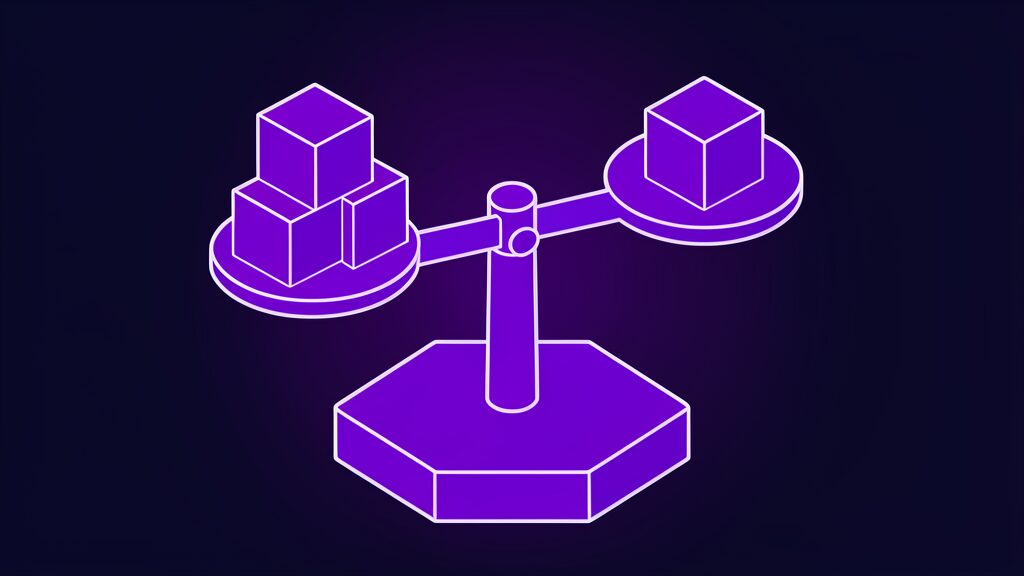
The graphic below compares, illustratively, how much trust each existing mechanism actually anchors — from a vendor’s word up to a mathematical guarantee.
What Buyers Should Ask For
Any organization signing a frontier-model contract should now ask one additional question: can you produce a FlashProve-style proof that the contracted model produced this output? The question is cheap. A vendor’s inability to answer it is information too — and it should be priced.
Compliance Teams Already Want This
Regulated industries are the natural early adopters. A bank that must show which system produced a risk assessment, or a hospital group logging AI triage steps, currently satisfies auditors with screenshots and vendor letters — evidence that proves almost nothing once examined. Provable inference gives compliance a control that maps cleanly to existing audit language: evidence of origin, retained per event, verifiable without the vendor’s cooperation. FlashProve is not ready for production, but the audit checklist is already being written around ideas like it.
The Procurement Line Item Nobody Has Yet
Verification has a cost, and someone always asks who pays it. If providers absorb it, expect the fee to appear somewhere in the contract; if buyers run checks themselves, expect tooling budgets and staff time. Neither answer is a blocker, but the honest line should be drawn before the first audit deadline rather than during it. Procurement teams that plan for verification now will negotiate it cheaper than the ones who discover it after an incident.
A Practical Caution Before the First Signature
Proofs verify outputs, not contracts. The paperwork still has to state which model was bought, at what price, with which retention duties attached. Provable inference sharpens the enforcement question — did you actually get what you paid for? — but someone still has to write that answer into the agreement before the math can defend it.
Where FlashProve Sits in the Trust Toolkit

Watermarks Tried First — Here Is the Difference
Provable inference is not the first attempt at AI attribution. OpenAI has moved to embed watermarks in ChatGPT text for the EU under the TextGrain-style watermarking effort. Watermarks mark content after the fact and degrade under edits; a cryptographic proof binds content to origin in a way that survives scrutiny because it does not hide in the text at all.
A Side-by-Side of the Trust Toolkit
The table below places FlashProve next to the mechanisms security teams already rely on.
| Mechanism | Proves | Survives copy/retype | Needs lab cooperation |
|---|---|---|---|
| TLS / transport encryption | The channel, not the origin | n/a (connection only) | No |
| Content watermarks | Which tool generated the content | Partially — degrades under edits | Yes (must embed) |
| C2PA-style provenance manifests | Claimed creation chain | Strips with metadata | Yes (must sign) |
| FlashProve provable inference | Output came from a fingerprinted model | Yes — proof travels with the claim | Yes (publish fingerprint) |
The Email Analogy, Extended
DKIM-style email signing taught the industry that identity plumbing works when it is optional at first and default later. FlashProve is following the same runway: open specification, working code, no forced adoption. The difference is urgency — model substitution is a live commercial incentive, not a hypothetical.
Why the Toolkit Needs Both Layers
Watermarks and proofs are complements, not rivals. A watermark can survive a screenshot of clearly AI-made content and flag the tool family; a proof can confirm a specific model produced a specific stored output. FlashProve covers the high-stakes, record-keeping case; watermarks cover the messy, walk-in-the-street case. A mature trust stack keeps both, and stops pretending either alone settles the question of who made what.
The Limits: What a Proof Cannot Fix
Research, Not Product
Anthropic was emphatic that FlashProve is not shipping. There are no plans to deploy it at Anthropic or any other lab; the announcement exists to share intermediate progress so others can take it and improve it. Treat every claim about the system as a draft claim — including, politely, the ones in this article.
A Proof of Origin Is Not a Proof of Quality
Cryptographic certainty says which model answered, not whether the answer was correct, honest, or appropriate. A verified output can still be confidently wrong. Anthropic’s own recent warning that self-building AI is almost here shows the lab is comfortable surfacing uncomfortable capability facts — but a stamp of provenance is still just a stamp of provenance.
The Fingerprint Is the New Attack Surface
If verification hinges on published fingerprints, then publishing, storing, and versioning those fingerprints becomes the weak point. A compromised fingerprint repository would poison the whole chain of trust. Expect the first real-world FlashProve-style incident to target the directory, not the math.
Cost is the quieter obstacle: proving every inference adds computation and key management. Labs will argue it is cheap; procurement teams will want to see the line item before they believe it.
Adoption Needs a Second Lab, Not a Sermon
Infrastructure like FlashProve only hardens into a standard when a second independent lab ships compatible fingerprints, because verification is comparative by nature. One lab’s fingerprints prove that lab’s outputs; two labs’ fingerprints start proving the industry. Until that second signature appears, the honest summary is that Anthropic has built a convincing prototype of a norm — and the rest of the field has to decide whether to hold it.
A Culture of Receipts, Not Claims
There is a version of this future where provenance becomes boring: contracts reference proofs the way they reference invoices, and nobody writes think-pieces about it. Getting there is mostly unglamorous — stable specifications, boring hosting, insurance adjusters learning what a fingerprint looks like. The industry has been through this with TLS and with code signing, and both times the technical question resolved long before the cultural one. Expect the same lag here.
What Labs and Regulators Should Do Next
Labs: Publish Fingerprints Before You Need Them
For labs, the cheapest move is incremental: publish a fingerprint with each model release, even while the ecosystem catches up. Fingerprints published at launch can be verified retroactively; fingerprints published after a scandal verify nothing about the scandal.
Auditors: Fold Provenance Into the Engagement
Audit teams have a standing habit of checking badges instead of checking systems, and our critique of AI labs bringing in-house auditors in through the front door is the cautionary tale. A verifiable output chain gives external auditors something they have never had: samples they can check without asking the lab’s permission.
Regulators: Specify Verification, Not Disclosure
Disclosure rules ask companies to describe their models. Verification rules let anyone check what the models did. Once FlashProve-style proofs exist, regulators should prefer the second kind — rules that survive the regulated party’s changing story.
Buyers: Start Writing the Ask into Contracts
Cheapest adoption lever of all: contract language. If enterprise buyers begin requesting provable-inference clauses in renewal season, labs get a commercial reason to invest before any regulator forces the issue. One clause — outputs shall be verifiable against the provider’s published model fingerprints — costs nothing to propose and reframes every later conversation about model identity around evidence instead of assurances.
Where Model Provenance Goes Next
The Standards Race Has Started
Anthropic released FlashProve openly, which hands the ball to standards bodies and rival labs. A rival proving system is inevitable; whether they interoperate will decide if model provenance becomes one ledger or a dozen regional ones.
What to Watch in the Next Year
Three signals tell you FlashProve-style verification is winning: a second major lab publishes fingerprints, a procurement RFP cites provable inference, and a vendor’s model-substitution claim actually gets checked in public. Any one of those events moves verification from research curiosity to commercial requirement.
The deepest change is cultural. For the first time, “which model did this?” shifts from a marketing question to a math question. Nobody in the industry can pretend not to know how that lands — and every lab knows exactly how much it has to lose when users stop having to ask.
The practical posture for now: watch the fingerprints. If Anthropic ships proofs quietly at scale, or a second lab publishes compatible ones, FlashProve graduates from research to requirement overnight. Until then, keep asking which model answered — the industry has only just started building a way to answer back.
For ordinary users the change arrives quietly: a badge on a receipt, a verification link in a report, a checkbox inside a procurement portal. That is how plumbing becomes culture — not with a launch keynote, but with a thousand unglamorous checks that make the old excuse, “trust us, it was our best model,” sound exactly like what it always was: a claim.
References
More AI coverage: explore Progressive Robot's AI Models, Tools & Releases hub — hands-on reviews, setup guides and benchmarks in one place.










