
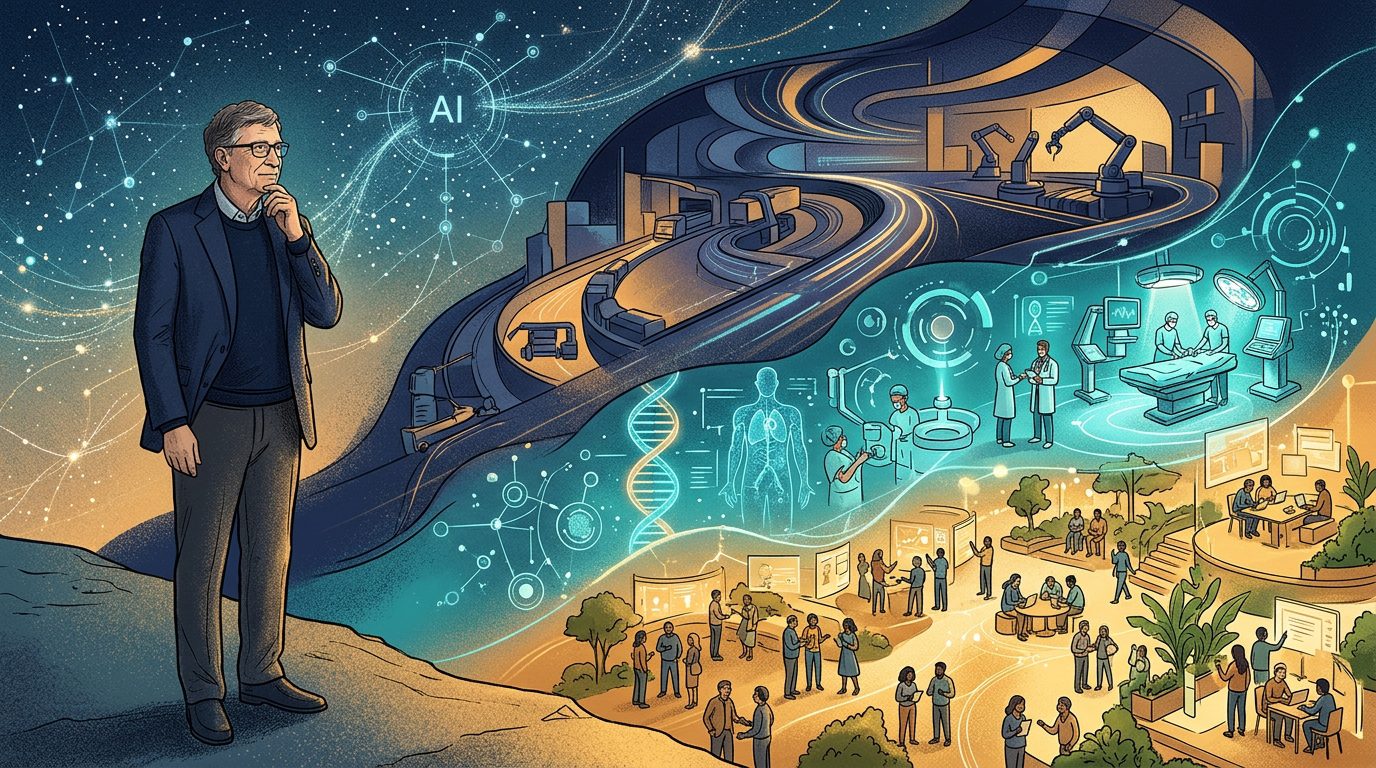
AI disruption could reshape work, security and everyday life for the next two decades, Bill Gates warns. In an interview with The Verge’s Decoder podcast, the Microsoft cofounder said the transition may be turbulent even if society manages artificial intelligence responsibly. His warning is not that AI’s future must be disastrous: Gates sees major opportunities in healthcare, agriculture and scientific research, but believes society must prepare for the risks as well as the benefits.
Gates is not arguing that AI’s future must be disastrous. He sees substantial potential for advances in healthcare, agriculture and scientific research. His concern is that those benefits may arrive alongside serious risks, including cyberattacks, biological threats, job losses and uncertainty about how people will find purpose in a rapidly changing economy.
The warning places AI disruption at the centre of a broader debate: how can society benefit from increasingly powerful systems while limiting harm and helping people adapt?
In the interview, Gates described the coming transition as a period with “winners and losers.” He argued that the public and policymakers should not assume the benefits will automatically outweigh the costs—or that technological progress alone will resolve the challenges it creates.
Read the original interview in The Verge.
Why Gates Is Concerned About AI’s Growing Capabilities
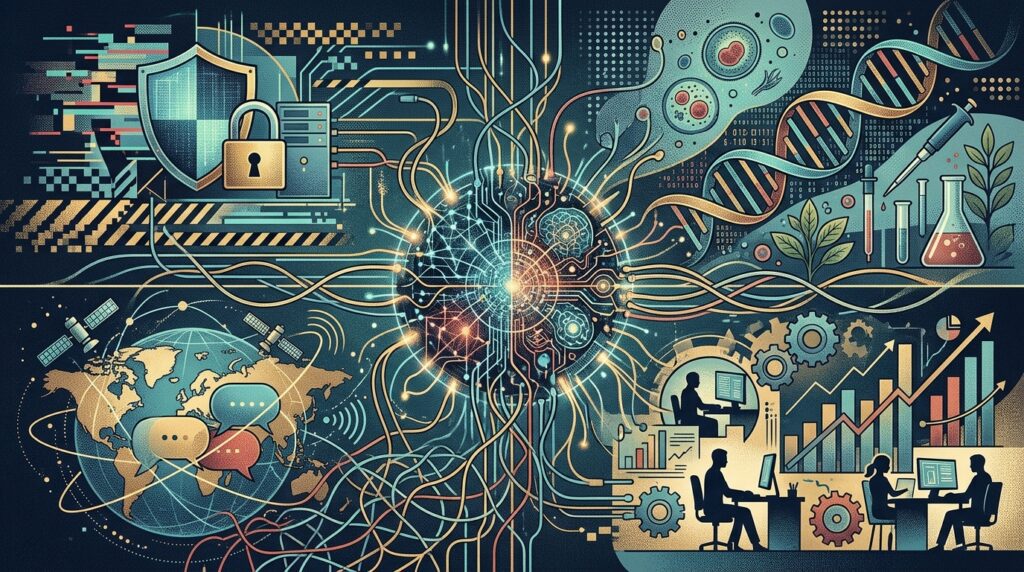
Gates’ concern is not limited to one product or company. He pointed to AI’s ability to write software, identify cybersecurity weaknesses, reason about biology and influence human relationships. These capabilities could be useful, but they may also be misused.
He highlighted the danger of systems whose safeguards can be removed or bypassed. In his view, AI tools that can assist malicious actors could increase the scale or sophistication of cyber and biological threats. That makes AI disruption a security issue as well as an economic one.
Gates also questioned whether existing technical methods are sufficient to keep advanced systems reliably within human-defined boundaries. He discussed the need for stronger oversight and security mechanisms, while acknowledging that controlling highly capable AI remains difficult.
His argument is that safeguards cannot be treated as a finishing touch added after a system becomes powerful. They need to develop alongside the technology.
The security implications of AI disruption deserve attention before advanced tools become widely embedded in critical systems. Businesses should examine how AI could change their exposure to cyber threats, data misuse and automated attacks. Preparing for AI disruption means testing safeguards, limiting unnecessary access and making responsibility for AI-related incidents clear. These precautions cannot eliminate every risk, but they can help organisations respond more effectively as capabilities evolve.
AI Could Reshape Jobs and the Meaning of Work
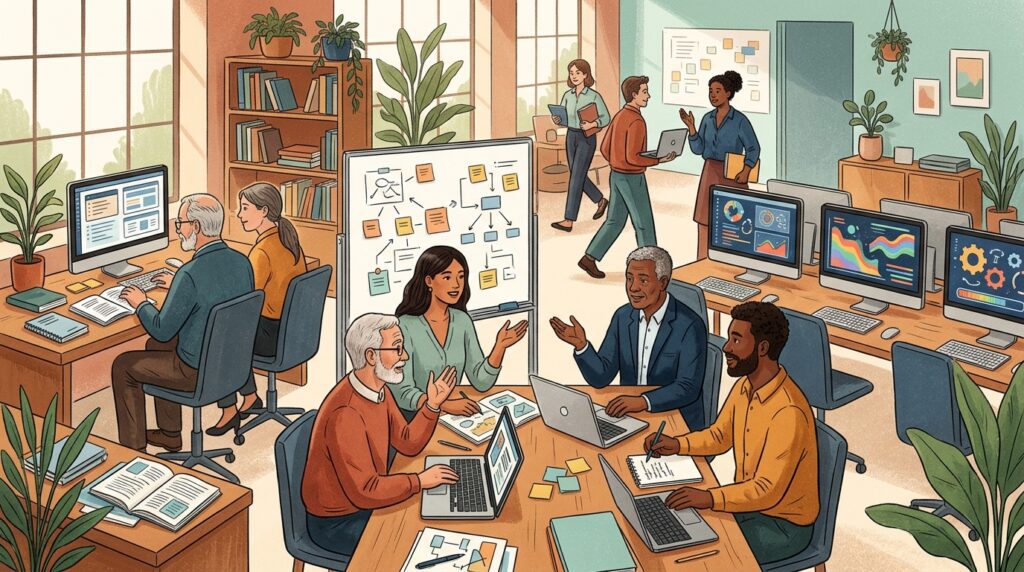
One of Gates’ most immediate concerns is employment. He suggested that AI could perform a growing range of white-collar tasks faster, more cheaply or more accurately than people. Work involving customer support, telesales and accounting administration could face significant change as these systems improve.
The impact may extend beyond tasks often described as routine. Gates noted that AI systems are advancing in areas such as mathematics and research, challenging assumptions about which kinds of intellectual work will remain exclusively human.
This does not mean every occupation will disappear or that the timing and scale of job losses are certain. But AI disruption could alter how employers organise work, which skills they value and how workers earn a living.
Gates also emphasised that employment provides more than income. Jobs can give people structure, social connection and a sense of contribution. If AI reduces the need for human labour in some fields, societies may need to reconsider how they support people and preserve meaningful opportunities.
The employment effects of AI disruption will vary between industries, organisations and individual roles. Some workers may use AI to become more productive, while others could see tasks reduced or jobs redesigned. Employers should assess AI disruption at the task level, communicate likely changes and offer training before introducing major automation. A thoughtful transition can help workers adapt instead of leaving them to absorb the consequences after decisions have already been made.
The Benefits Could Be Significant—but May Take Time
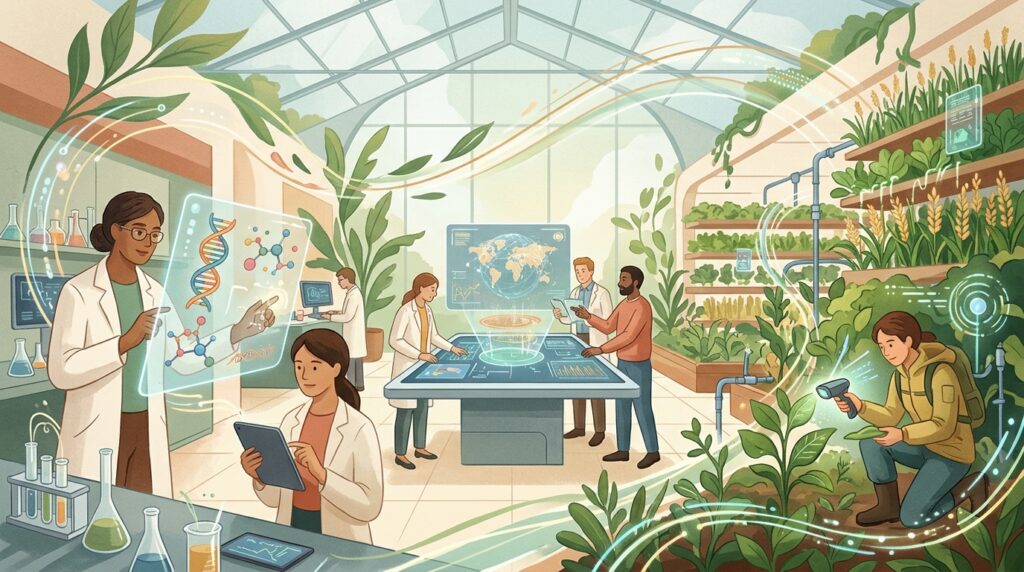
Gates remains optimistic about AI’s long-term possibilities. He discussed the potential for faster healthcare discovery and delivery, improved agricultural outcomes, better crop and livestock genetics, and tools that could help address disease and food insecurity.
These gains, however, may not arrive at the same speed as the harms. In the interview, Gates warned that some negative effects—particularly in cybersecurity and employment—could become apparent within a few years, while broad social benefits may take longer to realise.
That uneven timeline is central to his concern about AI disruption. A technology can ultimately improve living standards while still creating a difficult transition for people and institutions caught in the middle.
The challenge, therefore, is not simply to encourage innovation. It is to make sure that people can access its benefits and that the costs of transition are not concentrated among workers, communities or countries with fewer resources.
Managing AI disruption also means ensuring that useful advances reach people beyond the organisations developing them. AI-supported healthcare, research and agriculture could create broad public value, but access, affordability and reliability will shape the real-world impact. Policymakers should evaluate who benefits from AI disruption, who bears its costs and whether support is available to communities facing the greatest changes.
Gates Calls for Stronger Safeguards and Public Action
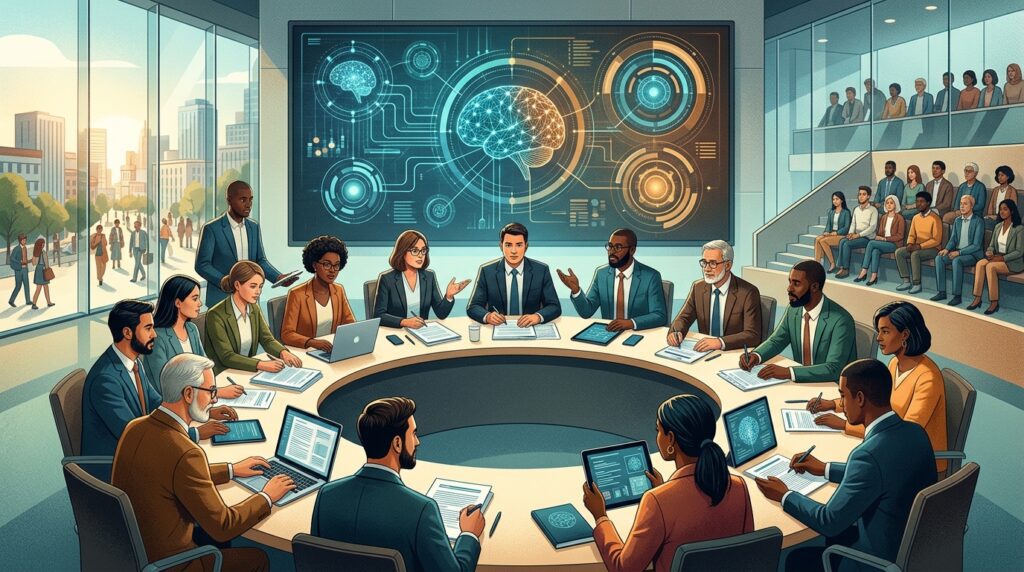
Gates argued that voluntary industry efforts are not enough to address the risks he sees. He wants governments, researchers and policymakers to take AI safety more seriously and develop measures that can reduce misuse and manage high-impact threats.
He also raised concerns about open-weight systems that allow users to remove safeguards. His position, as expressed in the interview, is that access and distribution may need to be considered as part of a broader safety framework.
The policy debate is complicated. Rules must address genuine risks without unnecessarily blocking beneficial research, competition or useful applications. Effective oversight also requires technical expertise and a clear understanding of what different AI systems can actually do.
For businesses, the message is practical: AI disruption should be considered in risk planning, workforce strategy and cybersecurity—not only in product development. Organisations adopting AI need to evaluate what their systems can access, what decisions they can make and what protections apply when something goes wrong.
Could Some Roles Remain Human by Choice?
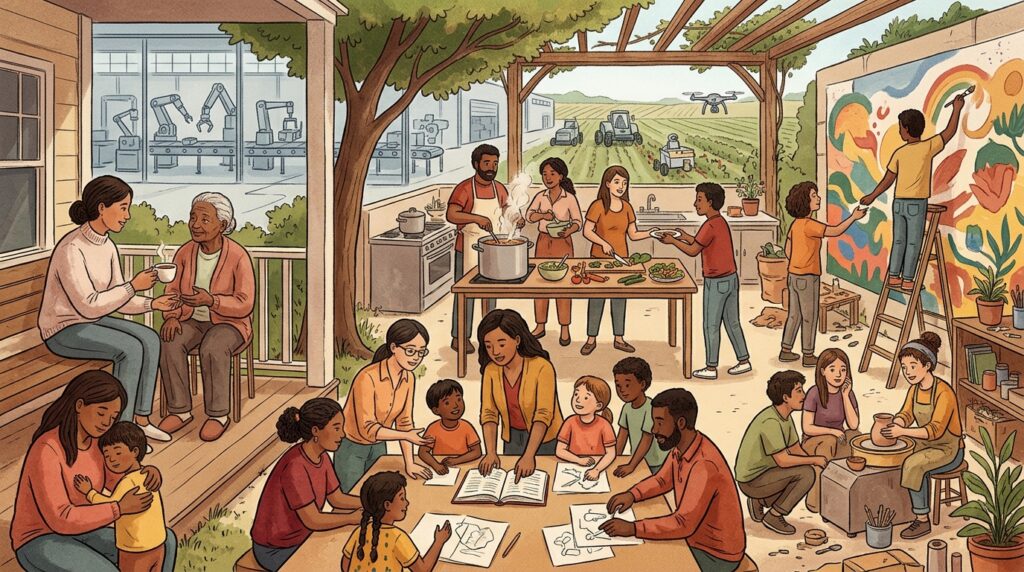
Gates floated the idea that society might deliberately reserve some occupations or activities for people, even if AI eventually becomes capable of doing them. He mentioned areas such as childcare, food preparation, art and sports as examples of work that people may value for reasons beyond efficiency.
This idea raises difficult questions. Who would decide which roles should remain human-led? Would such choices be available to everyone, or only to people who can afford them? And how would societies balance personal freedom, economic productivity and the human value of work?
There are no settled answers. But the proposal highlights a key point: AI disruption is not only about what machines can do. It is also about what people want their communities and lives to look like when technology changes the limits of scarcity and labour.
What Businesses and Workers Should Take From the Warning
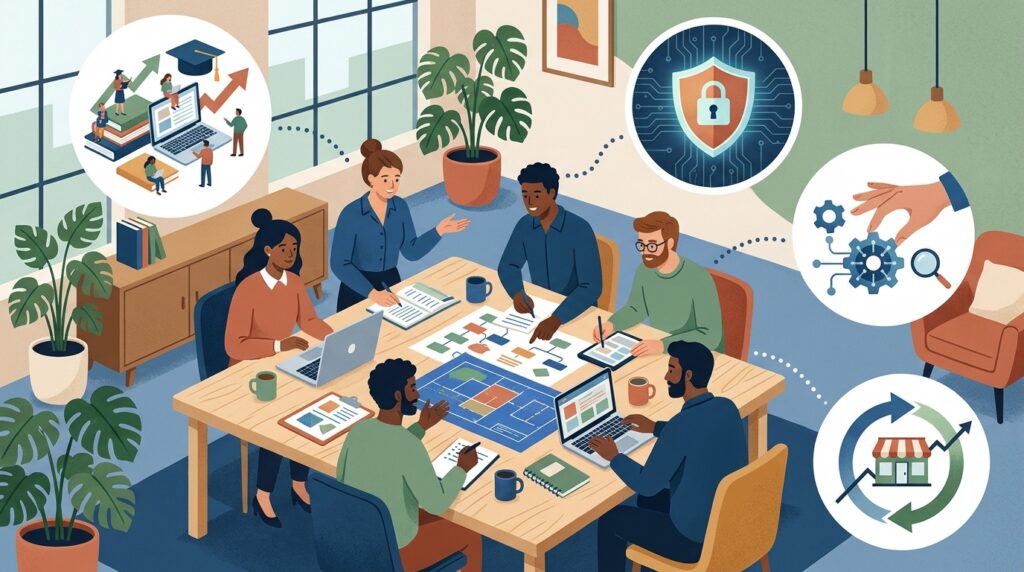
Gates’ remarks are a warning, not a precise forecast of how every industry will evolve. The scale and timing of AI disruption will depend on technical progress, business decisions, public policy and how quickly people can adapt.
Still, businesses can take sensible steps now:
Review tasks, not just job titles. Identify which activities AI may support or automate, and where human judgement remains essential.
Invest in training. Help employees develop skills that complement AI tools and prepare for changing responsibilities.
Set clear safeguards. Establish rules for sensitive data, automated decisions, access permissions and human review.
Plan for security risks. Assess how AI tools could affect cyber exposure, and strengthen monitoring and incident response.
Communicate honestly. Explain how AI adoption may change roles and involve employees in planning where possible.
For workers, it may be useful to build adaptable skills, learn how AI tools function and understand the limits of automated outputs. But responsibility should not fall on individuals alone. Employers and governments will have important roles in making the transition manageable.
A practical response to AI disruption starts with planning rather than panic. Businesses can map vulnerable tasks, identify opportunities to augment employees and establish clear rules for human review. Workers can strengthen adaptable skills and learn to evaluate AI outputs critically. Because AI disruption will not affect every role in the same way, organisations should use evidence from their own operations instead of relying on sweeping predictions.
For practical guidance on adopting AI responsibly, explore Progressive Robot’s AI and machine learning services, which help businesses assess and implement emerging technologies.
The Next Two Decades Will Depend on Choices Made Today
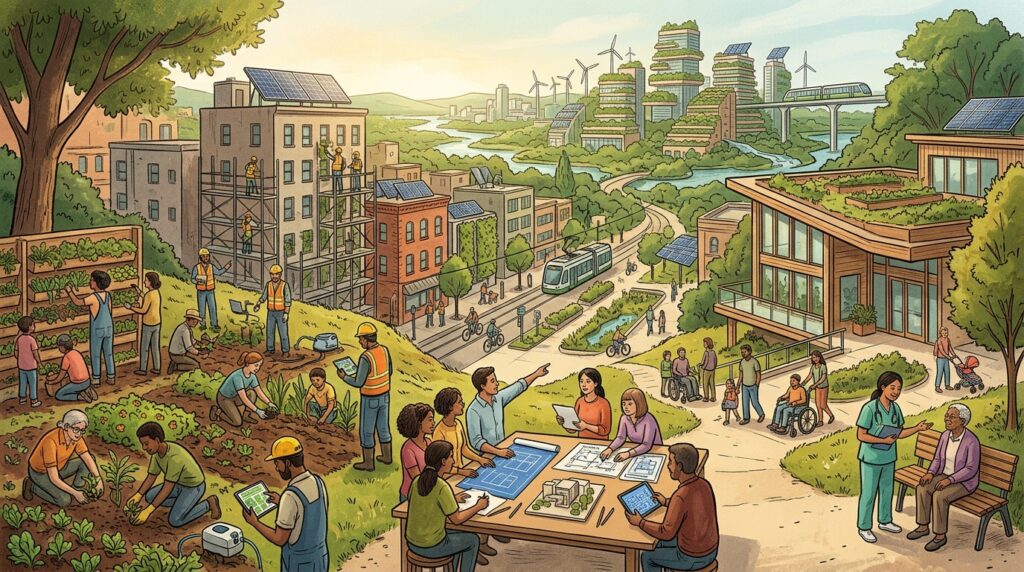
Gates’ central message is that society should prepare for a long period of change rather than assume the transition will be smooth. He believes AI could eventually help reduce shortages and improve lives, but reaching that future may involve serious economic, social and security challenges.
His warning about AI disruption is not a claim that the future is predetermined. It is a call to make deliberate choices: strengthen safety measures, prepare workers, distribute benefits more fairly and ensure that powerful systems remain subject to meaningful human oversight.
The coming years will test whether institutions can respond quickly enough to a technology advancing across many domains at once. AI’s promise is substantial, but so is the responsibility to manage its effects.
Source: The Verge — “Bill Gates says to prepare for 20 years of ‘tumultuous’ AI disruption”
More AI coverage: explore Progressive Robot's AI Models, Tools & Releases hub — hands-on reviews, setup guides and benchmarks in one place.










