
Spotify AI agents are becoming part of the company’s strategy for how people may listen in the future. Rather than requiring users to open Spotify, search for an artist and manually build a playlist, an AI assistant could help them find the right music through a conversation.
That was a central idea in Spotify’s third-quarter earnings discussion, as reported by TechCrunch. Co-CEO Gustav Söderström argued that entertainment is a category where people still want the experience itself—even if an agent can make accessing it easier.
Spotify’s pitch is straightforward: an assistant can handle the small steps involved in finding something to listen to, while Spotify remains the service that actually delivers the audio.
The strategy could matter as AI assistants become more capable of taking actions on users’ behalf. Instead of competing only for attention inside its own app, Spotify wants to be available wherever listeners interact with an agent.
The growth of Spotify AI agents could change how listeners reach their favourite audio content. Rather than navigating several menus, users may rely on Spotify AI agents to interpret requests and find suitable music. For Spotify, making Spotify AI agents work smoothly across assistant platforms could create another route to its catalogue. The success of Spotify AI agents will depend on whether they make listening simpler without losing the personal touch that audiences expect.
Why Music May Be Different From Other Agent Tasks

Söderström’s reasoning is that AI agents are especially useful for tasks people would rather delegate. Entertainment, he suggested, is different: listeners do not necessarily want an agent to replace the pleasure of hearing a song.
A person might ask an assistant to play music for a run, find a podcast related to a topic they have been discussing, or resume an audiobook at the right point. The agent handles the request, but the listener still enjoys the content.
This distinction gives Spotify AI agents a potential advantage. The company does not need to persuade users to surrender their entertainment choices entirely. It can make discovery and playback more convenient while keeping the listening experience central.
The opportunity depends on whether assistants can understand context well enough to make useful recommendations—and whether listeners trust them to choose music that fits their tastes.
The potential value of Spotify AI agents lies in helping people discover entertainment without taking away their enjoyment of it. Well-designed Spotify AI agents could respond to a listener’s mood, activity or preferences. If Spotify AI agents consistently provide useful recommendations, listeners may become more comfortable requesting music through conversations. This gives Spotify AI agents an opportunity to connect convenience with the emotional experience of music.
Spotify Is Integrating With More Than Its Own App
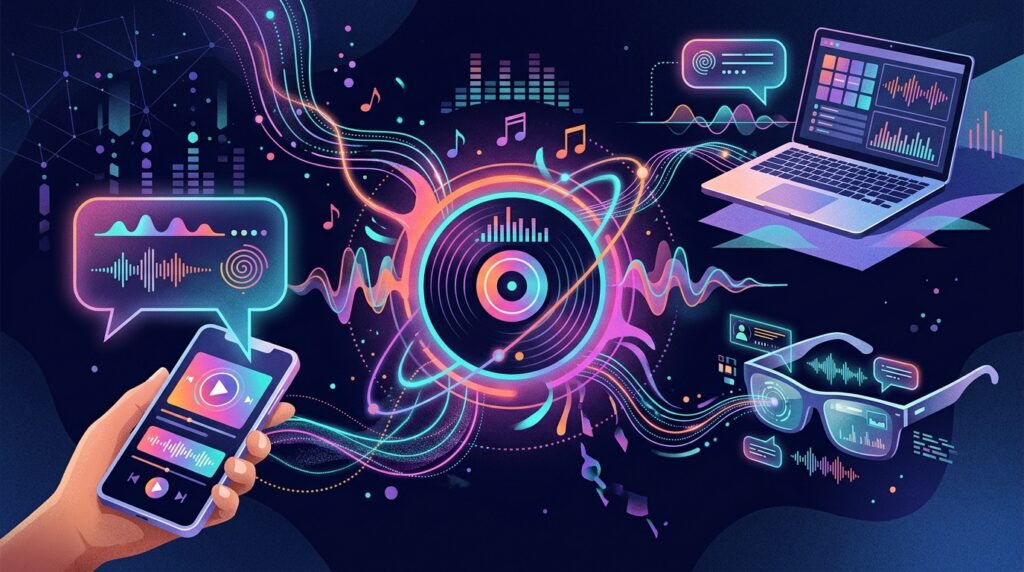
Spotify has already begun pursuing this approach through integrations with external AI tools. TechCrunch reported that Spotify works with ChatGPT and Claude, and was the first music service to integrate with Meta’s Muse assistant.
These integrations point to a shift in how streaming services may compete. In the traditional model, platforms try to keep listeners inside their own apps and interfaces. In an agent-driven model, a user could begin with a request in another service and still end up listening through Spotify.
Söderström described the company’s aim as becoming a media service people can use from different agents. He said Spotify was seeing adoption within these assistants and viewed agent growth as an opportunity rather than simply a threat.
For Spotify AI agents, availability is only the first step. The service also needs to deliver reliable playback, relevant discovery and a smooth hand-off from the assistant to the music. The more naturally Spotify fits into an agent’s workflow, the more likely it is to remain a listener’s preferred destination.
Third-party integrations are important because Spotify AI agents need to be accessible wherever users choose to interact with AI. Wider compatibility could allow Spotify AI agents to handle requests that begin outside Spotify’s own application. The more reliably Spotify AI agents work across supported platforms, the easier it may be for listeners to stay with the service they already use. This makes integration quality a key factor in the future of Spotify AI agents.
Spotify’s Scale Gives It a Strong Starting Point
Spotify’s existing scale gives it a substantial foundation for this strategy. TechCrunch reported that the company reached 788 million monthly active users in the third quarter of 2026 and generated nearly €5 billion in revenue.
A large audience does not guarantee that users will adopt agent-based listening. But Spotify already has a catalogue, recommendation systems and established listening relationships that assistants can potentially draw upon.
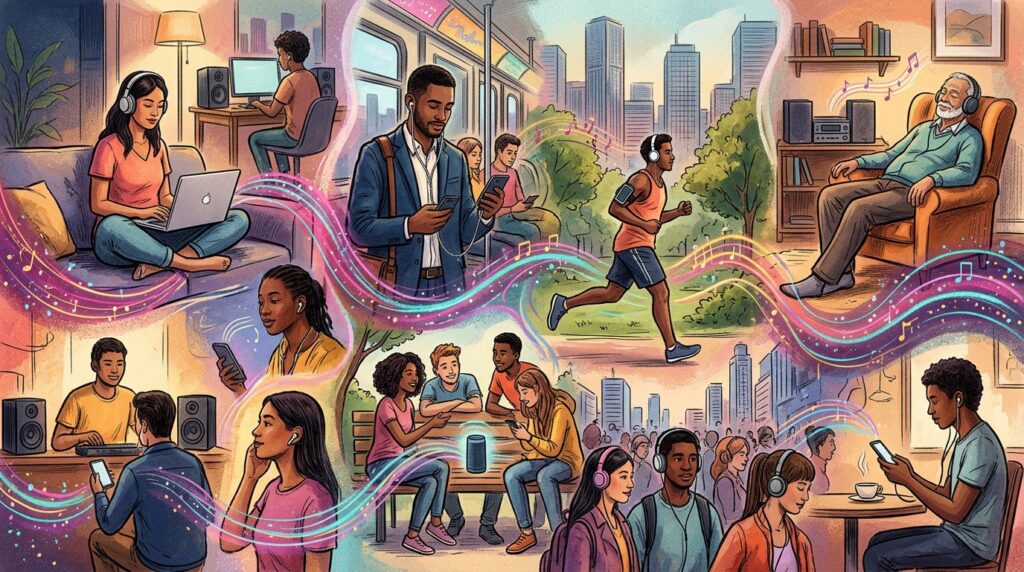
The strategic question is whether Spotify AI agents can bring the service into more moments of everyday life—when someone is exercising, commuting, cooking or looking for a particular podcast—without making the experience feel impersonal.
Spotify’s opportunity is not merely to be one more app an assistant can open. It is to make its music and audio catalogue a natural answer to conversational requests.
Spotify’s established catalogue and audience could support the expansion of Spotify AI agents into everyday listening routines. Existing personalisation features may help Spotify AI agents deliver recommendations that reflect individual tastes. However, Spotify AI agents will still need to demonstrate value beyond the company’s existing app experience. If they provide reliable discovery and playback, Spotify AI agents could help Spotify reach listeners through additional digital entry points.
What This Could Mean for Music Discovery

Agent-driven discovery could make music search more conversational. Instead of selecting genre filters or entering a precise title, someone might describe a mood, an activity or a listening situation. An assistant could interpret that request and find suitable content.
That convenience also creates a challenge: recommendations need to feel personal rather than generic. A playlist that technically matches “relaxing music” may still miss what a particular listener enjoys.
Spotify’s established focus on personalisation could help it compete in this environment, but the quality of the experience will depend on how well assistants communicate user intent and how effectively Spotify responds.
The broader shift is that Spotify AI agents could become a new discovery layer sitting between listeners and streaming libraries. The service that understands the request and plays the right content may gain an advantage, even if the listener never begins their session in its own app.
Conversational discovery could make Spotify AI agents useful when listeners cannot remember a song title or want music for a specific situation. Instead of searching manually, people could ask Spotify AI agents to find audio that matches a mood or activity. Better context handling would help Spotify AI agents distinguish between vague requests and specific preferences. This could make Spotify AI agents a valuable complement to traditional search and curated playlists.
The Challenges: Control, Competition and User Trust

The agent opportunity is not without complications. Listeners may want to know why a particular track was selected, what information an assistant used to make the recommendation and whether their preferences are being shared across services.
There is also a competitive question. If several music platforms are available to an AI assistant, what determines which one it selects? Catalogue availability, subscription status, recommendation quality, integration reliability and commercial arrangements could all influence the outcome.
Spotify must also ensure that an assistant can carry out a request accurately. A misunderstood prompt, an unsuitable playlist or a playback failure could undermine confidence in the experience.
For Spotify AI agents to become a meaningful growth channel, the company will need to make its service easy for assistants to use while preserving a clear and trustworthy experience for listeners.
Trust will influence whether people regularly use Spotify AI agents to choose their entertainment. Listeners need confidence that Spotify AI agents respect their preferences and handle requests reliably. Clear controls and dependable playback will help Spotify AI agents feel like a useful extension of the service rather than an unpredictable intermediary. Ultimately, Spotify AI agents must deliver a consistent experience to earn repeat use.
Why Spotify’s Agent Strategy Matters to the Wider AI Industry

Spotify’s approach reflects a wider industry question: when people increasingly ask AI assistants to perform tasks, which services will those assistants choose to use?
For media platforms, the answer could affect how customers discover content, how brands maintain relationships with audiences and where competition takes place. A service may need to succeed both in its own interface and in the systems that other companies build.
This is relevant beyond music. Businesses developing digital services can consider how their products might be accessed through conversational tools, while still maintaining control over quality, privacy and customer experience.
Progressive Robot discusses practical AI adoption through its AI and related IT services. For organisations exploring agent-based workflows, the broader lesson is to plan not only for people using a product directly, but also for software agents interacting with it on their behalf.
Spotify Wants Agent Growth to Become a Tailwind

Spotify’s current bet is that AI assistants can expand access to its service rather than displace it. Its integrations with ChatGPT, Claude and Meta’s Muse suggest the company is actively exploring that possibility.
The strategy still has to prove itself. Listener adoption, recommendation quality, platform competition and the practical limits of agent integrations will shape whether conversational access becomes a significant part of music streaming.
But Spotify’s logic is clear: people may increasingly delegate the work of finding something to listen to, while still wanting the music itself. If the company can make its catalogue a dependable choice for those requests, Spotify AI agents could help it remain relevant as the interface to digital services changes.
The long-term opportunity for Spotify AI agents is to make Spotify a natural destination when people ask digital assistants for music or other audio. Successful integrations could help Spotify AI agents reach listeners beyond the company’s own interface. Whether Spotify AI agents become a meaningful growth channel will depend on adoption, platform partnerships and the quality of the listening experience. For now, Spotify AI agents represent a strategic effort to stay visible as AI changes how people access digital services.
Source: “Spotify’s current AI bet is about being the music service that agents choose”
More AI coverage: explore Progressive Robot's AI Models, Tools & Releases hub — hands-on reviews, setup guides and benchmarks in one place.










