
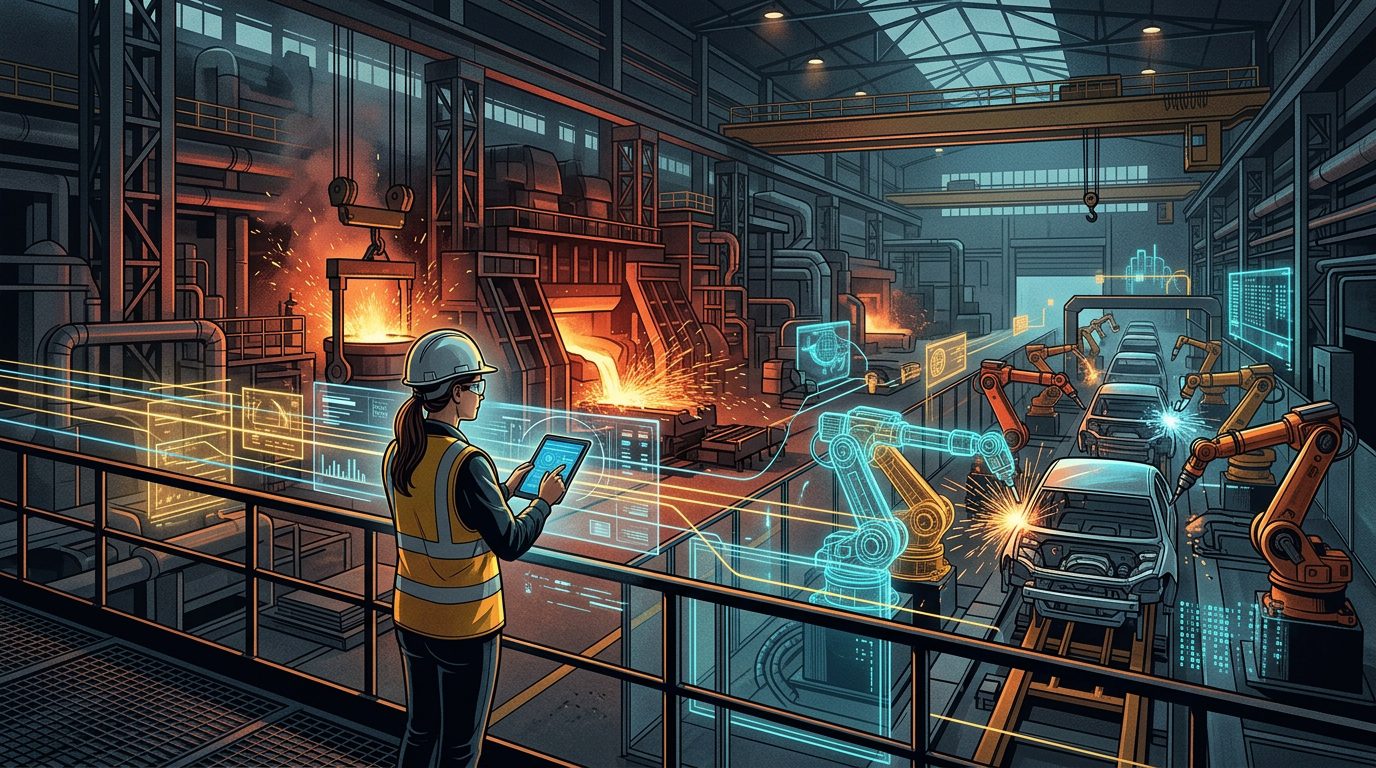
Nvidia CEO Jensen Huang is urging German manufacturers to embrace artificial intelligence, arguing that digital technology will not replace the country’s heavy industry. Instead, he says, AI can help Germany modernise the factories, engineering businesses and industrial expertise that have long underpinned its economy.
Speaking at an investment conference in Berlin alongside German Chancellor Friedrich Merz, Huang presented AI as an opportunity to renew Germany’s industrial model. His message was that the country should apply digital intelligence to its existing strengths rather than assume its future must be built around software alone.
The argument is especially relevant to AI in German manufacturing, where established companies operate complex production lines, develop machinery and supply products to global markets. Huang believes those businesses have valuable assets—industrial experience, engineering knowledge and manufacturing data—that can become more powerful when combined with AI.
The remarks come as Germany looks for ways to revive economic growth and strengthen its industrial competitiveness. High energy costs, global competition and the demands of technological change have put pressure on manufacturers to improve productivity and invest in new capabilities.
According to the Associated Press, Huang stressed that AI should augment traditional manufacturing rather than displace it. His pitch places AI in German manufacturing at the intersection of industrial renewal and the next wave of automation.
To make this transition concrete, AI in German manufacturing needs to be connected to measurable factory outcomes: fewer defects, less downtime, better energy use and faster product development. AI in German manufacturing should not be treated as a generic software upgrade; its value depends on the specific machines, materials and processes a company already operates. For suppliers serving global customers, AI in German manufacturing could also help preserve competitiveness by improving quality and responding more quickly to changing orders.
Why Germany’s Industrial Expertise Matters to AI
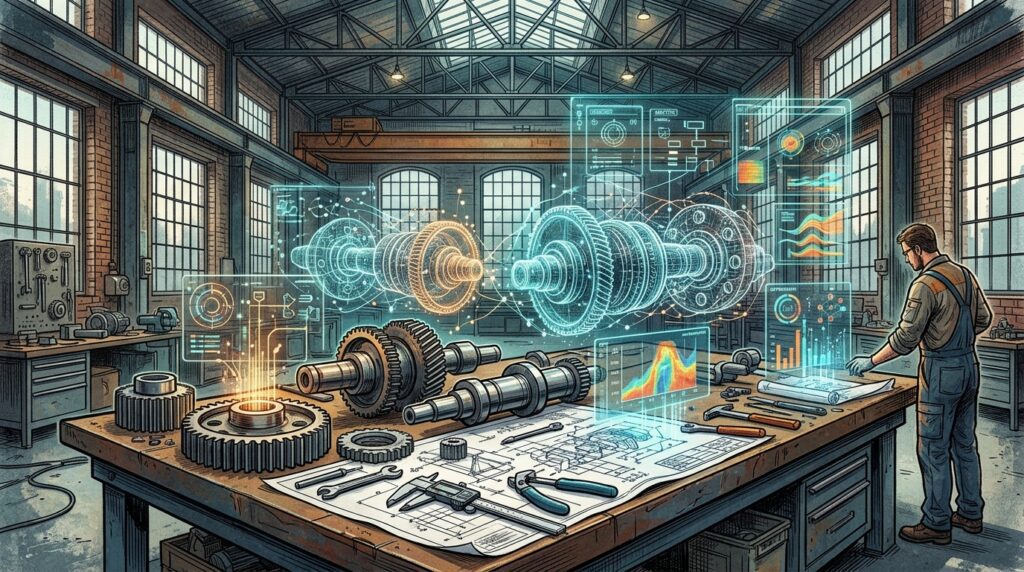
Huang’s case rests on the idea that AI is most valuable when it is applied to real-world expertise. Germany has a deep manufacturing base, including automotive companies, machine builders, specialist suppliers and small and medium-sized industrial businesses often described as the Mittelstand.
These companies possess detailed knowledge of materials, machinery, quality standards and production processes. Their factories also generate data about equipment performance, product defects, energy consumption and workflow bottlenecks.
That makes AI in German manufacturing more than a question of installing chatbots or using AI to write office documents. Industrial AI can analyse production data, help engineers identify faults, support product design and assist with planning and maintenance.
The potential advantage is not simply that AI can process information quickly. It is that AI tools may help manufacturers use knowledge they already possess more effectively.
For smaller firms, the challenge will be making these tools accessible and practical. Many manufacturers cannot afford to rebuild their operations around entirely new technology. AI systems will need to work with existing machinery, software, safety procedures and specialist workflows.
Huang’s message is that Germany should treat its industrial expertise as an asset in the AI era. In that view, AI in German manufacturing is not a replacement for skilled engineers or production workers; it is a way to give them additional capabilities.
This is where AI in German manufacturing can build on existing expertise rather than replace it. Engineers can use AI in German manufacturing to examine production histories, compare design alternatives and detect patterns that are difficult to see manually. Properly implemented, AI in German manufacturing can help specialists make better-informed decisions while keeping their experience central to the process. The strongest projects will pair that expertise with reliable data, clear goals and human review.
AI, Robotics and the Rise of Physical AI
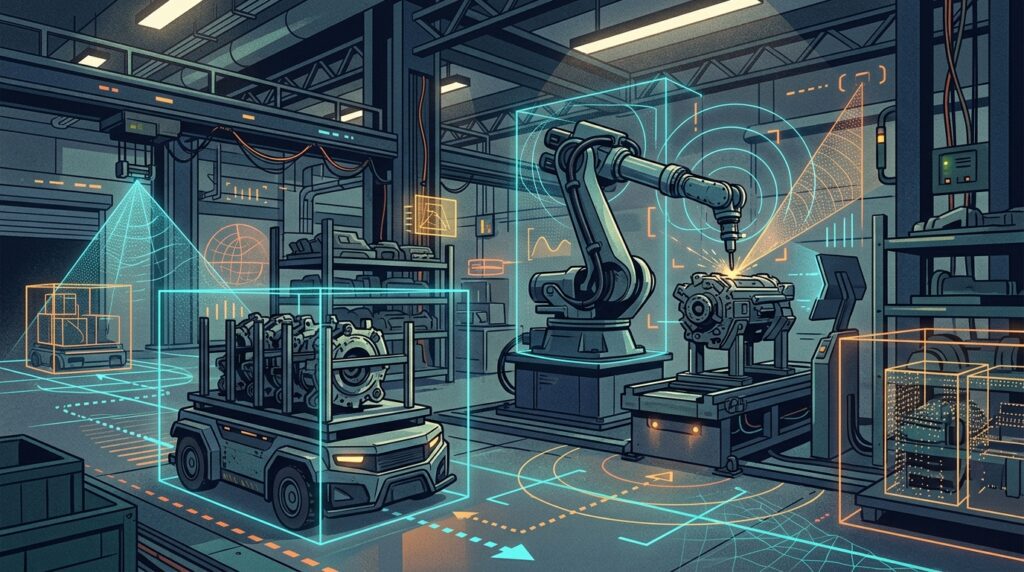
A major part of Nvidia’s industrial strategy involves what the company calls physical AI: AI systems that can perceive, reason about and act in the physical world. That includes robotics, autonomous machines and simulations used to develop and test industrial systems.
This approach could expand the role of automation beyond repetitive tasks. Robots may be able to adapt more effectively to changing environments, while AI-powered simulation can help companies test machine behaviour before deploying it on an actual factory floor.
For AI in German manufacturing, these technologies could support activities such as moving materials, inspecting components, assisting assembly and coordinating production equipment. They may also help companies model factory layouts and identify operational problems before making costly physical changes.
However, intelligent automation is not the same as a fully autonomous factory. Industrial systems must meet demanding requirements for reliability, safety, precision and uptime. A robot that performs well in a demonstration may still need extensive testing before it can be trusted around workers or valuable equipment.
Manufacturers will also need staff who understand both the production process and the digital systems controlling it. AI adoption is therefore likely to change some industrial roles while creating demand for new technical skills.
The long-term opportunity is to connect software intelligence with physical machinery. Huang’s argument is that Germany’s established industrial base gives it a strong position to develop and use these technologies.
Robotics offers another practical route for AI in German manufacturing. AI in German manufacturing can help machines interpret sensor information, adapt to changing tasks and support inspection, handling or assembly. Yet AI in German manufacturing must still meet industrial safety requirements, and systems need rigorous testing before they are trusted in live production. Companies should evaluate each application on reliability and business value, not on how impressive a demonstration looks.
Nvidia and Germany Are Moving Toward Industrial AI Cooperation
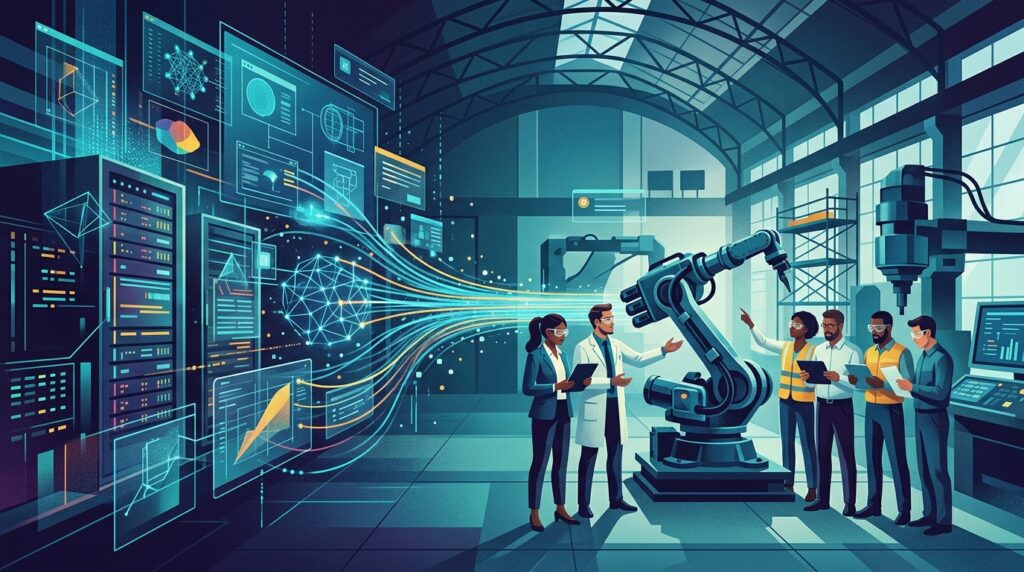
Huang’s remarks came amid broader efforts to deepen cooperation between Nvidia and Germany. Reuters reported that German officials were preparing an AI cooperation agreement with Nvidia focused on industrial applications, including physical AI, robotics and specialised AI models.
A separate Reuters report described a wider investment push in Germany, with Nvidia announcing investments in several German startups and the government seeking to encourage AI adoption across domestic industry.
The cooperation could help companies explore AI systems for factories, robotics and other industrial applications. It also reflects a wider European debate about how to benefit from advanced AI while maintaining control over sensitive data and critical technology.
For AI in German manufacturing, partnerships may provide access to computing infrastructure, software tools and technical expertise that individual companies would struggle to develop independently. But the terms of cooperation will matter: manufacturers will need clarity about data handling, system security, ownership and long-term dependence on technology providers.
The Reuters reporting also points to Germany’s interest in developing its own AI capabilities. That creates a potential tension: industrial companies may want to use Nvidia’s tools, while policymakers seek to preserve European technological sovereignty and avoid excessive reliance on foreign suppliers.
Digital Technology Won’t Make Heavy Industry Obsolete
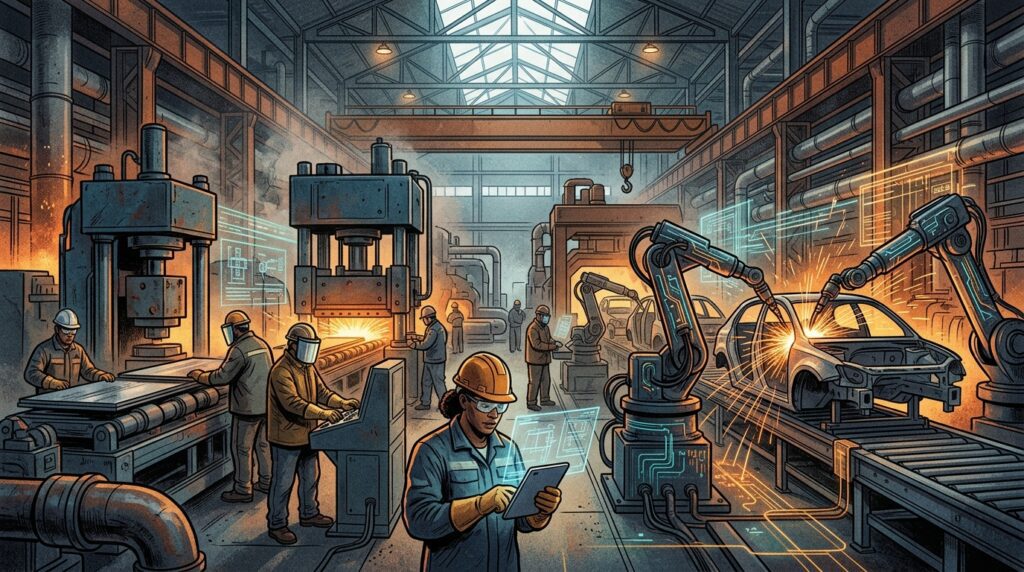
Huang’s central point is that digital technology does not eliminate the need for physical industry. A modern economy still needs vehicles, machinery, building materials, industrial equipment and the infrastructure that supports them.
AI can improve the way these products are designed and manufactured, but it cannot make the physical production process disappear. Factories still require equipment, energy, materials, logistics and people with practical expertise.
This is why AI in German manufacturing should be understood as a transformation of industrial work rather than a wholesale shift away from it. Digital systems may help factories become more efficient, responsive and competitive, while their physical operations remain fundamental.
That distinction also matters for public policy. If Germany wants to maintain its industrial base, it will need to invest not only in AI software and computing but also in energy infrastructure, workforce training, research and modern production facilities.
AI adoption alone will not resolve every challenge facing German industry. Manufacturers must still contend with international competition, operating costs, supply chains and changing demand. Technology can help address some of those pressures, but it is not a substitute for sound industrial strategy.
The Challenges: Costs, Skills, Data and Dependence
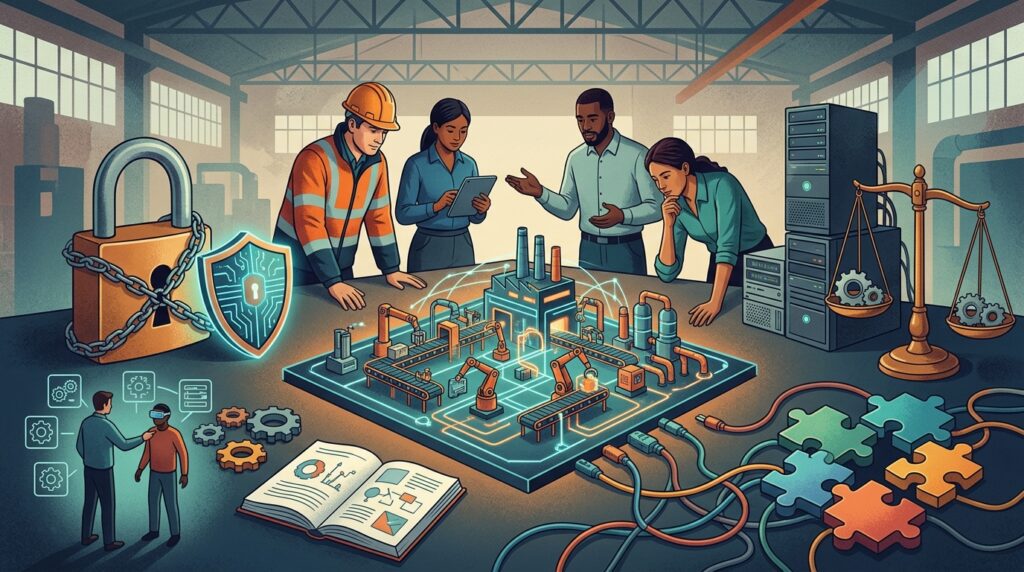
Despite the potential, companies face significant barriers when bringing AI in German manufacturing into daily operations.
First, AI systems must connect with existing production technology. Many factories use machinery and software that were installed years ago, and integrating new tools can be complicated or expensive.
Second, manufacturers need reliable data. AI outputs are only as useful as the information behind them, and industrial data may be fragmented across systems or recorded in inconsistent formats.
Third, businesses must protect sensitive information and operational technology. A cybersecurity incident affecting factory systems could disrupt production or expose valuable engineering knowledge.
Workforce preparation is another key issue. Employees may need training to use AI tools, interpret their outputs and recognise when a system is wrong. Successful implementation requires the involvement of workers who understand the production environment, not just external technology specialists.
Finally, companies must evaluate their dependence on vendors. AI infrastructure and software can be costly, and manufacturers should understand how pricing, data access, support and future compatibility could affect them.
These practical considerations will determine whether AI in German manufacturing becomes a sustained productivity improvement or an expensive experiment.
For many firms, the adoption path for AI in German manufacturing will be gradual. A company might begin with predictive maintenance or quality inspection before expanding AI in German manufacturing into planning and robotics. This staged approach lets teams test whether AI in German manufacturing improves a defined process, train employees and address cybersecurity or integration problems before making a larger investment.
What Huang’s Message Means for Germany’s Industrial Future
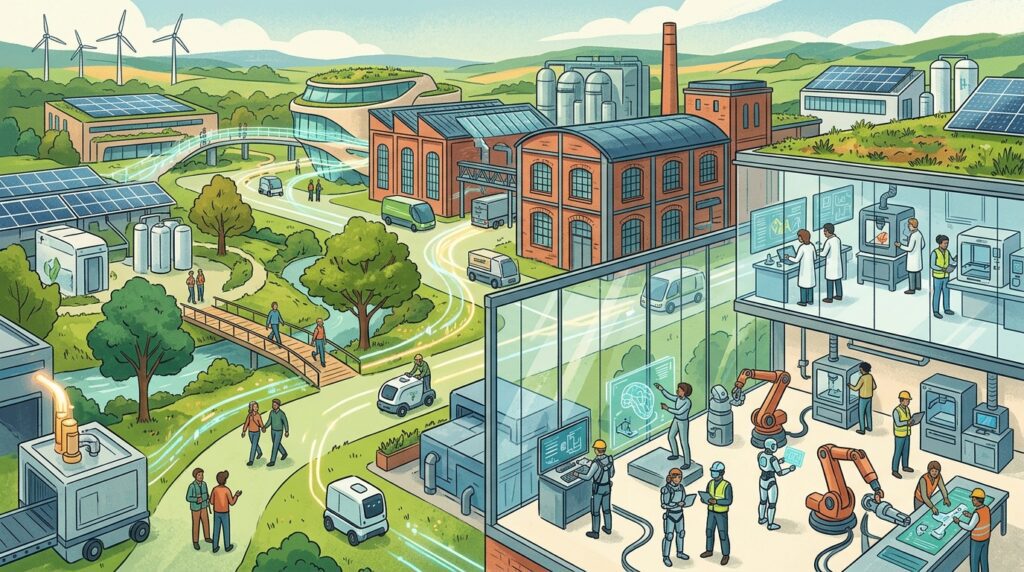
Huang’s appeal to German manufacturers is both a technology pitch and an argument about economic strategy. He is urging the country to treat AI as a tool for strengthening its industrial identity, not as a force that makes manufacturing obsolete.
For Germany, the opportunity is to combine its established engineering capabilities with new advances in AI, simulation and robotics. That could help industrial companies improve productivity, develop products and compete in global markets.
But the outcome will depend on implementation. Businesses need secure systems, dependable data, skilled employees and clear reasons to invest. Policymakers must also balance innovation with data protection, resilience and the desire to build local technological capabilities.
The broader message is that AI in German manufacturing is not simply about adding AI to factories. It is about deciding how digital intelligence can support the physical industries that remain central to Germany’s economy.
Huang believes Germany already has much of the foundation it needs. The challenge now is to apply AI in ways that strengthen that foundation rather than undermine it.
Ultimately, AI in German manufacturing will succeed when it strengthens the industrial capabilities Germany already has. AI in German manufacturing should support skilled people, make production more resilient and create measurable improvements—not become an expensive layer of technology without a clear purpose. The debate over AI in German manufacturing is therefore also a debate about investment, training, infrastructure and the future of Germany’s industrial workforce.
Sources
Reuters: Germany sees up to €4.6 trillion investment potential by 2035
Reuters: Germany to unveil Nvidia AI agreement next week, government sources say
Reuters: Germany plans AI cooperation deal with Nvidia, Handelsblatt says
More AI coverage: explore Progressive Robot's AI Models, Tools & Releases hub — hands-on reviews, setup guides and benchmarks in one place.










