
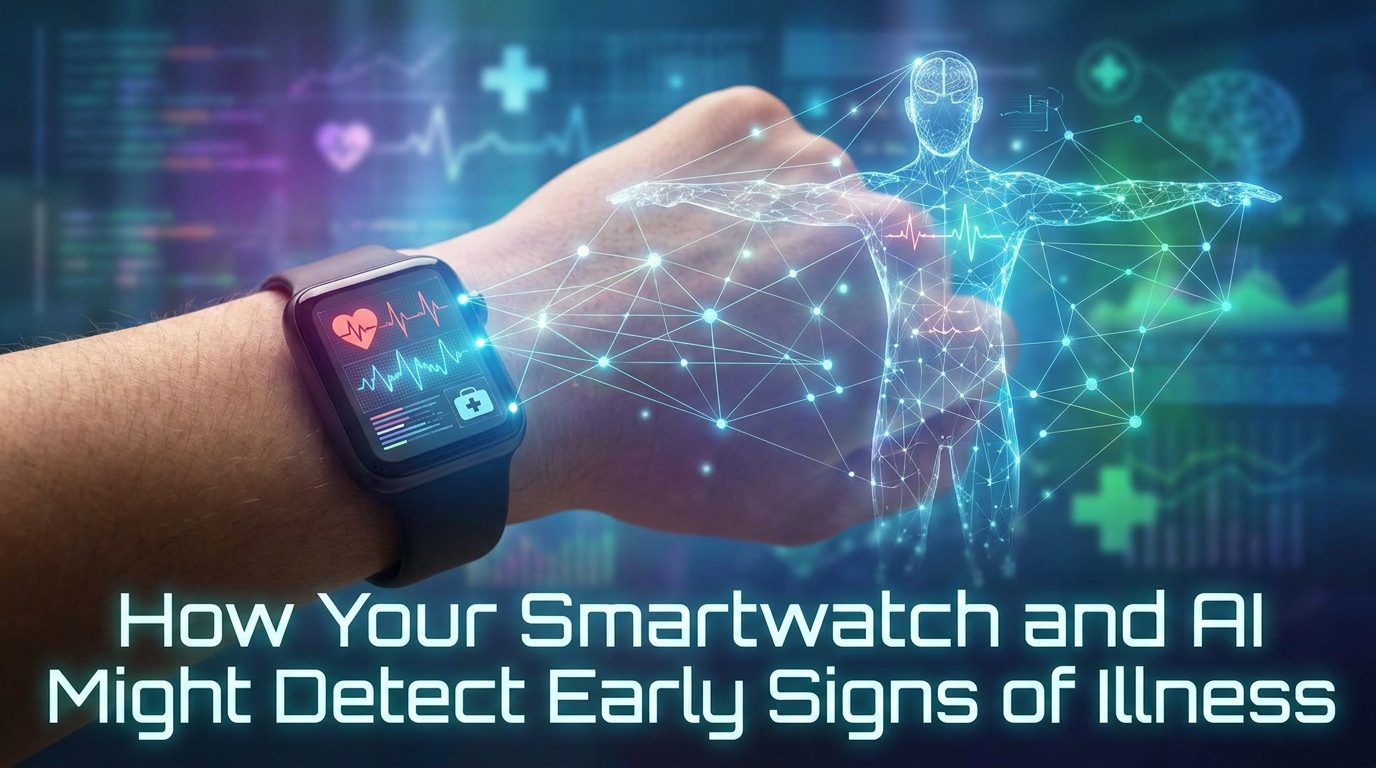
Smartwatches and other wearables have moved far beyond just tracking your steps and heart rate. Many of today’s versions can monitor everything from sleep and skin temperature to respiratory rate, blood oxygen, heart rate variability, and even alert you to possible signs of sleep apnea. But can a smartwatch detect illness before you feel symptoms? The answer is both yes and no — and understanding the difference matters for your health.
Heart Rhythm Detection Is Clinically Proven
One area where they’ve already proved themselves is in detecting atrial fibrillation (AFib), an abnormal heart rhythm associated with an increased risk of stroke. In one Apple Watch study, the device’s irregular pulse alerts were confirmed to be AFib 84 percent of the time. That’s good enough to make it one of the few smartwatch features that many doctors consider clinically useful. Why? Because AFib has a clear physiological signature that’s relatively straightforward for a consumer wearable to detect.
As for other “high-confidence” metrics, well, the list is pretty short. Physicians recently told The New York Times that basic sleep patterns (less so sleep stages) and step counts are also among the more reliable metrics from a medical standpoint. In other words, the clinically useful features are the exception, not the rule.
What This Means for Early Illness Detection
The key insight is that smartwatch detect illness scenarios work best when they flag deviations from your personal baseline rather than trying to diagnose specific diseases. Your watch knows what normal looks like for you — your resting heart rate, your typical sleep duration, your daily step count. When those numbers shift in ways that don’t match your usual routine, that’s when the data becomes worth paying attention to.
This is fundamentally different from trying to use a smartwatch as a diagnostic tool. Instead, think of it as an early warning system that tells you something might be off so you can take action. That distinction matters because it sets realistic expectations about what wearable health technology can and cannot do.
The technology behind a smartwatch detect illness capabilities relies on a combination of optical sensors, electrical sensors, and temperature sensors working together. Optical sensors use green or red LED lights to measure blood flow, while electrical sensors track heart rhythm through the wrists. These sensors collect data continuously, creating a comprehensive health profile that changes over time.
Understanding Sensor Technology
Modern smartwatches use several types of sensors to monitor your health. Optical sensors, also known as photoplethysmography (PPG) sensors, use LED lights to measure blood flow beneath your skin. These sensors flash green or red light onto your wrist and measure how much light is absorbed or reflected by your blood. This measurement allows the watch to calculate your heart rate and heart rate variability with impressive accuracy.
Electrical sensors take a different approach by measuring the electrical activity of your heart directly. This is the same technology used in hospital ECG machines, just miniaturized for your wrist. Some smartwatches offer single-lead ECG readings that can detect atrial fibrillation and other heart rhythm abnormalities. These electrical sensors are particularly valuable because they provide direct measurements rather than estimates based on blood flow patterns.
Temperature sensors are another increasingly common feature in health-focused wearables. By continuously monitoring your skin temperature, these sensors can detect subtle changes that might indicate the onset of illness, the beginning of a fever, or even ovulation in women. When combined with heart rate and heart rate variability data, temperature readings add another dimension to the health monitoring picture.
The Role of Machine Learning
Machine learning algorithms process all the raw sensor data and convert it into meaningful health insights. These algorithms are trained on millions of health records and can recognize patterns that human observers would never notice. For example, a subtle combination of slightly elevated resting heart rate, reduced heart rate variability, and disrupted sleep patterns might indicate the early stages of an infection before you feel any symptoms at all.
The more data a wearable collects about an individual user, the better it becomes at recognizing what’s normal for that person and what represents a genuine deviation. This personalization is crucial because population-level health data can only tell you so much. Your personal baseline is the most important reference point for detecting meaningful health changes.
Building Trust in Wearable Data
As the technology matures, building trust in wearable health data becomes crucial for widespread adoption. Users need to understand both the capabilities and limitations of their devices. This means reading the fine print on what features are medically validated versus wellness-only, and understanding the accuracy rates for each measurement type.
The companies leading this space — Apple, Samsung, Fitbit, Garmin — are investing heavily in clinical research to validate their health features. Some have published peer-reviewed studies showing strong correlation with medical-grade devices for specific metrics like heart rate and blood oxygen. Others remain in the research phase. Users should look for published validation studies before trusting a device’s health alerts.
When a smartwatch detect illness alert comes through, the best response is calm curiosity rather than panic or dismissal. Track the pattern over several days, note any symptoms you may be experiencing, and discuss the data with your healthcare provider. This collaborative approach maximizes the benefit of wearable technology while maintaining appropriate medical oversight.
Knowing the Limits (smartwatch detect illness)
What Actually Works
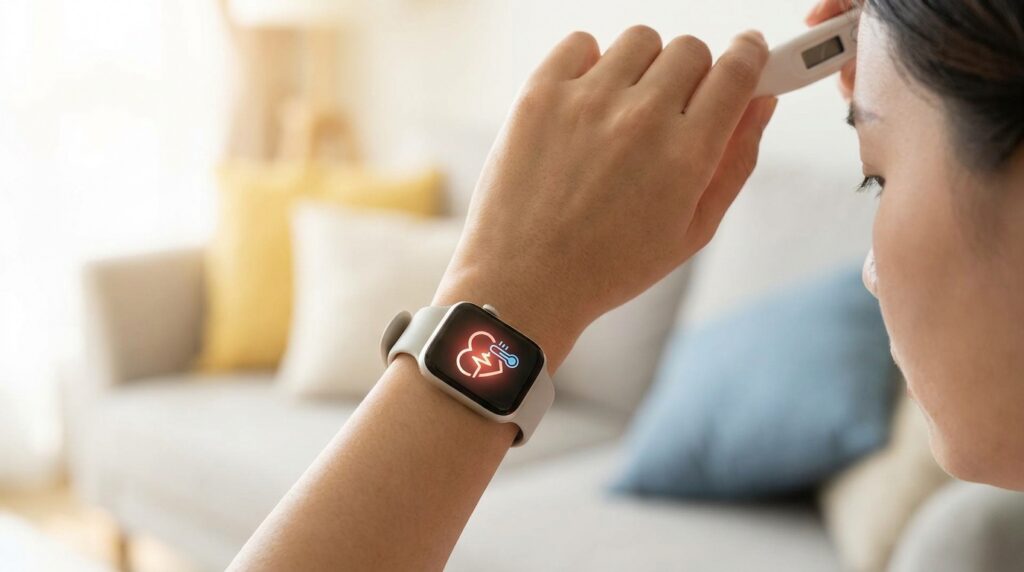
One area where smartwatches have already proved themselves is in detecting atrial fibrillation (AFib), an abnormal heart rhythm associated with an increased risk of stroke. In one Apple Watch study, the device’s irregular pulse alerts were confirmed to be AFib 84 percent of the time. That’s good enough to make it one of the few smartwatch features that many doctors consider clinically useful. Why? Because AFib has a clear physiological signature that’s relatively straightforward for a consumer wearable to detect.
As for other “high-confidence” metrics, well, the list is pretty short. Physicians recently told The New York Times that basic sleep patterns (less so sleep stages) and step counts are also among the more reliable metrics from a medical standpoint. In other words, the clinically useful features are the exception, not the rule.
What This Means for Early Illness Detection
The key insight is that smartwatch detect illness scenarios work best when they flag deviations from your personal baseline rather than trying to diagnose specific diseases. Your watch knows what normal looks like for you — your resting heart rate, your typical sleep duration, your daily step count. When those numbers shift in ways that don’t match your usual routine, that’s when the data becomes worth paying attention to.
This is fundamentally different from trying to use a smartwatch as a diagnostic tool. Instead, think of it as an early warning system that tells you something might be off so you can take action. That distinction matters because it sets realistic expectations about what wearable health technology can and cannot do.
Understanding the Technology Behind Smartwatch Detect Illness Capabilities
Modern smartwatches use several types of sensors to monitor your health. Optical sensors, also known as photoplethysmography (PPG) sensors, use LED lights to measure blood flow beneath your skin. These sensors flash green or red light onto your wrist and measure how much light is absorbed or reflected by your blood. This measurement allows the watch to calculate your heart rate and heart rate variability with impressive accuracy.
Electrical sensors take a different approach by measuring the electrical activity of your heart directly. This is the same technology used in hospital ECG machines, just miniaturized for your wrist. Some smartwatches offer single-lead ECG readings that can detect atrial fibrillation and other heart rhythm abnormalities. These electrical sensors are particularly valuable because they provide direct measurements rather than estimates based on blood flow patterns.
Temperature sensors are another increasingly common feature in health-focused wearables. By continuously monitoring your skin temperature, these sensors can detect subtle changes that might indicate the onset of illness, the beginning of a fever, or even ovulation in women. When combined with heart rate and heart rate variability data, temperature readings add another dimension to the health monitoring picture.
The Role of Machine Learning in Early Detection
Machine learning algorithms process all the raw sensor data and convert it into meaningful health insights. These algorithms are trained on millions of health records and can recognize patterns that human observers would never notice. For example, a subtle combination of slightly elevated resting heart rate, reduced heart rate variability, and disrupted sleep patterns might indicate the early stages of an infection before you feel any symptoms at all.
The more data a wearable collects about an individual user, the better it becomes at recognizing what’s normal for that person and what represents a genuine deviation. This personalization is crucial because population-level health data can only tell you so much. Your personal baseline is the most important reference point for detecting meaningful health changes.
Combining Data for Better Signals (smartwatch detect illness)
What Actually Works
One area where smartwatches have already proved themselves is in detecting atrial fibrillation (AFib), an abnormal heart rhythm associated with an increased risk of stroke. In one Apple Watch study, the device’s irregular pulse alerts were confirmed to be AFib 84 percent of the time. That’s good enough to make it one of the few smartwatch features that many doctors consider clinically useful. Why? Because AFib has a clear physiological signature that’s relatively straightforward for a consumer wearable to detect.
As for other “high-confidence” metrics, well, the list is pretty short. Physicians recently told The New York Times that basic sleep patterns (less so sleep stages) and step counts are also among the more reliable metrics from a medical standpoint. In other words, the clinically useful features are the exception, not the rule.
What This Means for Early Illness Detection
The key insight is that smartwatch detect illness scenarios work best when they flag deviations from your personal baseline rather than trying to diagnose specific diseases. Your watch knows what normal looks like for you — your resting heart rate, your typical sleep duration, your daily step count. When those numbers shift in ways that don’t match your usual routine, that’s when the data becomes worth paying attention to.
This is fundamentally different from trying to use a smartwatch as a diagnostic tool. Instead, think of it as an early warning system that tells you something might be off so you can take action. That distinction matters because it sets realistic expectations about what wearable health technology can and cannot do.
Understanding the Technology Behind Smartwatch Detect Illness Capabilities
Modern smartwatches use several types of sensors to monitor your health. Optical sensors, also known as photoplethysmography (PPG) sensors, use LED lights to measure blood flow beneath your skin. These sensors flash green or red light onto your wrist and measure how much light is absorbed or reflected by your blood. This measurement allows the watch to calculate your heart rate and heart rate variability with impressive accuracy.
Electrical sensors take a different approach by measuring the electrical activity of your heart directly. This is the same technology used in hospital ECG machines, just miniaturized for your wrist. Some smartwatches offer single-lead ECG readings that can detect atrial fibrillation and other heart rhythm abnormalities. These electrical sensors are particularly valuable because they provide direct measurements rather than estimates based on blood flow patterns.
Temperature sensors are another increasingly common feature in health-focused wearables. By continuously monitoring your skin temperature, these sensors can detect subtle changes that might indicate the onset of illness, the beginning of a fever, or even ovulation in women. When combined with heart rate and heart rate variability data, temperature readings add another dimension to the health monitoring picture.
The Role of Machine Learning in Early Detection
Machine learning algorithms process all the raw sensor data and convert it into meaningful health insights. These algorithms are trained on millions of health records and can recognize patterns that human observers would never notice. For example, a subtle combination of slightly elevated resting heart rate, reduced heart rate variability, and disrupted sleep patterns might indicate the early stages of an infection before you feel any symptoms at all.
The more data a wearable collects about an individual user, the better it becomes at recognizing what’s normal for that person and what represents a genuine deviation. This personalization is crucial because population-level health data can only tell you so much. Your personal baseline is the most important reference point for detecting meaningful health changes.
The Role of AI in Health Monitoring (smartwatch detect illness)
What AI Can Do Right Now
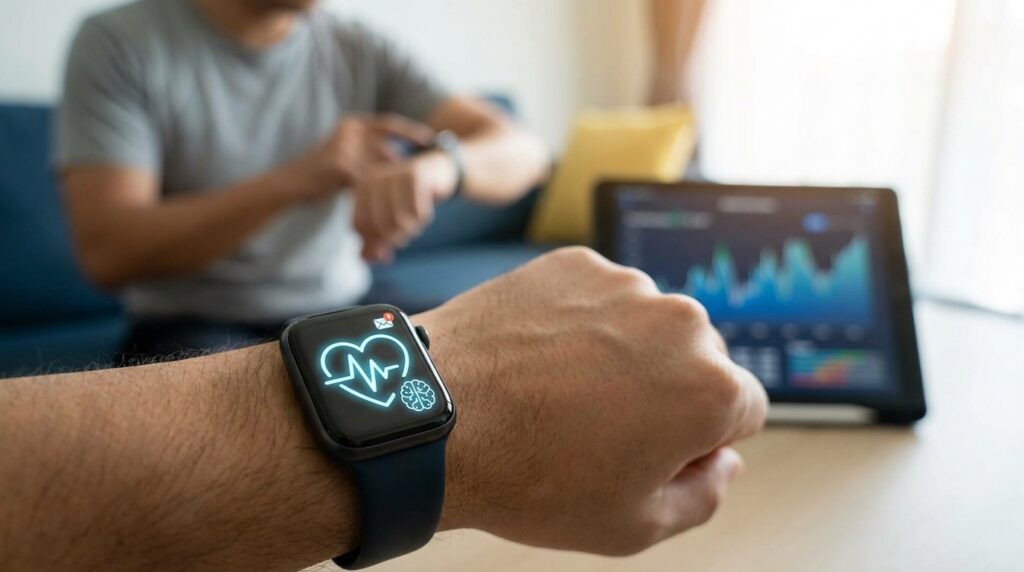
Current AI-powered health features on wearables can track trends in your heart rate, sleep patterns, and activity levels. Machine learning models analyze these patterns to identify deviations from your personal baseline. When multiple signals shift simultaneously — elevated resting heart rate, reduced sleep quality, lower activity levels — the system can flag this as a potential health concern.
AI is the glue that makes it possible for a smartwatch detect illness trends that would be invisible to any single metric. Machine learning models trained on millions of health records can recognize subtle multi-signal patterns that human observers would miss entirely. This is particularly valuable for detecting conditions that develop gradually, like the onset of diabetes or thyroid disorders.
What AI Cannot Do
Despite the hype, AI in wearables cannot diagnose specific diseases. An elevated resting heart rate could indicate infection, stress, dehydration, or poor sleep. Without additional clinical context, the device cannot determine which cause is responsible. This is why wearable health alerts should always be followed by professional medical evaluation, not self-diagnosis.
The clinical validation for a smartwatch detect illness system is still evolving. Some features like ECG and blood oxygen monitoring have received FDA clearance as medical devices. Others remain classified as wellness tools. Users should understand which features have medical validation and which are informational only, and never ignore medical advice based solely on wearable device alerts.
Real-World Applications
Several real-world applications demonstrate the potential of AI-powered health monitoring. People with chronic conditions like diabetes or heart disease have reported that their wearables helped them detect early warning signs that led to timely medical intervention. These success stories, while encouraging, represent best-case scenarios and should not create unrealistic expectations for all users.
Understanding how a smartwatch detect illness works starts with recognizing what these devices can and cannot measure. Modern wearables track heart rate, heart rate variability, blood oxygen saturation, skin temperature, sleep stages, and physical activity. Some newer models also monitor respiratory rate and electrodermal activity. Each of these metrics can change when your body is fighting an infection.
The Future of Wearable Health Detection (smartwatch detect illness)
Where Technology Is Heading
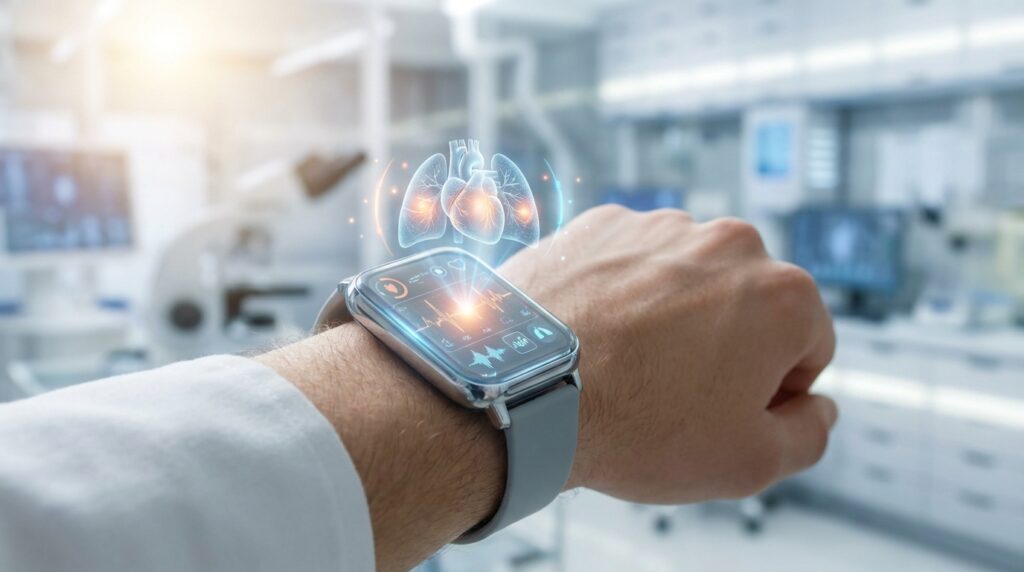
Several trends suggest wearable health detection will improve dramatically in the coming years. Sensor technology is becoming more sophisticated, with manufacturers developing smaller, more accurate devices that can measure additional biomarkers. The integration of AI and machine learning is making these devices smarter at recognizing patterns that indicate health concerns.
As sensors become more sophisticated and AI models more powerful, the ability to smartwatch detect illness earlier and more accurately will only improve. The next generation of wearables may track biomarkers in sweat and interstitial fluid, opening entirely new frontiers in preventive health. This could include glucose monitoring, lactate levels, and even early detection of certain cancers through volatile organic compounds.
Regulatory Landscape
The regulatory landscape for a smartwatch detect illness capability is evolving. Some devices have received FDA clearance for specific health features like ECG and blood oxygen monitoring. Others remain classified as wellness tools. Understanding which features have medical validation helps users know which alerts to take seriously and which are informational only.
As a smartwatch detect illness tool improves, it will likely be integrated into broader digital health platforms. Your wearable data could feed into electronic health records, giving your doctor a continuous stream of information between visits. This could transform preventive healthcare from periodic snapshots to continuous monitoring, enabling earlier intervention and better health outcomes.
Privacy and Security Considerations
Privacy concerns accompany any smartwatch detect illness system that collects continuous health data. Users should understand who accesses their health information, how it’s stored, and whether it’s shared with third parties. Choose devices from companies with transparent privacy policies and consider whether the health benefits outweigh the privacy trade-offs. For more information on data privacy best practices, visit the Electronic Frontier Foundation’s privacy resources.
Practical Tips for Using Your Smartwatch for Health Monitoring (smartwatch detect illness)
Establish a Solid Baseline
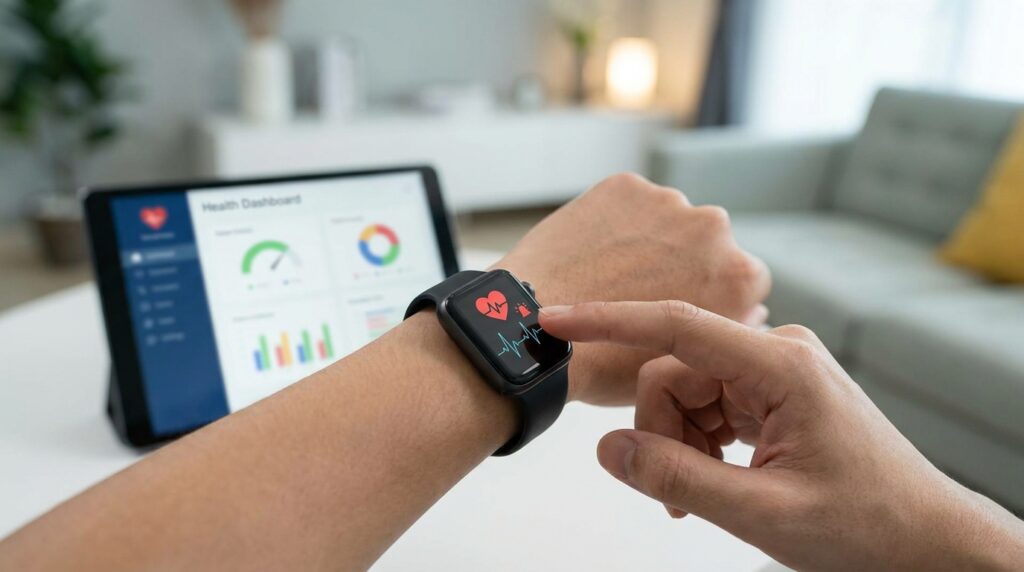
Give your watch at least two to four weeks of consistent wear before relying on its data for health insights. This baseline period allows the device to learn your normal patterns — your typical resting heart rate, sleep duration, and daily activity levels. The more data it collects, the better it can detect meaningful deviations from your personal norm.
When evaluating whether your smartwatch detect illness alerts are worth acting on, look for consistency. One isolated alert is noise. Three alerts across different metrics over consecutive days is a pattern worth discussing with your healthcare provider. For more tips on getting started with health monitoring, see our digital transformation consulting page.
Understand the Limitations
Not all smartwatches offer the same health monitoring capabilities. Apple Watch, Samsung Galaxy Watch, and Fitbit devices all have different sensor suites and algorithms. Some have FDA-cleared features like ECG monitoring, while others remain classified as wellness tools. Understanding which features have medical validation helps you know which alerts to take seriously and which are informational only.
Research published in the New England Journal of Medicine has validated some smartwatch health features, but many claims remain unproven. Always cross-reference wearable data with professional medical advice rather than making health decisions based solely on your device’s readings.
Protect Your Health Data Privacy
When you use a smartwatch detect illness system, you’re generating continuous health data that has significant privacy implications. Review your device manufacturer’s privacy policy carefully. Understand who accesses your health information, how it’s stored, and whether it’s shared with third parties like insurance companies or advertisers. Choose devices from companies with transparent data practices and consider the privacy trade-offs against the health benefits.
Conclusion (smartwatch detect illness)
The Bottom Line
Smartwatches and AI-powered wearables represent a genuine advance in personal health monitoring, but they are not diagnostic tools. The ability to smartwatch detect illness patterns is real and improving, but the technology cannot replace clinical evaluation. Use your device as a complementary tool that alerts you to changes worth discussing with your healthcare provider.
What to Do With Your Data
If your smartwatch flags unusual readings, don’t panic — but don’t ignore them either. Track the pattern over several days. If multiple metrics shift simultaneously, schedule an appointment with your doctor. Bring your wearable data to the appointment, but remember that it’s one piece of information, not a diagnosis. For more insights on wearable health technology, check out our guide on AI and healthcare monitoring.
Looking Forward
The future of wearable health detection is promising. As sensors become more sophisticated and AI models improve, the accuracy of smartwatch detect illness capabilities will only increase. The key is maintaining realistic expectations today while staying informed about advances in this rapidly evolving field. Read more about the latest developments in smartwatch health features from Healthline to stay current on what’s possible.










