
AI Technical Skills have become one of the most important topics in modern software engineering and technology leadership. As large language models, AI coding assistants, autonomous agents, and intelligent development platforms continue transforming the software industry, many professionals wonder which technical abilities will remain valuable in the years ahead. While artificial intelligence now generates code, writes documentation, automates testing, analyzes infrastructure, and accelerates development workflows, the assumption that technical expertise is becoming obsolete is both inaccurate and potentially harmful.
Throughout every major technological revolution, automation has changed the nature of work rather than eliminating the need for expertise. Artificial intelligence follows the same pattern. Routine implementation becomes easier, but strategic thinking, architectural judgment, systems design, debugging complex failures, cybersecurity reasoning, business understanding, and engineering leadership become increasingly important. In many cases, AI actually amplifies the value of experienced professionals because organizations need individuals capable of directing, validating, integrating, governing, and improving intelligent systems.
One of the most common misconceptions surrounding AI-assisted development is the belief that coding itself represents the primary value of software engineers. Explore enterprise AI engineering resources through the OpenAI Documentation. In reality, writing code is only one component of professional software engineering. Engineers also solve business problems, design scalable systems, manage technical risk, coordinate teams, evaluate trade-offs, optimize performance, ensure security, maintain reliability, and support long-term product evolution. Artificial intelligence may accelerate implementation, but it does not remove the need for these broader engineering responsibilities.
The growing adoption of AI coding assistants further reinforces this trend. As code generation becomes increasingly accessible, organizations place greater emphasis on professionals who understand why software should be built in a particular way rather than simply how to produce syntax. Engineers capable of designing resilient architectures, identifying flawed assumptions, evaluating AI-generated outputs, and making informed technical decisions become even more valuable in AI-driven environments.
The same principle applies beyond software engineering. Technical professionals across cybersecurity, cloud computing, DevOps, infrastructure management, networking, data engineering, and machine learning increasingly collaborate with AI systems instead of competing against them. AI accelerates repetitive activities while experienced practitioners provide context, judgment, creativity, governance, and accountability.
Technical education is therefore evolving. Instead of focusing exclusively on programming languages or memorizing APIs, future learning increasingly emphasizes durable competencies that remain valuable regardless of technological change. These competencies include systems thinking, architectural reasoning, critical analysis, communication, problem solving, leadership, collaboration, security awareness, and continuous learning.
Organizations similarly benefit from investing in AI Technical Skills rather than viewing artificial intelligence solely as a workforce reduction strategy. Companies that combine intelligent automation with highly skilled professionals consistently outperform organizations attempting to replace engineering expertise with AI-generated outputs alone.
This comprehensive guide explores AI Technical Skills, examines which competencies remain durable during AI-assisted development, explains how technical training is evolving, evaluates implementation challenges, and analyzes how engineers can prepare for the future of intelligent software development.
Key Takeaways
- AI Technical Skills remain essential despite rapid advances in AI-assisted development.
- Artificial intelligence changes software engineering rather than replacing it.
- Durable competencies become increasingly valuable.
- Systems thinking and architecture remain human-led activities.
- Technical training is evolving alongside AI.
- Human judgment remains critical for enterprise software.
- Continuous learning becomes a competitive advantage.
- AI amplifies experienced professionals instead of eliminating expertise.
What Are AI Technical Skills?
AI Technical Skills are the durable engineering competencies that allow professionals to effectively design, supervise, validate, integrate, govern, and improve artificial intelligence within real-world software systems.
These skills extend far beyond programming syntax.
They include:
- Systems thinking.
- Software architecture.
- Engineering judgment.
- Technical communication.
- Security awareness.
- Infrastructure design.
- Problem solving.
- Business understanding.
Rather than competing directly with AI, these capabilities enable professionals to maximize AI’s effectiveness while minimizing operational risk.
Why AI Changes Skills Instead of Eliminating Them
Artificial intelligence automates many repetitive implementation activities.
However, automation rarely eliminates entire professions.
Instead, it shifts professional focus toward higher-value responsibilities.
Software engineers increasingly spend more time:
- Designing systems.
- Reviewing AI outputs.
- Solving complex problems.
- Leading technical decisions.
- Improving architecture.
- Coordinating teams.
- Managing technical risk.
- Driving innovation.
Consequently, AI Technical Skills become increasingly valuable rather than less important.
The Rise of AI-Assisted Development
Modern software development increasingly combines:
- Large language models.
- AI coding assistants.
- Intelligent testing.
- Automated documentation.
- DevOps automation.
- Infrastructure optimization.
- Security analysis.
- Workflow intelligence.
Developers no longer work without AI.
Instead, they collaborate with increasingly capable intelligent systems throughout the software development lifecycle.
How AI Technical Skills Work
AI Technical Skills operate differently from traditional programming knowledge because they focus on decision-making rather than implementation alone. While artificial intelligence increasingly generates code, explains APIs, creates documentation, writes unit tests, and automates repetitive engineering tasks, it still depends heavily on human direction, validation, architectural reasoning, and business context. The professionals who consistently create the greatest value are those who understand entire systems instead of individual coding tasks.
Rather than asking engineers to compete with AI in writing syntax, organizations increasingly expect professionals to supervise intelligent systems, evaluate AI-generated solutions, identify hidden risks, design scalable architectures, and ensure software aligns with long-term business objectives.
This shift explains why durable competencies remain central to AI-assisted development.
Systems Thinking
One of the most valuable AI Technical Skills is systems thinking.
Artificial intelligence often solves individual problems effectively.
However, enterprise software rarely consists of isolated components.
Modern applications include:
- APIs.
- Databases.
- Cloud infrastructure.
- Security controls.
- Networking.
- Identity systems.
- Monitoring platforms.
- Distributed services.
Changing one component frequently affects many others.
Engineers using systems thinking understand:
- Dependencies.
- Trade-offs.
- Scalability.
- Reliability.
- Performance.
- Operational complexity.
- Business impact.
- Long-term maintenance.
AI may recommend technically correct solutions that introduce broader architectural problems.
Systems thinkers identify these issues before they become production failures.
Software Architecture
Software architecture continues becoming more important—not less—as AI capabilities improve.
AI generates implementation.
Architects design systems.
Architecture responsibilities include:
- Selecting technologies.
- Designing service boundaries.
- Managing scalability.
- Planning resilience.
- Optimizing infrastructure.
- Balancing trade-offs.
- Supporting future growth.
- Managing technical debt.
These decisions require organizational understanding that extends beyond code generation.
Consequently, architecture remains one of the most durable AI Technical Skills.
Critical Thinking
Artificial intelligence confidently produces incorrect answers.
Large language models occasionally:
- Hallucinate APIs.
- Misunderstand requirements.
- Recommend insecure implementations.
- Produce inefficient algorithms.
- Ignore organizational constraints.
- Misinterpret business logic.
- Overlook regulatory requirements.
- Invent unsupported functionality.
Critical thinking allows engineers to evaluate outputs rather than accepting AI responses automatically.
Future engineering success increasingly depends on validating AI instead of simply using AI.
Technical Communication
Engineering involves constant communication.
Developers explain:
- Architecture.
- Risks.
- Requirements.
- Technical trade-offs.
- Performance.
- Security.
- Roadmaps.
- Operational impacts.
Artificial intelligence assists documentation.
However, technical leaders still translate engineering decisions into business language understandable by executives, customers, stakeholders, and cross-functional teams.
Communication therefore remains a highly durable professional capability.
Problem Decomposition
Complex engineering rarely involves solving one large problem.
Successful engineers divide challenges into manageable components.
This process includes:
- Identifying assumptions.
- Separating dependencies.
- Prioritizing risks.
- Evaluating alternatives.
- Organizing implementation.
- Managing complexity.
- Validating outcomes.
- Measuring success.
AI performs substantially better when guided through well-structured problem decomposition.
Professionals capable of organizing complexity therefore maximize AI productivity.
Technical Judgment
Engineering constantly requires balancing competing priorities.
Examples include:
- Performance versus cost.
- Security versus usability.
- Simplicity versus flexibility.
- Innovation versus stability.
- Speed versus quality.
- Automation versus oversight.
- Scalability versus maintainability.
- Features versus technical debt.
Artificial intelligence can analyze alternatives.
Technical judgment determines which option best supports organizational goals.
This capability develops through experience rather than memorization.
Continuous Learning
Technology evolves continuously.
Programming languages.
Frameworks.
Cloud platforms.
Cybersecurity.
Artificial intelligence.
Developer tools.
Infrastructure.
Every discipline changes rapidly.
Consequently, continuous learning becomes one of the most important AI Technical Skills.
Rather than mastering one programming language permanently, professionals increasingly master learning itself.
Organizations similarly invest heavily in continuous education because technical capabilities evolve faster than traditional training programs.
Business Understanding
Software exists to solve business problems.
Engineers increasingly collaborate with:
- Product managers.
- Marketing.
- Finance.
- Customer support.
- Operations.
- Executive leadership.
- Legal teams.
- Compliance specialists.
Understanding business objectives enables professionals to guide AI toward solutions creating measurable organizational value.
AI generates implementations.
Business-aware engineers ensure those implementations solve the correct problems.
Future-Proof Technical Training
Technical education increasingly emphasizes capabilities remaining valuable regardless of technological change.
Modern AI Technical Skills education focuses on:
- Architecture.
- Distributed systems.
- Security.
- Systems thinking.
- Cloud computing.
- Problem solving.
- Communication.
- Responsible AI.
Instead of competing against AI, future professionals learn how to collaborate with increasingly intelligent development platforms.
Challenges and Limitations of AI Technical Skills
Although AI Technical Skills are becoming increasingly valuable, developing and maintaining these competencies presents significant challenges for both individuals and organizations. Artificial intelligence dramatically accelerates software development, but it also creates new risks that can weaken engineering expertise if professionals become overly dependent on automation. Rather than eliminating the need for technical training, AI-assisted development increases the importance of disciplined learning, engineering judgment, continuous education, and responsible technology adoption.
Many organizations mistakenly assume that widespread access to AI coding assistants automatically creates better engineers. In reality, artificial intelligence amplifies existing capabilities. Experienced engineers often become significantly more productive because they understand how to guide, evaluate, and refine AI outputs. Less experienced developers, however, may struggle to recognize incorrect recommendations, architectural flaws, security vulnerabilities, or long-term maintenance concerns.
For this reason, AI Technical Skills require deliberate investment throughout an engineer’s career.
Overreliance on Artificial Intelligence
One of the most significant risks involves excessive dependence on AI-generated solutions.
Modern AI systems can rapidly generate:
- Source code.
- Unit tests.
- Documentation.
- Infrastructure configurations.
- Database queries.
- Deployment scripts.
- API integrations.
- Technical explanations.
While these capabilities improve productivity, relying exclusively on AI without understanding the underlying technology gradually weakens engineering expertise.
Professionals who consistently accept AI outputs without verification may lose confidence in:
- Manual debugging.
- Algorithm design.
- Performance optimization.
- System architecture.
- Security reasoning.
- Infrastructure management.
- Root cause analysis.
- Technical decision-making.
AI should accelerate expertise rather than replace learning.
Skill Atrophy
Automation has historically reduced practice in routine tasks.
Artificial intelligence creates similar challenges.
Developers who rarely:
- Write algorithms.
- Design database schemas.
- Configure infrastructure.
- Troubleshoot failures.
- Review architecture.
- Optimize queries.
- Debug production systems.
- Build software manually.
may gradually experience skill atrophy.
Organizations therefore encourage engineers to continue strengthening core technical competencies even while benefiting from AI assistance.
Maintaining strong AI Technical Skills requires balancing automation with deliberate practice.
Hallucinations and Incorrect Recommendations
Large language models occasionally produce highly convincing but incorrect information.
Examples include:
- Nonexistent APIs.
- Incorrect library usage.
- Insecure authentication.
- Inefficient algorithms.
- Outdated framework guidance.
- Unsupported cloud services.
- Invalid configuration settings.
- Incorrect technical assumptions.
These hallucinations become particularly dangerous when developers assume confident responses are automatically accurate.
Human validation remains essential.
AI Technical Skills therefore include the ability to critically evaluate AI-generated recommendations rather than accepting them unconditionally.
Security Risks
Artificial intelligence introduces additional cybersecurity concerns.
Developers may unintentionally expose:
- Source code.
- API keys.
- Customer information.
- Proprietary algorithms.
- Infrastructure configurations.
- Internal documentation.
- Business logic.
- Enterprise architecture.
Organizations implementing AI-assisted development establish strict governance regarding which information may be shared with external AI platforms.
Security awareness remains one of the most important AI Technical Skills within enterprise environments.
Education Challenges
Traditional technical education often emphasizes memorization.
Artificial intelligence changes this approach.
Future education increasingly focuses on:
- Systems thinking.
- Architecture.
- Critical reasoning.
- Software design.
- Security.
- Cloud infrastructure.
- Business understanding.
- Human-AI collaboration.
Universities, engineering bootcamps, enterprise training programs, and certification providers continue adapting curricula to reflect this changing reality.
Continuous education becomes a lifelong requirement rather than an early-career milestone.
Enterprise Training Strategies
Organizations investing successfully in AI Technical Skills frequently redesign internal learning programs.
Common approaches include:
- AI engineering workshops.
- Architecture reviews.
- Secure AI usage policies.
- Pair programming with AI.
- Technical mentoring.
- Prompt engineering education.
- Responsible AI governance.
- Continuous certification.
Rather than teaching employees to simply use AI, organizations educate professionals to supervise intelligent systems effectively.
Human Oversight Remains Essential
Artificial intelligence assists engineering.
It does not eliminate accountability.
Experienced professionals continue supervising:
- Production deployments.
- Security reviews.
- Architecture approvals.
- Infrastructure changes.
- Regulatory compliance.
- Customer-facing systems.
- Incident response.
- Executive technical decisions.
Human oversight ensures enterprise software remains reliable, secure, maintainable, and aligned with business objectives.
This oversight becomes increasingly important as AI systems gain greater autonomy.
Best Practices for Strengthening AI Technical Skills
Professionals preparing for AI-assisted development should follow several proven principles.
Continue Learning Fundamentals
Programming fundamentals remain essential even as AI automates implementation.
Validate AI Outputs
Never assume AI-generated solutions are automatically correct.
Develop Systems Thinking
Understand complete software ecosystems rather than isolated code snippets.
Strengthen Communication Skills
Technical leadership increasingly depends on explaining complex engineering decisions.
Learn Security
Cybersecurity awareness becomes increasingly important in AI-assisted environments.
Embrace Continuous Education
Technology evolves rapidly.
Successful professionals continuously expand their knowledge rather than relying on existing expertise alone.
Organizations following these practices consistently build stronger engineering teams capable of maximizing AI while preserving professional software development standards.
The Future of AI Technical Skills
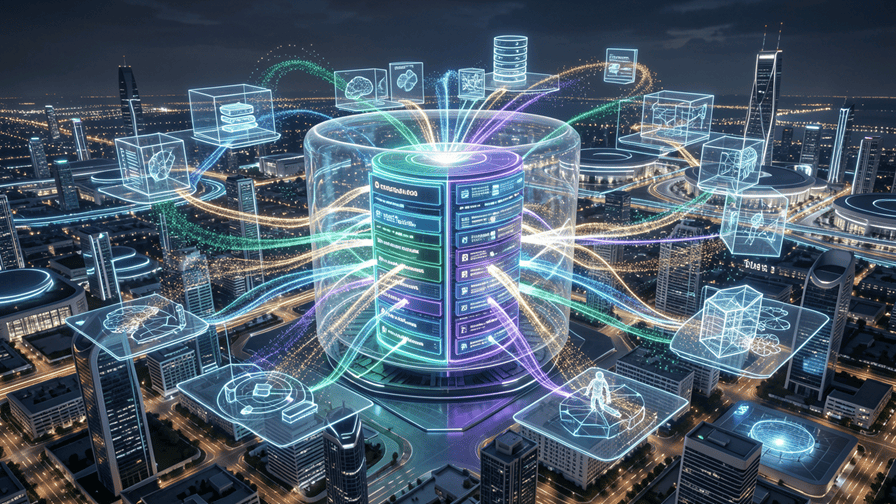
The future of AI Technical Skills will not be defined by who can write code the fastest, but by who can combine technical expertise, business understanding, systems thinking, and artificial intelligence to solve increasingly complex problems. As AI-assisted development becomes the standard across software engineering, cybersecurity, cloud computing, DevOps, infrastructure management, and enterprise technology, the competitive advantage will shift from implementation speed toward engineering judgment, architectural leadership, and intelligent decision-making.
Large language models will continue improving rapidly. Future AI systems will understand entire repositories, enterprise architectures, cloud environments, organizational coding standards, security policies, historical design decisions, customer requirements, and operational constraints. These capabilities will significantly reduce routine engineering work while increasing demand for professionals capable of supervising, validating, governing, and continuously improving intelligent systems.
Consequently, organizations investing in AI Technical Skills today will be better prepared for long-term technological change.
Engineers Will Become System Designers
Traditional software development often emphasized writing code.
Future engineering will increasingly emphasize designing intelligent systems.
Engineers will spend more time:
- Defining architecture.
- Evaluating trade-offs.
- Supervising AI agents.
- Optimizing workflows.
- Managing infrastructure.
- Coordinating distributed systems.
- Improving security.
- Driving innovation.
Programming remains important.
However, implementation becomes only one component of broader engineering responsibilities.
AI Will Amplify Experienced Professionals
Artificial intelligence generally produces the greatest productivity improvements for professionals who already possess strong technical foundations.
Experienced engineers understand:
- System architecture.
- Software quality.
- Infrastructure.
- Security.
- Performance.
- Business requirements.
- Technical debt.
- Organizational priorities.
These professionals effectively guide AI while recognizing its limitations.
As AI capabilities continue advancing, experienced engineers become increasingly valuable because they transform AI output into enterprise-grade software.
Technical Training Will Continue Evolving
Future education programs will increasingly prioritize durable competencies over memorizing individual technologies.
Training will emphasize:
- Systems thinking.
- Distributed architecture.
- Artificial intelligence.
- Cloud computing.
- Security engineering.
- Technical communication.
- Critical reasoning.
- Continuous learning.
Programming languages will continue evolving.
Frameworks will change.
Developer tools will improve.
Durable engineering capabilities remain valuable regardless of technological shifts.
Human-AI Collaboration Will Become Standard
Future software development will rarely involve humans or AI working independently.
Instead, engineering teams will increasingly operate alongside:
- AI coding assistants.
- Autonomous testing systems.
- Intelligent documentation tools.
- AI architecture reviewers.
- Predictive monitoring platforms.
- Security analysis agents.
- Infrastructure optimization systems.
- Enterprise knowledge assistants.
Human professionals continue providing strategy, oversight, accountability, creativity, and leadership.
Artificial intelligence accelerates execution.
Together they create stronger engineering outcomes than either operating independently.
Enterprise Organizations Will Prioritize Learning
Technology now evolves faster than traditional career paths.
Organizations increasingly recognize continuous education as a competitive advantage.
Future enterprises will likely establish:
- AI engineering academies.
- Continuous certification programs.
- Internal learning platforms.
- Technical mentoring initiatives.
- AI governance education.
- Architecture communities.
- Security workshops.
- Cross-functional engineering training.
Learning becomes an ongoing organizational capability rather than a one-time event.
Strategic Takeaways
Professionals preparing for the future should focus less on competing against artificial intelligence and more on developing capabilities that AI enhances rather than replaces.
Several important lessons emerge.
First, AI Technical Skills become increasingly valuable because intelligent systems require experienced supervision.
Second, architecture, systems thinking, security, communication, and engineering judgment represent durable competencies that remain essential regardless of advances in AI-assisted development.
Third, organizations should redesign education and technical training around collaboration with AI rather than viewing automation as a replacement for engineering expertise.
Fourth, continuous learning becomes one of the most important long-term career investments because technology evolves continuously.
Finally, professionals capable of combining deep technical knowledge with artificial intelligence will likely become the highest-performing engineers of the coming decade.
Conclusion
Artificial intelligence is fundamentally changing how software is designed, developed, tested, deployed, and maintained. Yet despite extraordinary advances in AI-assisted development, the need for experienced engineers has not diminished. Instead, professional responsibilities are evolving toward higher-value activities requiring technical judgment, strategic thinking, architecture design, business understanding, leadership, and responsible governance.
Developing strong AI Technical Skills enables professionals to use artificial intelligence as a force multiplier rather than viewing it as a competitor. Engineers who understand systems instead of simply writing syntax, who evaluate AI outputs rather than accepting them blindly, and who continuously expand their expertise will remain indispensable within modern enterprise technology organizations.
Organizations likewise benefit by investing in durable competencies rather than focusing exclusively on short-term automation. Teams capable of combining artificial intelligence with strong engineering discipline consistently produce more secure, scalable, reliable, and innovative software than teams relying entirely on automated generation.
Ultimately, the future belongs not to engineers who resist AI, nor to organizations attempting to replace technical expertise with automation, but to professionals who combine AI with deep engineering knowledge to solve increasingly complex business challenges. AI Technical Skills therefore represent one of the most valuable long-term investments for individuals and enterprises preparing for the future of intelligent software development.
Frequently Asked Questions (FAQs)
What are AI Technical Skills?
AI Technical Skills are the durable engineering competencies that enable professionals to effectively design, supervise, validate, govern, and improve artificial intelligence within enterprise software development and technology environments.
Will AI replace software engineering skills?
No. Artificial intelligence automates many repetitive implementation tasks, but architecture, systems thinking, technical judgment, security, communication, and leadership remain essential engineering responsibilities.
Why are durable competencies important?
Durable competencies remain valuable even as programming languages, frameworks, AI models, and developer tools evolve. They provide long-term professional resilience.
How can engineers improve AI Technical Skills?
Engineers should strengthen systems thinking, software architecture, cloud computing, cybersecurity, communication, business understanding, critical reasoning, and continuous learning while using AI responsibly.
What should organizations teach employees?
Organizations should focus on AI-assisted development, secure AI usage, architecture, engineering judgment, governance, cloud infrastructure, systems design, and lifelong technical learning rather than only teaching AI tools.
Future-Proof Your Engineering Team
Whether you’re building AI-assisted development workflows, modernizing enterprise engineering practices, or investing in long-term technical training, our experts can help you implement secure, scalable, and future-ready AI Technical Skills strategies that maximize productivity without sacrificing engineering excellence.
More AI coverage: explore Progressive Robot's AI Models, Tools & Releases hub — hands-on reviews, setup guides and benchmarks in one place.