
Single-Tenant vs Multi-Tenant Architecture is a fundamental cloud computing design decision that determines how applications, infrastructure, databases, and resources are allocated to customers. Choosing the right architecture directly impacts security, scalability, performance, operational costs, compliance, and long-term business growth.
Cloud computing has fundamentally changed how software is delivered. Learn more about cloud architecture through Microsoft Azure Architecture Center. Single-Tenant vs Multi-Tenant Architecture is one of the most important decisions organizations make when designing modern cloud applications, SaaS platforms, enterprise software, and scalable digital services. The architectural model chosen affects security, scalability, infrastructure costs, performance, maintenance, customization, compliance, and long-term operational efficiency. Whether developing a new software platform or modernizing an existing application, understanding the differences between these two deployment approaches is essential for making informed technical and business decisions.
Cloud computing has fundamentally changed how software is delivered. Organizations increasingly deploy applications using architectures that can efficiently serve thousands—or even millions—of users while balancing security, operational costs, and resource utilization. Single-tenant and multi-tenant architectures represent two of the most common strategies for achieving these objectives, but each offers distinct advantages depending on business requirements.
In a single-tenant architecture, every customer receives a dedicated application environment with isolated infrastructure and resources. This approach emphasizes stronger isolation, greater customization, and simplified compliance management. By contrast, a multi-tenant architecture allows multiple customers to share the same application instance while maintaining logical separation of their data. This shared approach maximizes infrastructure efficiency, lowers operating costs, and enables rapid scalability.
Neither model is universally superior. The best choice depends on factors such as regulatory requirements, expected customer growth, performance expectations, infrastructure budgets, operational complexity, security priorities, and customization needs. Organizations often evaluate these trade-offs during cloud migration, SaaS platform development, enterprise modernization, and digital transformation initiatives.
As businesses continue moving toward cloud-native software, selecting the appropriate tenancy model becomes increasingly important. A well-designed architecture can improve scalability, simplify maintenance, reduce operational expenses, and provide a better user experience while supporting future business growth.
This comprehensive guide explains Single-Tenant vs Multi-Tenant Architecture, compares their core characteristics, explores real-world deployment scenarios, examines advantages and limitations, and provides practical guidance for choosing the most suitable architecture for your organization.
Key Takeaways
- Single-tenant environments provide dedicated infrastructure for each customer.
- Multi-tenant systems allow multiple customers to share application resources securely.
- Security, scalability, customization, and cost differ significantly between both models.
- Cloud-native applications frequently adopt multi-tenant designs for efficiency.
- Business requirements should drive architectural decisions.
What Is Single-Tenant Architecture?
Single-tenant architecture provides every customer with an isolated application environment.
Each tenant typically receives dedicated:
- Application instance.
- Database.
- Computing resources.
- Storage.
- Configuration.
- Security boundaries.
- Infrastructure allocation.
- Operational environment.
This approach offers greater control and stronger workload isolation.
What Is Multi-Tenant Architecture?
Multi-tenant architecture enables multiple customers to use a shared software platform while maintaining logical separation of their information.
Shared resources may include:
- Application servers.
- Processing infrastructure.
- Storage systems.
- Network resources.
- Cloud services.
- Software updates.
- Monitoring systems.
- Operational management.
Each customer’s data remains logically separated despite sharing the same underlying infrastructure.
Why Architecture Choice Matters
The selected architecture influences nearly every aspect of software delivery.
Important considerations include:
- Scalability.
- Performance.
- Security.
- Compliance.
- Operational costs.
- Maintenance.
- Availability.
- Customer experience.
Choosing the right model early helps reduce future migration complexity.
Where These Architectures Are Used
Common deployment scenarios include:
- SaaS platforms.
- Enterprise software.
- Healthcare systems.
- Financial applications.
- Government services.
- Ecommerce platforms.
- Educational technology.
- Cloud-native applications.
Each industry may prioritize different architectural characteristics based on regulatory and operational requirements.
How Single-Tenant vs Multi-Tenant Architecture Works
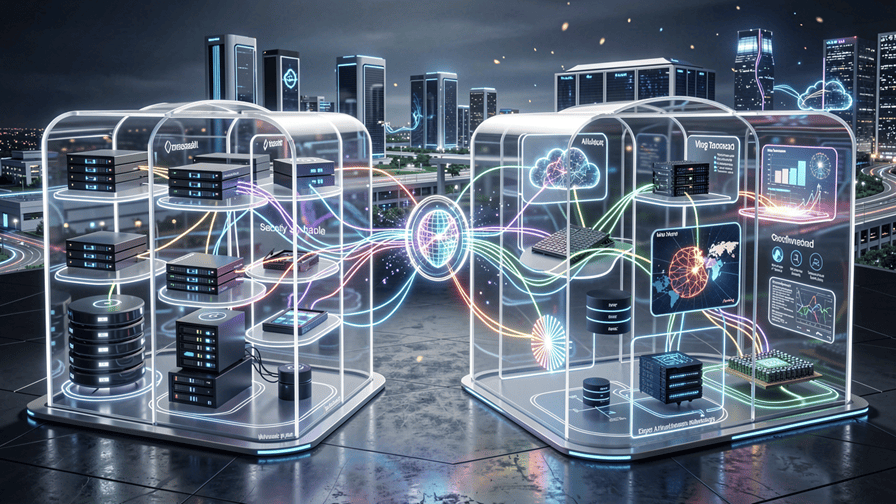
Single-Tenant vs Multi-Tenant Architecture differs primarily in how computing resources, applications, databases, and infrastructure are allocated to customers. Although both models deliver software through modern cloud environments, they take fundamentally different approaches to resource isolation, scalability, maintenance, customization, and operational efficiency.
Understanding how each architecture functions helps organizations select the deployment model that best aligns with business goals, regulatory requirements, expected growth, and long-term infrastructure strategy.
How Single-Tenant Architecture Works
In a single-tenant architecture, each customer operates within a completely isolated software environment.
Every tenant typically has its own:
- Application instance.
- Database.
- Storage.
- Compute resources.
- Security configuration.
- Network allocation.
- Backup environment.
- Administrative controls.
Because resources are not shared with other customers, organizations gain greater control over customization, upgrades, and security policies.
How Multi-Tenant Architecture Works
Multi-tenant architecture allows multiple customers to use a shared application while keeping their information logically separated.
Customers commonly share:
- Application servers.
- Cloud infrastructure.
- Compute resources.
- Storage systems.
- Monitoring services.
- Software updates.
- Runtime environment.
- Operational management.
Although the infrastructure is shared, application logic ensures that each tenant only accesses its own data.
Resource Allocation
Resource management differs significantly between both architectures.
Single-Tenant
Resources are dedicated to one customer.
Advantages include:
- Predictable performance.
- Dedicated capacity.
- Independent scaling.
- Greater workload isolation.
Multi-Tenant
Resources are shared among multiple customers.
Benefits include:
- Better utilization.
- Lower infrastructure costs.
- Higher efficiency.
- Simplified resource management.
Cloud providers often dynamically allocate computing resources based on overall demand.
Security Comparison
Security is one of the most important factors when evaluating Single-Tenant vs Multi-Tenant Architecture.
Single-Tenant Security
Dedicated environments naturally provide stronger physical and logical separation.
Organizations can implement:
- Custom security policies.
- Independent firewalls.
- Dedicated encryption strategies.
- Customer-specific compliance controls.
This model is frequently preferred for highly regulated industries.
Multi-Tenant Security
Modern multi-tenant platforms rely on logical isolation rather than physical separation.
Security mechanisms commonly include:
- Identity management.
- Access controls.
- Tenant isolation.
- Encryption.
- Authentication.
- Authorization.
- Activity monitoring.
- Continuous auditing.
When implemented correctly, multi-tenant environments can achieve very high levels of security.
Performance Characteristics
Performance depends largely on infrastructure design.
Single-Tenant Performance
Dedicated resources reduce the possibility of neighboring workloads affecting performance.
Organizations benefit from:
- Stable response times.
- Consistent workloads.
- Dedicated compute power.
- Predictable application behavior.
Multi-Tenant Performance
Shared infrastructure enables efficient resource utilization but requires intelligent workload management.
Cloud platforms commonly implement:
- Load balancing.
- Auto scaling.
- Resource scheduling.
- Traffic optimization.
- Elastic computing.
- Capacity monitoring.
- Distributed processing.
- Performance optimization.
Well-designed multi-tenant platforms can deliver excellent performance while supporting large customer bases.
Customization
Customization requirements often influence architecture decisions.
Single-Tenant
Organizations typically enjoy greater flexibility for:
- User interfaces.
- Business workflows.
- Integrations.
- Infrastructure.
- Security policies.
- Update schedules.
- Database configuration.
- Feature extensions.
Multi-Tenant
Customization generally focuses on configurable features rather than modifying the underlying platform.
Examples include:
- Branding.
- User preferences.
- Role management.
- Business rules.
- Permission settings.
- Dashboards.
- Notifications.
- Workflow configuration.
This standardized approach simplifies maintenance while supporting many customers.
Scalability
Cloud-native applications prioritize scalability.
Single-Tenant Scaling
Each customer environment scales independently.
Benefits include:
- Individual resource allocation.
- Flexible infrastructure planning.
- Dedicated performance tuning.
- Independent workload growth.
Multi-Tenant Scaling
Multi-tenant systems are designed to support rapid growth across thousands of customers.
Scalability features include:
- Elastic cloud resources.
- Automatic scaling.
- Shared infrastructure.
- Distributed services.
- Container orchestration.
- Cloud-native deployment.
- Infrastructure automation.
- Efficient resource utilization.
Common Enterprise Use Cases
Single-Tenant Architecture
Often selected for:
- Healthcare.
- Financial institutions.
- Government systems.
- Defense.
- Enterprise ERP.
- Large corporations.
- High-security applications.
- Compliance-intensive industries.
Multi-Tenant Architecture
Frequently used for:
- SaaS products.
- CRM platforms.
- Collaboration software.
- Productivity applications.
- Ecommerce platforms.
- Learning management systems.
- Marketing software.
- Customer support platforms.
Challenges and Limitations of Single-Tenant vs Multi-Tenant Architecture

Although both deployment models offer significant advantages, neither Single-Tenant nor Multi-Tenant Architecture is ideal for every organization. Each approach introduces its own technical, operational, financial, and security challenges that must be carefully evaluated before implementation.
The right architectural decision depends on business goals, regulatory obligations, expected customer growth, infrastructure budgets, operational complexity, and long-term scalability requirements. Organizations that fully understand these trade-offs are better positioned to build software platforms that remain efficient, secure, and maintainable as demand increases.
Selecting an unsuitable tenancy model can lead to higher operational costs, unnecessary infrastructure complexity, scalability limitations, or reduced customer satisfaction. Careful planning during the design phase helps minimize these risks.
Challenges of Single-Tenant Architecture
While single-tenant deployments provide strong isolation and flexibility, they also introduce additional operational overhead.
Common challenges include:
- Higher infrastructure costs.
- Increased cloud resource consumption.
- More complex environment management.
- Larger operational workloads.
- Independent software deployments.
- Greater maintenance effort.
- Higher storage requirements.
- Longer provisioning times.
As the customer base grows, managing numerous isolated environments can become increasingly resource-intensive.
Challenges of Multi-Tenant Architecture
Multi-tenant systems improve efficiency but require more sophisticated engineering.
Potential challenges include:
- Tenant isolation complexity.
- Shared resource management.
- Noisy neighbor effects.
- Performance balancing.
- Data segregation.
- Upgrade coordination.
- Application complexity.
- Advanced monitoring requirements.
Careful platform design is essential to maintain consistent performance across all customers.
Infrastructure Costs
Cost considerations differ significantly between both architectures.
Single-Tenant
Organizations may require:
- Dedicated virtual machines.
- Independent databases.
- Separate storage.
- Additional compute resources.
- Individual backups.
- Customer-specific monitoring.
- Higher licensing costs.
- Increased cloud spending.
Operational expenses generally increase as more tenants are added.
Multi-Tenant
Shared infrastructure reduces many operational expenses.
Cost advantages include:
- Better hardware utilization.
- Shared cloud resources.
- Simplified maintenance.
- Lower infrastructure duplication.
- Reduced deployment overhead.
- Centralized monitoring.
- Shared software updates.
- Improved operational efficiency.
This makes multi-tenant architecture attractive for SaaS businesses targeting large customer bases.
Maintenance Complexity
Maintenance requirements vary considerably.
Single-Tenant Maintenance
Each customer environment may require:
- Individual upgrades.
- Independent testing.
- Separate backups.
- Custom configurations.
- Dedicated monitoring.
- Environment-specific troubleshooting.
- Security updates.
- Version management.
Managing hundreds of isolated environments can become operationally demanding.
Multi-Tenant Maintenance
Shared platforms simplify many operational activities.
Centralized management supports:
- Single software deployment.
- Unified updates.
- Shared monitoring.
- Consistent security patches.
- Simplified maintenance.
- Faster feature releases.
- Centralized troubleshooting.
- Streamlined operations.
However, updates must be carefully planned to avoid affecting all customers simultaneously.
Compliance Considerations
Industry regulations often influence architectural decisions.
Single-tenant deployments may simplify compliance for:
- Healthcare.
- Financial services.
- Government.
- Defense.
- Critical infrastructure.
- Highly regulated enterprises.
Multi-tenant systems can also achieve regulatory compliance but often require additional engineering controls for tenant isolation, auditing, encryption, and governance.
Best Practices for Choosing an Architecture
Organizations should evaluate several factors before selecting a deployment model.
Understand Business Requirements
Architecture should align with customer expectations, security priorities, scalability goals, and operational strategy.
Estimate Future Growth
Consider expected customer growth over the next several years rather than current demand alone.
Evaluate Security Needs
Highly regulated industries may prioritize stronger isolation, while SaaS providers often prioritize scalability and efficiency.
Analyze Total Cost of Ownership
Evaluate infrastructure, maintenance, staffing, licensing, monitoring, and operational expenses rather than initial deployment costs alone.
Plan for Scalability
Design architectures that can support increasing workloads without requiring major redesigns.
Prioritize Operational Simplicity
Simpler operational models generally improve long-term maintainability and reduce support costs.
Why Modern SaaS Platforms Prefer Multi-Tenant Designs
Many modern SaaS providers adopt multi-tenant architecture because it supports rapid customer growth while reducing operational complexity.
Advantages include:
- Faster deployment.
- Lower infrastructure costs.
- Simplified software updates.
- Better cloud resource utilization.
- Easier scalability.
- Centralized management.
- Consistent user experience.
- Improved operational efficiency.
Nevertheless, enterprise software with strict compliance or extensive customization requirements may continue benefiting from single-tenant deployments.
The Future of Single-Tenant vs Multi-Tenant Architecture
Single-Tenant vs Multi-Tenant Architecture will continue shaping the future of cloud computing, SaaS platforms, enterprise software, and digital transformation strategies. As organizations increasingly migrate applications to cloud-native environments, software architects are focusing on building platforms that combine scalability, security, operational efficiency, and flexibility while meeting evolving business requirements.
Rather than choosing exclusively between single-tenant and multi-tenant deployments, many organizations are adopting hybrid approaches that combine the strengths of both models. Modern cloud technologies such as containers, Kubernetes, serverless computing, microservices, infrastructure as code, and artificial intelligence are making it easier to build highly scalable applications while maintaining strong security and tenant isolation.
Future architectural decisions will increasingly be influenced by automation, cloud optimization, AI-assisted infrastructure management, compliance requirements, and customer expectations. Organizations will continue seeking deployment models that maximize resource utilization while providing the flexibility to meet diverse enterprise needs.
Potential future developments include:
- Hybrid tenancy architectures.
- AI-powered infrastructure optimization.
- Intelligent cloud resource allocation.
- Autonomous scaling.
- Advanced tenant isolation.
- Zero Trust security integration.
- Cloud-native application platforms.
- Automated compliance management.
As cloud computing continues evolving, architectural flexibility will become just as important as scalability and performance.
Strategic Takeaways
Selecting the right tenancy model is a strategic business decision rather than simply a technical implementation detail.
Key insights include:
- Single-tenant environments provide stronger isolation and greater customization.
- Multi-tenant platforms maximize scalability and infrastructure efficiency.
- Security, compliance, performance, and cost should guide architecture selection.
- Hybrid cloud architectures continue gaining popularity.
- Business objectives should always drive infrastructure design.
Conclusion
Cloud computing has transformed how modern software is designed, deployed, and managed. Choosing between Single-Tenant vs Multi-Tenant Architecture is one of the most important decisions organizations make when building scalable digital platforms. The selected architecture directly influences operational efficiency, customer experience, infrastructure costs, security, maintenance, and long-term business growth.
Single-tenant architecture remains an excellent choice for organizations requiring dedicated infrastructure, extensive customization, and strict regulatory compliance. Industries such as healthcare, finance, government, and defense often benefit from the additional isolation and administrative control provided by dedicated environments.
Multi-tenant architecture, meanwhile, has become the preferred model for many SaaS providers because it enables efficient resource sharing, simplified maintenance, rapid scalability, and lower operational costs. When designed correctly, modern multi-tenant platforms can provide excellent security while supporting thousands of customers through centralized cloud infrastructure.
There is no universal solution that fits every organization. Businesses should evaluate their security requirements, customer expectations, compliance obligations, growth projections, operational capabilities, and long-term digital strategy before selecting an architectural model. A well-planned deployment strategy provides the foundation for sustainable cloud growth while supporting future innovation.
As cloud-native technologies continue advancing, organizations that understand the strengths and limitations of both deployment models will be better positioned to build secure, scalable, and resilient software platforms for the future.
Frequently Asked Questions (FAQs)
What is Single-Tenant vs Multi-Tenant Architecture?
Single-Tenant vs Multi-Tenant Architecture compares two software deployment models. Single-tenant environments provide dedicated infrastructure for each customer, while multi-tenant systems allow multiple customers to securely share the same application and infrastructure.
Which architecture is more secure?
Single-tenant architecture provides stronger physical and logical isolation, but well-designed multi-tenant platforms can also achieve very high security through encryption, access controls, tenant isolation, and continuous monitoring.
Why do SaaS companies prefer multi-tenant architecture?
Multi-tenant architecture reduces infrastructure costs, improves resource utilization, simplifies software updates, and supports rapid scalability across large customer bases.
When should businesses choose single-tenant architecture?
Organizations with strict compliance requirements, highly sensitive data, extensive customization needs, or dedicated performance expectations often benefit from single-tenant deployments.
Can organizations combine both models?
Yes. Many enterprises implement hybrid tenancy strategies that combine dedicated environments for selected customers with shared infrastructure for standard workloads.
Build the Right Cloud Architecture for Your Business
Whether you’re developing a new SaaS platform, migrating legacy applications, or modernizing enterprise infrastructure, choosing the right architecture is essential for long-term success. Our cloud and software experts can help you design secure, scalable, and cost-effective solutions tailored to your business goals.
More AI coverage: explore Progressive Robot's AI Models, Tools & Releases hub — hands-on reviews, setup guides and benchmarks in one place.