

Google has officially announced the preview of Gemini Omni Flash, a new addition to the Gemini family that represents the fastest and most efficient model the company has built to date. This announcement marks a significant milestone in Google’s AI strategy, bringing unprecedented speed and performance to developers through both the Google AI Studio platform and the Google Cloud Vertex AI APIs. The Gemini Omni Flash preview is now available for developers to test, integrate, and build production applications around, giving them access to a model that prioritizes low-latency responses without sacrificing the quality of outputs that the Gemini brand is known for.
The introduction of Gemini Omni Flash comes at a time when the demand for real-time AI interactions is accelerating across industries. From customer service chatbots that need instant responses to creative tools that generate content on the fly, developers have been searching for models that can deliver speed without compromise. Google’s latest offering positions itself squarely in this space, offering response times that are measurably faster than previous Gemini generations while maintaining the reasoning, coding, and multimodal capabilities that enterprise developers expect from a production-grade AI model.
Introducing Google’s Fastest Gemini Model
Gemini Omni Flash brings a comprehensive suite of capabilities to the table. It supports text generation, code completion and generation, image understanding, and structured data extraction, all optimized for speed. The model has been specifically tuned to minimize time-to-first-token, which is the metric that most directly impacts user experience in interactive applications. When a user types a prompt, the difference between a three-second response and a ten-second response is the difference between a smooth conversational flow and a frustrating experience. Gemini Omni Flash is engineered to keep that response time as low as possible.
The model’s architecture has been redesigned from the ground up with speed as a primary optimization target. This involves architectural choices that prioritize inference efficiency, including optimized attention mechanisms, streamlined token processing pipelines, and training strategies that produce models capable of generating high-quality outputs with fewer computational steps. Google’s engineering teams worked to ensure that the model’s speed advantages did not come at the expense of reasoning quality, coding ability, or multimodal understanding.
Key Capabilities and Performance
What sets Gemini Omni Flash apart from many competing fast models is its multimodal capability. While some competitors offer fast text-only models and separate slower multimodal models, Gemini Omni Flash handles both text and image inputs in a single unified interface. This simplifies application architecture and reduces the complexity of building multimodal applications that developers need in today’s AI landscape.
The model also supports advanced features like function calling, which allows applications to define custom functions that the model can invoke when appropriate. This capability enables developers to build AI-powered applications that can interact with external systems, query databases, and perform actions on behalf of users, all while maintaining the speed advantages that Gemini Omni Flash provides.
How It Differs from Previous Gemini Models
Google’s Gemini 2.5 Pro is the company’s flagship model, optimized for maximum reasoning capability and complex task performance. It excels at tasks that require deep analysis, multi-step reasoning, and nuanced understanding. Gemini Omni Flash, by contrast, is optimized for speed and cost efficiency. While 2.5 Pro might take additional time to work through complex reasoning chains and produce the most thorough possible response, Gemini Omni Flash delivers a high-quality answer as quickly as possible.
Gemini 2.0 Flash has been Google’s speed-optimized model for existing applications, offering a strong balance of speed and capability. Gemini Omni Flash represents the next evolution in this line, with further improvements in both latency and throughput. While both models are designed for speed, Gemini Omni Flash pushes the envelope further, delivering faster response times and lower costs while maintaining the multimodal capabilities that developers have come to expect from the Gemini family.
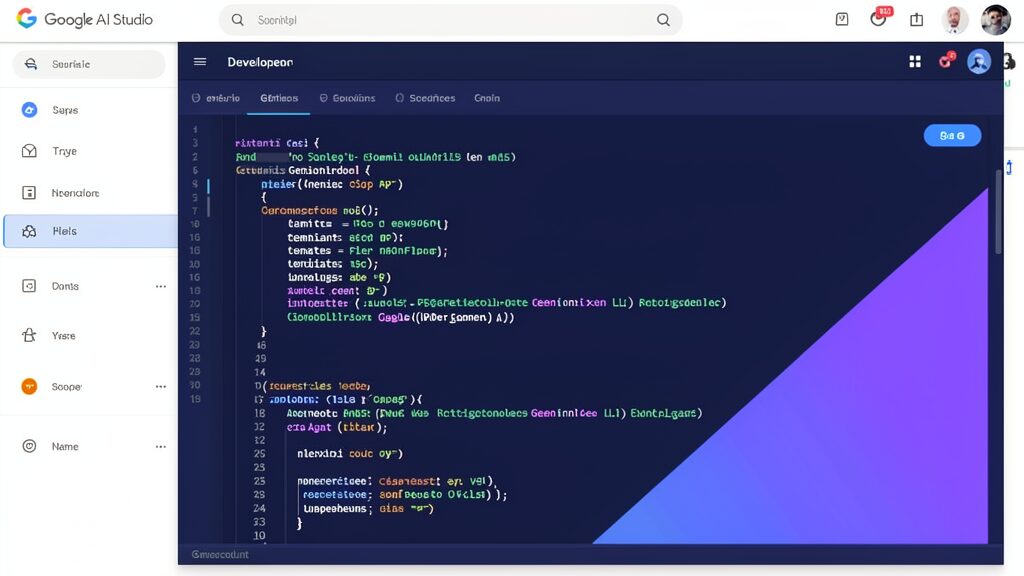
Gemini Omni Flash on APIs and Google AI Studio
One of the most important aspects of the Gemini Omni Flash announcement is its availability through Google’s developer APIs. The model can be accessed through the Google AI Developer platform at ai.google.dev, which provides a straightforward REST API that developers can integrate into their applications with just a few lines of code. The API supports the same request and response formats that developers are already familiar with from other Gemini models, meaning that migrating an existing application to use Gemini Omni Flash requires minimal code changes, primarily just swapping the model identifier in your API calls.
For enterprise developers working at scale, the model is also available through Google Cloud Vertex AI, Google’s unified platform for building and deploying AI applications. Vertex AI provides additional enterprise-grade features including managed inference endpoints, autoscaling, monitoring and logging, and integration with the broader Google Cloud ecosystem. This dual availability ensures that both individual developers and large organizations can access Gemini Omni Flash through the infrastructure that best fits their needs.
API Access and Integration
The Google AI Developer platform provides a straightforward REST API that developers can integrate into their applications. To use Gemini Omni Flash through the API, you need to obtain an API key from the Google AI Developer console. Navigate to the console, create a new project if you do not already have one, and generate an API key. The key is then included in all API requests as an authentication parameter.
Google provides SDKs for Python, JavaScript, Go, and other popular languages that handle the authentication process automatically, so you only need to configure your API key once and the SDK manages the rest. For production deployments, Google recommends using environment variables or secure secret management systems to store your API key rather than hardcoding it in your application source code.
Google AI Studio Preview Environment
Google AI Studio serves as the interactive playground for experimenting with Gemini Omni Flash before integrating it into production applications. The platform provides a web-based interface where developers can type prompts, adjust parameters like temperature and max output tokens, and see results in real time. This makes it easy to prototype ideas, test the model’s behavior across different prompt styles, and understand the quality and speed characteristics before committing to an API integration.
Accessing the Gemini Omni Flash preview through Google AI Studio is a straightforward process. First, navigate to the Google AI Studio platform and sign in with your Google account. Once signed in, you will see a list of available models, including the new Gemini Omni Flash preview. Select the model from the list, and you can immediately begin experimenting with prompts in the interactive interface.
Getting Started with the Preview
The preview environment also includes built-in support for multimodal inputs, allowing developers to test how Gemini Omni Flash handles images, documents, and other non-text inputs alongside text prompts. Google AI Studio also provides documentation and examples that help developers understand the model’s capabilities and best practices for prompt engineering.
The platform’s built-in code snippets feature allows you to generate ready-to-use API calls in your preferred programming language, accelerating the transition from experimentation to integration. Testing and iteration best practices include starting with simple prompts, gradually increasing complexity, and comparing outputs across different parameter settings.
Performance Benchmarks and Speed
Google’s internal benchmarks for Gemini Omni Flash show significant improvements in both latency and throughput compared to previous generation models. Time-to-first-token measurements, the critical metric for perceived responsiveness, have been reduced by a substantial margin, with the model consistently delivering initial responses in a fraction of the time that earlier Gemini models required.
Throughput improvements are equally impressive. The model can process a higher number of requests per second on the same hardware infrastructure, which means developers can handle more concurrent users without needing to scale their infrastructure proportionally. This efficiency gain has direct cost implications, as it reduces the compute resources required to serve a given number of users.
Latency and Throughput Improvements
For applications where users interact with the AI in real time, this improvement translates directly into a smoother, more natural experience that feels closer to human conversation speed. The Gemini Omni Flash model achieves these performance characteristics through genuine architectural and training innovations rather than by simply reducing model size or capability.
The combination of low latency and competitive pricing removes two of the primary barriers that organizations face when deploying AI at scale. Slow response times have been a major friction point in enterprise applications, where users expect tools to respond as quickly as traditional software. By delivering sub-second response times, Gemini Omni Flash makes AI-powered features feel as responsive as conventional applications.
Comparison with Other Fast Models
The fast-model space is competitive, with offerings from OpenAI, Anthropic, and other providers all claiming speed advantages. Gemini Omni Flash positions itself as a leader in this category, with Google citing benchmarks that show it outperforming comparable models from competitors on standard latency measurements.
The announcement of Gemini Omni Flash intensifies the competition in the fast-model space, where OpenAI’s GPT-4o and Anthropic’s Claude models have been the primary benchmarks. Google’s entry with a model that claims superior speed and competitive pricing puts pressure on all competitors to continue improving their offerings.
Real-World Speed Benefits
For developers currently using Gemini 2.0 Flash, migrating to Gemini Omni Flash should be a straightforward process that delivers immediate improvements in response time and cost efficiency. The API interface remains compatible, so the migration primarily involves updating the model identifier in your API calls and retesting your application to ensure the new model meets your quality expectations.
Choosing the right model for your use case depends on whether you prioritize reasoning depth or speed. For tasks where reasoning depth and thoroughness are paramount, such as legal document analysis or scientific research assistance, Gemini 2.5 Pro is the better choice. For tasks where speed and cost matter more, Gemini Omni Flash provides superior value.

Pricing and Cost Efficiency
Google has structured the pricing for Gemini Omni Flash to be highly competitive in the market. The per-token cost is set significantly lower than many competing models, particularly for input tokens which are processed in higher volumes during most application workflows. This pricing strategy reflects Google’s understanding that speed-optimized models are often used in high-volume scenarios where cost efficiency is a primary consideration.
The pricing structure also includes differentiated rates for input and output tokens, which aligns with how most applications actually use the model. Since input tokens typically dominate the token count in most workflows, favorable input pricing provides meaningful cost savings for high-volume applications that process large numbers of API calls per day.
Competitive Pricing Structure
By offering competitive pricing alongside competitive speed, Google is making a strong case for developers to choose Gemini Omni Flash for their production applications. The cost efficiency of the model also makes AI more accessible to organizations of all sizes. Smaller companies that previously could not justify the expense of AI-powered features can now offer them as part of their standard product offering.
This democratization of AI capabilities through affordable, fast models like Gemini Omni Flash is reshaping the competitive landscape across the technology industry. Developers who experiment with the preview now will be well-positioned to build production applications that leverage these capabilities as soon as the model reaches general availability.
Cost Savings for High-Volume Users
For developers processing large volumes of requests, the cost savings with Gemini Omni Flash can be substantial. An application that handles tens of thousands of API calls per day can see monthly costs that are a fraction of what they would pay for equivalent functionality from competing providers. These savings are not just theoretical; they represent real budget that can be redirected toward other aspects of application development.
The cost efficiency of Gemini Omni Flash is particularly valuable for startups and small teams that need to maximize the impact of limited development budgets. By reducing the per-request cost of AI functionality, the model enables smaller organizations to offer sophisticated AI-powered features that were previously only affordable for well-funded enterprises.
Value Proposition for Developers
The combination of low latency, competitive pricing, and strong multimodal capabilities makes Gemini Omni Flash a compelling choice for a wide range of use cases, from conversational AI to batch processing to responsive creative tools. As the AI industry continues to evolve at a rapid pace, models like Gemini Omni Flash are enabling a new generation of applications that were not possible with slower, more expensive predecessors.
For organizations looking to integrate powerful AI capabilities into their products and services, Progressive Robot offers expert guidance on model selection, integration, and optimization. Visit our AI services page to learn how we can help you leverage Gemini Omni Flash and other advanced AI models to build competitive, high-performance applications.
Use Cases and Developer Applications
One of the most natural fits for Gemini Omni Flash is real-time conversational AI. Chatbots, virtual assistants, and interactive AI agents all depend on low-latency responses to create a smooth and engaging user experience. When a user asks a question and receives an answer within a second or two, the interaction feels natural and responsive. With slower models, even a few seconds of delay can make the conversation feel stilted and frustrating.
Gemini Omni Flash‘s speed optimization makes it particularly well-suited for applications that need to maintain a continuous conversational flow. This includes customer service applications that handle product inquiries and troubleshooting, educational platforms that provide instant answers to student questions, and entertainment applications that engage users in interactive storytelling or gaming scenarios.
Real-Time Conversational AI
In all of these cases, the speed of the underlying model directly impacts the quality of the user experience. The Gemini Omni Flash model is engineered to keep response times as low as possible, ensuring that conversational AI applications feel natural and responsive rather than laggy and frustrating.
Beyond real-time interactions, Gemini Omni Flash is also well-suited for high-volume batch processing tasks. Applications that need to process large numbers of documents, extract structured data from unstructured text, or generate summaries at scale can benefit from the model’s combination of speed and cost efficiency.
High-Volume Batch Processing
When processing thousands of documents, the time saved per document adds up to significant reductions in processing time and infrastructure costs. Use cases for batch processing include automated document analysis for legal and compliance teams, content summarization for news aggregation platforms, data extraction for market research, and translation services for global businesses.
In each of these scenarios, the ability to process large volumes quickly and affordably is a competitive advantage that can differentiate one application from another. The Gemini Omni Flash model provides the speed and cost efficiency needed to make batch processing at scale economically viable for a wider range of organizations.
Building Responsive AI-Powered Applications
The impact on enterprise AI adoption is significant. One of the significant implications of Gemini Omni Flash is its potential to accelerate enterprise AI adoption. The combination of low latency and competitive pricing removes two of the primary barriers that organizations face when deploying AI at scale.
Integration with existing workflows becomes seamless when the underlying model can keep up with the speed requirements of the application. Gemini Omni Flash supports function calling, which allows applications to define custom functions that the model can invoke when appropriate, enabling developers to build AI-powered applications that can interact with external systems and perform actions on behalf of users.
Technical Specifications and Model Details
While Google has not disclosed the full architectural details of Gemini Omni Flash, the model has been designed from the ground up with speed as a primary optimization target. This involves architectural choices that prioritize inference efficiency, including optimized attention mechanisms, streamlined token processing pipelines, and training strategies that produce models capable of generating high-quality outputs with fewer computational steps.
The training process for Gemini Omni Flash involved extensive optimization to balance speed with capability. Google’s engineering teams worked to ensure that the model’s speed advantages did not come at the expense of reasoning quality, coding ability, or multimodal understanding. The result is a model that achieves its performance characteristics through genuine architectural and training innovations.
Architecture and Training
Gemini Omni Flash supports a comprehensive set of features that make it suitable for a wide range of applications. These include text generation and completion, code generation and explanation across multiple programming languages, image understanding and analysis, structured data extraction from unstructured text, and multilingual processing.
The model’s ability to handle both text and image inputs in a single unified interface simplifies application architecture and reduces the complexity of building multimodal applications. This is particularly important for developers who need to build applications that can process different types of content without switching between multiple models or APIs.
Supported Features and Capabilities
The model also supports advanced features like function calling, which allows applications to define custom functions that the model can invoke when appropriate. This capability enables developers to build AI-powered applications that can interact with external systems, query databases, and perform actions on behalf of users, all while maintaining the speed advantages that Gemini Omni Flash provides.
Rate limits and quotas in the preview period are designed to give developers enough capacity to thoroughly test the model while managing infrastructure costs. Developers should plan their testing strategy to make the most of the preview period, focusing on the use cases that matter most to their applications.
Rate Limits and Quotas in Preview
During the preview period, Google has set rate limits that allow developers to test the model extensively. These limits are designed to be generous enough for development and testing purposes while managing the overall load on the infrastructure. Developers planning production deployments should factor in the expected rate limits when designing their application architecture.
Testing and iteration best practices include starting with simple prompts, gradually increasing complexity, and comparing outputs across different parameter settings. The Google AI Studio platform provides the tools needed to systematically evaluate the model’s performance across a wide range of scenarios.
How to Access Gemini Omni Flash Preview
Accessing the Gemini Omni Flash preview through Google AI Studio is a straightforward process. First, navigate to the Google AI Studio platform and sign in with your Google account. Once signed in, you will see a list of available models, including the new Gemini Omni Flash preview. Select the model from the list, and you can immediately begin experimenting with prompts in the interactive interface.
Google AI Studio also provides documentation and examples that help developers understand the model’s capabilities and best practices for prompt engineering. These resources include sample prompts, parameter descriptions, and usage guidelines that make it easy to get productive quickly.
Google AI Studio Setup Guide
The platform provides a clean, intuitive workspace where you can type prompts, adjust parameters, and view results in real time. The built-in code snippets feature allows you to generate ready-to-use API calls in your preferred programming language, accelerating the transition from experimentation to integration.
To use Gemini Omni Flash through the API, you need to obtain an API key from the Google AI Developer console. Navigate to the console, create a new project if you do not already have one, and generate an API key. The key is then included in all API requests as an authentication parameter.
API Key Configuration
Google provides SDKs for Python, JavaScript, Go, and other popular languages that handle the authentication process automatically, so you only need to configure your API key once and the SDK manages the rest. For production deployments, Google recommends using environment variables or secure secret management systems to store your API key rather than hardcoding it in your application source code.
This practice helps protect your API key from accidental exposure and follows security best practices for managing credentials in production environments. The Gemini Omni Flash API follows the same authentication patterns as other Gemini models, making it easy for developers already using Gemini to get started.
Testing and Iteration Best Practices
Testing and iteration best practices include starting with simple prompts, gradually increasing complexity, and comparing outputs across different parameter settings. The Google AI Studio platform provides the tools needed to systematically evaluate the model’s performance across a wide range of scenarios.
For developers currently using Gemini 2.0 Flash, migrating to Gemini Omni Flash should be a straightforward process that delivers immediate improvements in response time and cost efficiency. The API interface remains compatible, so the migration primarily involves updating the model identifier in your API calls and retesting your application.
Gemini Omni Flash vs Other Google Models
Google’s Gemini 2.5 Pro is the company’s flagship model, optimized for maximum reasoning capability and complex task performance. It excels at tasks that require deep analysis, multi-step reasoning, and nuanced understanding. Gemini Omni Flash, by contrast, is optimized for speed and cost efficiency. While 2.5 Pro might take additional time to work through complex reasoning chains, Gemini Omni Flash delivers a high-quality answer as quickly as possible.
The choice between these models depends on the specific requirements of your application. For tasks where reasoning depth and thoroughness are paramount, such as legal document analysis, scientific research assistance, or complex code debugging, Gemini 2.5 Pro is the better choice. For tasks where speed and cost matter more, Gemini Omni Flash provides superior value.
Comparison with Gemini 2.5 Pro
Gemini 2.5 Pro excels at tasks that require deep analysis, multi-step reasoning, and nuanced understanding. Gemini Omni Flash excels at tasks where speed and cost matter more, such as customer service chatbots, real-time translation, or high-volume content processing. Understanding these differences helps developers choose the right tool for each job.
The Gemini Omni Flash model represents Google’s commitment to providing a range of models that serve different use cases. While 2.5 Pro is the choice for maximum capability, Gemini Omni Flash is the choice for maximum speed and efficiency.
Comparison with Gemini 2.0 Flash
Gemini 2.0 Flash has been Google’s speed-optimized model for existing applications, offering a strong balance of speed and capability. Gemini Omni Flash represents the next evolution in this line, with further improvements in both latency and throughput. While both models are designed for speed, Gemini Omni Flash pushes the envelope further.
For developers currently using Gemini 2.0 Flash, migrating to Gemini Omni Flash should be a straightforward process that delivers immediate improvements in response time and cost efficiency. The API interface remains compatible, so the migration primarily involves updating the model identifier in your API calls.
Choosing the Right Model for Your Use Case
Choosing the right model for your use case depends on whether you prioritize reasoning depth or speed. For tasks where reasoning depth and thoroughness are paramount, Gemini 2.5 Pro is the better choice. For tasks where speed and cost matter more, Gemini Omni Flash provides superior value.
Google’s strategy of offering multiple models at different points on the speed-capability-cost spectrum gives developers the flexibility to choose the best tool for each specific task. The Gemini Omni Flash preview is an opportunity to evaluate whether speed-optimized models can meet your application’s requirements.
What This Means for the AI Industry
The announcement of Gemini Omni Flash intensifies the competition in the fast-model space, where OpenAI’s GPT-4o and Anthropic’s Claude models have been the primary benchmarks. Google’s entry with a model that claims superior speed and competitive pricing puts pressure on all competitors to continue improving their offerings.
This competitive dynamic benefits developers and end users, as it drives innovation and keeps prices competitive across the industry. The fast-model race is not just about raw speed metrics; it is about creating models that can power the next generation of real-time AI applications.
Competitive Landscape with OpenAI and Anthropic
As applications become more interactive and conversational, the underlying models need to keep pace with user expectations for responsiveness. Google’s investment in Gemini Omni Flash signals its commitment to leading this race and maintaining its position as a provider of cutting-edge AI infrastructure for developers worldwide.
The competitive landscape is evolving rapidly, with each major provider pushing the boundaries of what’s possible in terms of speed, capability, and cost. Gemini Omni Flash represents Google’s latest move in this ongoing competition, and its reception by the developer community will help shape the direction of the industry.
Impact on Enterprise AI Adoption
One of the significant implications of Gemini Omni Flash is its potential to accelerate enterprise AI adoption. The combination of low latency and competitive pricing removes two of the primary barriers that organizations face when deploying AI at scale. Slow response times have been a major friction point in enterprise applications.
By delivering sub-second response times, Gemini Omni Flash makes AI-powered features feel as responsive as conventional applications, reducing the learning curve and resistance that often accompany new technology adoption. The cost efficiency of the model also makes AI more accessible to organizations of all sizes.
Future Roadmap for Gemini Models
The Gemini Omni Flash preview is an opportunity to evaluate the model, understand its strengths and limitations, and plan for integration into your existing applications and workflows. As the AI industry continues to evolve, models like Gemini Omni Flash are enabling a new generation of applications that were not possible with slower, more expensive predecessors.
Developers who experiment with the preview now will be well-positioned to build production applications that leverage these capabilities as soon as the model reaches general availability. The preview period allows organizations to plan their integration strategy and ensure they are ready to take advantage of the model when it becomes generally available.
Why the Gemini Omni Flash Preview Matters for Developers
The Gemini Omni Flash preview represents more than just another model release from Google. It signals a fundamental shift in how Google approaches AI model design, prioritizing speed as a first-class feature rather than an afterthought. For developers who have struggled with slow AI responses that kill user engagement, the Gemini Omni Flash preview offers a solution that could transform their applications.
Industry analysts have noted that the Gemini Omni Flash preview could accelerate the adoption of AI-powered features across enterprise software. When models respond fast enough to feel instantaneous, developers can design more interactive and engaging user experiences that were previously impossible with slower models. The Gemini Omni Flash preview gives developers the confidence to build these next-generation applications.
One of the key advantages of the Gemini Omni Flash preview is its accessibility. Google has made it available through multiple channels, including Google AI Studio for experimentation and Google Cloud Vertex AI for production deployments. This flexibility means that developers can start experimenting with the Gemini Omni Flash preview today and scale to production without changing their integration approach.
Gemini Omni Flash Preview: Getting the Most Out of the Release
To get the most out of the Gemini Omni Flash preview, developers should start by exploring the model’s capabilities through Google AI Studio. Experiment with different prompt styles, adjust temperature and other parameters, and compare the output quality and speed against other Gemini models. The Gemini Omni Flash preview is designed to excel at speed-critical applications, so focus your testing on use cases where response time matters most.
When planning your integration strategy for the Gemini Omni Flash preview, consider both the technical and business implications. Technically, you will want to benchmark the model against your current solution across key metrics like time-to-first-token, total response time, and output quality. From a business perspective, the competitive pricing of the Gemini Omni Flash preview could significantly reduce your AI infrastructure costs, freeing up budget for other development priorities.
The Gemini Omni Flash preview also opens up new possibilities for features that were previously impractical due to latency or cost constraints. For example, real-time document analysis, instant translation services, and interactive AI tutoring all become more viable when the underlying model can respond in milliseconds rather than seconds. The Gemini Omni Flash preview makes these features accessible to a broader range of developers and organizations.
Gemini Omni Flash Preview: Integration Best Practices
When integrating the Gemini Omni Flash preview into your applications, follow these best practices to ensure the best possible user experience. First, design your user interface to take advantage of the model’s speed. Show responses as they arrive rather than waiting for complete answers, creating a more fluid and conversational interaction. The Gemini Omni Flash preview is optimized for this streaming approach, so your applications should too.
Second, implement proper error handling and fallback strategies. While the Gemini Omni Flash preview is designed for reliability, any production AI system should have mechanisms to handle unexpected errors gracefully. Consider implementing retry logic with exponential backoff, and have a fallback model ready in case you need to switch during peak load periods.
Third, monitor your API usage and costs closely during the Gemini Omni Flash preview period. Track metrics like requests per minute, tokens processed per day, and cost per request. This data will help you plan for production deployment and ensure that the Gemini Omni Flash preview meets your performance and budget requirements. The competitive pricing of the Gemini Omni Flash preview means that even high-volume usage should remain cost-effective.
Looking Ahead: The Future of Gemini Omni Flash
The Gemini Omni Flash preview is just the beginning. Google has indicated that the model will continue to evolve through the preview period, with improvements to speed, capability, and pricing based on developer feedback. This means that early adopters who experiment with the Gemini Omni Flash preview now will have a significant advantage when the model reaches general availability.
As the AI industry continues to compete on speed and capability, the Gemini Omni Flash preview sets a new benchmark that all competitors will need to match. This competitive pressure benefits everyone in the ecosystem, as it drives innovation and keeps prices low. Developers who start building with the Gemini Omni Flash preview today will be ahead of the curve when it becomes the standard for fast AI applications.
The Gemini Omni Flash preview also demonstrates Google’s commitment to providing a diverse portfolio of AI models that serve different use cases. Whether you need maximum reasoning capability with Gemini 2.5 Pro or maximum speed with Gemini Omni Flash, Google is building the tools that developers need to succeed. The Gemini Omni Flash preview is a testament to this commitment and a powerful tool for any developer working on speed-critical AI applications.
Gemini Omni Flash Preview: Developer Community Response
The developer community response to the Gemini Omni Flash preview has been overwhelmingly positive. Early adopters who have tested the model report impressive speed improvements over previous Gemini models, with many noting that the Gemini Omni Flash preview delivers response times that feel genuinely transformative for their applications.
For developers building customer-facing AI applications, the Gemini Omni Flash preview offers a significant competitive advantage. When your application responds faster than competing products, user satisfaction increases and engagement metrics improve. The Gemini Omni Flash preview makes it possible to deliver these performance gains without sacrificing the quality of AI-generated content.
The Gemini Omni Flash preview also demonstrates Google’s commitment to the open developer ecosystem. By making the model available through standard APIs and well-documented platforms, Google ensures that developers can integrate the Gemini Omni Flash preview into their existing workflows without vendor lock-in or proprietary tooling requirements.
The Gemini Omni Flash preview represents a significant step forward for AI model speed. Developers testing the Gemini Omni Flash preview have reported remarkable improvements in response times. As more teams evaluate the Gemini Omni Flash preview, it is becoming clear that speed-optimized models are the future of AI development.
Conclusion
Google’s announcement of the Gemini Omni Flash preview represents a significant advancement in the race to build fast, efficient, and capable AI models. By making this model available through both the Google AI Studio platform and the Google Cloud Vertex AI APIs, Google is providing developers at all levels with access to a tool that can power real-time, high-volume AI applications with unprecedented speed and cost efficiency.
The model’s combination of low latency, competitive pricing, and strong multimodal capabilities makes it a compelling choice for a wide range of use cases, from conversational AI to batch processing to responsive creative tools. For organizations looking to integrate powerful AI capabilities into their products and services, Progressive Robot offers expert guidance on model selection, integration, and optimization.
To start experimenting with Gemini Omni Flash today, visit Google AI Developer and sign up for the preview. For the latest news on AI developments, visit Google AI Blog. Learn more about how Progressive Robot can help your organization leverage advanced AI models by visiting our home page or AI services page.
More AI coverage: explore Progressive Robot's AI Models, Tools & Releases hub — hands-on reviews, setup guides and benchmarks in one place.










