

Multimodal AI is changing business software because it can work with more than one kind of information at the same time. Instead of treating text, images, audio, video, code, and sensor data as separate problems, a multimodal model can combine them into one context and produce a more useful answer or action.
That matters because real work is rarely text-only. A nurse reads notes and scans. A factory engineer reviews camera footage, sensor values, and maintenance logs. A retailer sees product images, transaction history, support messages, and store video. A teacher works with speech, handwriting, diagrams, documents, and student questions.
Google Cloud describes multimodal models as systems that can process different inputs, including text, images, audio, and video, and generate outputs that are not limited to the original input type. IBM similarly defines multimodal AI as machine learning models that integrate information from multiple modalities to build a more comprehensive understanding.
The business impact is not just better chatbots. The bigger shift is that multimodal AI can connect the messy evidence around a task: what someone says, what a document contains, what a camera sees, what a machine reports, and what a workflow needs next.
What multimodal AI changes
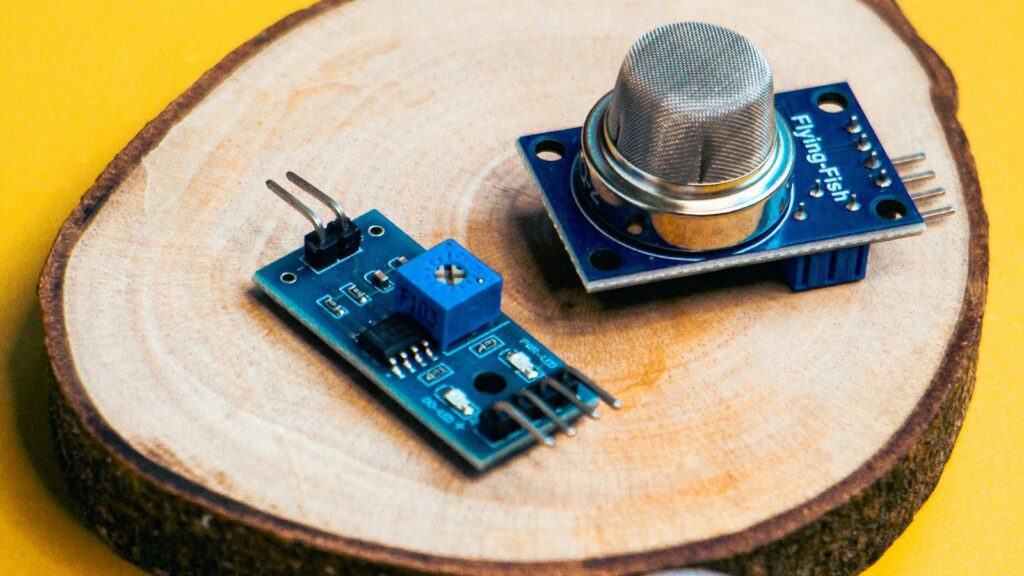
Multimodal AI changes the interface between people and software. Older automation often needed a narrow form: a field in a database, a typed command, a scanned barcode, or a structured file. Multimodal tools can accept a richer prompt: a photo plus a question, a video plus instructions, a spreadsheet plus a voice note, or a support ticket plus screenshots.
OpenAI’s GPT-4o announcement explains the same pattern in model terms: one model can reason across audio, vision, and text in real time. Google DeepMind says Gemini has advanced multimodal understanding across text, images, video, audio, and code. These are platform examples, but the enterprise question is workflow design.
For SMEs, the value usually appears in three places:
- Less translation between systems, because the AI can read more of the original evidence
- Faster first-pass analysis, because the AI can connect documents, images, and operational context
- Better human review, because the output can point back to the source evidence that shaped it
This is why multimodal AI belongs inside AI Process Redesign, not just experimentation. The useful question is not whether the model is impressive. The useful question is which workflow becomes faster, safer, or more accurate when several kinds of evidence are analyzed together.
9 industry use cases at a glance

The strongest multimodal AI use cases have one thing in common: they combine evidence that humans already compare manually. These are the nine industry patterns most leaders should understand first.
| Industry | Modalities involved | Practical use case | Human review needed |
|---|---|---|---|
| Healthcare | Notes, scans, images, voice, device data | Clinical triage and diagnostic support | Always, because patient risk is high |
| Manufacturing | Video, photos, sensors, logs, manuals | Quality inspection and maintenance | Required for defects, safety, and shutdowns |
| Retail | Product images, shelves, receipts, support text | Search, merchandising, and store operations | Needed for pricing, customer claims, and bias |
| Logistics | Warehouse images, scanner data, route notes | Inventory, picking, and exception handling | Needed for shortages and customer-impacting changes |
| Education | Speech, writing, diagrams, slides, code | Tutoring and accessibility support | Needed for assessment and safeguarding |
| Field service | Photos, manuals, audio notes, IoT readings | Technician guidance and repair summaries | Needed for safety-critical equipment |
| Finance and insurance | Forms, images, PDFs, transactions, calls | Claims and document intelligence | Needed for fraud, compliance, and adverse decisions |
| Media and marketing | Briefs, video, audio, images, brand assets | Content production and creative review | Needed for rights, accuracy, and brand risk |
| Security operations | Video, logs, alerts, messages, geodata | Threat triage and incident context | Needed for escalation and privacy |
The table also shows the adoption rule. Multimodal AI is most valuable where it gives people better evidence and better first drafts. It is dangerous when organizations let it make irreversible decisions without accountability.
1. Healthcare and clinical support
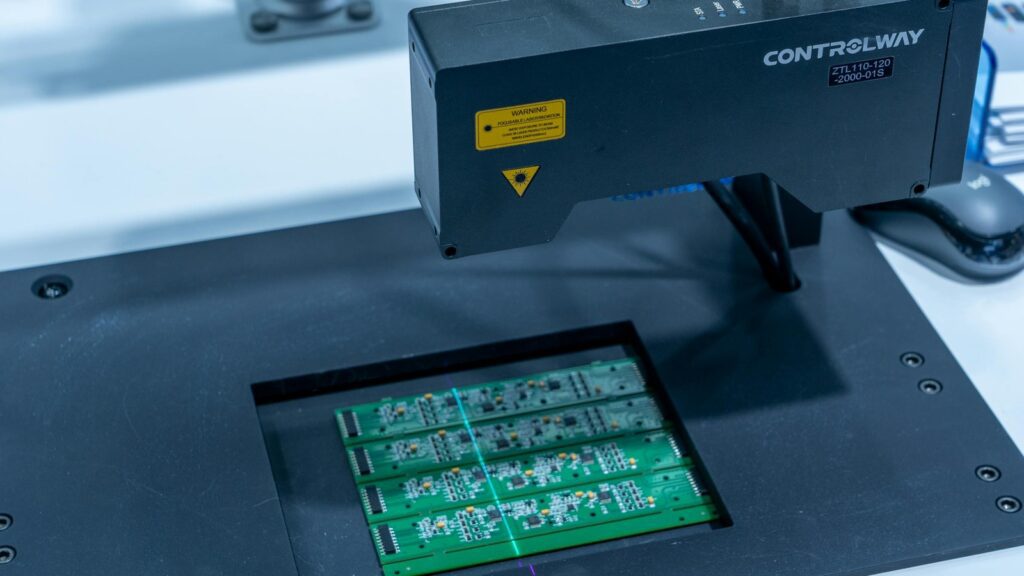
Healthcare is one of the clearest examples because clinicians already combine many modalities: symptoms, medical notes, imaging, lab results, device readings, and patient conversation. Multimodal AI can help summarize records, compare scans with written history, prepare referral notes, flag missing information, and support triage.
The opportunity is meaningful, but the governance bar is high. The FDA says AI and machine learning technologies can transform healthcare by deriving insights from the vast amount of data generated during care, while also emphasizing lifecycle management, transparency, and review for AI-enabled medical devices. That is the right framing for any healthcare deployment.
SMEs in healthcare, diagnostics, therapy, or care operations should treat multimodal AI as decision support, not autonomous diagnosis. A model may help organize evidence, surface inconsistencies, or draft clinical documentation. A qualified professional still owns the interpretation, patient conversation, and final decision.
Good starting points include intake summaries, prior-record comparison, radiology workflow support, patient education materials, and non-urgent back-office review. Avoid unsupervised diagnosis, treatment recommendations, or automated patient risk classification unless the system has the right regulatory pathway and clinical validation.
2. Manufacturing quality and maintenance

Manufacturing teams already rely on cameras, vibration sensors, temperature readings, operator notes, maintenance records, and manuals. Multimodal AI can bring those inputs together to support quality inspection, root-cause analysis, predictive maintenance, and training.
For example, a production manager could ask why a defect rate increased and provide photos of failed parts, machine logs, shift notes, and recent maintenance records. A multimodal system could identify likely correlations, summarize the relevant evidence, and prepare a checklist for an engineer to validate.
This is more useful than isolated computer vision. Vision can detect a scratch, dent, missing component, or packaging issue. Multimodal AI can connect that detection to supplier batches, environmental readings, operator comments, and the relevant service manual.
The control point is operational risk. A model should not stop a line, approve a safety change, or override a maintenance plan without human confirmation. It can, however, reduce investigation time and make expert review easier.
3. Retail, ecommerce, and customer experience
Retail is becoming a multimodal environment. Customers search with images, ask questions in natural language, send screenshots, scan products, leave reviews, and interact across stores, apps, and support channels. Multimodal AI can connect those signals.
The most visible use case is visual search: a shopper uploads a picture and asks for similar products, sizes, or alternatives. The more operational use cases are just as important. Store teams can use images and inventory data to identify shelf gaps, damaged packaging, poor signage, or mismatch between an online listing and the real product.
Customer support also changes. A customer can send a photo of a damaged item, a receipt, and a short message. A multimodal assistant can classify the issue, extract order details, summarize the claim, and draft a response for a human agent.
Retail teams should be careful with personalization and pricing. If image, purchase, location, and behavior data are combined, privacy and fairness issues grow quickly. The safest early projects improve search, product information, and service workflows before moving into sensitive decisioning.
4. Logistics and warehouse operations
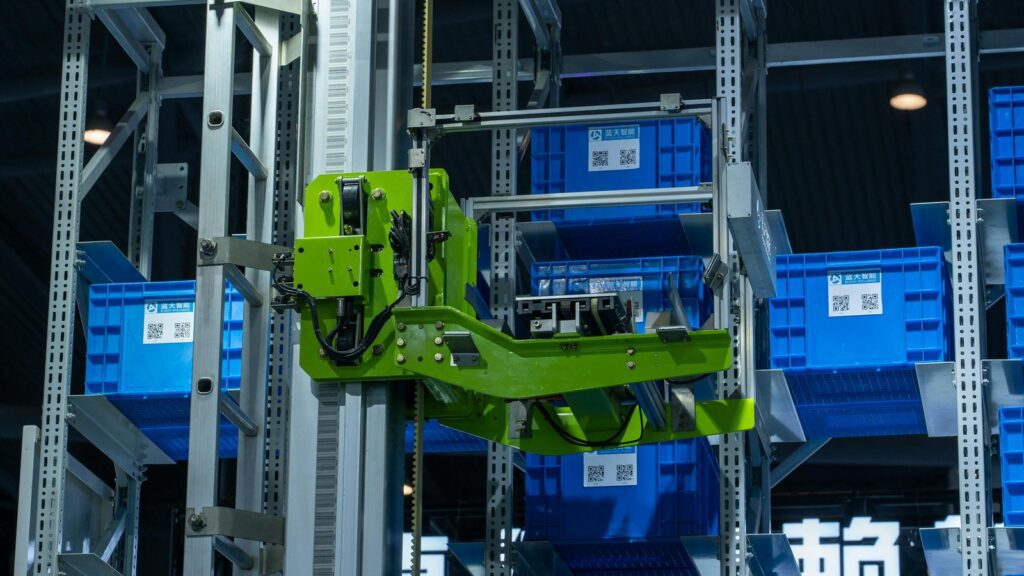
Warehouses produce a constant stream of visual and structured data: shelf photos, barcode scans, handheld-device entries, picker notes, order records, forklift routes, and exception reports. Multimodal AI can help turn that stream into better operational awareness.
A warehouse manager could use it to compare an item photo with the product record, identify a damaged package, summarize a missed-pick pattern, or explain why an order exception occurred. The model may combine the image, SKU details, staff note, and delivery deadline into one reviewable case.
The value is speed during exceptions. When a parcel is delayed, mislabeled, damaged, or out of place, teams often lose time collecting context. Multimodal AI can assemble that context and recommend the next investigation step.
For SMEs, this is also a path into AI-Native Organization habits. The business does not just add a tool; it redesigns how front-line evidence is captured, reviewed, and escalated.
5. Education, training, and accessibility
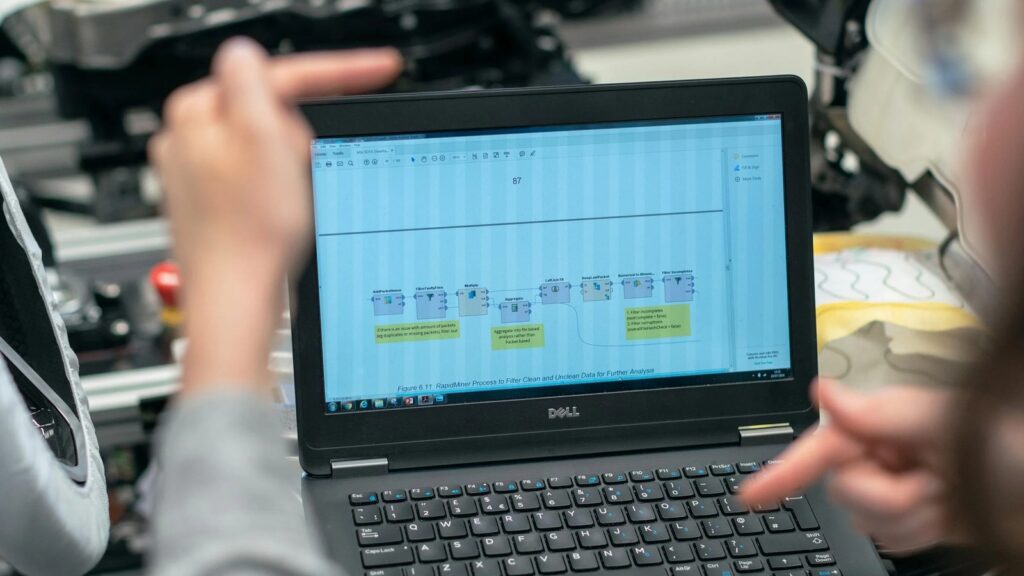
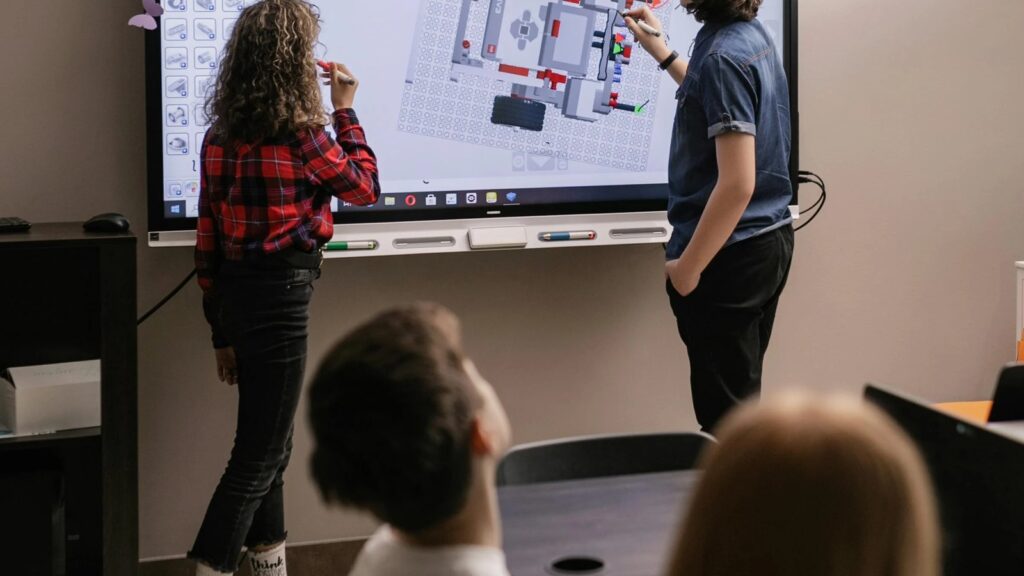
Education is naturally multimodal. Students speak, write, draw, code, annotate slides, solve equations, and work through diagrams. Multimodal AI can support tutoring, feedback, accessibility, translation, lesson planning, and training simulations.
A student might photograph a handwritten equation and ask for an explanation. A trainee might upload a diagram, describe the problem aloud, and receive step-by-step guidance. A teacher might use a model to turn a slide deck, worksheet, and transcript into different learning materials.
The most important design principle is support rather than substitution. Multimodal AI can make learning materials more accessible and help students explore concepts. It should not quietly replace teacher judgment, safeguarding processes, or fair assessment.
Schools and training providers should set boundaries for student data, consent, age-appropriate use, assessment integrity, and accessibility needs. The technology can be helpful, but only when it fits the learning environment rather than pulling attention away from it.
6. Field service and industrial operations
Field service is a strong near-term use case because technicians often work with incomplete information. They have photos of equipment, a symptom description, a manual, a customer note, and maybe a sensor reading. Multimodal AI can combine those pieces into a repair hypothesis, a safety checklist, or a service summary.
This is not about replacing skilled workers. It is about giving them faster access to the right context. A technician could photograph a panel, ask which component matches the fault code, and receive a guided checklist drawn from the manual and prior service cases.
Industrial teams should design strict safety controls. The assistant can help find documentation, compare images, translate field notes, and draft the service report. It should not authorize dangerous work, bypass lockout procedures, or change safety-critical settings without a qualified person.
This is where Domain-Tuned Models become relevant. Generic models are useful for first-pass interpretation, but production field support often needs equipment-specific manuals, approved procedures, known fault patterns, and controlled escalation rules.
7. Finance, insurance, and document-heavy workflows
Finance and insurance teams process forms, PDFs, IDs, photographs, emails, call transcripts, invoices, transaction records, and customer histories. Multimodal AI can help with claims intake, document review, evidence summarization, compliance checks, and fraud triage.
An insurance claim may include photos of damage, a repair estimate, policy text, location details, and a customer explanation. A multimodal system can summarize the claim, extract missing fields, compare the evidence against policy language, and highlight contradictions for a human reviewer.
The benefit is not automated denial. That would create serious compliance and customer-trust risks. The benefit is faster assembly of evidence and more consistent review. Human decision-makers should handle adverse outcomes, fraud accusations, exceptions, and appeals.
Organizations also need auditability. A reviewer should be able to see which image, document, message, or transaction led to a recommendation. Without traceability, multimodal AI can become a black box wrapped around sensitive decisions.
8. Media, marketing, and product content
Media and marketing teams work across briefs, images, audio, video, product specs, social posts, campaign results, brand guidelines, and customer feedback. Multimodal AI can speed up content planning, rough cuts, accessibility captions, asset tagging, creative versioning, and product-page improvement.
The best use cases are structured and reviewable. A team can ask a model to compare a video against a brief, identify missing product shots, generate alt text, summarize a webinar, adapt a campaign into channel-specific variants, or inspect whether an image matches brand guidance.
The risk is rights and accuracy. A model can hallucinate claims, misunderstand a product, flatten brand voice, or reuse material in ways that create copyright and licensing problems. Human editors still need to approve final copy, claims, visuals, and source use.
Used well, multimodal AI helps creative teams spend less time sorting assets and more time making judgment calls.
9. Security operations and incident response
Security operations already combine signals: logs, endpoint alerts, screenshots, video feeds, access events, emails, chat messages, and geolocation. Multimodal AI can help analysts build a timeline, correlate evidence, summarize an incident, and prepare a response plan.
This is especially useful when the issue crosses physical and digital systems. A suspicious access event may involve a badge reader, a camera clip, a help-desk ticket, a device alert, and a user message. A multimodal assistant can gather the context faster than a human switching between systems manually.
The governance problem is privacy. Surveillance video, employee communications, location data, and security logs are sensitive. Organizations need clear retention, access, and escalation policies before combining them in one AI workflow.
Security teams should also assume prompt injection and data poisoning risks. If the model reads emails, documents, tickets, or web pages, malicious instructions may be part of the evidence. That makes validation, logging, and least-privilege access essential.
Adoption checklist for SMEs
Multimodal AI projects should start with one constrained workflow, not a company-wide mandate. The goal is to prove that combining data types improves a real business process.
Use this checklist before rollout:
- Define the decision the system supports and the decision it must never make
- List every modality used: text, image, audio, video, code, sensor data, documents, or logs
- Confirm who owns the output and who reviews exceptions
- Require source traceability for recommendations
- Set privacy rules for images, voice, location, employee data, customer data, and health data
- Test performance across edge cases, poor-quality inputs, missing data, and noisy environments
- Keep access narrow and connect only the systems needed for the workflow
- Monitor for hallucinations, bias, prompt injection, and incorrect source interpretation
The NIST AI Risk Management Framework is useful here because it pushes teams to govern, map, measure, and manage AI risks rather than treating risk as a final checklist. For SMEs, the practical translation is simple: know the workflow, know the data, know the reviewer, and know the failure mode.
Multimodal AI FAQ
What is multimodal AI?
Multimodal AI is AI that can process and combine multiple data types, such as text, images, audio, video, code, documents, and sensor data. It can use those inputs together to generate answers, summaries, classifications, recommendations, or content.
How is it different from generative AI?
Generative AI creates content. Multimodal AI can be generative, but its key difference is that it works across multiple modalities. A multimodal model might analyze an image and text together, summarize a video, answer questions about a chart, or combine speech with a document.
Which industries benefit first?
Healthcare, manufacturing, retail, logistics, education, field service, finance, insurance, media, and security operations are strong early candidates because they already depend on mixed evidence.
What is the biggest risk?
The biggest risk is overtrust. Multimodal AI can sound confident while misreading an image, missing context, inventing a connection, or mishandling sensitive data. Human review, source traceability, and access controls are essential.
Can SMEs use it without a large AI team?
Yes, but they should start with narrow workflows and managed platforms. Good first projects involve document summaries, image-supported support tickets, product content, warehouse exceptions, training materials, and maintenance guidance.
Final thoughts
Multimodal AI is powerful because it better matches how work actually happens. People do not operate in one data type. They look, listen, read, compare, explain, and act with context.
The industries that benefit first will not be the ones with the flashiest demo. They will be the ones that redesign specific workflows around mixed evidence, careful review, and clear accountability.
For SMEs, the winning path is pragmatic: choose one high-friction process, connect the evidence types that humans already compare, keep the model inside a reviewable boundary, and measure whether the result is faster, clearer, and safer than the old way.










