

How Scrum Masters Can Benefit from Using AI Tools is becoming an increasingly relevant topic as organisations continue to leverage artificial intelligence to streamline workflows and improve efficiency. AI is no longer limited to product innovation or customer-facing solutions. It has evolved into a practical partner for Agile delivery, internal team processes and day-to-day Scrum facilitation. According to The 17th State of Agile Report, nearly one-third of Agile practitioners—29%—are actively exploring AI tools to determine how these technologies can enhance team performance, support organizational goals or strengthen their product and service offerings.
As AI capabilities expand, Scrum Masters are in a unique position to harness these tools to improve facilitation, deepen insights, optimise team processes and strengthen collaboration. Artificial intelligence can complement the Scrum Master’s work, not replace it, by helping automate repetitive tasks, generate insights from team data, support communication and provide new ways to refine Agile practices. To maximise value, Scrum teams must carefully tailor AI solutions and their implementation to their environment rather than treat them as one-size-fits-all tools. When used thoughtfully, AI supports not only the entire Scrum team but individual roles—including Scrum Masters, who increasingly benefit from these tools to drive better outcomes.
This article explores how Scrum Masters can benefit from using AI tools, the core responsibilities of the role, high-value use cases, strategic benefits and best practices for safe and effective adoption.
Understanding the Scrum Master Role
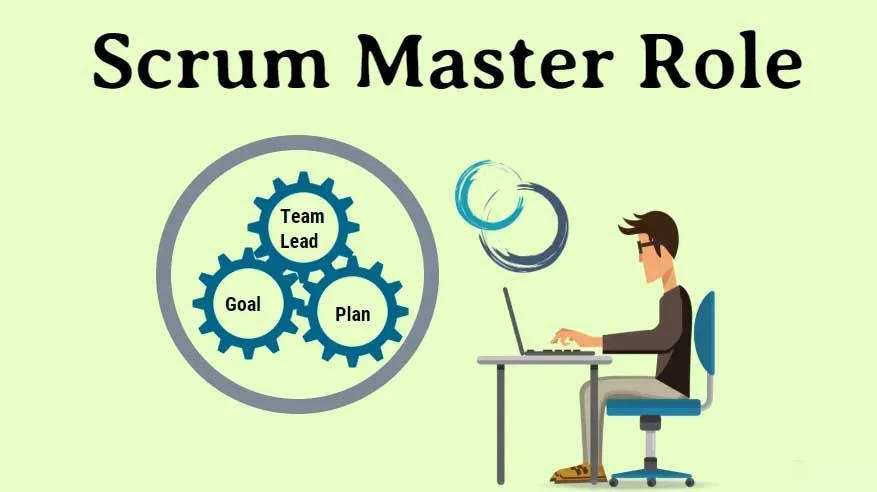
A Scrum Master plays a pivotal leadership role in guiding software development teams to operate in alignment with the Scrum framework. Scrum is an Agile methodology that emphasizes iterative and incremental delivery through short development cycles known as sprints. Teams refine their processes continuously through planning sessions, daily standups, sprint reviews and retrospectives.
Within this structure, Scrum Masters act as facilitators, coaches and process guardians. Their responsibilities include supporting the team in eliminating blockers, conducting Agile ceremonies, maintaining communication across roles and ensuring that the team remains aligned with Scrum values. They oversee workflows to ensure smooth collaboration and help team members navigate challenges while ensuring that the team continues to develop its self-management abilities.
Scrum Masters are not project managers or task supervisors. They function as mentors who enable effective cooperation, remove impediments, assist in conflict resolution, promote transparency and drive continuous improvement. AI tools, when integrated thoughtfully, can support these responsibilities by enhancing decision-making, improving facilitation and reducing administrative overhead.
How Scrum Masters Can Benefit from Using AI Tools for Meeting Preparation and Facilitation
One of the most valuable ways Scrum Masters can benefit from using AI tools is through meeting preparation and automation. Sprint planning, retrospectives, backlog refinement and daily coordination require structure and consistency. AI can streamline these processes significantly.
AI platforms can assist Scrum Masters with designing agendas for recurring and one-off meetings. They can generate retrospective frameworks tailored to the team’s context, propose thought-provoking discussion questions or design workshop formats that keep participants engaged. This reduces the repetitive effort associated with preparing meetings week after week.
AI assistants also support Scrum Masters by coordinating schedules, identifying optimal time slots for standups or workshops, and managing reminders. During meetings, tools like Otter.ai or Notion AI can transcribe discussions, summarize key decisions and capture action items. This ensures accurate documentation while allowing participants to focus fully on dialogue rather than note-taking.
Through these capabilities, AI enhances meeting consistency and allows Scrum Masters to allocate more time toward observation, facilitation and strategic reflection.
Improving Team Communication and Conflict Facilitation with AI Tools

Scrum Masters frequently support team communication, especially in challenging situations. AI can assist in crafting messages, rewriting sensitive communication and generating neutral phrasing that helps de-escalate conflict.
AI tools can help Scrum Masters draft clear, concise messages for stakeholders or team members. They can translate communications for international teams or adjust tone based on the target audience. When preparing for difficult conversations, AI can be used to analyse pros and cons of different approaches or simulate perspectives to help the Scrum Master prepare more thoughtfully.
Another way Scrum Masters can benefit from using AI tools is through the analysis of historical meeting notes. AI-powered platforms can scan sprint reviews, standup logs and retrospective summaries to identify recurring issues or patterns. For example, an AI assistant may detect repeated references to delays in code reviews or recurring bottlenecks in testing. This type of pattern recognition helps the Scrum Master identify improvement areas that may otherwise go unnoticed.
These communication enhancements free Scrum Masters to focus on relationship-building, trust, empathy and the human elements of the role that AI cannot replace.
Enhancing Scrum Master and Team Development Through AI-Based Learning and Coaching Support
Professional development is central to maintaining a high-performing Scrum environment. AI tools can provide tailored learning resources based on the specific needs of the Scrum Master or the team.
AI can create personalised development paths by analysing skills gaps, team challenges or performance goals. It can recommend workshop techniques, training materials or practical exercises that align with the team’s maturity and current objectives. AI can also generate templates for retrospectives, coaching sessions or team-building exercises designed to address particular issues.
Using AI for research amplifies the Scrum Master’s ability to stay current on industry best practices, Agile trends and emerging methodologies. Instead of scanning numerous articles, AI can compile key insights quickly, allowing the Scrum Master to invest more time into applying those learnings within the team.
AI-augmented coaching does not replace the Scrum Master’s experience or emotional intelligence, but it strengthens the tools available for guiding team growth.
Leveraging AI for Metrics, Reporting and Data-Driven Insights
Scrum environments depend heavily on metrics such as velocity, lead time, cycle time and burndown charts. AI can augment the Scrum Master’s ability to monitor, interpret and act on these data points.
AI tools analyse performance metrics to identify trends more quickly than manual review. They can monitor team velocity, detect deviations from historical patterns or highlight anomalies that could indicate risk. By automating report compilation and data visualization, AI drastically reduces administrative overhead.
These insights enable Scrum Masters to make informed decisions about workload distribution, capacity planning and process improvements. For example, if AI identifies that developers consistently complete fewer tasks in the final days of each sprint, the Scrum Master can explore whether the backlog items are too large, whether testing needs earlier engagement or whether the team is overcommitting.
AI can also help teams interact more efficiently with tools like Jira by generating JQL queries that retrieve the necessary data without manual query writing.
When combined with human interpretation, AI-driven analytics offer a more complete understanding of team performance, enabling continuous improvement at a faster pace.
Benefits of Integrating AI into Scrum Master Responsibilities
Integrating AI provides significant benefits that improve efficiency, productivity and decision-making. One of the most prominent advantages is the time saved through task automation. AI minimizes manual effort in meeting preparation, reporting and research, allowing Scrum Masters to focus on strategic thinking and team development.
AI enhances the Scrum Master’s ability to adopt a data-driven approach. It processes large volumes of information quickly, translating them into actionable recommendations. This makes it easier to detect patterns, anticipate challenges and optimise sprint outcomes.
AI also enriches personal and team development by offering access to diverse resources, innovative workshop ideas and learning opportunities that might otherwise require extensive research. By accelerating knowledge acquisition, AI enables Scrum Masters to provide more effective guidance.
Most importantly, AI strengthens the Scrum Master’s impact by freeing them to prioritise interpersonal interactions, empathy-driven support, mentoring and cross-team collaboration—areas where human intelligence remains irreplaceable.
Best Practices for Scrum Masters Using AI Tools Responsibly
While AI is a powerful enabler, Scrum Masters should adopt best practices to ensure safe and effective usage. AI-generated information must always be verified before inclusion in reports or decision-making processes. Even advanced AI systems can produce inaccurate or misleading content, and the Scrum Master’s contextual understanding is essential for proper interpretation.
AI recommendations should not replace team feedback or Agile intuition. Every team has its own culture, dynamics and constraints. AI may propose workshop techniques or communication strategies that do not align with the team’s preferences, maturity or values. Scrum Masters must evaluate appropriateness before implementation.
AI tools should be viewed as assistants, not authorities. Incorrect prompts or ambiguous queries can lead to flawed output. Reviewing and refining AI-generated content ensures its relevance and accuracy.
Ultimately, AI should enhance—not dictate—Scrum processes.
Strengthening Scrum Facilitation with AI While Preserving Human-Centered Leadership
The rise of artificial intelligence presents exciting opportunities for Scrum Masters, but it does not diminish the importance of human skills. Empathy, communication, active listening, intuition and emotional intelligence remain central to the Scrum Master’s effectiveness. These qualities allow Scrum Masters to identify subtle team signals, resolve interpersonal challenges and create a safe environment for collaboration.
AI supports the administrative and analytical aspects of the role. It cannot replace the human understanding that drives trust, motivation and psychological safety. When implemented strategically, AI helps Scrum Masters focus on what truly matters: empowering teams, eliminating barriers and nurturing continuous improvement.
For organisations seeking expert guidance in integrating AI into Agile workflows, Progressive Robot offers tailored software development solutions that align with evolving market needs and organizational goals. Their experience equips teams to adopt high-value AI tools responsibly while accelerating delivery and enhancing collaboration.
If you are ready to elevate your Agile delivery with strategic AI support, reach out through the contact form to explore partnership opportunities with Progressive Robot.
More AI coverage: explore Progressive Robot's AI Models, Tools & Releases hub — hands-on reviews, setup guides and benchmarks in one place.










