
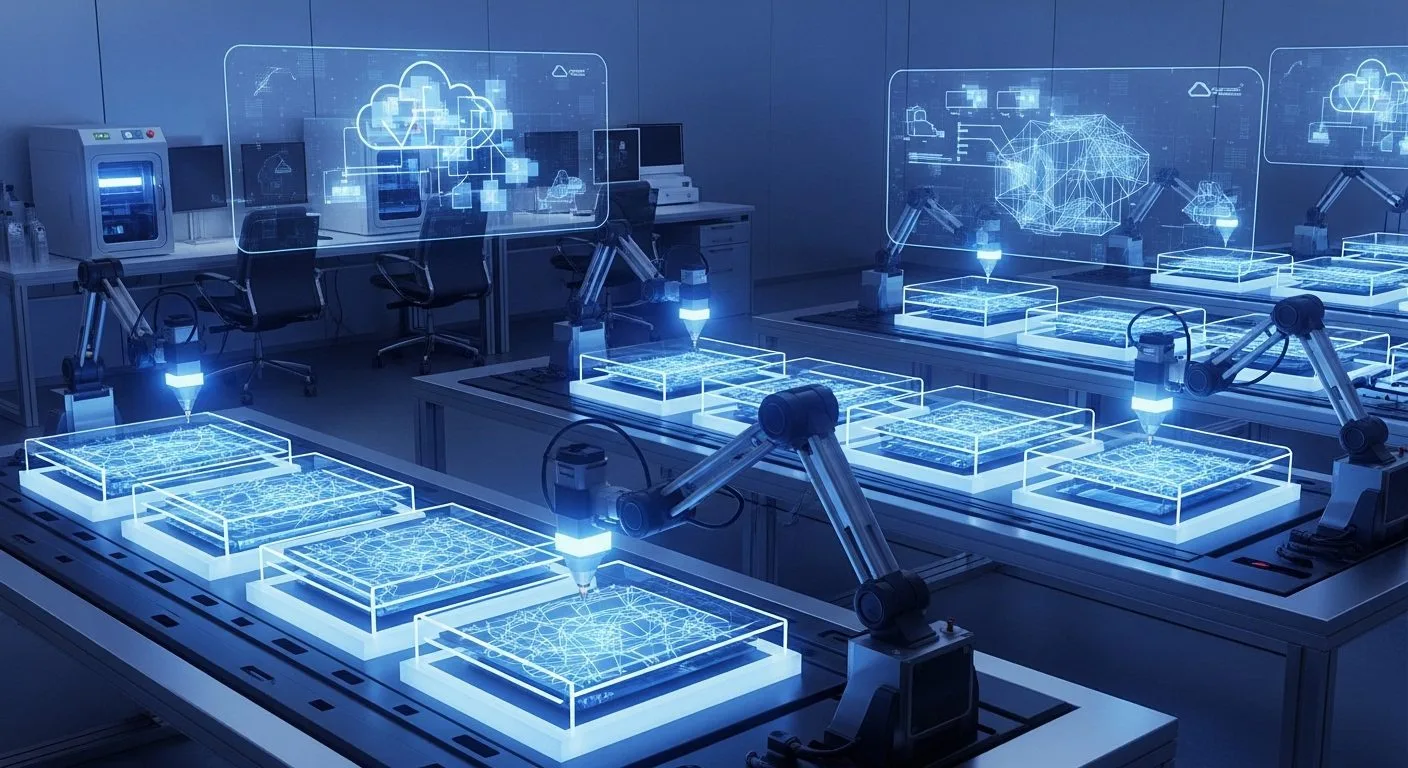
If you are asking what is Project Silica, the short answer is that it is Microsoft’s long-term archival storage project that stores data inside quartz glass instead of relying on conventional magnetic media. Rather than treating storage as a short-lifecycle hardware problem, Project Silica is designed around the idea that some data should survive for decades, centuries, or even far longer without constant migration to new media.
This guide uses Microsoft’s official Project Silica research page and Microsoft’s official news coverage of the Warner Bros. Superman proof of concept as the main references. If you want to understand what is Project Silica in practical terms, the key point is simple: Microsoft is trying to build a write-once, read-many archival storage system on glass that is durable, sustainable, and designed for cloud-scale cold data.
What is Project Silica? Microsoft’s quartz-glass bet on long-term data preservation.
6 key facts at a glance
What is Project Silica at a glance? It is Microsoft’s glass-based archival storage technology for extremely long-lived data retention.
- Project Silica stores data in quartz glass rather than magnetic tape or hard drives.
- Microsoft describes the media as low-cost, durable, electromagnetic-field-proof, and capable of lifetimes measured in tens to hundreds of thousands of years.
- The storage medium is WORM, which means write once, read many.
- Microsoft uses ultrafast femtosecond lasers to write the data and polarization-sensitive microscopy with machine learning to read it back.
- Public Microsoft materials position Project Silica as cloud-scale archival or cold storage rather than everyday consumer storage.
- Warner Bros. collaborated with Microsoft on an early proof of concept that stored the 1978 Superman movie on a coaster-sized piece of glass.
Why understanding what is Project Silica matters
If you want a better answer to what is Project Silica, it helps to start with the storage problem it is trying to solve. The world keeps generating more valuable long-lived data, from medical records and industrial datasets to cultural archives and scientific information. Existing archival systems can preserve data, but they usually do so with tradeoffs: media degrades, operating environments must be tightly managed, and organisations often have to keep copying the same data onto new generations of storage just to avoid loss.
That matters because long-term storage is not only a technical problem. It is also an energy, cost, sustainability, and governance problem. The more companies automate systems and produce durable records, the more they need ways to preserve critical data without a constant rewrite cycle. If you are thinking about how digital systems become repeatable operational infrastructure instead of one-off projects, Progressive Robot’s guide to workflow automation is useful context for why retention and system design matter over time.
What is Project Silica in simple terms

What is Project Silica in plain English? It is a research-driven storage system that writes digital information inside durable glass so it can be preserved for a very long time without the normal maintenance burden of magnetic archival media.
The practical way to think about Project Silica is as cold storage for data you may not need every day but absolutely do not want to lose. Microsoft explicitly points to archival use cases, including personal histories, medical information, industrial records, scientific data, and other high-value information that may need to be kept for a very long time.
Unlike a normal hard drive or SSD, this is not trying to be a fast, reusable everyday storage device. It is trying to be a long-lived physical archive.
How Project Silica works

1. What is Project Silica storing data on?
The first thing to know about what is Project Silica is the medium itself. Microsoft stores data in quartz glass, not on the surface of a disk or strip of magnetic tape. The data is written within the glass by creating layers of nanoscale structures at different depths and angles.
Microsoft says this has major durability advantages. The media is described as electromagnetic-field-proof and strong enough to survive environmental threats that would be dangerous for more traditional archival systems. In Microsoft’s public demonstrations, Project Silica glass has been boiled, baked, microwaved, flooded, demagnetized, and otherwise abused without losing the stored data.
2. What is Project Silica using to write and read data?
Another major part of what is Project Silica is the read-write method. Microsoft says it uses ultrafast femtosecond lasers to write data into the glass. To read the data back, the system uses polarization-sensitive microscopy with ordinary light, while machine learning algorithms decode the patterns that appear when polarized light shines through the material.
That combination matters because Project Silica is not just about inventing a strange storage medium. It is about building a whole storage stack around a medium whose physical behaviour is very different from magnetic media.
3. What is Project Silica doing differently from magnetic archival media?
If you are still asking what is Project Silica beyond the glass itself, the answer is that Microsoft is redesigning the archival system around the media’s strengths. The official research page says the team is co-designing the hardware and software stack from the media all the way up to the cloud user API.
That includes how data is physically stored, how it is retrieved, and how the media library is built. Microsoft also emphasizes a true airgap by design for the storage media. Reading the glass does not supply enough power to modify it, and the mechanical library design is intended to prevent the media from accidentally reaching a writer during read access. That makes Project Silica as much a systems architecture story as a materials science story.
4. What is Project Silica offering in density and cloud potential?
Microsoft’s research page says Project Silica can reach volumetric data densities higher than current magnetic tape, with raw capacity upwards of 7 TB in a square glass platter the size of a DVD. Microsoft also says its beam-steering techniques allow aggregate write throughput comparable to current archival systems.
Those numbers matter because Project Silica is not being presented as an art project or a museum curiosity. Microsoft is explicitly trying to show that this could become practical for cloud-scale archival storage if the surrounding system matures.
Why Microsoft thinks Project Silica matters for archival storage

What is Project Silica trying to improve in real operational terms? The clearest answer is the economics and sustainability of cold storage.
Magnetic archival systems are workable, but they require ongoing intervention. Media wears out, old formats become harder to support, and operators have to keep migrating data forward so it is not lost. Microsoft’s argument is that a durable glass medium can reduce or even eliminate much of that expensive refresh cycle.
That matters for two reasons. First, it can lower the long-term operational burden of keeping valuable data alive. Second, it can reduce the environmental cost of archival storage, because the media can be left in place rather than continually recopied, chilled, and managed through frequent replacement cycles.
This is one reason the official Project Silica page talks about sustainability so directly. Microsoft is not just claiming longer life. It is claiming that longer life changes the system design economics.
The Superman proof of concept and why it mattered

The most concrete public answer to what is Project Silica came from Microsoft’s 2019 collaboration with Warner Bros. In that proof of concept, Microsoft and Warner Bros. successfully stored and retrieved the full 1978 Superman film on a piece of quartz glass roughly the size of a drink coaster, measuring 75 by 75 by 2 millimeters.
Microsoft’s news story says the glass held 75.6 GB of data plus error redundancy codes. More important than the raw number was what the demonstration represented: a recognizable archival workload, a major media library partner, and a real reason to care about decades-long preservation.
Warner Bros. was an especially strong test partner because media archives face exactly the kind of long-horizon preservation problem Project Silica is supposed to address. Studios need to preserve culturally important digital assets, protect against flood or fire risk, and avoid expensive conversion or migration cycles. Microsoft used the Superman example to show that glass storage might eventually offer a durable third copy for digital content that is cheaper and higher fidelity than some archival film workflows.
What Project Silica is not
Project Silica is easier to understand if you are also clear about what it is not.
- It is not a consumer hard drive replacement.
- It is not a general-purpose rewriteable storage medium for everyday computing.
- It is not positioned as a mainstream public cloud storage tier that ordinary users can buy today.
- It is not only about one movie demo; the broader aim is long-term cold data at cloud scale.
- It is not just materials science in isolation, because Microsoft is designing the full storage system around the glass media.
Who should pay attention to Project Silica?
Project Silica matters most for people thinking about archival retention, infrastructure durability, and the long-term cost of data preservation.
- Cloud infrastructure leaders who think about cold data economics.
- Archivists and media libraries with century-scale preservation problems.
- Enterprises storing legal, financial, industrial, or scientific records for long periods.
- Sustainability-minded infrastructure teams looking for lower-maintenance archival media.
- Researchers tracking the future of post-magnetic storage technologies.
If your concern is everyday storage performance for laptops or local development, Project Silica is not the story you need. If your concern is how humanity preserves valuable digital information for very long periods, it is one of the more interesting storage efforts to watch.
Limitations and open questions
There are still clear reasons to stay realistic.
- Microsoft publicly frames Project Silica as an active research and development effort, not a finished mass-market product.
- Long-term success depends on scaling write and read speeds, density, operational costs, and deployment systems.
- Enterprise adoption depends on the total system around the media, not just the media itself.
- Archival storage also involves software, format, governance, and retrieval policies, not just physical durability
So the right takeaway is not that Project Silica has already replaced tape. It is that Microsoft has built one of the most serious public alternatives to the standard archival-media model.
Frequently asked questions
Is Project Silica a hard drive made of glass?
No. Publicly, it is best understood as a quartz-glass archival storage technology for write-once, read-many cold data, not as a general-purpose hard drive.
What is Project Silica best suited for?
The clearest answer is long-term archival or cold storage for information that must be preserved reliably for very long periods but does not need constant access.
Is Project Silica available as a normal Microsoft product?
Not in the way typical cloud or consumer storage products are. Microsoft’s public materials present it as a research-driven storage technology effort rather than a standard off-the-shelf offering.
Why does Project Silica use glass instead of magnetic tape?
Microsoft’s argument is that glass can offer much longer life, better durability, less need for repeated media migration, and better sustainability characteristics for archival storage.
Final thoughts
If you came here asking what is Project Silica, the most useful answer is that it is Microsoft’s attempt to rethink archival storage from the media up. Instead of accepting short-lifecycle storage media and the endless cost of migrating data forward, Project Silica asks whether durable quartz glass can become the foundation for long-term cloud archival systems.
That makes Project Silica important not because it is a consumer product today, but because it points to a different future for preservation. If Microsoft can keep improving the surrounding system, Project Silica could help change how organisations store the kinds of data that need to outlast hardware generations, datacenter refresh cycles, and even institutions themselves.
More AI coverage: explore Progressive Robot's AI Models, Tools & Releases hub — hands-on reviews, setup guides and benchmarks in one place.