

You post a few photos from a trip to Brazil on Tuesday. On Wednesday, an email lands from the hotel where you stayed, thanking you for your visit and dangling a discount on your next booking. The name is right, the link looks clean, and the greeting knows your itinerary. The hotel sent none of it. A generative AI model wrote that message after scraping details straight from your public posts. That is the warning at the center of new research from The University of Texas at Arlington, and it shows how an AI scam built from ordinary social media sharing can wear the face of a trusted brand.
The study puts numbers on something security teams have feared for years: widely available AI tools can turn your vacation photos, concert check-ins, and late-night worries into highly personalized phishing emails, generated in minutes and aimed at huge numbers of people. Researchers call it context-aware spear phishing. Participants in a user study rated the fake emails as startlingly credible. Even more troubling, the safety filters that AI companies rely on today caught almost none of the attack requests that produced them.
- What Is Context-Aware Spear Phishing?
- The UTA Study: Inside the AI Scam Experiment
- How AI Turns Social Posts Into Personalized Bait
- The Brazil Hotel Scam: A Warning Shot
- Safety Filters Caught Almost Nothing
- The 99% Fix: Teaching Guards to Recognize Attacks
- How to Protect Yourself From the Next AI Scam
- What Comes Next: NDSS 2027 and Beyond
What Is Context-Aware Spear Phishing?

Traditional phishing is a shotgun: one fake invoice, one fake password reset, blasted to thousands of strangers, hoping a few click. Spear phishing narrows the aim. An attacker researches one target, borrows the vocabulary of their world, and crafts a message that feels like it came from a colleague, a vendor, or a bank.
From Static Details to Living Context
According to the spear phishing playbook, targeted scams have historically leaned on static details: a job title scraped from a professional network, an employer name, maybe an invoice number pulled from a breached database. Those facts age slowly, describe what you do rather than who you are, and any recycled AI scam could reuse them for years.
The University of Texas at Arlington study examines a sharper evolution. The AI models in the research pulled context from people’s recent social media posts, including photos, and wove that material into the email itself. Travel plans, concerts, events, even worries a person shared online became the emotional furniture of the message. Researchers call this context-aware spear phishing, and it turns an AI scam from a generic lure into a story the recipient recognizes as their own life.
Why the Anybody-Can-Attack Shift Matters
Context-aware AI scam attacks were expensive before generative models. Writing a convincing personalized lure took fluency, local knowledge, and time, which kept mass personalized phishing in the hands of skilled criminal groups. The UTA findings show that cost collapsing. An attacker no longer needs writing skill or even fluent English; they need a model, a scraped feed, and a short description of what they want the email to say. That is now the complete recipe for a modern AI scam.
That shift changes who can run a convincing AI scam, and volume changes with it. Personalization used to be rationed to high-value targets. Now it can be produced for thousands of ordinary accounts at once, which is exactly the scenario the UTA team measured.
The UTA Study: Inside the AI Scam Experiment

The research was led by Shirin Nilizadeh, an associate professor in the Department of Computer Science and Engineering at The University of Texas at Arlington, with graduate student Elham Pourabbas Vafa as co-author. Their question was blunt: can off-the-shelf AI models turn public social media activity into phishing emails that real people find credible?
What the Researchers Tested
The team gathered details from volunteers’ recent public posts, including photographs, and fed them to widely available AI tools. From that raw context, the models generated complete spear-phishing emails: subject lines tuned to each recipient, sender names chosen to match the story, and embedded links dressed to look legitimate. The lures rode on real life, including trips the person had posted about, events they had said they were excited for, and concerns they had voiced online.
One detail in the setup matters. The prompts were deliberately simple. The researchers were not showing off red-team technique; they were demonstrating that casual attackers now clear a very low bar. As Nilizadeh put it, anyone can be the attacker, and that makes it scarier. With these models, she said, attackers do not need to do much. They can just tell the model what they want it to do, a one-sentence AI scam brief.
What the Study Found
The output was not gimmicked toward success, and that is what makes this AI scam research sobering. In a user study, participants rated the AI-generated emails highly for quality, and researchers say that credibility is precisely what makes the attacks dangerous. A recipient is far more likely to click when the message references their recent experiences, noted Pourabbas Vafa, because context-aware bait reads as relevant rather than random.
The findings landed in a security venue with serious standing: the paper was accepted for presentation at the Network and Distributed System Security Symposium (NDSS 2027) in Seoul in March 2027, and Pourabbas Vafa also presented the work at the Texas Security Workshop at The University of Texas at Dallas. That credibility matters, because the same pattern of AI-assisted fraud is already showing up in the wild, such as the infostealer campaign that uses AI to autodox victims once malware touches a machine.
How AI Turns Social Posts Into Personalized Bait

The attack pipeline in the UTA study is unsettling mainly because every stage is trivial. Understanding it explains why an AI scam born from social posts lands so much better than a generic one.
Stage One: Harvest Open Profiles
Public posts are a free intelligence feed. Photos reveal locations and dates. Captions reveal plans. Replies reveal relationships, and hashtags reveal habits. None of this requires hacking. If a profile is public, or if a post leaks to aggregators through friends-of-friends settings, the material is collected as easily as reading a magazine.
Stage Two: Compress the Context
The model reads the harvested posts and extracts the useful bones: where the person traveled, what they paid attention to, what they worried about, who they mentioned. That summary becomes the personalization payload, a few sentences describing a human life in a way the attacker never had to understand personally. This is the step where a generic AI scam becomes a personal one.
Stage Three: Generate the Lure
A short prompt then asks the model for an email that exploits that payload. The model chooses a sender persona, writes a subject line referencing the trip or event, mirrors the recipient’s tone, and shapes a link label that fits the story. One run produces one email; a loop produces thousands, each unique, an AI scam assembly line that never gets tired or bored.
| Personal detail | Where it leaks from | How the AI scam email uses it |
|---|---|---|
| Recent travel | Photos, geotags, captions | Fake confirmation or discount email from a hotel or airline |
| Events and interests | Check-ins, replies, hashtags | Fake ticket refund or resale offer |
| Stated concerns | Vent posts, support threads | Empathy lure: a message that feels supportive, then asks to click |
| Relationships | Tags, replies, family photos | Sender names and references borrowed from people you know |
| Purchase habits | Unboxing posts, store tags | Fake order support or delivery exception notices |
Each row in that table is a template an attacker can request from a chatbot in plain language. The UTA study effectively confirmed that every one of them is already achievable with public posts and no malware, which is why the research reads less like a lab result and more like a forecast of the next AI scam wave.
The Brazil Hotel Scam: A Warning Shot
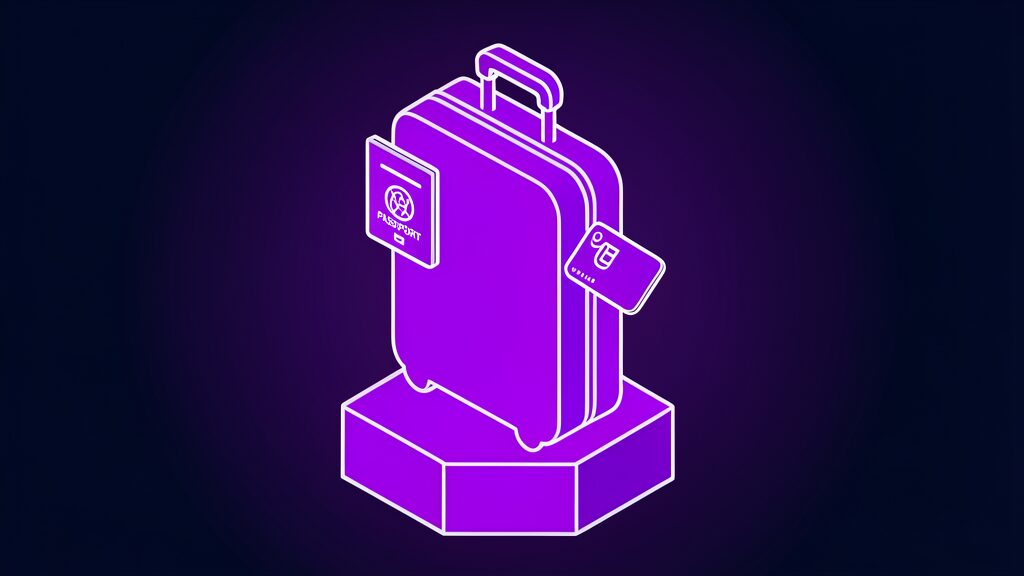
The example the researchers open with is almost cozy. You post photos from a trip to Brazil. The next day an email arrives from the hotel where you stayed, thanking you for visiting and offering a discount on your next stay. The hotel name looks right. The link looks legitimate. The email references your actual trip.
Why This Email Works
Every credibility check a cautious person runs passes. The sender name matches a real business you used. The content matches things you did. The timing feels natural, because post-travel marketing emails are real and common. The only missing ingredient was the hotel, and that is exactly the ingredient generative AI removes the need for. The hotel never sent the message. A model fabricated it from vacation posts, no malware and no breach required, a textbook AI scam.
What makes this warning-shot scenario so uncomfortable is that the click does not need to ask for much. A discount booking link that leads to a look-alike page is enough. Enter an email, a name, and a card number to claim the deal, and the AI scam has captured the payment credentials of a real customer who trusted context, not just spelling.
From Discount Lures to Credential Theft
Swap the hotel story for your employer, your bank, or your utility, and the same mechanics produce classic credential-harvesting. The UTA research shows personalization is the force multiplier: recipients evaluate messages partly on relevance, and context-aware relevance is now manufactured on demand. That assembly is the engine of the modern AI scam.
This is also why password hygiene keeps failing as a defense on its own. Even careful people re-enter credentials on look-alike pages when the story around the page feels personal. The Bank of America password warning about not sharing credentials with AI assistants underlines the same underlying problem: the credential itself is the prize, and social engineering is how attackers reach it.
Safety Filters Caught Almost Nothing

The most alarming result of the UTA study is not the quality of the fake emails. It is how quietly the attack requests passed through the guardrails standing between an AI scam and its target.
The Guardrails Under Test
AI companies lean on input-output safety classifiers to police misuse: Llama Guard, ShieldGemma, and WildGuard are among the most widely deployed open guard models. The research team ran the spear-phishing generation requests through these tools with default settings. Detection landed between zero and nineteen percent.
| Guard model | Default detection of scam-email requests | With attack-specific instructions |
|---|---|---|
| Llama Guard | Within the 0-19% band | Up to 99% |
| ShieldGemma | Within the 0-19% band | Up to 99% |
| WildGuard | Within the 0-19% band | Up to 99% |
In other words, at least four out of five, and often nearly all, of the requests to manufacture personalized scam emails sailed through the guardrails that are supposed to be the industry’s first line of defense.
Why the Filters Miss This
Default classifiers were trained on obvious harm: malware code, explicit fraud language, weapons instructions. The AI scam generation requests in this study look nothing like that. They are polite, abstract, and wrapped in the ordinary vocabulary of marketing and personalization.
Nothing in the phrasing says phishing. The malicious intent lives in the combination of harvested context plus an instruction, not in any single loaded word, which is why word-based safety lists miss it entirely.
This is a classic mismatch between static taxonomies and composable attacks. An AI scam built this way never asks the model to do anything that reads dangerous in isolation. It asks for an email, a discount offer, a friendly reminder, with context attached. Every piece looks benign. Only the assembly is harmful, and assembly-level intent is exactly what default guardrails are worst at detecting.
The 99% Fix: Teaching Guards to Recognize Attacks

The same UTA experiments that exposed the gap also sketched its remedy. When the researchers gave the guard models explicit instructions to recognize context-aware spear-phishing requests, detection rates climbed to as high as 99%, the difference between an AI scam walking free and being stopped at the door. The capability was present the whole time. What was missing was a threat model that included this attack.
Instruction-Tuned Guardrails Work
The mechanism is straightforward and cheap. Guard models respond to their configuration: tell a classifier what an attack looks like, including benign-looking components paired with personal context, and it stops flagging only obvious harm. The researchers effectively taught Llama Guard, ShieldGemma, and WildGuard to treat harvested social context plus an email-generation request as a single suspicious object, and the detection numbers responded almost immediately.
That finding reframes the problem from model capability to deployment practice. Vendors do not need new safety models to close this hole first. They need to update guard instructions with attack patterns from security research that they currently treat as downstream or niche.
Why the Researchers Held Back the Prompt
One deliberate choice in the paper deserves attention. The team omitted the exact instructions that reliably produced the scam emails from the public version of the paper, to prevent immediate misuse. That restraint sits awkwardly beside the results: defenders know guardrails can reach 99% detection, yet they must reverse-engineer which attack signatures to teach, because publishing the recipes would hand out an AI scam starter kit.
Nilizadeh’s conclusion was direct. AI companies need to take these kinds of attacks seriously and put safeguards in place before their tools are misused to create highly targeted social engineering at scale. The 0-to-99% spread is the argument: the fix exists, and the AI scam will not wait for the will to ship it.
How to Protect Yourself From the Next AI Scam
You cannot un-publish your past, and you cannot wait for vendors to retune guardrails. The practical defense combines a smaller public footprint with verification habits that assume every personalized message could be an AI scam until proven otherwise.
Shrink the Context an Attacker Can Steal
Every detail that never goes public is a detail no AI scam can quote back at you. Start with the obvious leaks: trip posts can be delayed until after you are home, event tickets never need to be shown, and support-seeking posts deserve a privacy check before they go out. Most social platforms let you lock old posts, restrict search visibility, and block profile scraping for logged-out visitors. Those settings are not paranoid anymore. They are the front line.
| Habit | Effort | What it stops |
|---|---|---|
| Delay travel and event posts until after you return or attend | Low | Location-aware lures with real dates |
| Audit who can see old posts; lock down public profile access | One-time | Bulk context harvesting |
| Never post real-time worry, health, or purchase details | Awareness | Empathy lures and fake order support |
| Verify unexpected offers through the official app or a known phone number | Habit | Look-alike booking and refund pages |
| Use a password manager and passkeys for logins | Setup | Credential capture on cloned pages |
| Add MFA on email itself, not just accounts | Setup | Mailbox takeover that fuels deeper AI scam chains |
Verify Out of Band, Every Time
The Brazil hotel example works because in-band checks all pass: same brand, same trip, plausible sender. An out-of-band check breaks the spell. Open a new tab, type the hotel’s real site, and look for the offer. Call the company using a number you found yourself. If the personalized email is the only evidence that the event exists, treat it as a possible AI scam until a second channel confirms it.
These habits mirror what a cybersecurity expert’s tips on AI-powered scams recommend, and they extend the classic social-engineering playbook in our guide to phishing and social engineering: the tactics change, but suspicion plus verification still wins.
What Comes Next: NDSS 2027 and Beyond

The UTA paper arrives on a steep curve. Guardrail gaps like this one tend to surface in research months or years before they surface in headlines, and the industry’s response is visible in the near-term calendar: the study is scheduled for presentation at NDSS 2027 in Seoul, one of the top security conferences, which tells you how seriously the security community reads AI-automated social engineering.
What Defenders Should Watch
Three things deserve attention over the coming year. First, expect guard-model updates that encode context-aware phishing signatures, because the research just proved detection can reach 99%. Second, watch email providers and messaging platforms, which are racing in the opposite direction with AI of their own, including scam detection built into messaging apps. Third, watch the identity layer: provenance standards for sender domains, and watermarks that mark where content came from.
The deeper shift, though, is cultural. Personalized communication used to be a signal of trustworthiness precisely because personalization was expensive. An AI scam erases that cost, which means relevance itself stops being evidence. Individuals, companies, and standards bodies are all being forced to rebuild trust on verifiable channels instead of familiar tone.
The Bottom Line
Public posts plus public models plus weak guardrails equal mass-produced, context-aware spear phishing, and the UTA team has now demonstrated each term of that equation with peer-reviewed results. The defenses are known, unglamorous, and available today: smaller footprints, out-of-band verification, stronger authentication, and guardrails actually tuned for the attacks security researchers keep describing. The next AI scam will quote your life back at you. The question is whether you will have handed it the script.
References
Your social media posts could fuel the next AI scam, TechXplore
NDSS 2027, Network and Distributed System Security Symposium
Llama Guard: LLM-input-Output Llama Guard, arXiv
ShieldGemma, Google DeepMind documentation
WildGuard: Navigating the Double-Edged Sword of Large Language Model Safety, arXiv
The University of Texas at Arlington
UTA College of Engineering and Computer Science and Engineering
More AI coverage: explore Progressive Robot's AI Models, Tools & Releases hub — hands-on reviews, setup guides and benchmarks in one place.










