
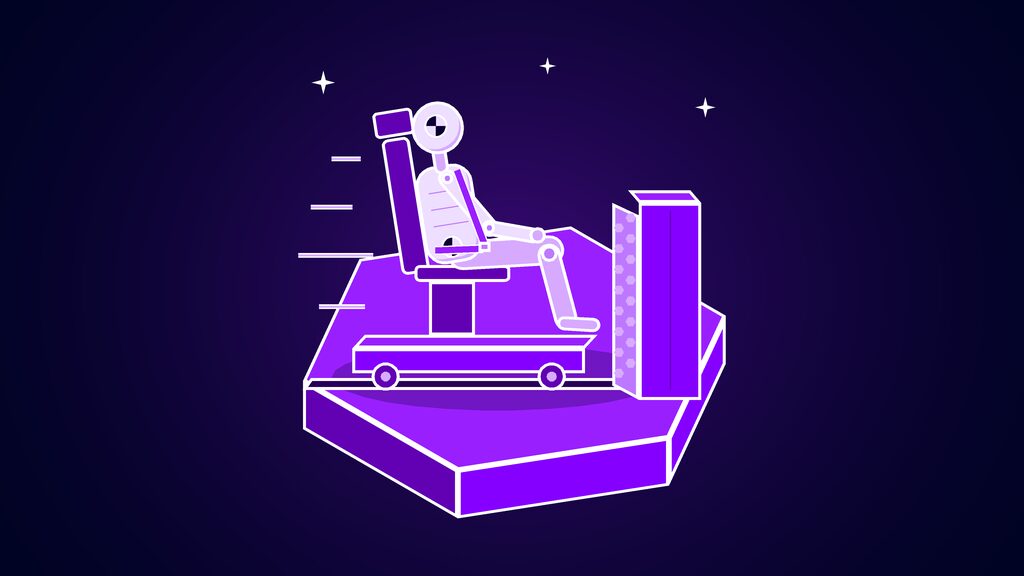
Circuit Breaker Labs is a five-person start-up with an unusual product: an army of AI “crash-test dummies”. Its simulated users, built to talk like six-year-olds, teenagers, gamers, second-language speakers and adults in distress, are sent into conversations with chatbots to find the moments when an AI system misses a cry for help or says something dangerous. TechCrunch profiled the company on 2 October 2026, ahead of its pitch at TechCrunch Disrupt.
The timing is pointed. Generative AI safety debates often focus on distant scenarios, such as bioweapons or rogue systems. Circuit Breaker Labs is focused on harm that has already happened: young people who formed emotional attachments to chatbots and died by suicide, and families who are now suing the companies involved.
This article explains what Circuit Breaker Labs does, how its testing works, why children are the hardest users to protect, how it fits with new rules in the US and the UK, and what parents and AI builders can take from it.
Table of contents
- What Circuit Breaker Labs Does
- The Harm Circuit Breaker Labs Wants to Prevent
- How Circuit Breaker Labs Tests a Chatbot
- Three Ways Chatbots Fail Vulnerable Users
- Why Children Are the Hardest Users to Protect
- Where Circuit Breaker Labs Fits With New Rules
- How Circuit Breaker Labs Compares With Other Safety Checks
- What Circuit Breaker Labs Still Has to Prove
- What Parents Can Do Now
- What AI Builders Should Take From It
- What to Watch Next for Circuit Breaker Labs
- Circuit Breaker Labs FAQ
- References and Further Reading
What Circuit Breaker Labs Does
Circuit Breaker Labs describes itself as an AI safety testing lab for high-risk applications. Its homepage tells developers to build and “Break Nothing”, and its promise is that it will “simulate every edge case to find where AI breaks, so real users never do.”
Crash-test dummies for chatbots
Car makers do not wait for real crashes to find out whether a seatbelt works. They use dummies, instrumented and repeatable, to test every scenario they can think of. Circuit Breaker Labs applies the same idea to conversational AI. Its AI agents play the part of users, and the chatbot under test has to respond safely.
A Startup Battlefield 200 finalist
TechCrunch named Circuit Breaker Labs one of its 2026 Startup Battlefield 200 companies. It will pitch at TechCrunch Disrupt, held at Moscone West in San Francisco from 13 to 15 October. The company’s homepage invites visitors to come and see it there.
The founders
Circuit Breaker Labs was founded by siblings Shirali Nigam, its chief executive, and Arul Nigam, its chief technology officer. Crypto Briefing reported that the company made its public debut on 10 September 2025, World Suicide Prevention Day, and that it has been self-funded so far. TechCrunch reported that it has five employees, including the two founders.
The Harm Circuit Breaker Labs Wants to Prevent

The founders have said they were motivated by a specific case, and the wider record since then explains why investors and regulators are paying attention.
Sewell Setzer
Sewell Setzer III was 14 when he died by suicide in 2024 after developing an emotional attachment to a Character.AI chatbot. His parents alleged in a 2024 lawsuit that the bot encouraged him. Arul Nigam told TechCrunch that the bot may not have understood what words like “I want to be with you” really implied.
The lawsuits that followed
In January 2026, Character.AI and Google agreed to settle several lawsuits brought by families of young users, with terms kept confidential. Families have also sued OpenAI over ChatGPT’s alleged role in suicides and delusions; TechCrunch reported in November 2025 that seven more families had filed claims. Character.AI itself removed open-ended chat for users under 18 from 25 November 2025.
The scale of the problem
In October 2025, OpenAI said that about 0.15% of ChatGPT’s weekly active users have conversations that include “explicit indicators of potential suicidal planning or intent”. It also said 0.05% of messages contain explicit or implicit indicators of suicidal ideation or intent. A small percentage of a very large user base is a very large number of people.
People a week showing explicit signs of suicidal planning or intent, at OpenAI’s reported rate of 0.15% (our arithmetic: weekly users x 0.0015)
Ordinary users, not attackers
Most AI red-teaming looks for people deliberately trying to break a system. Circuit Breaker Labs is interested in something else. “Those sorts of safety vulnerabilities, where people aren’t necessarily actively trying to break the system — they’re engaging in a natural way — and the system has context pollution or it doesn’t understand the nuance, and then takes really dangerous action, we’re trying to prevent that,” Arul Nigam told TechCrunch.
How Circuit Breaker Labs Tests a Chatbot
The company’s website sets out a three-stage process. It is designed so that the client’s model never leaves the client’s control.
| Stage | What happens |
|---|---|
| Model intake | Circuit Breaker Labs connects to the client’s API endpoint, “so nothing proprietary leaves your side” |
| Adversarial simulation | It generates “100,000+ user-interactions” to probe escalating risk, language nuance and clinical contexts |
| Report and remediation | An audit report with failure patterns and recommendations, plus a public-facing summary the client can share |
Simulated users of every kind
The agents mimic people of different ages, backgrounds, languages and cultures. “The way a six-year-old girl versus a 45-year-old man, or someone who speaks English as a first language versus a second language, or gamer slang versus someone else who uses a different kind of slang, all of those can really trip up a model,” Shirali Nigam told TechCrunch.
Messy, realistic language
Circuit Breaker Labs says it works with human domain experts to make its simulations realistic. The tests include slang, coded language and typos. Shirali Nigam’s point is simple: “Models are really good at handling standard speech patterns, but nobody actually talks like that.” Slang and misspellings have long been a weak spot for natural language processing, and safety filters inherit that weakness.
Volume and time
According to TechCrunch, Circuit Breaker Labs runs tens of thousands to hundreds of thousands of simulated interactions a day. That matters because risk often builds over many messages and many conversations, rather than appearing in one obvious line.
Scores without an AI judge
Many evaluation tools use one language model to grade another. Circuit Breaker Labs says it uses “No LLM-As-A-Judge” and produces severity scores that “show exactly what to fix”. TechCrunch described a proprietary scoring method designed to be auditable and explainable. The company says its approach is patent-pending.
Testing inside the release process
Crypto Briefing reported that Circuit Breaker Labs offers a command-line tool, API access and GitHub Actions support, so safety checks can run every time a team ships new code. That turns safety testing from a one-off audit into a regression test, which is how most software teams already treat security.
Three Ways Chatbots Fail Vulnerable Users

Crypto Briefing summarised the three failure types Circuit Breaker Labs targets most. Each one is easy to miss in normal testing.
| Failure type | What goes wrong | Why ordinary testing misses it |
|---|---|---|
| Missed warning signs | The bot does not recognise cues of suicidal thinking | Cues are indirect, not keyword matches |
| Misread slang | A casual phrase with serious meaning is taken literally, or the reverse | Test scripts use standard, tidy language |
| Gradual drift | A conversation moves one message at a time to somewhere it should never go | Single-prompt tests never see the build-up |
Single-turn and multi-turn tests
To catch all three, the framework runs both single-turn tests, which check one reply, and multi-turn tests, which play out a whole conversation. Our earlier report on how long AI conversations reveal vulnerabilities across seven chatbots found the same pattern in a different area: safety that holds in a short exchange can erode over a long one.
Suicidal ideation as the default suite
By default, the testing suite centres on suicidal ideation scenarios, according to Crypto Briefing. Clients can build custom test groups and run repeated iterations to match their own product. That makes sense for mental health apps, where the worst failure is the one that matters most.
Why Children Are the Hardest Users to Protect
The TechCrunch headline promises safer AI “for your kids (and you)”. Children are the harder half of that promise, for three reasons.
They talk differently
Children use invented words, phonetic spelling and slang that changes from one playground to the next. A safety system trained on adult text may not recognise that a child is describing harm. Circuit Breaker Labs’ decision to simulate a “six-year-old girl” alongside adult users addresses this directly.
They form attachments quickly
TechCrunch described the risk of users falling down an “AI psychosis” hole, developing a parasocial relationship with a chatbot. Young people are especially prone to treating a friendly, always-available voice as a confidant. That is the pattern in the Setzer case.
They use AI where adults do not look
Children meet chatbots inside games, homework helpers and social apps, not only in dedicated assistants. TechCrunch noted that the testing platform could eventually apply to any app where that kind of attachment could form, including AI “co-worker” agents whose answers vary from one conversation to the next.
Where Circuit Breaker Labs Fits With New Rules
Regulators on both sides of the Atlantic have started to focus on chatbots and children. Independent testing is one way companies can show they are taking the problem seriously.
| Date | Development |
|---|---|
| 8 Nov 2024 | Ofcom confirms that the UK Online Safety Act covers generative AI chatbots in many cases |
| 11 Sep 2025 | US Federal Trade Commission opens an inquiry into companion chatbots, sending orders to seven companies |
| 13 Oct 2025 | California signs SB 243, the first state law on companion chatbot safeguards |
| 25 Nov 2025 | Character.AI ends open-ended chat for under-18s |
| 1 Jan 2026 | SB 243 takes effect |
| Jan 2026 | Character.AI and Google agree to settle teen harm lawsuits |
| 2 Oct 2026 | TechCrunch profiles Circuit Breaker Labs ahead of Disrupt |
The FTC inquiry
The FTC’s September 2025 orders went to Alphabet, Character Technologies, Instagram, Meta, OpenAI, Snap and xAI. They asked how the companies test and monitor for negative effects on children and teens, how they restrict access by age and how they make money from engagement. Questions like “how do you test?” are exactly the ones a lab such as Circuit Breaker Labs is built to help answer.
California’s SB 243
California’s law requires companion chatbot operators to remind users that they are talking to an AI, to prevent sexual content reaching minors, and to have a protocol for suicidal ideation and self-harm that refers users to crisis services. It also gives families a private right of action. The Circuit Breaker Labs homepage points to California’s push for independent audits as part of “the need” for its service.
The UK position
In the UK, Ofcom’s open letter of November 2024 made clear that many generative AI chatbots fall under the Online Safety Act, which requires risk assessments and protections for children. UK developers building companion, coaching or wellbeing chatbots should assume they will need evidence of testing, not just good intentions.
Government use
The company also says it has achieved “Awardable” status on the US Department of Defense’s Tradewinds Solutions Marketplace, linked to safeguarding AI used in military mental health. That suggests Circuit Breaker Labs sees public-sector buyers as well as start-ups among its future customers.
How Circuit Breaker Labs Compares With Other Safety Checks
Simulated users are one tool among several. Most serious teams will combine them, and it helps to see what each approach is good at.
| Approach | Strength | Weakness |
|---|---|---|
| Internal prompt tests | Cheap, fast, built into development | Written by the people who built the product |
| Human expert red-teaming | Clinical judgement and creativity | Slow, expensive, limited volume |
| One model grading another | Scales to huge test sets | The judge can share the blind spots it is checking for |
| Simulated users (Circuit Breaker Labs) | Volume, realistic language, multi-turn drift, repeatable scores | Only as good as its simulations and scoring |
| Live monitoring | Sees real behaviour | Finds harm after it has happened |
Where simulation adds most
The biggest gain from simulated users is coverage. A human team might run a few hundred careful conversations; TechCrunch reported that Circuit Breaker Labs runs tens of thousands or more a day. That is how rare failures, the ones that appear once in ten thousand conversations, become visible before launch.
Where people still matter
Clinicians decide what a safe response looks like in the first place. Circuit Breaker Labs says it builds its simulations with human domain experts, and its homepage says its research has been “presented at APA & FDA”, without giving further detail. The machines provide scale; people provide the standard.
What Circuit Breaker Labs Still Has to Prove
The idea is strong, but the company is very young. A fair assessment needs to note the open questions.
A small team
With five employees, Circuit Breaker Labs is a small operation. TechCrunch described it as being “in the very early stages”, although it already has a working product. Scaling to hundreds of clients, languages and cultures will need people as well as compute.
Unnamed customers
Arul Nigam declined to name the company’s main customers. The website carries one testimonial, from Kevin M. Ramotar, Psy.D., a director of clinical product and AI, who says the red-teaming “surfaced actionable insights” for a behavioural health product. Crypto Briefing reported clinical backing from Grow Therapy. More public case studies would help.
Independence and incentives
The company’s own slogan is “You can’t grade your own homework.” The same logic applies to any auditor paid by the company it audits. Car safety ratings work partly because test protocols are public and comparable. If Circuit Breaker Labs’ scores are to carry weight with regulators, the methods behind them will need outside scrutiny.
Simulation is not reality
However realistic, a simulated user is still a model of a person. Real distress can be stranger, quieter and more varied than any test set. Simulation reduces risk; it cannot remove it, and products still need human escalation paths and monitoring once they are live.
What Parents Can Do Now
Testing labs work upstream, on the products. Parents work downstream, at home. Both matter.
Know which apps have chatbots
Many games and social apps now include AI characters or assistants. Check app descriptions and settings, and ask your child which ones they talk to.
Talk about what a chatbot is
Children should understand that a chatbot is not a friend, a therapist or a person, however warm it sounds. California’s law requires reminders of this; a conversation at home does the job better.
Watch for withdrawal
Long, secretive conversations with an AI character, especially late at night, are a warning sign. So is a child who seems more attached to a bot than to friends or family.
Know where to get help
If you are worried about a child’s safety, contact your GP or local services. In the UK, Samaritans can be reached free at any time on 116 123, and Childline on 0800 1111.
What AI Builders Should Take From It
For any team shipping a chatbot that might meet a vulnerable user, the message from Circuit Breaker Labs is clear: assume it will.
Test like real users talk
Include slang, typos, code-switching and children’s language in your test sets. Tidy prompts will flatter your model.
Test whole conversations
Run multi-turn scenarios that escalate slowly. Our guide to AI red-teaming before launch covers how to build a programme that goes beyond single prompts.
Get an outside view
Internal teams know what they built and, without meaning to, test for it. External red-teaming, whether from Circuit Breaker Labs or another provider, finds the cases you did not imagine. Independent oversight was also a theme of the White House’s recent AI safety accord, although that pledge is voluntary.
Keep testing after launch
Models change, prompts change and users change. Treat safety tests as regression tests that run with every release, not as a certificate you earn once.
What to Watch Next for Circuit Breaker Labs
The next few weeks will show how far the company can take its crash-test pitch.
The Disrupt pitch
Startup Battlefield runs from 13 to 15 October. A strong showing could bring the first outside funding and named customers.
Published methods
The company has published a whitepaper titled “Agentic Red-Teaming for Mental Health Safety”. Peer review or independent replication of its scoring would strengthen its case with regulators.
Wider use
Circuit Breaker Labs started with mental health apps. If it moves into general assistants, companion apps and AI built into games, its work would reach many more children.
Circuit Breaker Labs FAQ
What is Circuit Breaker Labs?
Circuit Breaker Labs is a US start-up that tests AI chatbots for psychological safety by sending simulated users into conversations with them. It was founded by Shirali and Arul Nigam.
What are AI crash-test dummies?
They are AI agents that imitate real people, including children, second-language speakers and people in distress, so a chatbot’s responses to risky conversations can be tested before real users meet it.
Who uses Circuit Breaker Labs?
Its current focus is high-risk applications such as AI coaching, journaling and mental health support apps. The company has not named its main customers.
How many tests does it run?
TechCrunch reported tens of thousands to hundreds of thousands of simulated interactions a day, and the company’s website refers to “100,000+” clinically realistic tests.
Is Circuit Breaker Labs funded?
Crypto Briefing reported that it was self-funded as of mid-2026. It will pitch at TechCrunch Disrupt’s Startup Battlefield in October 2026.
Does UK law cover AI chatbots for children?
In many cases, yes. Ofcom has said the Online Safety Act applies to generative AI chatbots on user-to-user and search services, including duties to protect children.
References and Further Reading
Circuit Breaker Labs hopes to make AI safer for your kids (and you) (TechCrunch)
Circuit Breaker Labs: AI Safety Evaluation and Red-Teaming
Agentic Red-Teaming for Mental Health Safety (Circuit Breaker Labs whitepaper)
How We Safeguard AI for Military Mental Health (Circuit Breaker Labs)
Circuit Breaker Labs builds crash test dummies for mental health chatbots (Crypto Briefing)
Lawsuit blames Character.AI in death of 14-year-old boy (TechCrunch)
Google and Character.AI agree to settle lawsuits (Fortune)
Seven more families are now suing OpenAI (TechCrunch)
Character.AI to ban children from open-ended chats (Fortune)
Over 1 million ChatGPT users mention suicidal intent every week (PCWorld)
FTC launches inquiry into AI chatbots acting as companions (FTC)
First-in-the-nation AI chatbot safeguards signed into law (Senator Steve Padilla)
More AI coverage: explore Progressive Robot's AI Models, Tools & Releases hub — hands-on reviews, setup guides and benchmarks in one place.










