

Apple home hub hardware has been sliding down the calendar since 2024, and it is finally in employees’ houses. Bloomberg’s Mark Gurman reports that the device known internally as J490 is in widespread home testing among Apple staff, running an operating system built around the new Siri AI, and could be introduced as early as October 2026.
The Apple home hub timing is not a coincidence. Every previous slip of this product traced back to the same cause: the software was not ready. Apple’s first Apple Intelligence push did not deliver an assistant capable of anchoring a screen whose entire premise is that you talk to it. With Siri AI shipping in the iOS 27 betas and launching publicly next month, the blocker is gone.
What emerges is not a single device but the opening move in a much larger plan. Gurman describes two variants of the hub, two refreshed companion products arriving alongside it, and at least two further devices behind them — including an in-home security system in 2027 tied to a monitoring service. This article works through the hardware as reported, the software it runs, how it compares with the incumbents it is ten years late to fight, the price signals, and the parts that are still rumour.
Table of contents
- What the Apple Home Hub Actually Is
- The Software Is the Whole Story
- How the Apple Home Hub Compares With What It Is Fighting
- The Apple Home Hub Is the Start, Not the Product
- The Apple Home Hub Against Apple’s Own Smart Home Record
- What the Apple Home Hub Has to Get Right
- What Is Confirmed and What Is Not
- How the Apple Home Hub Got Here: A Timeline
- What It Means if You Are Buying
- Frequently Asked Questions About the Apple Home Hub
- References
What the Apple Home Hub Actually Is
Strip away the years of speculation and the reported device is specific.
A seven-inch square screen, two ways to mount it
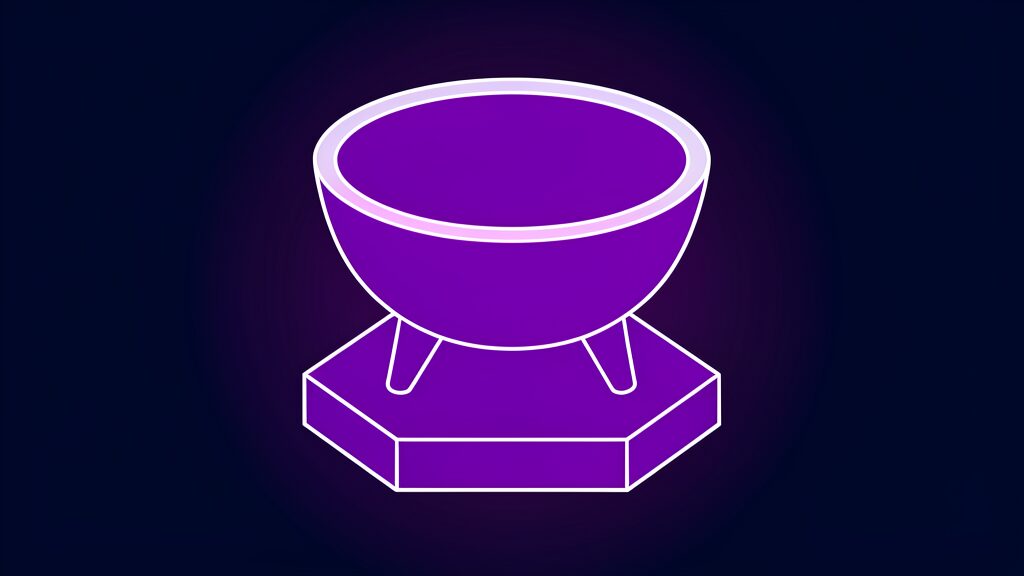
The Apple home hub carries a squarish seven-inch display — smaller than the screens Amazon and Google put on their comparable products. Gurman describes two versions. One sits the display on a rounded base that looks like a HomePod mini cut in half. The other has no base at all and attaches to a wall with a magnetic system. Apple’s expectation, per the reporting, is that people buy several and place them around the house.
The Apple home hub hardware beyond the screen
Reported components include a camera, microphones, an advanced display and pervasive Wi-Fi connectivity. FaceTime video calling is expected. Setup requires syncing with an iPhone, which places the device firmly inside the existing ecosystem rather than beside it.
What the Apple home hub does not have
One notable omission: there is no Face ID depth sensor. The facial recognition described in the reporting is a camera-based feature for personalisation, not a biometric authentication system of the kind that unlocks an iPhone. That distinction matters for anyone reading “facial recognition” as a security claim.
Two more devices arrive with the Apple home hub
Gurman reports that the hub is one of three products close to release. The others are updated versions of the Apple TV and the HomePod mini, both expected to look essentially unchanged externally while carrying upgraded processors capable of running Siri AI. The HomePod mini refresh is overdue by any measure — the original launched in October 2020 and has received nothing beyond new colours since.
The Software Is the Whole Story

Hardware was never the Apple home hub hold-up, and the new operating system is what makes the Apple home hub a different proposition from the smart display Apple could have shipped two years ago.
A new OS with tvOS underneath
The device runs an operating system reportedly built on the tvOS foundation that powers Apple TV, presented as what Gurman characterises as a mashup of iOS, tvOS and watchOS. The interface carries a home screen, icons, widgets, apps and a set of customisable clock faces in the manner of Apple Watch — plus a standby-style ambient mode.
Siri AI is the Apple home hub interaction model
The functions revolve around Siri AI, the LLM-based assistant that arrived with the OS 27 generation and can look up information across a user’s devices and accounts. The demonstrations described include playing a podcast or song someone recently sent you, finding a particular image, and performing tasks inside Calendar and Notes. This is the capability that makes a screen in the kitchen worth talking to, and it is why the product waited. Readers following the assistant’s rollout can compare against the Siri AI waitlist and what iOS 27 actually shipped.
Facial recognition drives personalisation
The marquee feature is that the front camera identifies who is looking at the display and adjusts what appears: apps, notes, calendar appointments, news, music and podcasts. Gurman’s reporting adds that the device also reads the viewer’s distance and adjusts display size in real time — the household-scale version of a feature phones have had in a single-user form for years.
Why the Apple home hub delay ran this long
The device was reportedly close to launch in early 2025, with Apple employees already testing it at home. The software was not where Apple wanted it, and the same problems that forced the rethink of Siri pushed the hub back with it. The result is a product whose hardware has been finished for the better part of two years.
How the Apple Home Hub Compares With What It Is Fighting
This is a category Amazon effectively created in 2017 and Google joined in 2018. Apple arrives with a smaller screen and a better assistant.
| Factor | Apple home hub (J490, reported) | Amazon Echo Show line | Google Nest Hub line |
|---|---|---|---|
| Screen | ~7in, squarish | 5in to 15in across the range | 7in and 10in |
| Mounting | Half-dome base or magnetic wall mount | Fixed stand; wall mount on larger model | Fixed stand |
| Assistant | Siri AI (LLM-based, OS 27 generation) | Alexa | Google Assistant / Gemini |
| Personalisation | Camera-based facial recognition, distance-aware UI | Visual ID | Face Match |
| Setup requirement | Sync with an iPhone | Amazon account | Google account |
| Reported starting price | Around $349 (earlier reports, unconfirmed) | Roughly $90 to $280 | Roughly $100 to $230 |
The screen is the weak spec
Seven inches is at the small end of this category. Amazon sells 8, 11 and 15-inch models; Google sells a 10-inch. If Apple’s positioning is that you buy several and distribute them, a smaller screen is a coherent choice rather than a compromise — but it is a hard sell against a larger rival at a third of the price.
The assistant is the strong spec
It is also the only one that matters. Every criticism of smart displays for a decade has come down to the assistant being too dumb to justify the screen. A cross-device, cross-account LLM assistant that can act inside Calendar and Notes is a materially different product, and Apple is the last of the three to have one.
The price gap is the open question
An unconfirmed earlier report put the starting price around $349. If that holds, the Apple home hub launches at roughly three times an entry Echo Show. Apple has made that trade before — the original HomePod at $349 against a $49 Echo Dot — and it did not go well.
The Apple Home Hub Is the Start, Not the Product

The strategic reading of the Apple home hub is more interesting than the device itself.
Two more devices sit behind the Apple home hub
Gurman reports at least two further products further out: an in-home smart security camera, and a higher-end home hub with a nine-inch screen mounted on a robotic limb that can turn and move. The second of those has been in the rumour mill for years and remains the most speculative item on the list.
A security system and a monitoring service in 2027
The more concrete item is a 2027 in-home security sensor and system, described as a privacy-centric camera and automation device that uses AI to monitor the surrounding environment rather than recording video footage, tapping into a new home security and monitoring service. A subscription service is a meaningfully different business from selling a screen.
The services logic is already visible
Apple has run this playbook before. HomeKit Secure Video limits camera count by iCloud storage tier, and AI video summaries in iOS 27 require at least the $9.99 monthly 2TB plan, which supports five cameras — with 6TB and 12TB plans needed for more. Whether a home monitoring service attaches to iCloud+ or stands alone, the pattern of hardware pulling recurring revenue is established.
HomeKit finally gets first-party hardware worth the framework
HomeKit shipped in iOS 8 as a framework with no Apple hardware behind it; the first-party Home app did not arrive until iOS 10 in 2016. The Apple home hub is the first device in twelve years designed to be the thing HomeKit was always assumed to need.
The Apple Home Hub Against Apple's Own Smart Home Record

The competitive comparison flatters Apple because Siri AI is genuinely new. The historical comparison does not.
HomeKit arrived years before the Apple home hub
Apple unveiled HomeKit with iOS 8 in 2014, two years before Amazon’s Echo had meaningful competition. But the framework ran entirely under the hood: third parties were expected to build the accessories and also write the apps that drove them. Apple did not ship its own Home app until iOS 10 in 2016, by which point the category had a different shape and a different leader.
The original HomePod is the cautionary tale
The first HomePod launched in 2018 at $349 with excellent audio and an assistant that could not do much. It was discontinued in 2021. The parallel to a $349 Apple home hub with a smaller screen than its rivals is close enough that it has to be addressed rather than waved away — and the difference this time is entirely the assistant.
The HomePod mini went six years without an update
The smaller speaker arrived in October 2020 and has received nothing but new colours since. Six years without a processor bump puts it in the same territory as the 2013 Mac Pro, which went 2,179 days between its release and its discontinuation without a single refresh. That is the standard of attention this category has had inside Apple.
The Apple TV has been the de facto hub
In practice, the device holding HomeKit households together has been an Apple TV or a HomePod acting as a home hub in the background — a role neither product was designed around. A purpose-built screen is the first time Apple has made hardware whose main job is that role rather than a side effect of it.
What the Apple Home Hub Has to Get Right
Assuming the reporting holds, a few things decide whether this lands better than the 2018 attempt.
The Apple home hub has to work in a shared room
An assistant that knows which household member is speaking, and answers from that person’s calendar and messages rather than someone else’s, is a much harder problem than the single-user phone case. The facial recognition feature suggests Apple knows this. Getting it wrong in front of a family is more damaging than getting it wrong in a pocket.
Latency in the kitchen is unforgiving
Phone assistants get a few seconds of grace because the user is already holding the device. A wall panel competing with simply reaching for the light switch does not. Whatever on-device processing the upgraded silicon in the refreshed Apple TV and HomePod mini enables will matter more here than raw capability.
Third-party accessories decide the Apple home hub ceiling
A home hub is only as useful as the things it can control. Matter has improved cross-vendor support considerably since 2022, but the depth of Apple’s accessory ecosystem against Amazon’s remains the structural constraint, and no amount of assistant quality fixes it.
The camera has to be defensible on privacy
Putting an always-present camera in a kitchen is a harder sell than putting a microphone there, and Apple’s entire marketing position rests on being the company you trust to do it. The reported 2027 security device — analysing the environment rather than recording footage — reads like an early answer to that objection.
What Is Confirmed and What Is Not
It is worth being precise about the evidentiary status of each claim, because none of this comes from Apple.
| Claim | Status | Source |
|---|---|---|
| Siri AI shipping in the OS 27 generation | Shipped / in public betas | Apple |
| J490 in widespread employee home testing | Reported | Gurman, Bloomberg |
| Seven-inch screen, two mounting options | Reported | Gurman, Bloomberg |
| October 2026 introduction | Reported as possible, not committed | Gurman, Bloomberg |
| ~$349 starting price | Earlier report, unconfirmed | Prior rumours |
| 2027 security system and monitoring service | Reported roadmap item | Gurman, Bloomberg |
| Nine-inch hub on a robotic limb | Long-running rumour | Gurman, Bloomberg |
Apple has confirmed none of the hardware
There has been no announcement, no date and no price. Every hardware detail above is reporting, and Apple’s own track record on this specific device is a product that was “nearly ready” in late 2024 and has not shipped since.
The Apple home hub timing could still move
“As early as October” is a floor, not a commitment. A fall release for the Apple TV and HomePod mini refreshes is the firmer part of the reporting; the hub is the piece most exposed to another software slip.
One adjacent cancellation
In the same reporting cycle, Apple reportedly dropped plans for a dedicated Apple Pencil for the iPhone Duo over manufacturing issues, opting to support the standard iPad Apple Pencil by the end of 2026. It is unrelated to the home push but a useful reminder that roadmap items get cut.
How the Apple Home Hub Got Here: A Timeline
The reason this device feels like it has been announced several times is that the reporting cycle around it has run for two years.
| Date | Event |
|---|---|
| 2014 | HomeKit announced with iOS 8; no first-party Apple hardware built around it |
| 2016 | Apple ships its own Home app in iOS 10 |
| 2018 | Original HomePod launches at $349; discontinued in 2021 |
| October 2020 | HomePod mini launches; no hardware update follows for six years |
| Late 2024 | Gurman reports J490 hardware nearly ready for an early 2025 launch |
| 2025 | Launch slips; the Siri rework delays the hub with it |
| September 2026 | Siri AI ships in the OS 27 generation; J490 reported in employee home testing |
| 2027 (reported) | In-home security sensor and system, plus a monitoring service |
The pattern in the dates
Every gap in that table is a software gap. The hardware milestones are close together; the delays sit between a finished device and an assistant that could justify it.
What It Means if You Are Buying
Practical Apple home hub guidance is thin this far ahead of an announcement, but a few things follow from what is reported.
Wait for the price
Everything about whether the Apple home hub makes sense depends on a number nobody has confirmed. At $349 against an $90 Echo Show it is an ecosystem purchase; at a lower figure it is a genuine competitor.
An iPhone is not optional for the Apple home hub
Setup requires syncing with an iPhone. This is not a device that works as a standalone smart display for a household on Android, which narrows the addressable market considerably and is presumably deliberate.
Facial recognition is a personalisation feature
Treat the camera as a convenience, not a lock. Without a depth sensor this is not Face ID, and anyone evaluating it for a shared or semi-public space should judge it on that basis.
The refreshed cheap devices may be the better buy
If the value you want is Siri AI in the house rather than a screen, the updated HomePod mini and Apple TV deliver the same assistant at a fraction of the price. For anyone tracking the wider assistant story, the Siri AI settlement and Apple’s privacy exposure is the other half of the picture, and the broader AI models and tools hub tracks how rival assistants are moving.
Frequently Asked Questions About the Apple Home Hub
When is the Apple home hub launching?
Gurman reports it could be introduced as early as October 2026. Apple has announced nothing, and this product has slipped before.
What is J490?
J490 is the internal Apple codename for the device. The name “HomePad” appears widely in coverage but is not an Apple product name.
Does the Apple home hub run iOS?
No. Reporting describes a new operating system built on tvOS foundations, presented as a blend of iOS, tvOS and watchOS conventions.
Will it work without an iPhone?
Setup is reported to require syncing with an iPhone, so an iPhone appears to be a prerequisite rather than an optional companion.
Is the facial recognition the same as Face ID?
No. There is no Face ID depth sensor. The camera identifies who is looking in order to personalise the display, which is a different capability from biometric authentication.










