
Medical Imaging Software Development has become one of the most important areas of healthcare technology, enabling hospitals, diagnostic centers, research institutions, and medical device manufacturers to capture, store, analyze, share, and interpret medical images with greater speed and accuracy. As healthcare continues its digital transformation, modern imaging software plays a critical role in improving patient care, supporting clinical decision-making, increasing operational efficiency, and enabling artificial intelligence-assisted diagnostics.
Learn more about healthcare interoperability through the DICOM Standard.
Medical imaging has evolved far beyond traditional X-ray film. Today, healthcare organizations routinely generate enormous volumes of digital imaging data from computed tomography (CT), magnetic resonance imaging (MRI), ultrasound, positron emission tomography (PET), mammography, fluoroscopy, digital pathology, ophthalmology imaging, and numerous other diagnostic technologies. Managing this growing ecosystem requires sophisticated software capable of handling large datasets securely while maintaining exceptional performance and regulatory compliance.
Modern Medical Imaging Software Development involves far more than displaying images on a screen. Healthcare imaging platforms integrate Picture Archiving and Communication Systems (PACS), Radiology Information Systems (RIS), Electronic Health Records (EHR), Artificial Intelligence (AI), cloud infrastructure, workflow automation, reporting systems, interoperability standards, cybersecurity controls, and advanced visualization technologies into unified clinical environments.
Healthcare providers increasingly depend on advanced imaging software to accelerate diagnosis, improve collaboration among specialists, reduce reporting delays, support remote consultations, and enhance overall patient outcomes. Artificial intelligence further expands these capabilities by assisting radiologists with image interpretation, anomaly detection, workflow prioritization, segmentation, and predictive analytics.
At the same time, Medical Imaging Software Development presents unique engineering challenges. Developers must balance high-performance image rendering, interoperability, regulatory compliance, patient privacy, cybersecurity, reliability, scalability, and usability while supporting diverse imaging modalities and healthcare workflows.
As medical imaging technology continues advancing, software has become the central platform connecting diagnostic equipment, clinicians, researchers, patients, and healthcare organizations. Organizations investing in modern imaging platforms are better positioned to deliver efficient, data-driven, and patient-centered healthcare services.
This comprehensive guide explores Medical Imaging Software Development, explains how imaging platforms operate, examines core technologies, discusses healthcare workflows, evaluates implementation strategies, analyzes regulatory considerations, and explores the future of intelligent medical imaging.
Key Takeaways
- Medical Imaging Software Development supports modern diagnostic healthcare.
- Imaging platforms integrate PACS, RIS, EHR, AI, and cloud technologies.
- DICOM standards enable interoperability across medical imaging systems.
- Artificial intelligence is transforming diagnostic imaging workflows.
- Regulatory compliance and cybersecurity remain fundamental throughout software development.
What Is Medical Imaging Software Development?
Medical Imaging Software Development is the process of designing, building, integrating, testing, and maintaining software solutions that manage medical images generated by diagnostic imaging equipment.
Modern imaging software supports numerous healthcare functions including:
- Image acquisition.
- Image visualization.
- Image storage.
- Diagnostic reporting.
- Clinical collaboration.
- Workflow automation.
- Artificial intelligence analysis.
- Long-term archiving.
Rather than serving as standalone applications, imaging platforms frequently operate as critical components within broader healthcare information ecosystems.
Why Medical Imaging Software Matters
Medical images often represent essential diagnostic evidence.
Healthcare organizations depend upon Medical Imaging Software Development to improve:
- Diagnostic accuracy.
- Clinical efficiency.
- Patient safety.
- Specialist collaboration.
- Image accessibility.
- Reporting speed.
- Healthcare workflows.
- Data management.
Well-designed imaging software enables clinicians to access critical diagnostic information whenever and wherever it is needed.
Medical Imaging Technologies Continue Expanding
Modern healthcare relies upon numerous imaging modalities.
Common examples include:
- Computed Tomography (CT).
- Magnetic Resonance Imaging (MRI).
- X-ray.
- Ultrasound.
- Mammography.
- Positron Emission Tomography (PET).
- Fluoroscopy.
- Digital pathology.
Each modality produces different data types requiring specialized processing, visualization, storage, and workflow support.
How Medical Imaging Software Development Works
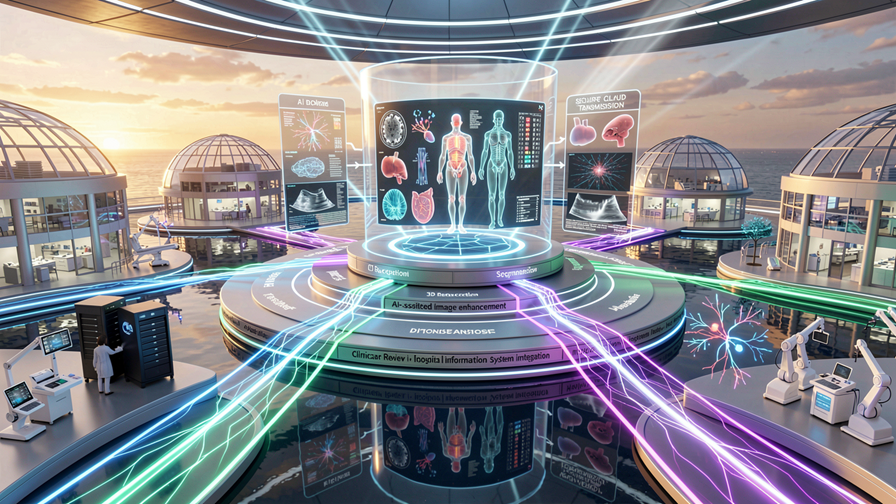
Understanding Medical Imaging Software Development requires examining the complex ecosystem connecting diagnostic equipment, healthcare professionals, information systems, cloud infrastructure, and regulatory requirements. Unlike conventional business applications, medical imaging software operates within mission-critical clinical environments where performance, reliability, interoperability, security, and patient safety directly influence healthcare outcomes.
Modern imaging platforms process millions of medical images while supporting radiologists, physicians, surgeons, specialists, researchers, and healthcare administrators. To accomplish this, Medical Imaging Software Development integrates multiple specialized technologies into a unified architecture that enables images to move securely from acquisition devices to diagnostic workstations and long-term archives.
Image Acquisition
Every imaging workflow begins with image acquisition.
Diagnostic equipment generates digital medical images from various modalities including:
- Computed Tomography (CT).
- Magnetic Resonance Imaging (MRI).
- Digital X-ray.
- Ultrasound.
- Mammography.
- PET scanners.
- Fluoroscopy.
- Digital pathology.
These images are immediately transferred into healthcare imaging systems for processing, storage, and clinical review.
DICOM Standard
The Digital Imaging and Communications in Medicine (DICOM) standard forms the foundation of Medical Imaging Software Development.
DICOM enables consistent communication between imaging equipment and software platforms.
It standardizes:
- Image formatting.
- Patient metadata.
- Device communication.
- Image transfer.
- Storage protocols.
- Network communication.
- Study organization.
- Diagnostic interoperability.
Without DICOM, imaging devices from different manufacturers would struggle to exchange information reliably.
Picture Archiving and Communication Systems (PACS)
PACS represents one of the core components of modern imaging environments.
Medical Imaging Software Development frequently centers around PACS functionality because it manages:
- Image storage.
- Image retrieval.
- Image distribution.
- Long-term archiving.
- Viewing workstations.
- Clinical collaboration.
- Diagnostic history.
- Enterprise imaging.
PACS eliminates traditional film-based workflows while improving accessibility throughout healthcare organizations.
Radiology Information Systems (RIS)
Radiology Information Systems coordinate operational workflows surrounding medical imaging.
RIS platforms commonly manage:
- Patient scheduling.
- Imaging orders.
- Examination tracking.
- Resource allocation.
- Reporting workflows.
- Billing support.
- Clinical documentation.
- Department operations.
Medical Imaging Software Development often integrates PACS and RIS into unified diagnostic environments.
Electronic Health Record Integration
Healthcare professionals require imaging information alongside broader clinical records.
Medical Imaging Software Development therefore integrates imaging platforms with Electronic Health Records (EHRs).
Integration enables clinicians to access:
- Diagnostic images.
- Clinical reports.
- Laboratory results.
- Patient histories.
- Treatment plans.
- Medications.
- Physician notes.
- Follow-up recommendations.
This unified clinical view supports faster and more informed decision-making.
Advanced Image Visualization
Displaying medical images involves considerably more than opening image files.
Modern visualization engines support:
- High-resolution rendering.
- Multi-monitor viewing.
- Three-dimensional reconstruction.
- Volume rendering.
- Image fusion.
- Measurement tools.
- Window leveling.
- Image annotation.
These capabilities assist clinicians in evaluating increasingly complex diagnostic information.
Artificial Intelligence Integration
Artificial intelligence is rapidly becoming a major component of Medical Imaging Software Development.
AI systems assist healthcare professionals by performing tasks including:
- Image segmentation.
- Anomaly detection.
- Lesion identification.
- Tumor measurement.
- Fracture detection.
- Workflow prioritization.
- Diagnostic assistance.
- Predictive analysis.
Importantly, AI typically supports clinicians rather than replacing professional medical judgment.
Cloud-Based Imaging
Healthcare organizations increasingly adopt cloud infrastructure for imaging platforms.
Cloud-enabled Medical Imaging Software Development provides:
- Scalable storage.
- Disaster recovery.
- Remote access.
- Cross-site collaboration.
- Reduced infrastructure costs.
- Centralized management.
- Elastic computing.
- Improved availability.
Cloud technologies also facilitate secure telemedicine and distributed diagnostic workflows.
Workflow Automation
Automation significantly improves healthcare efficiency.
Medical Imaging Software Development frequently automates:
- Image routing.
- Study prioritization.
- Report distribution.
- Notification systems.
- Data synchronization.
- Archive management.
- User authentication.
- Quality assurance.
Automation reduces administrative burden while accelerating clinical operations.
Cybersecurity
Medical imaging systems store highly sensitive healthcare information.
Security measures commonly include:
- Encryption.
- Multi-factor authentication.
- Access controls.
- Audit logging.
- Secure APIs.
- Network segmentation.
- Backup systems.
- Continuous monitoring.
Strong cybersecurity protects both patient privacy and healthcare operations.
Benefits of Medical Imaging Software Development
The advantages of Medical Imaging Software Development extend far beyond digital image storage and visualization. Modern healthcare organizations rely on advanced imaging platforms to improve diagnostic accuracy, accelerate clinical workflows, enhance collaboration, reduce operational costs, and support better patient outcomes.
As medical imaging continues becoming more data-intensive, healthcare providers require software solutions capable of managing complex diagnostic information efficiently. Advanced imaging platforms provide clinicians with faster access to critical information while enabling organizations to deliver more connected and intelligent healthcare services.
Improved Diagnostic Accuracy
One of the most important benefits of Medical Imaging Software Development is improved diagnostic accuracy.
Advanced imaging platforms provide healthcare professionals with powerful tools that assist in identifying and analyzing medical conditions.
These capabilities include:
- High-resolution image processing.
- Three-dimensional visualization.
- Automated measurements.
- Image enhancement.
- AI-assisted analysis.
- Comparative imaging.
- Clinical decision support.
- Advanced reporting tools.
These features allow specialists to examine medical information more precisely and make better-informed decisions.
Faster Clinical Workflows
Healthcare environments require rapid access to diagnostic information.
Medical Imaging Software Development improves workflow efficiency by reducing delays associated with traditional imaging processes.
Modern imaging platforms help organizations:
- Automatically route imaging studies.
- Prioritize urgent examinations.
- Reduce manual data entry.
- Accelerate reporting.
- Improve communication.
- Simplify image sharing.
- Reduce administrative workload.
- Optimize department operations.
Faster workflows allow healthcare professionals to spend more time focusing on patient care.
Remote Diagnostics and Telemedicine Support
Remote healthcare has become increasingly important.
Modern Medical Imaging Software Development enables specialists to securely access and review medical images from different locations.
Remote imaging capabilities support:
- Tele-radiology.
- Specialist consultations.
- Rural healthcare access.
- Emergency diagnosis.
- International collaboration.
- Remote reporting.
- Distributed healthcare networks.
- Second medical opinions.
These capabilities help expand access to specialized medical expertise.
Artificial Intelligence-Assisted Healthcare
Artificial intelligence represents one of the most transformative developments in medical imaging.
AI-powered imaging platforms can assist healthcare professionals with:
- Detecting abnormalities.
- Identifying potential diseases.
- Segmenting anatomical structures.
- Measuring tumors.
- Prioritizing critical cases.
- Comparing previous examinations.
- Predicting clinical outcomes.
- Improving workflow efficiency.
AI integration does not replace medical professionals but provides additional support for faster and more consistent analysis.
Better Data Management
Healthcare organizations generate enormous volumes of imaging data.
Medical Imaging Software Development helps manage this information through:
- Centralized storage.
- Automated archiving.
- Metadata management.
- Data organization.
- Secure retrieval.
- Image indexing.
- Backup management.
- Enterprise-wide access.
Efficient data management improves operational performance while supporting long-term patient records.
Enhanced Collaboration Between Specialists
Modern healthcare often requires collaboration between multiple specialists.
Advanced imaging platforms enable professionals to share information securely between:
- Radiologists.
- Surgeons.
- Oncologists.
- Cardiologists.
- Neurologists.
- Researchers.
- Primary care physicians.
Collaborative imaging environments improve communication and support multidisciplinary healthcare decisions.
Reduced Healthcare Costs
Although developing advanced imaging platforms requires investment, they can significantly reduce long-term operational costs.
Medical Imaging Software Development helps organizations reduce expenses through:
- Paperless workflows.
- Reduced physical storage.
- Automated processes.
- Improved resource utilization.
- Faster diagnosis.
- Reduced repeat examinations.
- Cloud-based infrastructure.
- Efficient collaboration.
These improvements contribute to more sustainable healthcare operations.
Regulatory Compliance Support
Healthcare software must comply with strict regulatory requirements.
Professional Medical Imaging Software Development incorporates compliance considerations including:
- Patient privacy protection.
- Data security.
- Audit requirements.
- Healthcare standards.
- Medical device regulations.
- Documentation requirements.
- Quality management systems.
Compliance-focused development helps healthcare organizations operate safely and responsibly.
Challenges and Limitations of Medical Imaging Software Development
Despite significant advantages, Medical Imaging Software Development presents several technical, operational, and regulatory challenges.
Healthcare organizations must carefully consider:
- Complex integration requirements.
- Data security risks.
- High development costs.
- Regulatory complexity.
- Large storage requirements.
- System interoperability.
- Performance expectations.
- User training requirements.
Understanding these limitations helps organizations plan successful imaging technology implementations.
Large Data Storage Requirements
Medical images often involve extremely large datasets.
Advanced imaging technologies generate substantial amounts of information that require:
- High-capacity storage.
- Efficient compression.
- Long-term archiving.
- Backup strategies.
- Disaster recovery.
- Cloud scalability.
- Data lifecycle management.
Poor storage planning can affect performance and increase operational expenses.
Interoperability Challenges
Healthcare environments frequently include systems from multiple vendors.
Medical Imaging Software Development must support integration between:
- Imaging devices.
- PACS platforms.
- RIS systems.
- EHR solutions.
- Laboratory systems.
- Cloud platforms.
- AI applications.
Achieving reliable interoperability requires careful architecture design and adherence to healthcare standards.
Security and Privacy Risks
Medical imaging systems contain highly sensitive patient information.
Potential security risks include:
- Unauthorized access.
- Data breaches.
- Malware attacks.
- Ransomware.
- Weak authentication.
- API vulnerabilities.
- Insider threats.
- Incorrect permissions.
Healthcare organizations must continuously improve cybersecurity protections.
Best Practices for Medical Imaging Software Development
Successful imaging platforms require careful planning and engineering discipline.
Recommended practices include:
Prioritize Security From the Beginning
Security should be integrated throughout the development lifecycle rather than added after deployment.
Follow Healthcare Standards
Using standards such as DICOM and healthcare interoperability frameworks improves compatibility and reliability.
Design for Scalability
Imaging platforms should support increasing data volumes, users, devices, and healthcare locations.
Focus on User Experience
Interfaces should be designed around clinical workflows to ensure usability for healthcare professionals.
Implement Continuous Testing
Regular testing improves reliability, performance, security, and regulatory compliance.
The Future of Medical Imaging Software Development
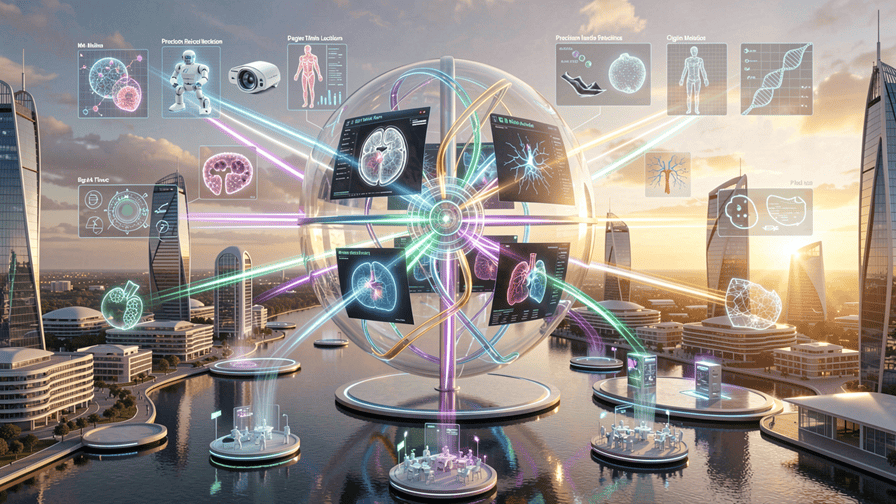
The future of Medical Imaging Software Development will be shaped by artificial intelligence, cloud-native healthcare platforms, advanced visualization technologies, interoperable healthcare ecosystems, and increasingly personalized patient care. As diagnostic imaging continues generating larger volumes of data, software will become even more intelligent, enabling healthcare professionals to interpret complex medical information faster while improving diagnostic accuracy and operational efficiency.
Artificial intelligence will become deeply integrated throughout Medical Imaging Software Development. Rather than functioning as standalone diagnostic tools, AI systems will increasingly operate alongside radiologists, pathologists, cardiologists, neurologists, and surgeons by continuously analyzing medical images, highlighting abnormalities, prioritizing urgent studies, measuring disease progression, recommending comparable historical examinations, and supporting evidence-based clinical decision-making. Human expertise will remain central, while AI enhances productivity and consistency.
Cloud computing will continue transforming healthcare imaging infrastructure. Hospitals increasingly require scalable platforms capable of securely storing petabytes of medical imaging data while supporting remote collaboration across multiple healthcare facilities. Future Medical Imaging Software Development will increasingly rely upon cloud-native architectures, distributed storage, edge computing, and secure hybrid environments that improve accessibility without compromising patient privacy.
Advanced visualization technologies will also expand rapidly. Three-dimensional reconstruction, augmented reality (AR), virtual reality (VR), mixed reality, and digital twin technologies will provide clinicians with increasingly immersive diagnostic environments. Surgeons may use highly detailed patient-specific anatomical models generated directly from imaging data to improve surgical planning and clinical outcomes.
Several emerging technologies are expected to influence Medical Imaging Software Development over the coming years:
- Artificial intelligence diagnostics.
- Cloud-native imaging platforms.
- Edge computing.
- Augmented reality visualization.
- Digital twins.
- Federated healthcare AI.
- Predictive analytics.
- Autonomous workflow optimization.
These innovations will strengthen diagnostic capabilities while improving patient care and healthcare efficiency.
Artificial Intelligence Will Continue Expanding
Artificial intelligence is rapidly becoming one of the most influential technologies within medical imaging.
Future Medical Imaging Software Development may enable AI to:
- Detect abnormalities earlier.
- Prioritize emergency studies.
- Predict disease progression.
- Compare longitudinal examinations.
- Reduce reporting times.
- Assist image segmentation.
- Improve workflow automation.
- Support precision medicine.
These capabilities allow clinicians to focus more attention on complex medical decisions rather than repetitive image analysis.
Cloud-Based Enterprise Imaging
Cloud adoption will continue accelerating across healthcare organizations.
Future imaging platforms may provide:
- Global accessibility.
- Elastic storage.
- Automatic disaster recovery.
- Multi-site collaboration.
- Secure cloud archives.
- Intelligent resource scaling.
- Reduced infrastructure costs.
- Continuous availability.
Cloud-native Medical Imaging Software Development will enable healthcare organizations to support growing diagnostic workloads more efficiently.
Personalized Healthcare
Medical imaging increasingly contributes to personalized medicine.
Future imaging software may combine:
- Medical images.
- Genomic information.
- Clinical histories.
- Laboratory results.
- Wearable device data.
- AI predictions.
- Treatment planning.
- Population analytics.
These integrated healthcare datasets support individualized patient care.
Strategic Takeaways
Organizations investing in Medical Imaging Software Development should focus on building flexible, secure, interoperable, and scalable imaging ecosystems capable of adapting to rapidly evolving healthcare technologies.
Several important lessons emerge throughout this guide.
First, Medical Imaging Software Development extends far beyond image viewing by integrating diagnostic workflows, cloud infrastructure, interoperability standards, artificial intelligence, cybersecurity, and enterprise healthcare systems.
Second, standards such as DICOM, PACS, RIS, and Electronic Health Record integration remain fundamental for reliable healthcare operations.
Third, artificial intelligence should enhance—not replace—professional clinical expertise while improving diagnostic efficiency and workflow consistency.
Finally, successful imaging platforms require continuous investment in cybersecurity, regulatory compliance, scalability, and user-centered clinical design.
Conclusion
Medical Imaging Software Development has become a foundational component of modern healthcare. As diagnostic imaging technologies continue advancing, healthcare organizations increasingly depend on intelligent software platforms capable of managing enormous imaging datasets while delivering secure, reliable, and clinically meaningful information to healthcare professionals.
Modern imaging platforms extend far beyond simple image storage. They integrate Picture Archiving and Communication Systems, Radiology Information Systems, Electronic Health Records, cloud infrastructure, artificial intelligence, advanced visualization technologies, cybersecurity, workflow automation, and regulatory compliance into unified healthcare ecosystems that support better clinical decision-making and improved patient outcomes.
Organizations investing in Medical Imaging Software Development benefit from faster workflows, improved collaboration, enhanced diagnostic capabilities, stronger data management, reduced operational costs, and greater scalability. At the same time, successful implementations require careful attention to interoperability, cybersecurity, healthcare regulations, performance optimization, and long-term maintainability.
As artificial intelligence, cloud computing, predictive analytics, and immersive visualization technologies continue evolving, Medical Imaging Software Development will become increasingly intelligent and deeply integrated throughout healthcare delivery. Organizations embracing these innovations today will be well positioned to improve diagnostic quality, operational efficiency, and patient-centered care for years to come.
Frequently Asked Questions (FAQs)
What is Medical Imaging Software Development?
Medical Imaging Software Development involves designing, building, integrating, and maintaining software platforms that acquire, process, store, visualize, analyze, and securely manage diagnostic medical images within healthcare environments.
What is DICOM?
DICOM (Digital Imaging and Communications in Medicine) is the international standard that enables medical imaging equipment and healthcare software systems to exchange imaging data consistently and reliably.
What is PACS?
Picture Archiving and Communication Systems (PACS) provide centralized storage, retrieval, management, and distribution of medical images across healthcare organizations.
How is artificial intelligence used in medical imaging?
Artificial intelligence assists clinicians by detecting abnormalities, segmenting anatomical structures, measuring lesions, prioritizing urgent cases, improving workflow efficiency, and supporting diagnostic decision-making.
Why is cybersecurity important for medical imaging software?
Medical imaging platforms contain highly sensitive patient information. Strong cybersecurity protects healthcare organizations against unauthorized access, ransomware, data breaches, API attacks, and regulatory compliance violations.
Build Intelligent Medical Imaging Solutions
Whether you’re developing PACS platforms, AI-assisted diagnostic systems, cloud-based imaging infrastructure, or healthcare interoperability solutions, our specialists can help you design secure, scalable, and regulatory-compliant Medical Imaging Software Development solutions that improve clinical outcomes and operational efficiency.