

Artificial intelligence is entering a new phase where raw model size is no longer the only measure of progress. As organizations deploy increasingly sophisticated AI agents capable of reasoning, planning, coding, researching, and making autonomous decisions, the efficiency of the underlying computing infrastructure has become just as important as model accuracy. This shift has placed greater emphasis on hardware platforms that deliver more intelligence for every dollar invested.
The introduction of NVIDIA Vera Rubin represents a major advancement in AI computing architecture designed specifically for the next generation of post-training and inference workloads. Rather than focusing solely on increasing computational performance, NVIDIA is emphasizing a new metric—intelligence per dollar—that measures how effectively AI infrastructure converts compute resources into useful reasoning and real-world outcomes.
As Agentic AI systems become increasingly capable of performing complex multi-step tasks, they also demand significantly more computational resources during post-training, reinforcement learning, reasoning optimization, and large-scale inference. These workloads require enormous GPU clusters capable of processing trillions of tokens while maintaining high efficiency, scalability, and manageable operational costs.
NVIDIA Vera Rubin has been engineered to address these challenges by combining next-generation GPUs, advanced networking technologies, high-bandwidth memory, faster interconnects, and highly optimized AI software. Together, these innovations help organizations process more AI workloads using fewer resources while improving performance across modern generative AI applications.
For enterprises, cloud providers, AI research laboratories, and hyperscale data centers, NVIDIA Vera Rubin offers an opportunity to reduce the total cost of ownership while supporting increasingly sophisticated AI models. Instead of simply purchasing additional hardware to scale AI deployments, organizations can achieve better performance through architectural efficiency and optimized infrastructure.
The concept of intelligence per dollar is particularly significant for Agentic AI because modern AI agents often perform extended reasoning, autonomous planning, tool usage, memory retrieval, coding, and decision-making before producing a response. These additional computational steps increase infrastructure requirements, making efficient hardware essential for long-term scalability.
Beyond enterprise AI, NVIDIA Vera Rubin is expected to accelerate innovation across scientific computing, robotics, autonomous systems, healthcare, engineering simulation, cybersecurity, software development, financial modeling, and large language model research.
In this comprehensive guide, we’ll explore what NVIDIA Vera Rubin is, how it maximizes intelligence per dollar, its architecture, post-training capabilities, enterprise applications, benefits, challenges, and why it represents one of the most important hardware platforms for the future of Agentic AI.
Key Takeaways
- NVIDIA Vera Rubin is NVIDIA’s next-generation AI computing platform.
- The architecture focuses on maximizing intelligence per dollar rather than raw compute alone.
- It is optimized for post-training, reasoning, and large-scale AI inference.
- NVIDIA Vera Rubin supports increasingly sophisticated Agentic AI systems.
- Enterprises can improve AI efficiency while reducing infrastructure costs.
- The platform represents an important evolution in AI data center architecture.
What Is NVIDIA Vera Rubin?
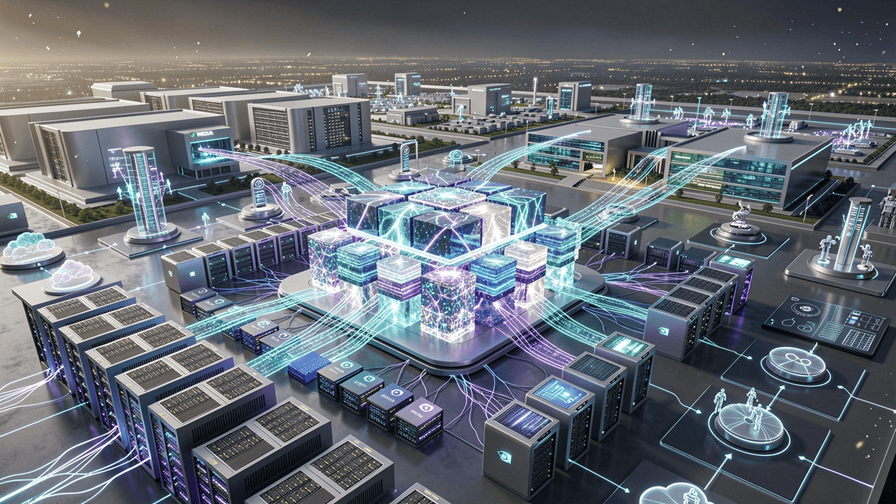
NVIDIA Vera Rubin is NVIDIA’s next-generation AI computing architecture designed to deliver higher performance, greater efficiency, and improved scalability for modern artificial intelligence workloads.
Unlike previous generations that primarily emphasized peak computational throughput, NVIDIA Vera Rubin introduces architectural improvements intended to maximize useful AI output for every unit of computing investment. This makes it especially valuable for post-training optimization, reinforcement learning, reasoning-intensive inference, and autonomous AI agents.
The platform combines powerful GPUs with high-bandwidth memory, advanced CPU technology, ultra-fast networking, and an optimized AI software ecosystem to accelerate both training and inference across large-scale AI deployments.
For organizations building increasingly intelligent AI systems, NVIDIA Vera Rubin provides the infrastructure required to support the next generation of foundation models and Agentic AI applications.
Why Intelligence per Dollar Matters
As AI models become larger and more capable, computational costs continue to rise.
Traditional performance metrics such as FLOPS or raw GPU throughput no longer provide a complete picture of AI efficiency. Organizations now need infrastructure capable of producing better reasoning, higher-quality responses, faster inference, and improved productivity without proportionally increasing operational costs.
This is where NVIDIA Vera Rubin introduces the concept of intelligence per dollar.
Rather than measuring only hardware performance, intelligence per dollar evaluates how efficiently computing infrastructure delivers practical AI outcomes. Better utilization, faster inference, optimized memory bandwidth, efficient networking, and scalable software all contribute to higher intelligence per dollar.
For enterprises deploying thousands of AI agents simultaneously, improvements in this metric can significantly reduce infrastructure costs while increasing overall AI productivity.
How NVIDIA Vera Rubin Works
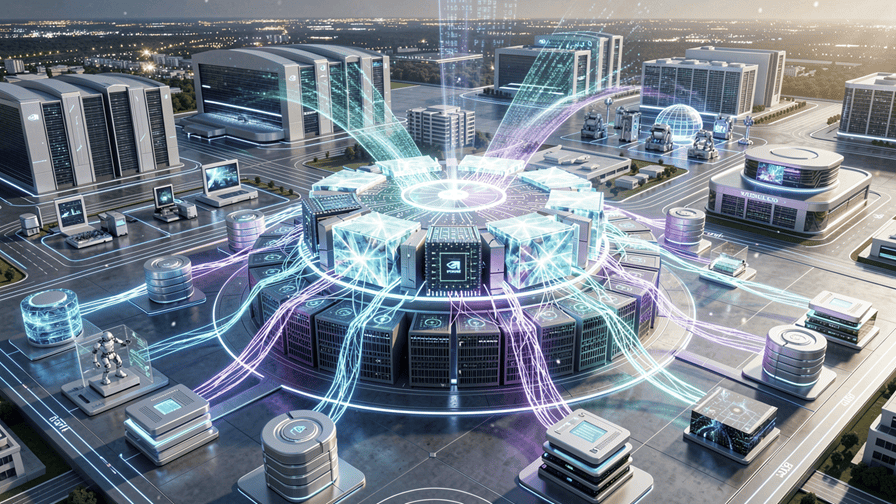
NVIDIA Vera Rubin has been designed to meet the rapidly changing computational demands of modern artificial intelligence. While earlier AI infrastructure focused primarily on training increasingly large language models, today’s AI landscape requires hardware capable of supporting continuous post-training, reinforcement learning, reasoning, fine-tuning, retrieval, long-context inference, and autonomous AI agents operating at massive scale.
Rather than optimizing for a single benchmark, NVIDIA Vera Rubin brings together advanced GPUs, next-generation CPUs, high-bandwidth memory, ultra-fast networking, scalable software, and optimized AI frameworks into a unified computing platform. Every component is engineered to reduce latency, increase throughput, and maximize intelligence per dollar across enterprise AI deployments.
The result is an AI infrastructure capable of supporting millions of simultaneous inference requests while also accelerating the computationally intensive post-training workloads that continue improving model quality after pre-training has finished.
NVIDIA Vera Rubin Architecture
The architecture behind NVIDIA Vera Rubin is built around multiple tightly integrated technologies that work together as a complete AI computing platform rather than independent hardware components.
Instead of viewing AI infrastructure as individual servers, NVIDIA Vera Rubin treats the entire data center as a highly coordinated AI supercomputer capable of distributing workloads efficiently across thousands of accelerators.
Major architectural components include:
- Next-generation NVIDIA GPUs.
- Advanced NVIDIA Vera CPUs.
- High-bandwidth memory (HBM).
- Ultra-fast NVLink interconnects.
- High-performance networking.
- AI software optimization.
- Large-scale GPU clustering.
- Energy-efficient system design.
Together, these technologies allow NVIDIA Vera Rubin to process increasingly sophisticated AI workloads with greater efficiency than previous hardware generations.
Optimized for Post-Training Workloads
One of the defining characteristics of NVIDIA Vera Rubin is its emphasis on post-training AI computation.
While pre-training teaches a foundation model general knowledge, post-training refines its capabilities through additional optimization techniques.
Common post-training workloads include:
- Reinforcement learning.
- Reinforcement learning from human feedback (RLHF).
- Preference optimization.
- Fine-tuning.
- Model alignment.
- Safety optimization.
- Instruction tuning.
- Domain adaptation.
These workloads often require repeated inference, evaluation, reward modeling, and optimization cycles that consume enormous computational resources.
By maximizing intelligence per dollar, NVIDIA Vera Rubin enables organizations to perform more post-training iterations while controlling infrastructure costs.
Accelerating Agentic AI
Modern AI agents differ significantly from traditional chatbots.
Instead of simply generating text, Agentic AI systems may:
- Plan tasks.
- Write software.
- Search external knowledge.
- Use digital tools.
- Retrieve memories.
- Analyze documents.
- Coordinate multiple agents.
- Make autonomous decisions.
Each of these activities increases computational complexity.
NVIDIA Vera Rubin has been engineered to support these reasoning-intensive workflows through faster inference, lower latency, larger memory capacity, and improved workload scheduling.
As Agentic AI becomes more capable, infrastructure efficiency becomes increasingly important, making NVIDIA Vera Rubin a foundational platform for next-generation autonomous systems.
High-Speed AI Networking
Large AI models rarely execute on a single processor.
Instead, workloads are distributed across thousands of GPUs that continuously exchange enormous amounts of information.
NVIDIA Vera Rubin leverages advanced networking technologies that reduce communication bottlenecks while increasing scalability.
Benefits include:
- Faster GPU communication.
- Reduced latency.
- Improved synchronization.
- Higher cluster efficiency.
- Better resource utilization.
- Scalable AI training.
- Accelerated inference.
- Greater overall throughput.
These networking improvements become increasingly valuable as AI clusters continue expanding.
Memory and Bandwidth Improvements
Memory bandwidth has become one of the most important performance factors for modern AI systems.
Large language models continuously move enormous quantities of parameters and activation data during inference and post-training.
NVIDIA Vera Rubin is expected to provide substantial improvements in memory performance through advanced high-bandwidth memory technologies that reduce data transfer delays and improve computational efficiency.
Higher memory bandwidth helps accelerate:
- Long-context reasoning.
- Large model inference.
- Retrieval-augmented generation.
- Multi-agent coordination.
- Scientific simulations.
- AI coding assistants.
- Enterprise search.
- Real-time AI applications.
Enterprise Applications
The capabilities of NVIDIA Vera Rubin extend well beyond foundation model development.
Organizations across numerous industries can benefit from higher AI efficiency.
Enterprise applications include:
Intelligent Digital Assistants
Businesses can deploy sophisticated AI assistants capable of managing workflows, answering complex questions, and automating repetitive tasks.
Scientific Research
Researchers can accelerate simulations, molecular modeling, climate analysis, genomics, and computational discovery using scalable AI infrastructure.
Software Development
AI coding assistants running on NVIDIA Vera Rubin can support software generation, debugging, documentation, testing, and code optimization.
Healthcare
Medical AI systems can process imaging, clinical documentation, research data, and personalized treatment recommendations more efficiently.
Financial Services
Banks and financial institutions can deploy advanced AI for fraud detection, portfolio analysis, market forecasting, compliance monitoring, and customer support.
Robotics
Autonomous robots require continuous reasoning, perception, planning, and decision-making—all computationally intensive workloads well suited to NVIDIA Vera Rubin.
Benefits of NVIDIA Vera Rubin
Organizations investing in NVIDIA Vera Rubin may experience significant operational advantages.
Potential benefits include:
- Higher intelligence per dollar.
- Faster post-training.
- Improved AI inference.
- Lower infrastructure costs.
- Better energy efficiency.
- Increased scalability.
- Reduced latency.
- Enhanced enterprise productivity.
As AI models continue increasing in sophistication, these efficiency improvements become increasingly valuable across virtually every AI-driven industry.
Challenges and Limitations of NVIDIA Vera Rubin
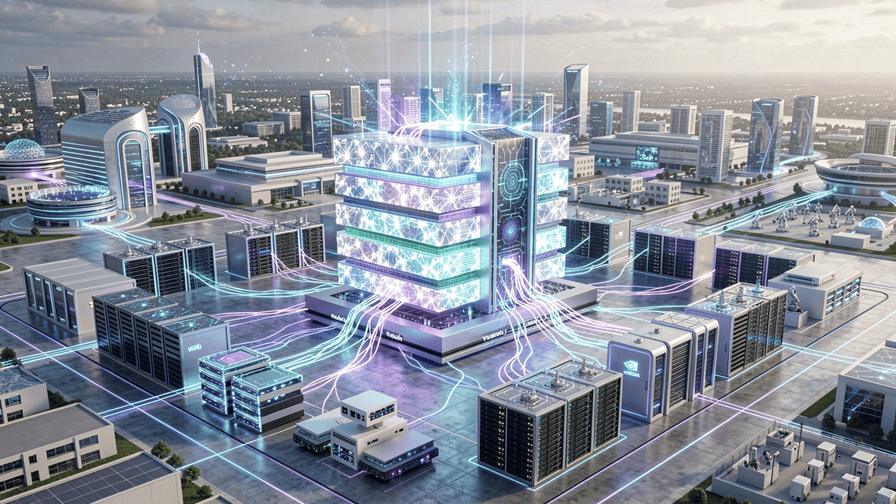
While NVIDIA Vera Rubin represents a significant advancement in AI infrastructure, deploying next-generation AI computing platforms involves more than purchasing faster hardware. Organizations must carefully evaluate infrastructure readiness, operational costs, software optimization, energy requirements, and long-term scalability before adopting large-scale AI systems.
As enterprises continue expanding the use of NVIDIA Vera Rubin for post-training and Agentic AI workloads, maximizing intelligence per dollar will depend on how efficiently the entire AI ecosystem is designed, managed, and optimized.
Infrastructure Investment
One of the primary challenges of NVIDIA Vera Rubin is the substantial infrastructure investment required to deploy cutting-edge AI computing at scale.
Beyond the AI accelerators themselves, organizations may also need investments in:
- High-speed networking.
- AI storage infrastructure.
- Advanced cooling systems.
- Reliable power distribution.
- High-bandwidth memory resources.
- GPU clustering.
- AI orchestration software.
- Data center modernization.
Although NVIDIA Vera Rubin improves long-term efficiency, the initial capital investment can be significant for many organizations.
Energy Consumption
Large-scale AI systems consume enormous amounts of electricity, particularly during post-training, reinforcement learning, and large inference workloads.
While NVIDIA Vera Rubin is engineered to maximize intelligence per dollar through improved efficiency, enterprises must still consider:
- Power availability.
- Cooling capacity.
- Energy optimization.
- Thermal management.
- Sustainability goals.
- Infrastructure utilization.
- Carbon reduction initiatives.
- Operational efficiency.
Optimizing the entire AI environment is essential for realizing the platform’s full value.
Software Optimization
Powerful hardware alone cannot guarantee superior AI performance.
To maximize the benefits of NVIDIA Vera Rubin, organizations must ensure their AI software stack is optimized for modern GPU architectures.
Optimization may involve:
- Model compilation.
- Memory management.
- Distributed training.
- Efficient scheduling.
- Workload balancing.
- Inference optimization.
- Parallel processing.
- AI framework tuning.
Well-optimized software enables enterprises to achieve the highest possible intelligence per dollar.
Deployment Complexity
Modern AI clusters often include thousands of interconnected accelerators operating simultaneously.
Managing these environments requires specialized expertise in:
- GPU infrastructure.
- Distributed computing.
- High-performance networking.
- AI orchestration.
- Security.
- Monitoring.
- Capacity planning.
- Performance optimization.
Organizations without experienced AI infrastructure teams may require external consulting or managed AI services to deploy NVIDIA Vera Rubin effectively.
Supply Chain and Availability
Demand for advanced AI hardware continues to grow rapidly across cloud providers, enterprises, governments, and research organizations.
As adoption increases, organizations may encounter challenges related to:
- Hardware availability.
- Procurement timelines.
- Global supply chains.
- Manufacturing capacity.
- Data center expansion.
- Deployment scheduling.
- Vendor coordination.
- Capacity planning.
Long-term infrastructure strategies become increasingly important as AI demand accelerates.
Balancing Cost and Performance
Although NVIDIA Vera Rubin focuses on maximizing intelligence per dollar, organizations must still balance infrastructure spending against expected business outcomes.
Decision-makers should evaluate:
- AI workload characteristics.
- Return on investment.
- Utilization rates.
- Operational costs.
- Productivity gains.
- Infrastructure scalability.
- Future expansion plans.
- Business priorities.
Choosing the right deployment strategy helps ensure sustainable AI growth.
Best Practices for Adopting NVIDIA Vera Rubin
Organizations seeking to maximize the value of NVIDIA Vera Rubin should adopt a structured infrastructure strategy.
Optimize AI Workloads
Prioritize workload optimization before scaling hardware. Efficient models often produce greater performance gains than simply adding more computing resources.
Invest in High-Speed Infrastructure
Networking, storage, and memory performance should evolve alongside compute capacity to prevent bottlenecks across AI clusters.
Continuously Monitor Performance
Track utilization, latency, throughput, energy efficiency, and infrastructure health to maximize intelligence per dollar throughout the AI lifecycle.
Prioritize Software Optimization
Ensure AI frameworks, orchestration platforms, distributed computing environments, and inference engines are fully optimized for NVIDIA Vera Rubin architecture.
Build for Future Scalability
Design AI infrastructure with future Agentic AI workloads in mind, allowing clusters to expand efficiently as computational requirements continue increasing.
The Evolution of AI Infrastructure
The emergence of NVIDIA Vera Rubin reflects a broader transformation in enterprise computing.
Future AI infrastructure is expected to emphasize:
- Greater intelligence per dollar.
- Autonomous workload optimization.
- Smarter resource scheduling.
- Higher energy efficiency.
- Larger AI clusters.
- Faster inference.
- Improved reasoning performance.
- Scalable Agentic AI deployment.
Rather than focusing exclusively on raw hardware performance, future AI platforms will increasingly optimize complete AI ecosystems that integrate hardware, networking, software, storage, and orchestration into unified intelligent computing environments.
The Future of NVIDIA Vera Rubin

The introduction of NVIDIA Vera Rubin signals a major shift in how the artificial intelligence industry measures computing performance. Instead of evaluating AI infrastructure solely by raw computational throughput, future platforms will increasingly focus on maximizing intelligence per dollar, enabling organizations to generate greater reasoning capability, higher-quality AI outputs, and improved business value from every hardware investment.
As foundation models continue growing and Agentic AI systems become capable of autonomous planning, long-term memory, tool usage, multi-step reasoning, coding, scientific research, and collaborative decision-making, the demand for highly efficient computing platforms will continue to rise. NVIDIA Vera Rubin has been designed specifically to support these emerging workloads while improving scalability and lowering the total cost of AI deployment.
Future versions of NVIDIA Vera Rubin are expected to deliver even greater improvements in GPU architecture, CPU integration, memory bandwidth, AI networking, energy efficiency, and software optimization. These advancements will allow enterprises to process larger models, longer context windows, and increasingly complex AI workflows without proportionally increasing infrastructure costs.
One of the most significant long-term developments will be the evolution of autonomous AI agents. Rather than responding to a single prompt, future AI systems will continuously plan, reason, coordinate with other agents, retrieve knowledge, interact with enterprise software, and execute complex workflows. Supporting millions of these intelligent agents simultaneously requires infrastructure capable of delivering exceptional efficiency, reliability, and scalability—precisely the area where NVIDIA Vera Rubin is expected to play a central role.
Future innovations powered by NVIDIA Vera Rubin may include:
- Autonomous enterprise AI agents.
- Large-scale reasoning models.
- Real-time multimodal AI.
- Advanced robotics intelligence.
- AI-driven scientific discovery.
- Personalized healthcare systems.
- Autonomous software engineering.
- Global AI cloud infrastructure.
As organizations increasingly adopt Agentic AI, NVIDIA Vera Rubin is positioned to become one of the foundational computing platforms enabling the next generation of intelligent applications.
Strategic Takeaways
The arrival of NVIDIA Vera Rubin demonstrates that AI infrastructure is evolving beyond simply delivering more processing power.
Key insights include:
- NVIDIA Vera Rubin prioritizes intelligence per dollar as a critical AI performance metric.
- The platform is optimized for post-training, inference, and Agentic AI workloads.
- Enterprises can improve AI efficiency while reducing long-term infrastructure costs.
- High-bandwidth memory, advanced networking, and optimized software play a vital role in maximizing performance.
- Future AI deployments will increasingly rely on scalable infrastructure capable of supporting autonomous AI agents.
- Organizations investing in efficient AI computing today will be better positioned for the next generation of artificial intelligence.
Conclusion
NVIDIA Vera Rubin represents one of the most significant advancements in AI infrastructure as the industry transitions from traditional model training toward large-scale inference, post-training optimization, and autonomous Agentic AI systems. By focusing on intelligence per dollar rather than raw computational performance alone, NVIDIA Vera Rubin introduces a more practical way to evaluate AI computing efficiency in real-world enterprise environments.
For cloud providers, AI research organizations, hyperscale data centers, and enterprises deploying increasingly sophisticated AI applications, NVIDIA Vera Rubin offers a platform capable of accelerating reasoning, improving scalability, reducing latency, and optimizing infrastructure utilization. These improvements are becoming increasingly important as AI agents perform longer reasoning chains, interact with external tools, manage enterprise workflows, and process enormous volumes of information.
Although successful deployment still requires careful planning, optimized software, robust networking, and modern data center infrastructure, the long-term outlook for NVIDIA Vera Rubin is exceptionally strong. As Agentic AI, multimodal models, and autonomous systems continue to mature, platforms that maximize intelligence per dollar will become the foundation of the global AI ecosystem.
Organizations that begin preparing for this new generation of AI computing today will be well positioned to build faster, smarter, and more cost-effective artificial intelligence solutions in the years ahead.
Frequently Asked Questions (FAQs)
What is NVIDIA Vera Rubin?
NVIDIA Vera Rubin is NVIDIA’s next-generation AI computing platform designed to maximize intelligence per dollar for post-training, inference, and Agentic AI workloads through advanced GPUs, CPUs, networking, memory, and AI software.
Why is NVIDIA Vera Rubin important?
NVIDIA Vera Rubin helps organizations process more AI workloads with greater efficiency, enabling faster reasoning, lower operational costs, and improved scalability for modern AI applications.
What are post-training workloads?
Post-training workloads include reinforcement learning, model alignment, fine-tuning, instruction tuning, preference optimization, safety improvements, and other techniques used to enhance AI models after initial pre-training.
How does NVIDIA Vera Rubin support Agentic AI?
NVIDIA Vera Rubin provides the computational performance, memory bandwidth, networking speed, and software optimization needed for AI agents that perform planning, reasoning, coding, tool use, memory retrieval, and autonomous decision-making.
Who can benefit from NVIDIA Vera Rubin?
Cloud providers, enterprise organizations, AI startups, research laboratories, healthcare providers, financial institutions, robotics companies, software developers, and scientific computing organizations can all benefit from NVIDIA Vera Rubin.
Build Scalable AI Infrastructure for the Agentic AI Era
The future of enterprise AI depends on efficient, high-performance computing platforms that maximize intelligence per dollar. Whether you’re planning large-scale AI deployments, optimizing inference infrastructure, developing Agentic AI solutions, or modernizing your data center, our AI specialists can help you design scalable and cost-effective architectures tailored to your business goals.
More AI coverage: explore Progressive Robot's AI Models, Tools & Releases hub — hands-on reviews, setup guides and benchmarks in one place.










