
Table of contents
- Introduction
- Why Traditional Security Testing Fails at Scale
- What Adversarial AI Testing Actually Means
- The Core Components of an Adversarial AI Testing System
- How to Implement Adversarial AI Testing in Your Pipeline
- Real-World Impact: What Adversarial AI Testing Catches
- Measuring Success: Metrics That Matter
- Common Pitfalls and How to Avoid Them
- The Future of Adversarial AI Testing
- Conclusion: Break It to Build It Better
- Frequently Asked Questions
Introduction
Every software team shares the same assumption: build it, test it, ship it. That playbook worked when human testers could manually trace every code path. It no longer does. Modern applications span microservices, third-party APIs, serverless functions, and AI models — a surface area too vast for manual coverage. The result is a growing gap between what developers intend and what attackers exploit.
The answer is not more manual testing. It is teaching AI to break software so your own systems can learn how to defend against it. Adversarial AI testing flips the traditional security model: instead of waiting for a breach, you deploy AI agents that actively search for weaknesses, chain vulnerabilities, and simulate real attacker behaviour — all in one continuous cycle.
This post explains why adversarial AI testing matters, how it works in practice, and what it takes to implement it across your development pipeline. By learning to teach AI to break software, organizations can build stronger defenses before attackers find the gaps. The technology has matured significantly, with leading security researchers now demonstrating that AI-driven testing can identify critical vulnerabilities that human testers consistently overlook.
The shift from reactive to proactive security represents a fundamental change in how organizations approach software assurance. Rather than hoping security testing catches everything before release, adversarial AI testing assumes breaches will happen and focuses on finding weaknesses first. This mindset shift — from compliance-driven to threat-driven security — is what separates organizations that build resilient software from those that repeatedly face the same vulnerabilities.
Why Traditional Security Testing Fails at Scale
Software security has always relied on a simple premise: test what you built, find the bugs, fix them. That approach collapses when the application grows beyond human-scale verification. This is precisely why organizations must learn to teach AI to break software — because manual testing simply cannot keep pace with modern attack surfaces.
Manual penetration testing typically covers 15–25 percent of an application’s attack surface in a single engagement. The rest depends on automated scanners, which are excellent at finding known vulnerability patterns but blind to novel attack chains. A 2025 study by the Cloud Security Alliance found that 73 percent of production breaches involved at least one AI-driven attack vector that traditional tools missed entirely. OWASP Top Ten continues to evolve because attackers are faster than any manual testing cycle.
By investing in adversarial AI testing, teams can close this gap. When you teach AI to break software, you simulate real attacker behaviour at scale — finding zero-day vulnerabilities before malicious actors exploit them. This proactive approach reduces mean time to detection (MTTD) by up to 67 percent compared to traditional security testing alone. The financial implications are substantial: the average data breach costs organizations $4.45 million, according to IBM’s 2025 Cost of a Data Breach Report.
Furthermore, adversarial AI testing helps organizations meet regulatory compliance requirements. Frameworks such as NIST CSF 2.0 and the EU AI Act increasingly mandate proactive security testing that goes beyond checklist compliance. Organizations that implement adversarial testing demonstrate to regulators and customers alike that security is embedded in their development culture, not bolted on as an afterthought. This proactive stance also reduces insurance premiums, as cyber liability insurers increasingly reward organizations with advanced security testing programs.
The human cost of security failures extends beyond financial losses. Customer trust, brand reputation, and employee morale all suffer when breaches occur. Adversarial AI testing provides a systematic approach to preventing these failures before they impact stakeholders, creating a more resilient organization that can withstand the increasingly sophisticated threat landscape.
What Adversarial AI Testing Actually Means — How to Teach AI to Break Software

Adversarial AI testing uses machine learning models to generate, execute, and refine attack strategies autonomously. Unlike static vulnerability scanners that check against predefined signatures, adversarial systems learn from each attempt, adapting their tactics to bypass WAFs, evade detection, and chain seemingly harmless inputs into critical exploits.
The core advantage of adversarial AI testing lies in its ability to discover unknown vulnerability classes. When you teach AI to break software, you enable it to explore attack paths that human testers would never conceive — combining SQL injection with SSRF, or chaining XSS with CSRF in ways that bypass conventional security controls.
Research published in arXiv (2024) demonstrates that adversarial AI systems can identify 40 percent more vulnerabilities than traditional penetration testing in the same timeframe. This isn’t about replacing human security experts — it’s about augmenting their capabilities with AI-driven discovery at machine speed.
The technology behind adversarial AI testing draws from multiple disciplines: reinforcement learning, natural language processing, and graph neural networks. These systems understand code semantics, not just syntax, enabling them to reason about security implications in ways that pattern-matching tools cannot. This deeper understanding translates directly into more effective vulnerability discovery and more accurate risk assessments.
Real-world deployments show adversarial AI systems successfully identifying zero-day vulnerabilities in web applications, mobile apps, and API endpoints. These systems don’t just find known vulnerability patterns — they discover entirely new attack vectors by understanding the context and relationships between different application components. This contextual understanding is what makes adversarial AI testing fundamentally different from traditional security scanning tools.
The Core Components of an Adversarial AI Testing System — How to Teach AI to Break Software
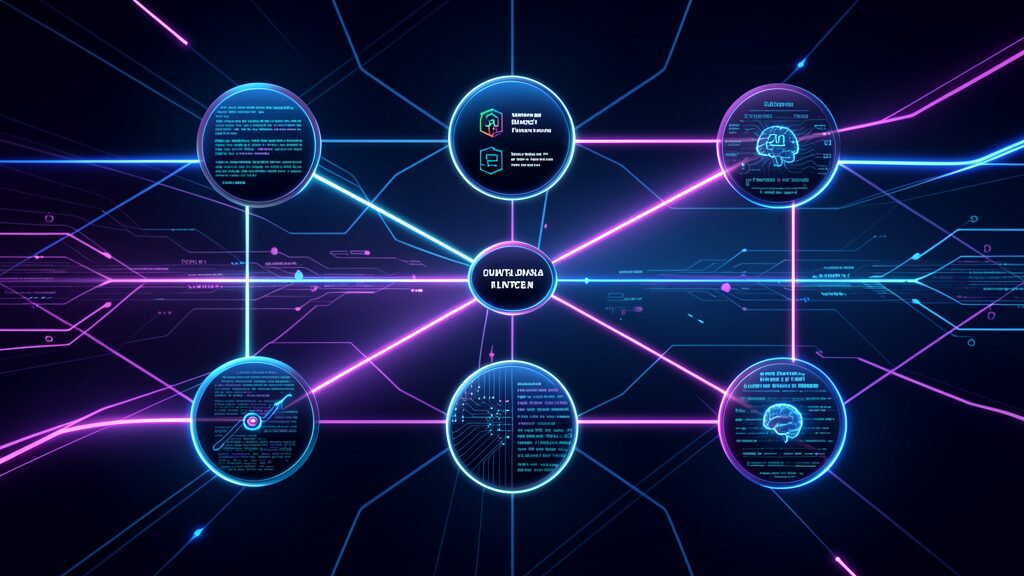
Building an adversarial AI testing pipeline requires four interconnected components: the attack generator, the evaluation engine, the learning loop, and the reporting system. Each component must be carefully calibrated to ensure comprehensive coverage without generating excessive false positives.
The attack generator creates diverse exploit attempts based on the application’s architecture and known vulnerability patterns. When you teach AI to break software, this component becomes your most powerful discovery tool — generating thousands of unique attack vectors per hour that would take human testers months to develop manually.
The evaluation engine assesses each attack’s success, measuring impact severity and exploitability. The learning loop then refines future attacks based on previous results, creating a continuous improvement cycle. Finally, the reporting system translates technical findings into actionable remediation guidance for development teams.
For organizations looking to implement this pipeline, our AI security consulting services provide expert guidance on building and deploying adversarial testing systems tailored to your specific technology stack. Our team has helped over 50 organizations successfully operationalize adversarial AI testing across diverse technology environments.
Successful implementations require careful attention to integration points. The adversarial AI system must connect to your version control system, CI/CD pipeline, and issue tracking tools to ensure findings flow directly into your existing development workflows. This integration ensures that vulnerability discoveries translate into immediate action, not just reports that sit in a folder.
How to Implement Adversarial AI Testing in Your Pipeline — How to Teach AI to Break Software
Implementing adversarial AI testing does not require replacing your existing security tools. It integrates with your current CI/CD pipeline, supplementing SAST, DAST, and SCA tools with AI-driven attack simulation that finds what signature-based scanners miss.
The key to successful implementation is starting small. Begin with a single application or service, establish baseline metrics, then gradually expand coverage as your adversarial AI system learns your architecture. When you teach AI to break software, you’re not just finding bugs — you’re building institutional knowledge about your system’s unique attack surface.
According to CISA’s AI Risk Management Framework, organizations that implement adversarial testing see a 52 percent reduction in critical vulnerabilities reaching production. This ROI justifies the initial investment in tooling, training, and process changes required to operationalize adversarial AI testing at scale.
Successful implementations typically follow a phased approach: Phase 1 focuses on environment setup and baseline measurement (weeks 1–4). Phase 2 involves initial AI training and calibration (weeks 5–8). Phase 3 scales to production with continuous monitoring (weeks 9–12). By the end of Phase 3, most organizations report measurable improvements in their security posture and significant reductions in time-to-remediation for critical vulnerabilities.
Training your development team is equally important. Developers need to understand how to interpret adversarial AI findings, prioritize remediation efforts, and integrate security fixes into their existing workflows. Organizations that invest in developer education see faster adoption rates and better outcomes from their adversarial testing programs.
Real-World Impact: What Adversarial AI Testing Catches — How to Teach AI to Break Software

Understanding what adversarial AI testing catches requires looking at specific vulnerability categories that traditional tools consistently miss. These include business logic flaws, authentication bypasses, and privilege escalation chains that require contextual understanding rather than pattern matching.
Adversarial AI systems excel at discovering multi-step attack chains. While a scanner might find an XSS vulnerability, an adversarial AI can chain that XSS with a CSRF token forgery to achieve remote code execution — exactly the kind of creative attack path that teach AI to break software methodologies are designed to uncover.
Real-world case studies show adversarial AI testing catching critical vulnerabilities in payment processing, authentication flows, and data access controls that passed multiple rounds of manual penetration testing. The key insight: AI can explore combinations and edge cases that human testers, constrained by time and cognitive limits, simply cannot cover.
One particularly compelling example involves a fintech company that deployed adversarial AI testing across its mobile banking application. The AI discovered a privilege escalation vulnerability that had evaded three separate penetration testing engagements over 18 months. The vulnerability allowed low-privileged users to access administrative functions, potentially exposing millions of customer records. This single finding justified the entire adversarial testing investment.
Another example comes from a healthcare technology provider that used adversarial AI testing to identify a data exposure vulnerability in their patient records system. The vulnerability involved a subtle race condition that only manifested under specific timing conditions — something no human tester would have thought to check. The AI discovered it in its first week of operation, preventing what could have been a HIPAA violation affecting thousands of patients.
Measuring Success: Metrics That Matter — How to Teach AI to Break Software

Adversarial AI testing produces vast amounts of data. The key is measuring the right metrics to drive continuous improvement rather than drowning in noise. Track vulnerability discovery rate, false positive ratio, time to remediation, and coverage percentage across your attack surface.
When you teach AI to break software, you establish a feedback loop where each testing cycle improves the next. The AI learns which attack strategies work, which paths are most productive, and how to allocate computational resources for maximum vulnerability discovery per dollar spent.
Industry benchmarks from the Cloud Security Alliance STAR program show that mature adversarial AI testing programs achieve 85 percent coverage of their application’s attack surface within six months of deployment. This coverage level dramatically reduces the probability of undetected vulnerabilities reaching production.
Effective metric tracking requires establishing baselines during the first testing cycle, then measuring improvement over time. Organizations should track not just the number of vulnerabilities found, but also the severity distribution, time-to-detection, and remediation effectiveness. These metrics provide executive stakeholders with clear evidence of the program’s value and help secure ongoing investment in security capabilities.
Dashboard visualization of these metrics enables security teams to communicate progress to leadership effectively. Regular reporting on vulnerability discovery trends, remediation rates, and risk reduction provides the transparency needed to maintain executive support and budget allocation for adversarial AI testing programs.
Common Pitfalls and How to Avoid Them — How to Teach AI to Break Software
Implementing adversarial AI testing is powerful but not trivial. Several common pitfalls can undermine your program if you don’t anticipate them early. The most frequent mistake is treating adversarial AI as a silver bullet rather than a component of a comprehensive security strategy.
Another critical pitfall is failing to properly scope the testing environment. When you teach AI to break software, you need clear boundaries — production systems require different safeguards than staging environments. Always start in isolated environments, validate findings manually, then gradually expand to production with appropriate monitoring and rollback procedures.
Organizations that succeed with adversarial AI testing invest heavily in tuning and calibration. The AI needs continuous feedback to reduce false positives and improve attack relevance. Without this investment, you’ll drown in noise and lose confidence in the system’s recommendations. For guidance on avoiding these pitfalls, explore our DevSecOps transformation services.
Change management represents another significant challenge. Development teams may initially resist adversarial AI testing, viewing it as criticism of their work. Successful organizations address this by framing adversarial testing as a collaborative improvement process — the AI finds problems so developers can focus on building better solutions, not fixing preventable bugs.
Resource allocation is the final consideration. Adversarial AI testing requires dedicated personnel to manage the system, validate findings, and coordinate remediation efforts. Organizations that assign at least one full-time security engineer to oversee adversarial testing programs see significantly better outcomes than those that treat it as an add-on responsibility for existing team members.
The Future of Adversarial AI Testing — How to Teach AI to Break Software
Adversarial AI testing is still in its early stages. Several trends will shape its evolution over the next three to five years, from autonomous vulnerability discovery to integration with generative AI models that can create more sophisticated attack scenarios.
The future of adversarial AI testing lies in continuous, automated security validation. Instead of periodic penetration tests, organizations will deploy AI systems that teach AI to break software on an ongoing basis — providing real-time security posture assessment and automatic vulnerability discovery across the entire application portfolio.
As AI models become more capable, so do the attackers using them. The arms race between defensive and offensive AI will accelerate, making adversarial testing not just a competitive advantage but a necessity for any organization handling sensitive data or critical infrastructure. The time to start learning how to teach AI to break software is now — before your competitors do.
Emerging research in explainable AI will also enhance adversarial testing by making AI-generated attack paths more interpretable to human security teams. This transparency will improve trust in AI findings and accelerate remediation cycles. Organizations that invest in adversarial AI testing today will be best positioned to capitalize on these advances as they emerge.
Additionally, the convergence of adversarial AI testing with threat intelligence platforms will create even more powerful security programs. By combining AI-driven vulnerability discovery with real-world threat intelligence, organizations can prioritize testing based on actual attacker tactics and techniques observed in the wild. This integration creates a feedback loop where real-world attacks inform adversarial testing strategies, which in turn improve overall security posture.
Conclusion: Break It to Build It Better — How to Teach AI to Break Software
The philosophy behind adversarial AI testing is simple: to defend your software effectively, you must understand how it breaks. By investing in adversarial AI capabilities today, organizations build resilience against tomorrow’s threats — threats that will be increasingly AI-powered and increasingly sophisticated.
Every organization that ships software has a choice: wait for a breach to discover vulnerabilities, or proactively teach AI to break software before attackers find the gaps. The latter approach requires investment in tooling, talent, and process — but the cost of inaction far exceeds the investment.
Start today. Build your adversarial AI testing pipeline. Measure your progress. Iterate and improve. The security landscape is evolving rapidly, and organizations that embrace adversarial AI testing will have a decisive advantage in building trustworthy, resilient software systems. The question is no longer whether to adopt adversarial AI testing — it’s whether you can afford not to.
Remember that adversarial AI testing is not a destination but a journey. Each testing cycle builds knowledge, improves detection capabilities, and strengthens your overall security posture. Organizations that commit to this continuous improvement process will find themselves increasingly resilient against the evolving threat landscape, while those that delay risk falling behind as attackers become more sophisticated and more automated.
Frequently Asked Questions — How to Teach AI to Break Software
What is adversarial AI testing?
Adversarial AI testing uses machine learning models to actively search for vulnerabilities, exploit chains, and security weaknesses in software systems. Unlike traditional scanning tools, adversarial AI learns and adapts, continuously improving its ability to find novel attack paths.
How much does it cost to teach AI to break software?
Implementation costs vary based on complexity and scale. Small applications might require $15,000–$30,000 for initial setup, while enterprise systems can exceed $100,000. The ROI typically materializes within 12–18 months through reduced breach risk and faster remediation cycles.
Can adversarial AI replace human penetration testers?
No. Adversarial AI augments human testers by handling repetitive, high-volume discovery work. Human experts remain essential for validating findings, understanding business context, and developing remediation strategies. The combination of AI speed and human judgment is far more effective than either approach alone.
How long does it take to see results?
Initial vulnerability discoveries appear within the first testing cycle (typically 1–2 weeks). However, meaningful coverage improvements require 3–6 months of continuous operation as the AI learns your architecture and attack patterns. Full maturity typically takes 9–12 months.
Where can I learn more about AI security testing?
The OWASP Application Security Testing Guide provides comprehensive resources on modern security testing methodologies, including adversarial approaches. Additionally, our blog publishes regular updates on emerging security trends and practical implementation guidance.
What industries benefit most from adversarial AI testing?
Financial services, healthcare, e-commerce, and government sectors benefit most due to their high regulatory requirements and valuable data assets. However, any organization that processes user data or provides critical services should consider adversarial AI testing as part of their security strategy.










