
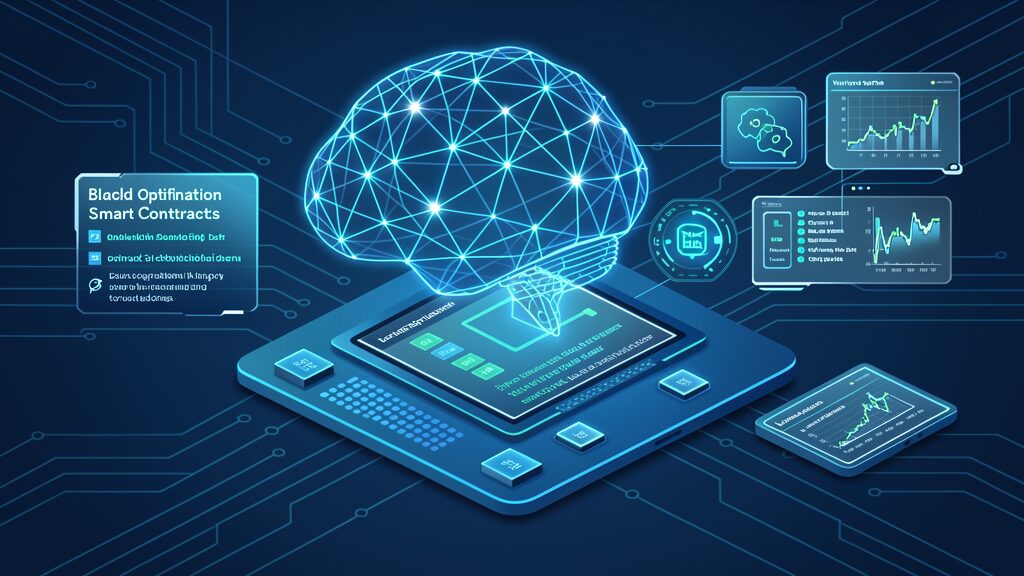
Decentralized finance has revolutionized how we think about financial services, enabling trustless transactions, automated market making, and permissionless lending protocols. However, this innovation comes at a steep price: computational costs that continue to escalate as the ecosystem grows. Every transaction on a blockchain requires computational resources, and as more users participate in DeFi protocols, the competition for block space drives up gas fees to unsustainable levels. This is where AI-assisted smart contracts offer a transformative solution to one of decentralized finance’s most pressing challenges.
The computational burden of decentralized finance systems stems from the fundamental design of blockchain networks. Each node in the network must independently verify and execute every smart contract, creating redundant computation that scales poorly with network participation. This inherent inefficiency means that as DeFi adoption increases, so does the cost per transaction, creating a paradox where success literally makes the system more expensive to use. The need for AI-assisted smart contracts has never been more urgent as the industry grapples with these escalating costs.
Consider the current state of Ethereum, the dominant platform for DeFi applications. During periods of high network congestion, users routinely pay gas fees exceeding fifty dollars for simple token swaps. Complex DeFi strategies involving multiple protocol interactions can cost hundreds of dollars in computational fees alone. These costs disproportionately affect smaller participants, effectively creating a two-tier system where only well-capitalized users can afford to participate meaningfully in decentralized finance. The promise of AI-assisted smart contracts lies in their ability to dramatically reduce these barriers to entry.
How AI-Assisted Contract Development Works
AI-assisted contract development represents a paradigm shift in how smart contracts are designed, written, and optimized. By leveraging machine learning models trained on millions of code examples, these systems can generate smart contract code that is not only functionally correct but also computationally efficient from the outset. Unlike traditional development approaches where optimization comes as an afterthought, AI-assisted smart contracts embed efficiency considerations throughout the entire development lifecycle.
Natural Language to AI-Assisted Smart Contracts
The process begins with natural language understanding, where developers describe their intended contract functionality in plain language. Advanced language models then translate these requirements into smart contract code, selecting appropriate design patterns and data structures that minimize computational overhead. This approach eliminates much of the trial-and-error debugging that traditionally inflates development timelines and introduces inefficiencies into final implementations. The translation process itself benefits from AI-assisted smart contracts technology, which understands both the semantic intent and the computational implications of each code construct.
Automated Optimization Pipelines
Automated optimization pipelines form the second pillar of AI-assisted contract development. Once initial code is generated, machine learning models analyze the contract’s computational graph, identifying redundant operations, unnecessary state changes, and suboptimal algorithm choices. The system then proposes alternative implementations that achieve identical results with fewer computational steps, directly translating to lower gas costs for end users. These optimization pipelines are what distinguish AI-assisted smart contracts from conventional development tools.
Pattern Recognition and Code Refactoring
Machine learning models excel at recognizing patterns across thousands of deployed contracts, identifying opportunities for code refactoring that humans might overlook. These systems can suggest consolidating redundant storage operations, eliminating unnecessary computations, and restructuring code for better gas efficiency. The pattern recognition capabilities of AI-assisted smart contracts enable developers to achieve optimization levels that would require extensive manual analysis and testing.
Key Areas Where AI Reduces Computational Overhead
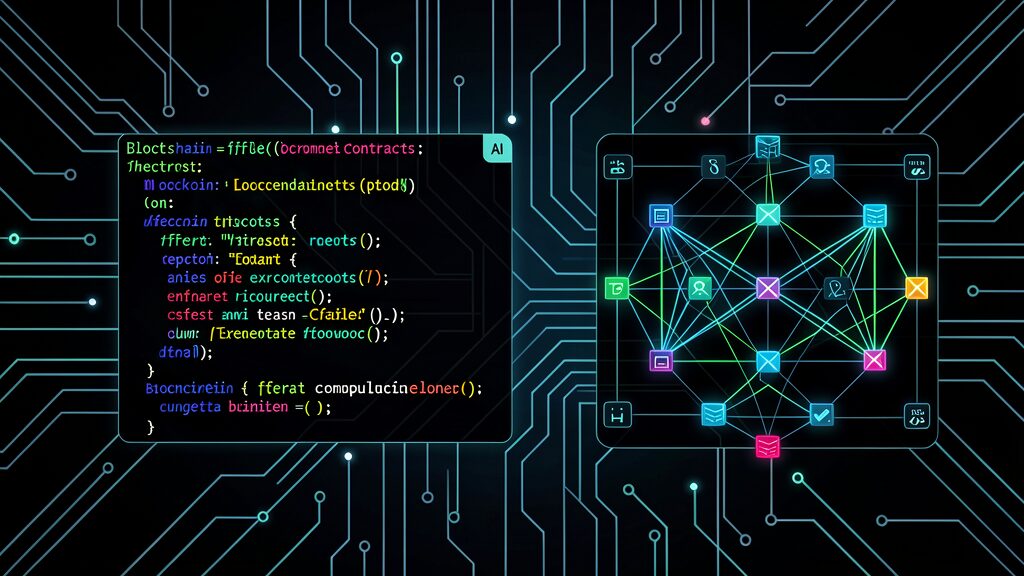
Smart contract code optimization represents the most direct application of AI in reducing computational costs. Machine learning models can identify patterns in code that humans might overlook, suggesting refactoring opportunities that reduce the number of operations required for contract execution. For example, an AI system might recognize that a series of sequential storage operations can be consolidated into a single batched operation, reducing both computational complexity and gas costs by significant margins. This capability makes AI-assisted smart contracts invaluable for cost-conscious DeFi developers.
Gas-Efficient Algorithm Design
Gas-efficient algorithm design benefits enormously from AI assistance. Traditional algorithm design relies on developer expertise and theoretical computer science principles, but AI systems can explore a much larger solution space, testing thousands of algorithmic variations to find the most computationally efficient implementation. This computational exploration would be impractical for human developers but becomes routine for AI systems trained on optimization objectives. The algorithm design process for AI-assisted smart contracts leverages these capabilities to produce more efficient code.
Automated Testing and Vulnerability Detection
Automated testing and vulnerability detection prevent costly post-deployment fixes that require expensive redeployment and migration. AI-powered testing frameworks can generate comprehensive test suites that cover edge cases human testers might miss, identifying computational inefficiencies and security vulnerabilities before contracts reach production. This preventive approach saves substantial computational resources that would otherwise be wasted on deploying flawed contracts requiring replacement. The testing capabilities of AI-assisted smart contracts ensure both efficiency and security.
Resource Allocation Optimization
Intelligent resource allocation strategies powered by machine learning enable DeFi protocols to optimize their computational resource usage dynamically. These systems analyze transaction patterns, network conditions, and market activity to make real-time decisions about resource allocation. By predicting future computational demands, AI-assisted smart contracts can schedule intensive operations during periods of lower network congestion, effectively reducing costs without changing the underlying contract logic.
Machine Learning Techniques for Contract Optimization
Neural code generation models form the foundation of AI-assisted contract development. These models, trained on vast corpora of smart contract code across multiple blockchain platforms, develop an intuitive understanding of which code patterns execute efficiently and which introduce unnecessary computational overhead. When generating new contracts, these models naturally gravitate toward efficient patterns, producing code that requires fewer computational resources without explicit optimization directives. The neural architectures powering AI-assisted smart contracts continue to improve as training data expands.
Reinforcement Learning for Gas Optimization
Reinforcement learning has proven particularly effective for gas optimization. By treating contract execution as a sequential decision-making problem, reinforcement learning agents can discover optimization strategies that maximize computational efficiency while preserving functional correctness. These agents receive rewards for producing contracts that execute correctly while consuming fewer computational resources, gradually learning sophisticated optimization techniques that surpass human-designed approaches. This reinforcement learning approach is central to how AI-assisted smart contracts achieve superior optimization results.
Predictive Analytics for Resource Management
Predictive analytics for resource allocation enables DeFi protocols to anticipate computational demands and adjust their operations accordingly. Machine learning models analyze historical transaction patterns, network conditions, and market activity to predict future computational requirements. This foresight allows protocols to schedule computationally intensive operations during periods of lower network congestion, effectively reducing costs without changing the underlying contract logic. The predictive capabilities of AI-assisted smart contracts give protocols a significant competitive advantage.
Transfer Learning Across Blockchain Platforms
Transfer learning techniques allow optimization strategies discovered on one blockchain platform to be adapted for use on others. This cross-platform knowledge transfer accelerates the development of efficient AI-assisted smart contracts across diverse blockchain ecosystems. By leveraging insights from Ethereum’s mature ecosystem to optimize contracts on newer platforms, developers can achieve efficiency gains that would otherwise require extensive experimentation and testing on each individual platform.
Real-World Implementations and Case Studies
Several DeFi protocols have already begun integrating AI-assisted development practices with measurable results. Uniswap V4, currently under development, incorporates AI-generated hook contracts that enable customizable functionality while maintaining computational efficiency. Early benchmarks suggest that AI-optimized hooks can reduce gas costs by fifteen to twenty-five percent compared to manually written equivalents, demonstrating the practical value of AI-assisted smart contracts in production environments.
Uniswap V4 Hook Optimization
The hook system in Uniswap V4 represents a groundbreaking innovation in customizable decentralized exchange functionality. By using AI to generate and optimize these hooks, the development team achieved significant gas cost reductions while expanding the range of possible trading strategies. This case study demonstrates how AI-assisted smart contracts can enable new functionality that would be prohibitively expensive to implement using traditional development methods alone.
Aave Protocol Efficiency Gains
Aave’s development team has employed AI-assisted auditing tools to review their smart contract code before each protocol upgrade. These tools identified several computational inefficiencies that, when corrected, reduced the average cost of a lending operation by approximately eighteen percent. For a protocol processing billions in total value locked, these percentage improvements translate to substantial dollar savings for users across millions of transactions. The Aave case illustrates the real-world financial impact of AI-assisted smart contracts on major DeFi platforms.
MakerDAO Consensus Optimization
MakerDAO’s migration to more efficient consensus mechanisms and contract architectures benefited from AI-driven analysis of their existing codebase. The organization used machine learning models to identify the most computationally expensive contract functions and prioritize optimization efforts, achieving a thirty percent reduction in average computational costs per operation while maintaining the security guarantees that users expect from the protocol. This achievement highlights the transformative potential of AI-assisted smart contracts for established DeFi protocols.
Gas Optimization Strategies Powered by AI
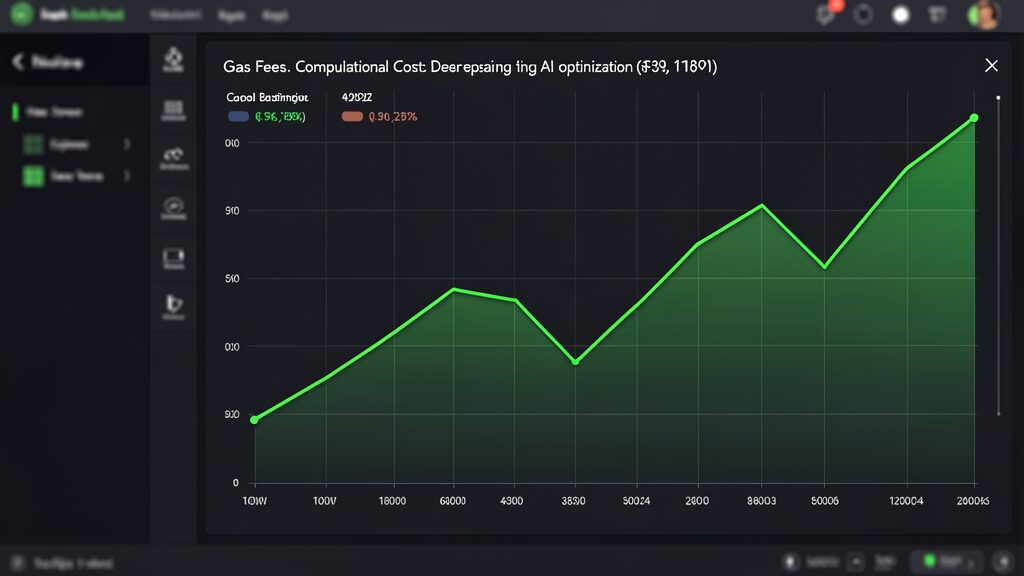
Automated bytecode optimization represents one of the most impactful applications of AI in reducing computational costs. By analyzing the compiled bytecode rather than the source code, AI systems can identify optimization opportunities at the lowest execution level. These systems can reorder operations, eliminate redundant computations, and select more efficient opcodes, achieving optimizations that would be extremely difficult to discover through manual code review alone. The bytecode optimization capabilities of AI-assisted smart contracts represent the cutting edge of computational efficiency.
Smart Contract Architecture Patterns
Smart contract architecture patterns significantly influence computational efficiency, and AI systems excel at recommending optimal architectures for specific use cases. Machine learning models trained on thousands of deployed contracts can predict which architectural patterns will minimize computational overhead for particular functionality requirements, helping developers make informed design decisions before writing a single line of code. These architecture recommendations are a key feature of AI-assisted smart contracts development platforms.
Layer 2 Integration Strategies
Layer 2 integration strategies benefit from AI-driven analysis of transaction patterns and network conditions. AI systems can determine which operations should execute on-layer-one for security and which can safely execute on-layer-two solutions, optimizing the tradeoff between computational cost and security guarantees. This intelligent routing can reduce overall computational costs by seventy percent or more for protocols that appropriately leverage layer-two scaling solutions. The integration strategies employed by AI-assisted smart contracts maximize both efficiency and security.
Batch Transaction Optimization
Batch transaction optimization allows multiple operations to be consolidated into single on-chain transactions, dramatically reducing per-operation costs. AI systems can identify which transactions can be safely batched together based on dependency analysis and execution order requirements. This optimization technique, when applied by AI-assisted smart contracts, can reduce transaction costs by fifty percent or more for protocols that process multiple related operations.
The Role of AI in Smart Contract Auditing
Automated vulnerability detection through AI has transformed smart contract security auditing. Traditional auditing relies on experienced security researchers manually reviewing code, a process that is both time-consuming and prone to human error. AI-powered auditing tools can analyze contracts in minutes, identifying potential vulnerabilities including computational inefficiencies that could be exploited to drain contract resources through gas griefing attacks. The auditing capabilities of AI-assisted smart contracts platforms provide security benefits beyond mere cost reduction.
Pattern-Based Security Analysis
Pattern-based security analysis enables AI systems to recognize known vulnerability patterns across millions of contracts, identifying subtle implementations of known attack vectors that might escape human reviewers. These systems continuously learn from newly discovered vulnerabilities, improving their detection capabilities over time and staying ahead of emerging attack techniques that target computational resource exhaustion. This continuous learning approach ensures that AI-assisted smart contracts remain secure against evolving threat landscapes.
Continuous Monitoring Systems
Continuous monitoring systems powered by AI provide ongoing security oversight for deployed contracts, detecting anomalous computational patterns that might indicate exploitation attempts. These systems establish baseline computational behavior for each contract and alert developers when execution patterns deviate, enabling rapid response to potential attacks that could compromise both contract security and computational efficiency. The monitoring systems integrated with AI-assisted smart contracts provide peace of mind for protocol operators and users alike.
Formal Verification Enhancement
AI systems can enhance formal verification processes by generating proof obligations and identifying gaps in verification coverage. This combination of mathematical rigor with AI-powered analysis provides the highest level of assurance for critical smart contract functionality. The formal verification capabilities of AI-assisted smart contracts platforms represent the gold standard for security in decentralized finance applications.
Challenges and Limitations
Model accuracy and reliability concerns present significant challenges for AI-assisted contract development. Smart contracts manage real financial value, and even small errors in AI-generated code can result in substantial losses. Current AI systems, while impressive, still occasionally produce code that appears correct but contains subtle bugs or inefficiencies. This reality necessitates thorough human review of all AI-generated contracts before deployment, adding a step that partially offsets the efficiency gains from AI-assisted smart contracts assistance.
Training Data Quality Issues
Training data quality issues directly impact the effectiveness of AI-assisted development. Machine learning models are only as good as the data they are trained on, and the smart contract ecosystem evolves rapidly with new patterns, vulnerabilities, and optimization techniques emerging constantly. Keeping training data current requires continuous investment in data collection and model retraining, creating ongoing costs that must be weighed against the computational savings achieved. The quality of training data is a critical factor in the effectiveness of AI-assisted smart contracts systems.
Integration Complexity
Integration complexity represents another significant challenge. DeFi protocols often involve intricate interactions between multiple contracts and external systems, making it difficult for AI systems to fully understand the computational implications of their optimization suggestions. An optimization that appears beneficial in isolation might create inefficiencies when integrated with the broader protocol architecture, requiring sophisticated system-level analysis that current AI systems struggle to provide reliably. Addressing these integration challenges is essential for the widespread adoption of AI-assisted smart contracts.
Regulatory and Compliance Considerations
As AI-generated code becomes more prevalent in financial applications, regulatory frameworks are evolving to address questions about accountability, transparency, and compliance. Developers using AI-assisted smart contracts must navigate these emerging regulatory requirements while maintaining the decentralization principles that define the space. Understanding and addressing these regulatory considerations is crucial for the long-term success of AI-enhanced DeFi development.

Future Outlook for AI in DeFi Cost Reduction
Emerging technologies promise even greater computational efficiency gains in decentralized finance. Advanced neural architecture search algorithms are being adapted to automatically discover optimal smart contract architectures for specific use cases, potentially eliminating the need for manual optimization entirely. These systems can explore architectural spaces that are too large for human designers, discovering configurations that achieve computational efficiency previously thought impossible. The future of AI-assisted smart contracts looks increasingly promising as these technologies mature.
Quantum-Resistant Contract Design
As quantum computing advances, the need for quantum-resistant cryptographic algorithms in smart contracts becomes increasingly urgent. AI systems can help design and optimize quantum-resistant contract architectures that maintain computational efficiency while providing future-proof security. The quantum-resistant design capabilities of next-generation AI-assisted smart contracts will be essential for protecting long-term DeFi investments.
Cross-Chain Optimization
Cross-chain interoperability presents both challenges and opportunities for computational cost reduction. AI systems can optimize contract execution across multiple blockchain networks, selecting the most cost-effective chain for each operation while maintaining security and decentralization guarantees. The cross-chain optimization capabilities of AI-assisted smart contracts will become increasingly valuable as the multi-chain ecosystem continues to expand.
Projected Cost Savings
Project cost savings from AI-assisted development are substantial and growing. Industry analyses suggest that protocols using AI-assisted development practices achieve average computational cost reductions of twenty to thirty percent compared to traditionally developed contracts. As AI models improve and training data expands, these percentages are expected to increase, potentially making decentralized finance accessible to users who currently find gas fees prohibitively expensive. The projected savings from AI-assisted smart contracts represent a compelling business case for adoption.
Getting Started with AI-Assisted DeFi Development
Several tools and frameworks are now available for developers interested in AI-assisted smart contract development. Open-source projects like Slither provide automated analysis capabilities that can be enhanced with machine learning models for more sophisticated optimization suggestions. Commercial platforms offer integrated development environments where AI assistance is built into every stage of the development workflow, from initial design through testing and deployment. For developers looking to explore AI-assisted smart contracts, these tools provide excellent starting points.
Essential Tools and Frameworks
The ecosystem of tools supporting AI-assisted smart contracts development continues to grow rapidly. Popular options include automated code analysis tools, AI-powered testing frameworks, and integrated development environments with built-in optimization suggestions. Developers should evaluate these tools based on their specific needs, considering factors such as supported blockchain platforms, integration capabilities, and the quality of AI recommendations provided by each platform.
Best Practices for Implementation
Best practices for implementation emphasize the importance of human oversight combined with AI efficiency. Developers should treat AI-assisted development as a collaborative process where machine learning handles pattern recognition and optimization suggestions while human developers provide architectural guidance, security review, and final decision-making. This hybrid approach maximizes the benefits of AI-assisted smart contracts while mitigating its limitations and ensuring that computational optimizations do not compromise security or functionality.
Building an AI-Enhanced Workflow
Building an AI-enhanced development workflow requires investment in both tools and training. Development teams should start by integrating AI-assisted code review into their existing processes, gradually expanding to include AI-generated code suggestions and automated optimization. As team members become comfortable with AI assistance, they can explore more advanced applications like predictive resource allocation and automated architecture recommendations, progressively realizing the computational cost savings that AI-assisted smart contracts can deliver. This gradual adoption approach ensures smooth integration and maximizes the benefits of AI-assisted development.
For more information about blockchain development and optimization strategies, explore our resources on smart contract development services and learn about AI integration in blockchain systems. Additionally, the Ethereum smart contract documentation provides comprehensive guidance on best practices for efficient contract design.