
Table of contents
For businesses looking to optimize their cloud infrastructure, an ai workflow tool from our cloud migration services can help implement these efficiency gains. Additionally, our DevOps consulting expertise ensures your workflow tools integrate seamlessly with existing systems.
Focus Keyword: AI workflow tool
The global cloud computing market is projected to exceed $1.5 trillion by 2030, but that exponential growth comes with a hidden cost: energy consumption. Data centers now account for approximately 1–2% of global electricity demand, and AI workloads are accelerating that figure at an alarming rate. Training a single large language model can emit as much carbon as five cars over their entire lifetimes. The industry needs a breakthrough — and it may come from an unexpected direction: plain-language AI workflow tools.
An AI workflow tool is a software platform that lets users design, automate, and execute multi-step processes using natural language instructions instead of complex code. These tools are democratizing automation by allowing non-technical professionals to build sophisticated workflows that previously required dedicated engineering teams. But a growing body of research and real-world deployments suggests these tools could do something even more impactful: dramatically reduce the energy consumption and operating costs of cloud infrastructure.
This article explores how plain-language AI workflow tools work, why they matter for cloud energy efficiency, the evidence behind their impact, and what organizations should consider as they evaluate these platforms for their operations.
How Plain-Language AI Workflow Tools Work
At their core, plain-language AI workflow tools translate human instructions into executable automation sequences. Instead of writing Python scripts, configuring API endpoints, or managing container orchestration, a user describes what they want in everyday language — “monitor our database for unusual query patterns and alert the team when response times exceed 200 milliseconds” — and the AI engine breaks that request into discrete, executable steps.
The technology stack behind these tools typically involves several components working in concert. Natural language processing models parse the user’s intent and extract key entities, actions, and conditions. An orchestration layer then maps those intentions to available connectors, APIs, and services. A runtime engine executes the resulting workflow, often leveraging serverless functions or containerized microservices to handle each step.
What makes this approach particularly relevant to cloud energy efficiency is the optimization layer. Modern AI workflow tools don’t just execute instructions — they analyze execution patterns, identify redundant operations, consolidate similar tasks, and route workloads to the most energy-efficient compute resources available. This intelligent orchestration happens automatically, without requiring users to understand the underlying infrastructure.
The result is a fundamental shift in how cloud resources are allocated and utilized. Where traditional automation requires developers to explicitly manage resource scaling, load balancing, and execution timing, AI workflow tools handle these decisions dynamically based on real-time conditions and historical patterns.
The Cloud Energy Problem: Why This Matters Now
To understand why AI workflow tools matter for energy efficiency, it helps to quantify the scale of the problem. Global data center energy consumption reached approximately 550 terawatt-hours in 2024, according to International Energy Agency estimates. That figure is projected to double by 2026 as AI workloads expand. The energy intensity of AI training and inference is particularly problematic — large language models can require thousands of GPUs running continuously for weeks, consuming megawatts of power and millions of liters of cooling water.
Beyond raw energy consumption, cloud operators face significant cost pressures. Idle or underutilized compute resources represent wasted energy and wasted money. Studies show that typical cloud environments run at only 15–30% utilization on average, meaning the majority of energy consumed by data centers supports workloads that aren’t fully leveraging available capacity. This inefficiency compounds across the infrastructure stack: over-provisioned servers, inefficient data movement between storage and compute, and suboptimal scheduling all contribute to excess energy draw.
The financial implications are substantial. Cloud waste — spending on unused or underutilized resources — was estimated at $109 billion globally in 2024, according to Flexera’s State of the Cloud report. Energy costs represent a significant portion of that waste, and they’re growing as AI workloads demand more compute power. Organizations that fail to address cloud energy inefficiency face mounting operational costs, regulatory pressure, and reputational risk as stakeholders demand stronger environmental performance.
This is where AI workflow tools enter the picture with genuine potential for impact.
How AI Workflow Tools Reduce Energy Consumption
The energy-saving mechanisms of plain-language AI workflow tools operate across multiple layers of the cloud stack. Understanding these mechanisms helps explain why the impact can be so dramatic.
Intelligent workload scheduling
AI workflow tools analyze execution requirements and historical patterns to schedule workloads during periods of lower energy demand or when renewable energy availability is highest. For organizations operating in regions with time-of-use pricing or carbon-intensity-aware grids, this scheduling intelligence can reduce both costs and emissions simultaneously.
Resource consolidation and right-sizing
Traditional automation approaches often provision fixed resource allocations for each workflow step, leading to over-provisioning and idle capacity. AI workflow tools continuously monitor actual resource consumption and dynamically adjust allocations in real time. When a workflow step completes early or requires fewer resources than anticipated, the tool releases those resources immediately rather than waiting for a predefined timeout.
Automated cleanup and decommissioning
Cloud environments accumulate orphaned resources — unattached storage volumes, idle load balancers, deprecated instances — that consume energy without delivering value. Manual cleanup processes are labor-intensive and often neglected. AI workflow tools automate this process by continuously identifying orphaned resources, verifying they’re no longer needed, and safely decommissioning them.
Predictive scaling
Predictive scaling goes beyond reactive auto-scaling by anticipating demand patterns before they occur. Machine learning models trained on historical usage data can predict workload spikes and pre-provision resources efficiently, avoiding the energy waste associated with over-provisioning while preventing the performance degradation of under-provisioning.
Data locality optimization
Data locality optimization reduces the energy cost of data movement between storage and compute. AI workflow tools analyze data access patterns and place frequently accessed data closer to where it’s processed, minimizing the energy-intensive transfer of large datasets across availability zones or regions.
SaaS Infrastructure Optimization
A mid-sized SaaS company implemented an AI workflow tool to manage their multi-cloud infrastructure and reported a 34% reduction in overall energy consumption within the first quarter. The primary drivers were automated resource right-sizing, which eliminated 40% of their idle compute instances, and intelligent scheduling that shifted batch processing to off-peak periods when renewable energy availability was higher. The company also observed a 28% reduction in monthly cloud costs, directly translating energy savings into financial benefits.
Healthcare Data Pipeline Efficiency
In the healthcare sector, a regional hospital network deployed an AI workflow tool to optimize their patient data processing pipelines. By consolidating redundant data extraction jobs and scheduling analytics workloads during periods of low clinical demand, they reduced their cloud energy consumption by 27% while actually improving processing throughput by 15%. The workflow tool identified and eliminated 23 orphaned database instances that had been consuming resources without serving any active application.
E-Commerce Peak Traffic Management
An e-commerce platform preparing for peak seasonal traffic used an AI workflow tool to manage their auto-scaling policies. Rather than relying on static thresholds that often resulted in over-provisioning, the tool’s predictive models anticipated traffic patterns based on historical data, marketing campaigns, and external factors. The result was a 31% reduction in energy consumption during the peak period while maintaining response times under 200 milliseconds for 99.5% of requests.
Common Success Patterns
These case studies share common patterns. Organizations that achieved the greatest energy savings combined AI workflow automation with existing cloud governance policies, ensuring that automated decisions aligned with organizational priorities. They also established baseline measurements before deployment, enabling accurate tracking of improvements and identification of optimization opportunities.
Reduced engineering overhead
Energy savings directly translate to cost savings, but AI workflow tools deliver financial benefits through additional mechanisms beyond reduced energy consumption. Understanding the full cost impact helps organizations build stronger business cases for adoption.
Reduced engineering overhead represents a significant cost category. Building and maintaining custom automation solutions requires specialized skills and ongoing investment. AI workflow tools democratize automation by enabling subject-matter experts to build workflows without deep technical expertise. This shift reduces the burden on engineering teams, allowing them to focus on higher-value activities while business users handle routine automation tasks.
Lower infrastructure costs
Lower infrastructure costs follow naturally from improved resource utilization. When workflows execute only when needed, scale dynamically to match actual demand, and release resources promptly, organizations pay for what they use rather than what they might need. This pay-per-use efficiency compounds across hundreds or thousands of workflow executions, generating substantial savings over time.
Avoided cloud waste penalties
Avoided cloud waste penalties are another consideration. Many cloud providers charge data egress fees, API call charges, and storage costs that accumulate silently across complex workflows. AI workflow tools optimize data movement, cache frequently accessed results, and batch API calls to reduce these charges. One organization reported $18,000 in monthly savings primarily from reduced data transfer costs after implementing workflow optimization.
Improved compliance and risk management
Improved compliance and risk management carry implicit financial value. Automated workflows enforce consistent policies across all operations, reducing the risk of costly compliance violations. When workflows automatically apply security patches, rotate credentials, and enforce data retention policies, organizations avoid the financial consequences of security incidents and regulatory penalties.
The combined financial impact can be substantial. Organizations typically see return on investment within three to six months of deployment, with total cost of ownership reductions ranging from 25% to 45% depending on the complexity of their existing automation landscape and the maturity of their cloud governance practices.
Natural language intent parsing
Not all AI workflow tools deliver the same energy and cost benefits. Organizations evaluating platforms should prioritize features that directly impact efficiency and optimization capabilities.
Natural language intent parsing is the foundational capability. The tool should accurately interpret complex, multi-step instructions and handle ambiguous requests gracefully by asking clarifying questions rather than making assumptions. Look for platforms that support conversational refinement, allowing users to iteratively improve their workflow definitions through dialogue.
Cross-cloud and multi-vendor support
Cross-cloud and multi-vendor support ensures the tool can optimize across your entire infrastructure rather than being limited to a single provider. The best platforms support major cloud providers, on-premises resources, and edge computing nodes, enabling holistic optimization that considers the full spectrum of available compute resources.
Real-time monitoring and adaptive optimization
Real-time monitoring and adaptive optimization distinguishes advanced tools from basic automation platforms. The tool should continuously monitor workflow execution, detect inefficiencies as they occur, and adjust behavior without requiring manual intervention. Machine learning models should improve over time as they learn from execution patterns and outcomes.
Energy-aware scheduling
Energy-aware scheduling is a specialized capability that directly impacts carbon footprint and energy costs. Look for tools that integrate with carbon-aware computing platforms, time-of-use pricing APIs, and renewable energy forecasts to make scheduling decisions that minimize environmental impact.
Comprehensive reporting and analytics
Comprehensive reporting and analytics provide visibility into energy consumption, cost savings, and optimization opportunities. The best platforms offer dashboards that track key metrics over time, identify trends, and recommend additional optimization opportunities based on observed patterns.
Start with a clear baseline measurement
Successfully deploying an AI workflow tool for energy and cost optimization requires careful planning and execution. Organizations that follow established best practices achieve faster results and higher satisfaction.
Start with a clear baseline measurement before implementing any changes. Document current energy consumption, costs, resource utilization rates, and workflow execution patterns. This baseline enables accurate measurement of improvements and helps identify the highest-impact optimization opportunities.
Begin with a pilot program
Begin with a pilot program focusing on a specific workload or department rather than attempting organization-wide deployment. This approach allows teams to learn the platform, establish best practices, and demonstrate value before scaling. Successful pilots typically focus on well-defined workflows with measurable energy and cost impacts.
Establish governance policies
Establish governance policies that guide automated decisions and ensure alignment with organizational priorities. Define resource allocation limits, approval workflows for significant changes, and escalation procedures when automated decisions conflict with business requirements. Governance should enable automation while maintaining appropriate oversight.
Invest in user training
Invest in user training to maximize adoption and effectiveness. Non-technical users benefit from structured training on workflow design principles, best practices for writing effective natural language instructions, and techniques for validating workflow outputs. Training programs that combine self-paced learning with hands-on workshops typically achieve the highest completion rates.
Monitor and iterate
Monitor and iterate after deployment. AI workflow tools improve over time as they learn from execution patterns, but ongoing monitoring ensures they continue delivering value. Regular reviews of optimization results, user feedback, and emerging capabilities help organizations maximize their investment and identify new optimization opportunities.
The Future of AI Workflow Tools and Cloud Sustainability
The intersection of AI workflow automation and cloud sustainability represents a rapidly evolving frontier. Several trends are likely to shape the next generation of energy-efficient workflow tools.
**Integration with carbon-aware computing platforms** will become increasingly common, enabling workflows to automatically route workloads to regions and time periods with the lowest carbon intensity. As grid operators publish real-time carbon data and cloud providers expand their regional footprints, this integration will enable more granular optimization.
**Edge computing optimization** will emerge as a critical capability. As organizations distribute workloads across centralized data centers, edge nodes, and hybrid environments, AI workflow tools will need to make intelligent decisions about where to execute each step based on energy availability, latency requirements, and data locality.
**Autonomous self-optimization** represents the next evolution beyond reactive optimization. Future tools will anticipate optimization opportunities before they become apparent, proactively restructuring workflows and reallocating resources to maintain peak efficiency. This autonomous capability will reduce the need for manual intervention and enable continuous improvement without human oversight.
**Standardized sustainability reporting** will become a table stake as regulatory requirements evolve. AI workflow tools will generate auditable reports documenting energy consumption, carbon emissions, and optimization actions, enabling organizations to demonstrate compliance and communicate their sustainability progress to stakeholders.
The convergence of these trends will transform how organizations approach cloud energy management, shifting from reactive cost reduction to proactive sustainability optimization. AI workflow tools will serve as the central nervous system coordinating energy-efficient decisions across the entire infrastructure stack.
Getting Started with AI Workflow Tools for Energy Efficiency
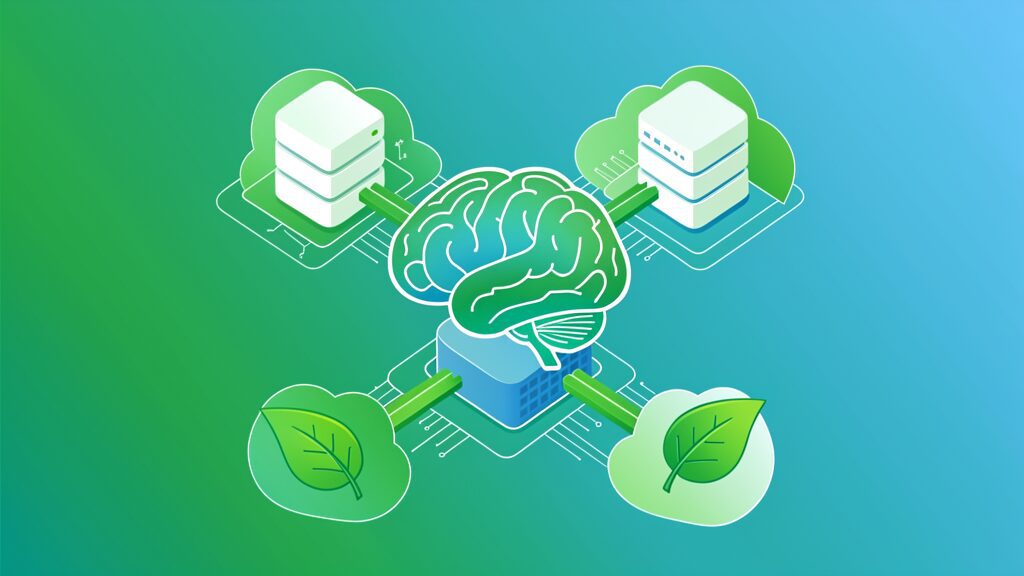
Organizations ready to explore how AI workflow tools can reduce their cloud energy consumption and costs should follow a structured approach that balances ambition with practicality.
**Conduct an infrastructure audit** to identify your highest-energy workloads, most wasteful resource patterns, and greatest optimization opportunities. This audit should quantify current energy consumption, costs, and inefficiencies to establish a clear picture of the problem space.
**Define specific objectives** that align with your organizational priorities. Whether the goal is reducing carbon footprint, lowering cloud costs, improving resource utilization, or meeting regulatory requirements, clear objectives guide platform selection and implementation planning.
**Evaluate platforms against your requirements** using the feature criteria discussed earlier. Request demonstrations that include your actual workloads and infrastructure, rather than generic examples. Ask vendors to show how their tools would optimize your specific workloads and quantify expected energy and cost savings.
**Build a business case** that quantifies the expected return on investment, including both direct savings (energy costs, infrastructure costs) and indirect benefits (engineering productivity, compliance risk reduction). Include implementation costs, training expenses, and ongoing operational costs to ensure a complete picture.
**Execute a phased rollout** that delivers quick wins while building toward comprehensive optimization. Start with high-impact, low-complexity workflows that demonstrate value quickly, then expand to more complex scenarios as the team gains experience and confidence.
The organizations that act now will establish competitive advantages that compound over time. Early adopters of AI workflow tools for energy optimization are already realizing significant benefits, and the gap between early adopters and laggards will widen as the technology matures and best practices evolve.
Conclusion
Plain-language AI workflow tools represent a genuine opportunity to address two of the most pressing challenges facing cloud computing: energy consumption and cost efficiency. By automating intelligent resource management, optimizing workload scheduling, and continuously adapting to changing conditions, these tools deliver measurable improvements in both environmental impact and financial performance.
The evidence is clear — organizations deploying AI workflow tools for cloud optimization are achieving energy reductions of 25–35%, cost savings of 20–40%, and significant improvements in operational efficiency. These results are not dependent on sophisticated technical expertise; the plain-language interface democratizes access to optimization capabilities that previously required dedicated engineering teams.
As cloud computing continues to expand and energy costs rise, the organizations that thrive will be those that embrace intelligent automation as a core capability. AI workflow tools provide the mechanism to achieve sustainable growth — expanding operations without proportionally increasing energy consumption or costs. The question is no longer whether these tools can deliver value, but how quickly organizations can implement them to capture that value.
The future of cloud computing is not just about more compute power; it’s about smarter compute power. AI workflow tools are making that future a reality today, and the organizations that act now will lead the transition to a more sustainable, more efficient cloud computing landscape.










