
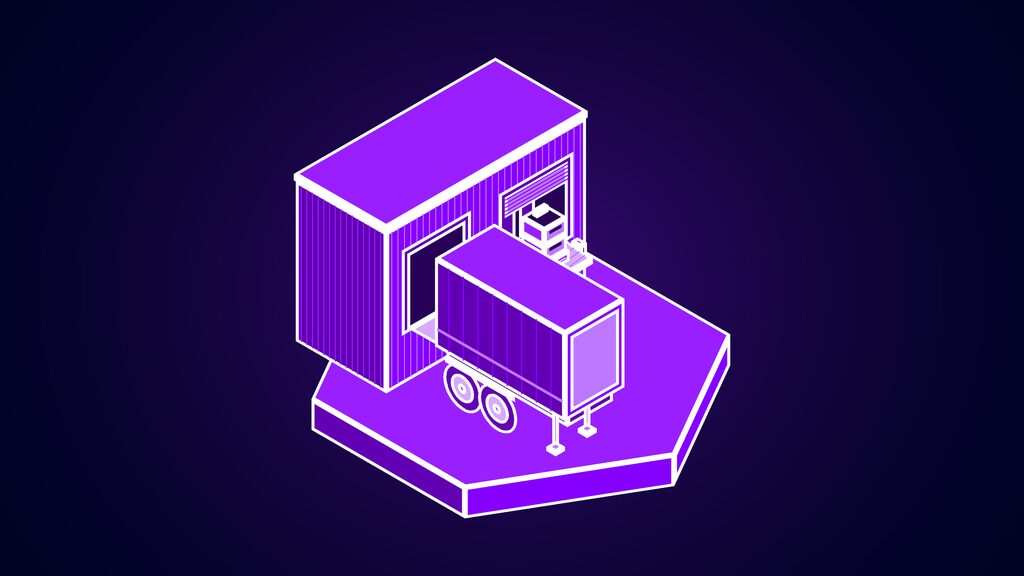
Destro AI has raised an $8 million seed round on a contrarian idea: the best way to make warehouse robots useful is not to build robots at all. The Brooklyn-based start-up makes software that directs robots, carts, trucks and human workers as one system, telling the people on the dock what to do as well as the machines. TechCrunch reported the round on 30 September 2026, with Base10 Partners and Bonfire Ventures leading and CoFound Partners joining.
Its first customer is Yusen Logistics, which is expanding a three-robot pilot to a full deployment of 26 robots and starting a second pilot with 17 more in Southern California. Founder Manthan Pawar puts the strategy in one line: “One of the biggest reasons we are winning against robotics companies is because we are not a robotics company.”
This article explains what Destro AI builds, how the Yusen cross-dock deployment works, why an orchestration layer may matter more than better robots, what the funding and timeline really show, and the risks in the model. For background on the category, see our guide to robot fleet management software.
What Destro AI Builds
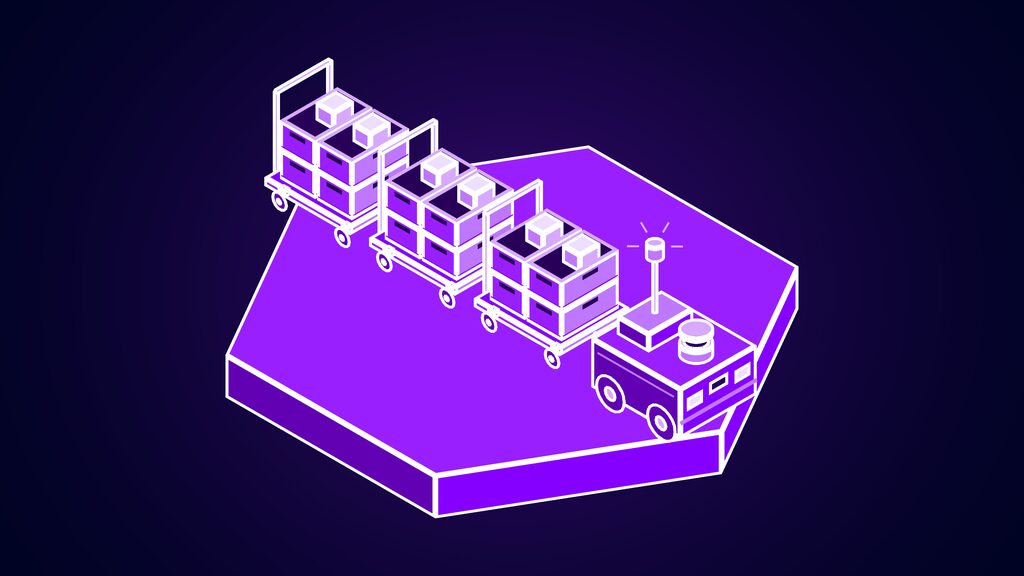
Destro AI describes itself as a “Physical AI platform” for warehouse operations. In practice it is a layer of software that sits above individual robots and decides what every robot and every person should do next.
Two operating systems
The company’s products have two parts. MothershipOS is a cloud-based orchestration engine that, Pawar told The Robot Report, is agnostic to both workflows and hardware. It plans and assigns work across the site. VisionOS, which TechCrunch says runs on open-weight vision-language-action models, handles what robots see and do on the floor.
What vision-language-action models are
A vision-language-action model is an AI system that interprets camera images and instructions and turns them into movements for a robot. It combines computer vision, which lets a machine recognise objects in an image, with a language model that follows instructions. Using open-weight models means Destro AI does not have to train its own foundation model from scratch, and can benefit as the open research community improves them.
What “agentic” means here
When Destro launched in February, it called its product an “Agentic AI Brain”. In this context, agentic AI means software that is given goals rather than fixed scripts. The Robot Report describes Destro treating robots as agents “capable of receiving goals, adapting to changing conditions, and coordinating with other agents and humans in real time”. Instead of a programmer writing every route and rule, Destro AI decides what should happen next as conditions change on the floor.
Smart glasses and data
The Robot Report adds that VisionOS also collects training data through smart glasses worn by workers. The software can count boxes and individual stock items, track barcodes without handheld scanners, and estimate the angles and pressure needed to grasp objects. In other words, people doing their normal jobs generate the data that teaches the robots.
Off-robot thinking, on-robot doing
Destro splits intelligence in two. Higher-level reasoning, such as deciding which cart should go where next, happens off the robot in the cloud. Execution, such as navigating an aisle safely, happens on the robot. That split is what lets one Destro AI brain direct robots from different makers.
| Layer | Destro component | What it does |
|---|---|---|
| Planning and orchestration | MothershipOS (cloud) | Decides the next task for every robot, cart, truck and person |
| Perception and control | VisionOS | Runs vision-language-action models to see and act; counts items |
| Data collection | VisionOS with smart glasses | Captures worker activity as robot training data |
| Hardware | Partners, such as Miva Robotics | Cart-moving robots; Destro does not build its own body |
| People | Directed by MothershipOS | Unload trucks and fill carts as instructed |
How Destro AI Works at Yusen Logistics
The Yusen deployment is the clearest picture of what Destro AI does day to day, and it began with a customer asking for something nobody else offered.
A customer-led pivot
When Rick Brunelle, director of automation for Yusen’s US logistics group, first met Pawar, Destro was working on pick and pack, the process of sorting goods into individual orders. Brunelle saw that his own problem was “fundamentally the same problem”. He told TechCrunch: “I asked whether Destro would be willing to adapt their solution to fit that cross-dock environment, because I don’t think anyone was doing that.” Destro agreed, and in his words, “they’ve gone all in.”
What cross-docking is
Cross-docking means unloading goods from incoming trucks and sorting them straight into mixed loads for outgoing trucks, with little or no storage in between. Speed matters, volumes swing from hour to hour, and every pallet or carton needs to reach the right outbound door. It is a coordination problem as much as a lifting one.
The pilot
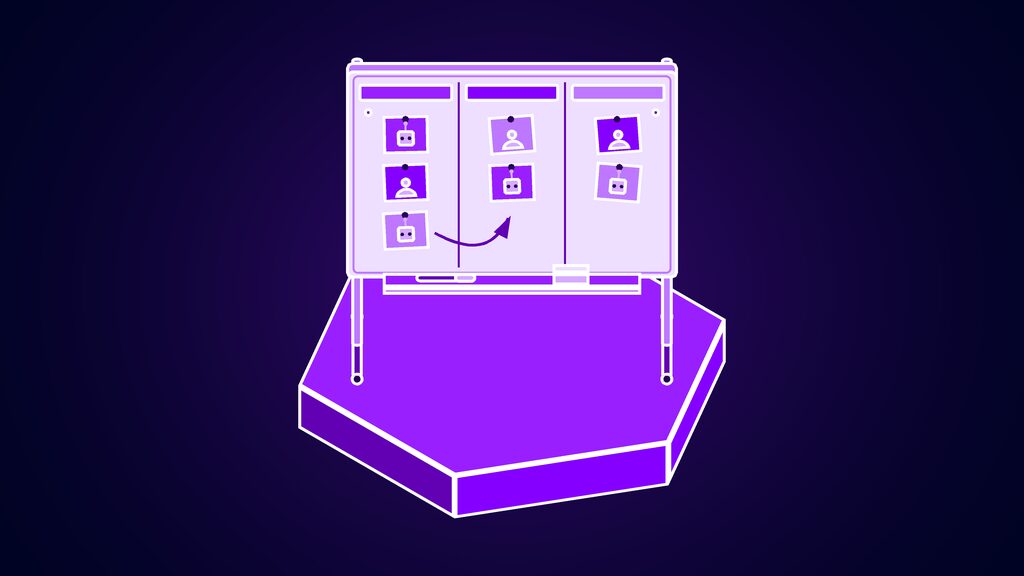
The pilot ran at one Yusen facility in the Pacific Northwest using three cart-moving robots built by Miva Robotics. As workers unload goods from a truck into different carts, the robots find the full carts and take them to the right destination. The people, the carts and the trucks are all directed by MothershipOS. Brunelle’s summary was: “We make that operation less labor intensive, and we get away from the paper. Everything is now systematic.”
A cross-dock shift, step by step
The workflow is easier to picture as a sequence. An inbound truck arrives at a dock door. MothershipOS knows what is on it and where each item needs to go, so it tells the workers unloading the truck which cart to place each carton in. When a cart is full, a robot is sent to collect it and take it to the right outbound door, where the next truck is being loaded. The Robot Report lists the things that usually break this flow: “missed handoffs, congestion, shifting priorities, and exceptions”. Destro AI’s job is to keep re-planning around them without stopping the line.
Why the rivals lost
Yusen also spoke to two other well-known robot start-ups, and neither fitted its workflow. One offered a robot that could move carts from point to point but could not handle loading or unloading. The other came with fleet management tools but required a person to do all of the orchestration. TechCrunch reports that Destro AI won because it could direct the whole process, not one step of it.
From 3 robots to 43
The next phase is much larger. Destro AI is expanding the original pilot to a full deployment of 26 robots, and launching a new pilot with 17 robots at Yusen’s facility in Southern California. Across both sites that is 43 robots, more than 14 times the original three.
Robots at Yusen sites under Destro AI (TechCrunch figures; total is our arithmetic: 26 + 17 = 43, which is 14.3 times the pilot’s 3)
What Yusen plans next
Yusen’s own announcement of the collaboration, published in August 2026, says the initial deployment focuses on optimising cart movements in its transload operations. As the partnership develops, Yusen plans to evaluate pallet movement and “AI-powered workflow verification” as well.
Why Destro AI Bets on Orchestration Over Robots
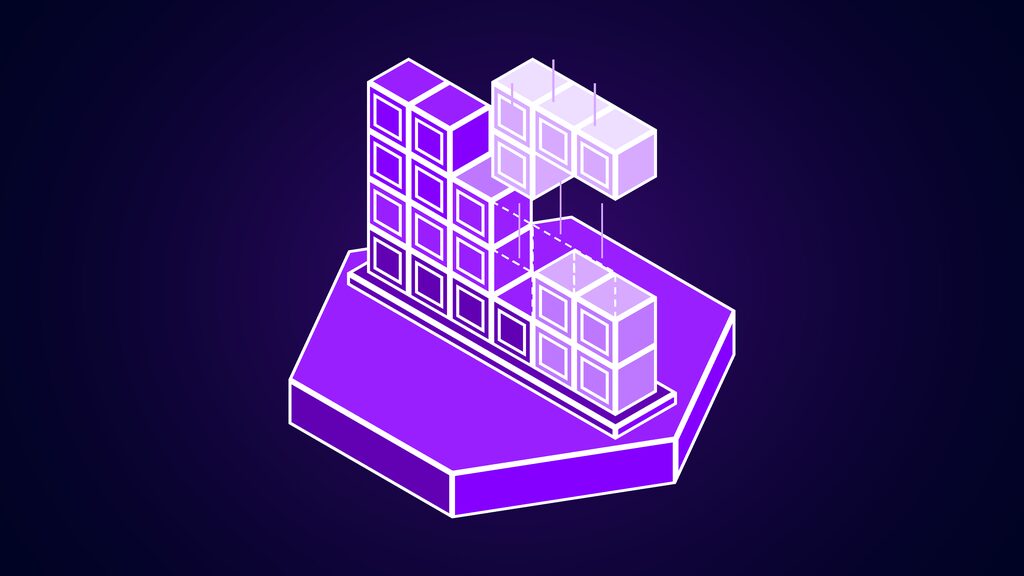
Most robotics start-ups compete on hardware or on a better robot brain. Destro AI is betting that the real bottleneck is coordination between machines and people.
Smart locally, dumb collectively
Pawar’s line to The Robot Report sums up the thesis: “Robots today are smart locally, but dumb collectively.” Each robot can navigate and avoid obstacles, but most deployments still leave humans and legacy systems to plan, prioritise and handle exceptions. That split limits how far automation can scale.
Too many robot makers
The market is crowded and fragmented. Pawar told The Robot Report that there are more than 1,000 providers of autonomous mobile robots, over 600 suppliers of automated forklifts and more than 200 humanoid robot developers. A warehouse that buys from several of them needs something above the fleet to make them work together.
Robot suppliers a warehouse might have to coordinate, by type (Manthan Pawar’s figures to The Robot Report, February 2026; each is a minimum)
Robots as apps, Destro as the operating system
Destro’s first investor, Unshackled Ventures, quoted Pawar in June 2025: “If individual robots are like apps, Destro is building the OS.” The comparison explains the business model. An operating system that runs on any hardware can grow with every new robot on the market, rather than competing with them.
Where Destro AI fits among existing systems
Warehouses already run several layers of software. A warehouse management system tracks stock and orders. A robot vendor’s fleet manager directs its own machines, usually for one brand only. Destro AI aims to sit between the two and above both, assigning work across robots from different makers and across the people on the floor. That is the gap Yusen found when one rival offered a robot without orchestration and another offered fleet tools that still needed a person to do the coordinating.
Retail as well as logistics
Destro told The Robot Report in February that it was deploying with “large logistics and retail operators”, focusing on “high-variability physical workflows where traditional automation breaks down”. It said early deployments improved system-level throughput by cutting idle time, unnecessary handoffs and reactive decision-making, although it did not publish figures. Retail distribution, with its constant mix of order sizes and promotions, is a natural second market for Destro AI.
Telling people what to do
The less glamorous part of the pitch is that Destro AI directs people too. In the Yusen deployment, workers are told which cart to fill while robots move the full ones. That turns human labour into a managed part of the system rather than a separate world working around the robots. It is efficient, and it raises questions about how workers experience being directed by software, discussed below.
The harness argument
Pawar told TechCrunch: “Robots are a platform. Every layer model is a platform. But we build a harness around it. That harness is just so complex and value-added that without that harness, these workflows are completely impossible, right?” The claim is that value accrues to the layer that connects hardware, models and people to a real operation, not to any one component.
The Destro AI Funding and Timeline
The seed round is new, but the company is not. Reading the coverage together gives a fuller timeline than the “out of stealth” framing suggests.
| Date | Milestone | Source |
|---|---|---|
| June 2025 | Pre-seed investment from Unshackled Ventures | Unshackled Ventures |
| 10 February 2026 | Public debut and “Agentic AI Brain” launch at Manifest, Las Vegas | The Robot Report |
| August 2026 | Yusen Logistics announces strategic collaboration | Yusen Logistics release |
| 29 to 30 September 2026 | $8 million seed led by Base10 Partners and Bonfire Ventures | TechCrunch |
| 13 to 15 October 2026 | Startup Battlefield at TechCrunch Disrupt | TechCrunch |
Two corrections to the coverage
TechCrunch says Destro “came out of stealth Tuesday”. The Robot Report, however, reported in February 2026 that Destro AI “emerged from stealth” at the Manifest supply chain conference in Las Vegas, where it showed live deployments. What is new this week is the funding. TechCrunch also describes Yusen Logistics as “a South Korean shipping giant”. Yusen’s own release says it is headquartered in Tokyo and is a wholly owned subsidiary of NYK Group, Japan’s largest shipping company.
Who invested
Base10 Partners and Bonfire Ventures led the seed round, with CoFound Partners also investing. TechCrunch reports that it was the plan to “copy-paste” the cross-dock workflow across thousands of other warehouses that convinced the lead investors.
The founders
Pawar holds a master’s degree in robotics from NYU Tandon and has spent about eight years in the US supply chain and robotics industry, starting in systems integration. Unshackled Ventures’ memo names a co-founder, Soorya, with a background in swarm robotics and multi-agent systems, and says the pair built a working platform that could coordinate several robot types in four months.
Why investors like software-only robotics
Hardware start-ups need large amounts of capital to design, test, manufacture and service machines, and their margins can be thin. A software layer that runs on other companies’ robots avoids most of that. It can also be sold to customers who already own robots, which widens the market. That is the logic behind an $8 million seed round for Destro AI: if the cross-dock workflow really can be copied from site to site, each new warehouse adds revenue without adding a factory.
Close to cash-flow positive
Pawar told TechCrunch that Destro AI is “actually on path to be cash-flow positive at the end of this year”. That is unusual for a robotics company at seed stage, and it reflects the software-only model: Destro does not carry the cost of designing and manufacturing robots.
The Risks in the Destro AI Model
The approach has clear strengths, but TechCrunch and the wider market point to real limits.
Dexterity is still unsolved
Moving carts is a navigation problem. Picking up mixed items, opening boxes or loading irregular freight is a manipulation problem, and TechCrunch notes that “generic robot bodies and open source models haven’t proven capable at these tasks yet”. Destro AI’s reach depends on other companies solving dexterity.
Will suppliers share their best tools?
Companies building foundation models, dexterous hands or general-purpose humanoids may prefer to capture warehouse business themselves rather than hand their tools to an orchestration layer. If the best hardware arrives with its own closed software, a hardware-agnostic platform has less to work with.
Integration is hard to copy-paste
Every warehouse runs its own warehouse management system, labour rules and building layout. The “copy-paste” plan assumes cross-docking workflows are similar enough across sites to deploy quickly. That has been true for some automation and painfully false for others.
Standards help, but slowly
Interoperability standards such as VDA 5050, which defines how a master control system talks to automated guided vehicles and mobile robots, are spreading. They make a vendor-neutral layer easier to build, but they also lower the barrier for competitors offering the same thing.
Cloud dependence
MothershipOS runs in the cloud, so the planning brain sits outside the building. That makes updates and multi-site learning easier, but it also means a network outage could leave robots and workers without instructions at a busy moment. Operators evaluating Destro AI or any cloud-based orchestration should ask what happens when the connection drops: whether robots finish their current task safely, and whether staff can fall back to a manual process without losing track of freight.
Workers directed by software
Software that tells people which cart to fill raises the same questions as other algorithmic management: how targets are set, whether workers can query a decision, and how performance data is used. Brunelle’s framing is that automation should help “our people work smarter”, but customers will need clear policies on how worker data from tools such as smart glasses is handled. Regulators are moving in the same direction: California’s new law limiting how employers rely on automated systems for discipline and dismissal, covered in our No Robo Bosses Act report, shows how quickly algorithmic management is becoming a compliance issue.
What Destro AI Means for Warehouse Operators
For logistics businesses, the lesson of the Destro AI story is less about one start-up than about how to buy automation.
Start from the workflow, not the robot
Brunelle’s test is the right one: “At the end of the day, we’re not putting automation into a building just because the technology is interesting. It must solve a real operational problem.” Operators should map the full process, including handoffs and exceptions, before choosing hardware.
Measure the whole operation
An orchestration layer should be judged on the whole flow, not on robot uptime. Useful measures for a cross-dock include the time from a truck arriving to its freight leaving on another truck, how long full carts wait for collection, labour hours per truck handled, and the number of exceptions each shift. Baseline them before a pilot. If Destro AI or a rival delivers, the gains should show up in those numbers, not only in a vendor dashboard.
Humanoids can wait
Brunelle told TechCrunch he has yet to find a good use case for a bipedal humanoid, although he is evaluating a possible pilot with a wheeled humanoid. For most sites, proven cart movers, conveyors and mobile robots under a strong coordination layer will deliver results sooner.
Ask about orchestration early
When comparing vendors, ask who handles orchestration: the robot vendor, a separate fleet manager, or your own staff. Yusen’s experience shows that a robot without orchestration can leave a person doing the hardest part of the job.
For UK warehouses
The UK is a relevant test market. TechCrunch notes that Yusen’s UK subsidiary has already built a fully autonomous facility, and a similar plan is under way in the US. UK operators facing labour shortages and high wage costs have the same coordination problem, and vendor-neutral orchestration is likely to reach the UK through multinational customers such as Yusen before it arrives as a local product.
Destro AI FAQ
What is Destro AI?
A Brooklyn-based start-up that makes software to coordinate warehouse robots and human workers as one system. Its main products are MothershipOS and VisionOS.
How much has Destro AI raised?
An $8 million seed round, reported on 30 September 2026, led by Base10 Partners and Bonfire Ventures with CoFound Partners. It previously raised pre-seed funding from Unshackled Ventures.
Does Destro AI build robots?
No. It works with hardware partners such as Miva Robotics and focuses on the software that directs robots and people.
Who uses Destro AI?
Yusen Logistics uses it for cross-dock operations, with 26 robots planned at one site and a 17-robot pilot at another.
Where can I see Destro AI next?
Destro is competing in Startup Battlefield at TechCrunch Disrupt, which runs from 13 to 15 October 2026.
References and Further Reading
More AI coverage: explore Progressive Robot's AI Models, Tools & Releases hub — hands-on reviews, setup guides and benchmarks in one place.










