
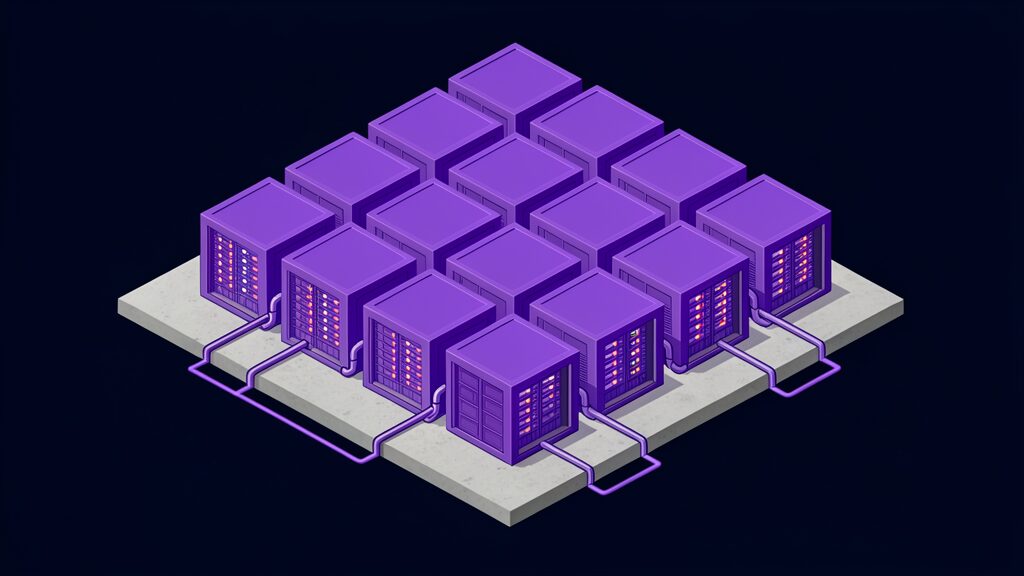
A modular data center approach has become the default answer to the wall every AI programme eventually hits. The models are ready, the GPUs are allocated, the business case is signed, and then someone asks where the compute will physically live. The answer used to be a construction schedule measured in years, which is an answer no AI roadmap survives.
That deadlock is what the modular data center model was built to break. Instead of pouring a building and then fitting it out, you buy factory-built blocks of power, cooling, and rack space, and you connect them on a prepared site. The construction portion compresses from eighteen to thirty-six months down to something closer to three to twelve, and capacity arrives in increments you can actually fund.
That speed is real, and it is also frequently oversold. A modular data center compresses the part of the timeline you control. It does nothing to the part you do not, which in 2026 is grid power. Teams that understand the difference deploy fast. Teams that do not simply move the delay from the construction schedule into the interconnection queue and act surprised.
This guide covers what a modular data center approach actually buys you, where the published time savings come from, why power remains the binding constraint, how AI-era cooling changed the calculation, and which projects should still be built the traditional way.
Table of contents
- Modular Data Center Approach: The Quick Answer
- Why AI Broke the Traditional Data Center Build
- What a Modular Data Center Approach Actually Means
- The Speed Case, With Real Numbers
- Power Is the Constraint a Modular Data Center Cannot Fix
- Cooling: Why AI Made Modular the Easier Path
- Reference Designs Turn Engineering Into Procurement
- Where a Modular Data Center Approach Is the Wrong Answer
- How to Phase Capacity Without Stranding It
- What Changes for the Operations Team
- The Numbers to Put in Your Business Case
- Frequently Asked Questions
- Final Verdict
- References
Modular Data Center Approach: The Quick Answer
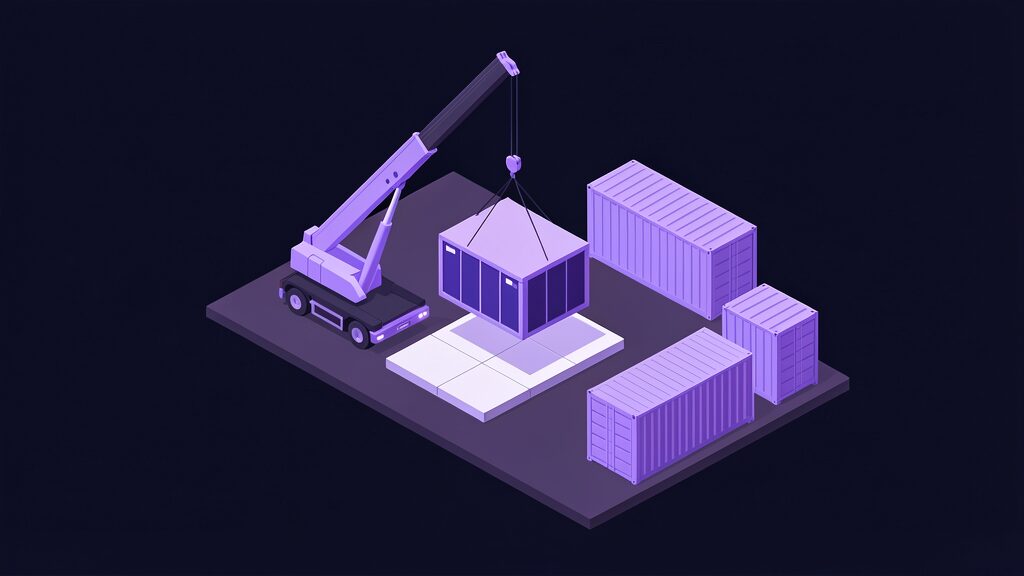
A modular data center approach means procuring prefabricated, factory-integrated units — IT pods, power skids, cooling plants — that are built and tested off-site, shipped, and assembled into working capacity on a prepared pad. The defining characteristic is not the shipping-container form factor people picture. It is that engineering, integration, and commissioning happen in a factory rather than on your site.
That single change is the whole argument. Factory work is repeatable, weather-independent, and parallel to site work. Site work is sequential, trade-dependent, and the reason traditional builds slip.
| Dimension | Traditional build | Modular data center approach |
|---|---|---|
| Construction timeline | 18–36 months | 3–12 months typical |
| Where integration happens | On site, by multiple trades | In a factory, by one integrator |
| Capacity commitment | Full shell up front | Incremental blocks |
| Design risk | Bespoke, per project | Amortised across a product line |
| Commissioning | After everything is installed | Largely done before shipping |
| Cost profile | Lower unit cost at large scale | Lower schedule risk, modest unit premium |
| Ideal fit | Multi-year hyperscale campus | AI capacity needed this financial year |
| What it cannot fix | Grid interconnection | Grid interconnection |
Read the last row twice. It is the row most business cases skip.
Why AI Broke the Traditional Data Center Build
Enterprise data centre planning assumed a world where compute demand grew predictably and rack densities crept upward by a few kilowatts a decade. AI ended both assumptions inside three years, and the modular data center market grew directly out of that break.
The 18-to-36-Month Problem
A conventional facility takes eighteen to thirty-six months from decision to operation, and the range widens in constrained markets. That was tolerable when the workload it housed was also planned years out. It is not tolerable when the model you intend to run was released last quarter and the competitive window closes this year.
The mismatch is structural rather than managerial. No amount of project discipline compresses civil works, multi-trade sequencing, and on-site commissioning into an AI product cycle. A modular data center approach attacks the problem by removing most of that work from the site entirely.
Power Density Moved Faster Than Buildings
The second break is density. Legacy halls were designed around racks drawing five to fifteen kilowatts. Current AI reference designs support racks up to roughly 246 kW, an order-of-magnitude shift that most existing buildings cannot absorb without gutting their power and cooling distribution.
When the retrofit cost approaches new-build cost, the modular data center option stops being the alternative and becomes the default. You are not choosing modular over a building you already have. You are choosing between two builds, one of which finishes this year.
What a Modular Data Center Approach Actually Means

The term is used loosely enough to be unhelpful, so it is worth being precise about what is on offer.
Prefabricated Modules Versus Containerised Boxes
The containerised data centre — a self-contained ISO box dropped at the edge of a site — is the version most people picture, and it is the smallest slice of the market. The volume today sits in prefabricated modular systems: purpose-built enclosures and skids engineered as a system, sized for real IT loads rather than for road transport convenience.
Schneider Electric’s prefabricated pod products, for instance, integrate liquid cooling, high-power busway, and high-density racks into a unit that arrives as a working room rather than as parts. Delta showed a comparable prefabricated AI modular data center line at COMPUTEX 2026, claiming up to a 60% reduction in deployment time.
The Four Blocks You Are Really Buying
A modular data center approach decomposes a facility into four purchasable blocks, and clarity about which ones you are actually buying prevents most disappointment.
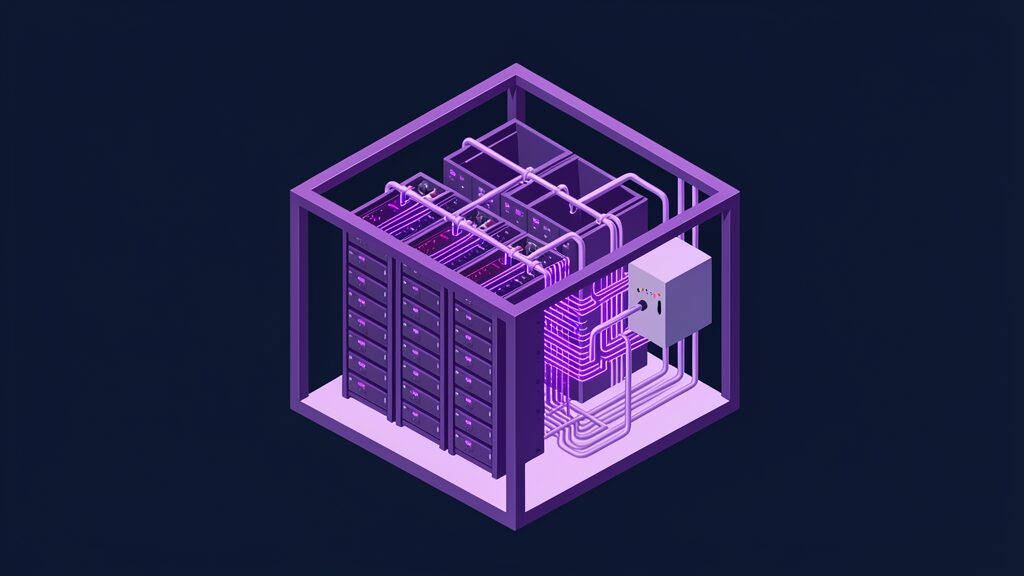
The IT block holds racks, busway, containment, and increasingly the coolant distribution units that AI hardware requires. The power block covers transformers, switchgear, UPS, and battery energy storage as pre-integrated skids. The cooling block delivers chillers, pumps, and heat rejection as matched plant. The controls and monitoring block ties them together with pre-configured instrumentation.
Buying one block modularly and building the rest conventionally is legitimate and common. It is also where the published timeline savings quietly disappear, because your schedule is governed by the slowest block, not the fastest.
The Speed Case, With Real Numbers
The claims in vendor material are broadly credible, provided you read what they are measuring. Almost all of them measure construction, not the full project.
Factory Work and Site Work Happen at the Same Time
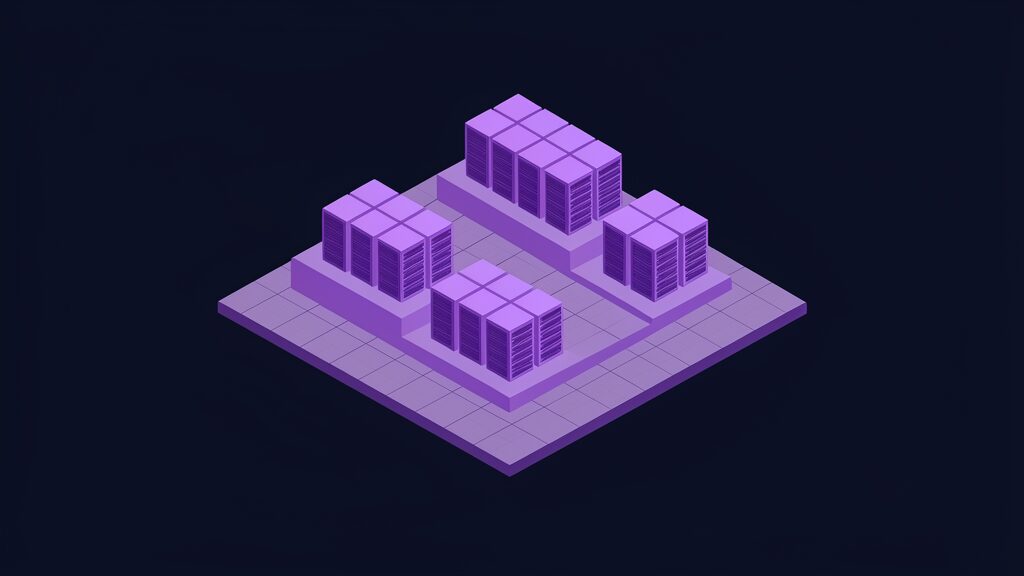
The mechanism behind every modular data center timeline claim is parallelism. While the factory builds and tests your modules, your site crew is doing groundworks, foundations, and utility trenching. In a traditional build those two activities are sequential, and the second cannot start until the first is complete.
Published figures cluster in a consistent band. Modular units delivering in eight to sixteen weeks, order-to-operation in as little as three months for smaller deployments, and 40–60% schedule compression as the general case. Schneider Electric has cited a 4 MW reference deployment supporting 320 NVIDIA H100 GPUs reaching operation in eleven months.
Where the 40-60% Actually Comes From
Roughly half the saving comes from parallelism. Most of the remainder comes from factory commissioning: a module that arrives tested has already retired the failures that normally surface during on-site integration, when they are most expensive and most schedule-damaging.
A smaller but real contribution comes from design reuse. A modular data center built to a repeated product design does not re-litigate every engineering decision, and the drawings, submittals, and approvals that consume months in a bespoke project are largely pre-done.
The honest caveat is that a mid-scale prefabricated deployment still commonly runs nine to twelve months from signed contract to go-live once site and utility work is counted. Three months is achievable, but it describes a small module on a ready site, not a campus.
Power Is the Constraint a Modular Data Center Cannot Fix
This is the section that should decide your programme plan, and it is the one most often written last.
The Interconnection Queue Is the Queue
Securing grid power for a new facility in 2026 typically takes twenty-four to seventy-two months, and constrained regions quote five to seven years for large loads. US interconnection queues average around fifty-five months. Dublin has paused new data centre connection agreements until 2028, and Dutch waits have been reported at up to a decade.
Against those numbers, an eleven-month modular data center build is not the critical path. It is a rounding error. Compressing construction while the connection application sits in a four-year queue changes your completion date by nothing at all.
Behind-the-Meter Generation and Its Price
The genuine workaround is to stop waiting for the utility. On-site generation, gas turbines, fuel cells, or a hybrid arrangement with storage lets a modular data center energise on your schedule rather than the grid operator’s, and this pairing is why prefabricated power skids sell as fast as IT pods.
It is not free. Industry estimates put behind-the-meter capex at roughly two to four million dollars per megawatt above an equivalent utility tie, before fuel and operations. Whether that premium is rational depends entirely on what a year of delayed AI capacity costs your business — which is a question for the board, not for the engineering team.
Sequence the Power Application First
The practical discipline is unglamorous. Start the interconnection application, or the on-site generation permitting, before you finalise the modular data center specification. Power lead time sets the earliest possible date; everything else is compression against a fixed wall.
Cooling: Why AI Made Modular the Easier Path
Density did not just break buildings. It broke the assumption that air is sufficient, and that shift favours factory integration for reasons that have nothing to do with speed.
Liquid Cooling Belongs in a Factory Build
Direct-to-chip liquid cooling means coolant distribution units, manifolds, quick-disconnects, leak detection, and a pressure-tested loop. Assembling that on a live site, above a raised floor, with multiple trades and a running production load nearby, is difficult and risky work.
Assembling it in a factory is ordinary work. A modular data center arrives with the loop built, filled, pressure-tested, and documented, and current designs remove up to 84% of heat through the liquid path while hybrid air handling covers the remainder. Reference configurations quote PUE around 1.12 at full load.
Retrofit Versus Purpose-Built
There is a legitimate brownfield path — deploying liquid-cooled AI capacity into existing halls — and for organisations with spare power and floor space it is often the cheapest first move. It is bounded by whatever the building’s electrical distribution and structural loading will tolerate.
Once you exceed that ceiling, a purpose-built modular data center block is usually cleaner than a deep retrofit, because you are no longer negotiating with a structure designed for a different decade.
Reference Designs Turn Engineering Into Procurement
The quiet advantage of the modular data center market is not the hardware. It is that the engineering has been done, published, and validated.
What a Reference Design Removes
Vendors now publish validated designs against specific AI platforms: liquid-cooled NVIDIA GB200 and GB300 NVL72 clusters in the 7.4–7.5 MW range, Vera Rubin NVL72 designs in the 10–12.4 MW range, and 1 MW twelve-rack prefabricated AI units at the small end. Schneider Electric and AMD have published a joint design for the Helios rackscale platform.
Each of those replaces a multi-month bespoke engineering exercise with a document you can price. For most enterprises that is the single largest schedule saving available, and it costs nothing to adopt.
The Validation You Still Owe
A reference design is validated for the vendor’s assumptions, not yours. Ambient conditions, water availability, seismic requirements, local electrical code, and acoustic limits are all yours to check. Skipping that check is how a modular data center project loses back the time the design saved, usually at the permitting stage.
Where a Modular Data Center Approach Is the Wrong Answer
Recommending modular universally is as lazy as ignoring it, and there are two clear cases where a traditional build still wins.
Long-Horizon, Single-Site Campuses
If you are building hundreds of megawatts on one site over a decade, with secured power and in-house engineering, conventional construction generally wins on unit cost. Modular’s premium buys schedule certainty and optionality, and an organisation with a ten-year horizon and a signed power agreement values neither highly.
Sites Where Logistics Beat You
Modules are large, heavy, and road-transported. Restricted access, low bridges, urban delivery windows, or the absence of suitable crane positions can erase the advantage. A modular data center that cannot reach its pad without three months of route surveys and permits is not a fast deployment.
Regulatory Environments That Do Not Recognise Prefabrication
Some jurisdictions inspect prefabricated assemblies as if they were built on site, which discards the factory-commissioning saving. This is improving, but it is worth confirming locally before the business case is written rather than after.
How to Phase Capacity Without Stranding It
Incrementality is the underrated half of the modular data center argument, and the half most likely to survive a budget review.
Size the First Block for the Workload You Have
The failure mode in AI infrastructure is not building too little. It is building three years of speculative capacity and running it at fifteen per cent utilisation while the depreciation lands anyway. A modular data center approach lets you buy the block your current workload justifies and add the next one when demand is demonstrated rather than forecast.
Contract for Repeat Units, Not One-Offs
The economics improve substantially on the second and third unit, provided the contract anticipates them. Negotiate pricing, lead times, and design continuity for a series up front. A one-off modular data center purchase captures the schedule benefit and misses most of the cost benefit.
Design the Site for the Blocks You Have Not Bought
Groundworks, utility capacity, and structural provision are cheap in advance and expensive to retrofit. Lay out the pad, ducting, and connection points for the full build-out even if you are only energising the first block, because that is what makes phase two a delivery rather than a project.
What Changes for the Operations Team
Procurement gets most of the attention, but the modular data center approach also changes daily operations in ways worth planning for rather than discovering.
Standardisation Is the Real Operational Win
Identical blocks mean identical runbooks. When every unit on the pad shares a design, a fault diagnosed once is diagnosed everywhere, spares inventory shrinks, and training transfers between sites without rewriting. This compounding effect is rarely in the business case and is often the benefit operations teams value most a year in.
Vendor Dependency Cuts Both Ways
The flip side is concentration. A modular data center estate built on one product line gives you a single integrator for support, firmware, and spares, which is efficient right up to the point where it is a negotiating weakness. Keep the interfaces documented — power, water, network, and controls — so a second supplier remains a credible option for the next phase.
Commissioning Discipline Still Applies on Site
Factory testing retires most integration risk, not all of it. Connection points, coolant loop tie-ins, earthing, and controls integration are still site work, and they are still where problems appear. Budget for a proper site acceptance test rather than assuming a pre-commissioned modular data center arrives finished.
The Numbers to Put in Your Business Case
Modular procurement fails internal review when it is argued on speed alone, because speed is not a line item. Two metrics translate it into terms a finance function accepts.
Time-to-First-Token as the Governing Metric
Measure the date your first production AI workload runs, not the date the facility is complete. That framing captures the whole point of a modular data center approach and exposes the interconnection queue as the real risk rather than a footnote.
Cost per Delivered Megawatt, Not per Square Foot
Square footage is meaningless at AI density. Cost per delivered megawatt, including power procurement and cooling plant, is the comparison that holds across a modular data center and a traditional build. It also makes the behind-the-meter premium visible as a schedule purchase rather than as an overrun.
Utilisation Against Committed Capacity
Track how much of what you have energised is actually working. This is the metric that justifies phasing, and it is the one that will tell you, honestly, whether the next modular data center block is a growth investment or an expensive act of optimism.
Frequently Asked Questions
How fast can a modular data center realistically be deployed?
For a small prefabricated unit on a prepared site with power available, three to six months is achievable. For a mid-scale deployment counting site and utility work, nine to twelve months is the realistic planning figure.
Is a modular data center more expensive than a traditional build?
Usually a modest unit premium, which narrows with repeat orders and can reverse once schedule and financing costs are included. At very large single-site scale, traditional construction generally remains cheaper per megawatt.
Does modular mean shipping containers?
No. Containerised units are one small segment. Most current capacity ships as purpose-built prefabricated modules and skids engineered as a system rather than around a transport form factor.
Can a modular data center support liquid-cooled AI racks?
Yes, and this is now a primary use case. Current designs support racks up to roughly 246 kW with factory-built liquid loops, which is considerably harder to achieve as a site retrofit.
Will a modular approach get us around the grid queue?
Only if it is paired with on-site generation. The modules themselves have no effect on interconnection timelines, which is why the power application should start before the module specification.
What is the biggest planning mistake teams make?
Optimising the construction schedule while treating power procurement as an administrative task. It is the critical path in most 2026 markets, and no modular data center strategy compensates for starting it late.
Final Verdict
A modular data center approach is the most reliable way to compress the part of an AI infrastructure programme that you control. The published figures — 40–60% schedule reduction, eleven months to a live 4 MW cluster, eight-to-sixteen-week module delivery — are achievable, and the underlying mechanisms of parallel factory work, pre-commissioning, and design reuse are sound rather than promotional.
What it does not do is manufacture electricity. In a year when interconnection queues run to four years and some markets have simply stopped accepting new connections, a modular data center that arrives in three months and then waits thirty for power has solved the wrong problem impressively.
The teams who get this right sequence it correctly. Power procurement first, reference design second, phased blocks third, and a first module sized for the workload that exists today. Done in that order, a modular data center approach genuinely does fast-track AI growth. Done in the wrong order, it produces a very efficient way to wait.
If you are scoping this work now, our data center operations and cloud adoption practices cover the operational and platform side of AI capacity planning, and our AI models and tools hub tracks how quickly the hardware requirements underneath these decisions keep moving.










