
Table of Contents
- How AI Entered the Fanfiction World
- Why AI-Generated Fanfiction Sparks Such Strong Reactions
- The Creative Rights Debate: Who Owns These Stories
- How Different Fandoms Are Responding to AI
- The Technical Side: How AI Writes Fanfiction
- What the Fanfiction Community Can Learn from This Crisis
- The Future of Fanfiction in an AI World
How AI Entered the Fanfiction World
A Creative Space Built by Humans
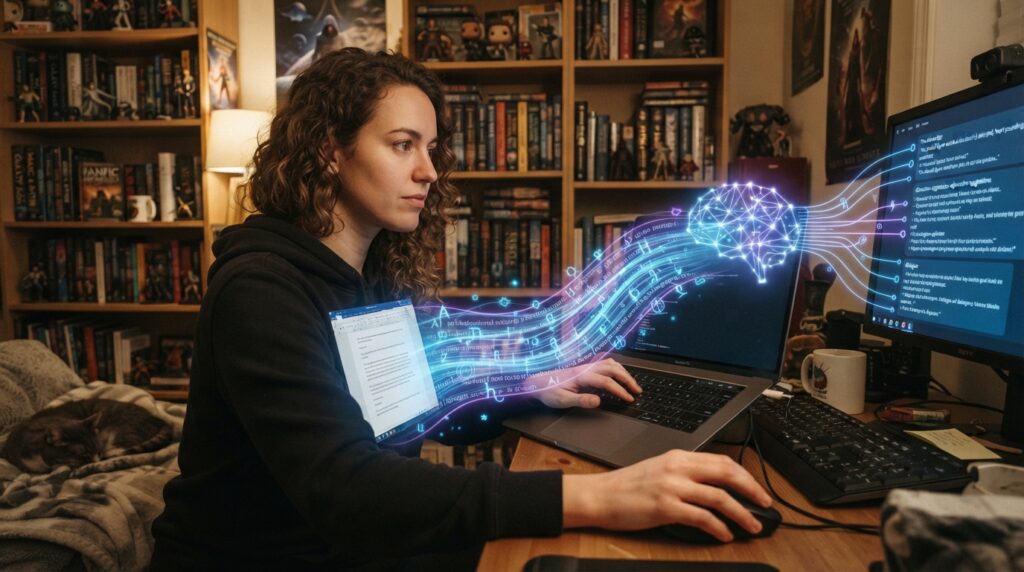
The fanfiction community has always been a place where readers become writers, where stories extend beyond the original source material, and where creativity thrives without corporate oversight. For decades, fans have written stories about their favorite characters, explored alternate universes, and built entire worlds from the seeds planted by television shows, books, movies, and games. This is a space where passion drives every word, where writers pour hours into developing characters that are not their own, and where readers find comfort in stories that continue long after the official narrative ends.
Creative Expression vs. Automated Writing
What makes fanfiction unique is not just the content but the process. Every story is written by someone who loves the source material, who understands the characters deeply, and who wants to explore what happens next. The fanfiction community operates on a foundation of mutual respect, shared enthusiasm, and a collective understanding that these stories exist because of love for the original work. Writers do not expect payment; they write because they cannot stop writing.
The Role of Human Emotion in Storytelling
The Rise of AI-Generated Content
This human-centered approach has defined fanfiction since its earliest days in science fiction fandom of the 1960s. The community built its own platforms, its own etiquette, its own systems for feedback and collaboration. Writers received comments that helped them improve. Readers found stories that spoke to their specific interests. Everyone participated in a shared creative ecosystem that operated entirely outside traditional publishing.
Community Guidelines Evolve
The beauty of this system is that it rewards genuine engagement with source material. A fanfiction writer who understands character motivation, narrative structure, and emotional resonance produces work that resonates with readers. The feedback loop is immediate and authentic. When a story captures the essence of a character or explores a theme in a fresh way, the community celebrates it. This is creativity driven by passion, not algorithms.
Fanfiction Writers Push Back
For over fifty years, this model worked beautifully. The fanfiction community grew from small mailing lists to massive platforms with millions of stories, dedicated reviewers, and entire subcultures built around specific fandoms. It became a training ground for professional writers, a space for marginalized voices to find representation, and a cultural force that occasionally influenced mainstream media itself.
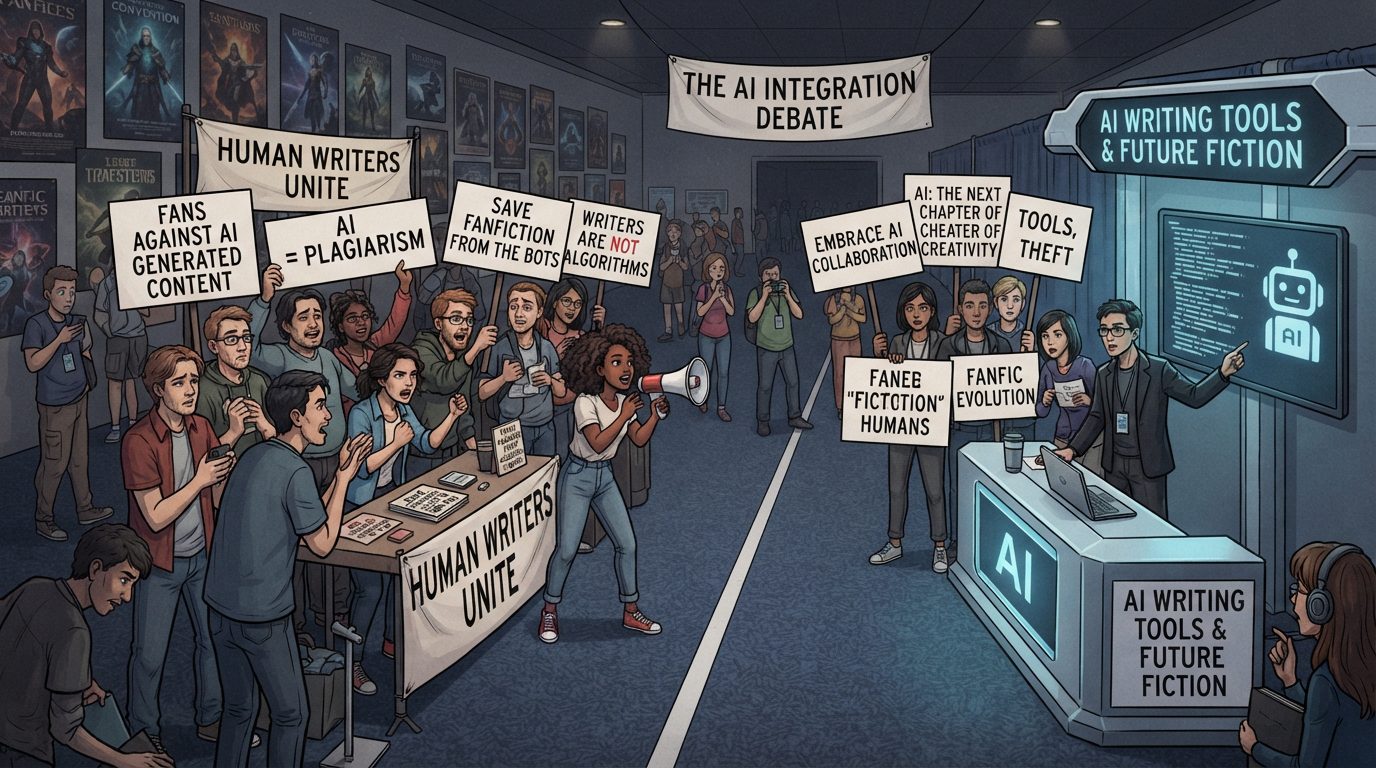
Then artificial intelligence arrived, and everything changed. The question of whether machines can participate in creative spaces like fanfiction is no longer theoretical. It is happening now, and the fanfiction community is responding with a mix of fascination, fear, anger, and confusion that reflects deeper questions about authorship, authenticity, and what makes creative work meaningful.
Platform Policies Divide the Community
Why AI-Generated Fanfiction Sparks Such Strong Reactions
The Heart of the Controversy
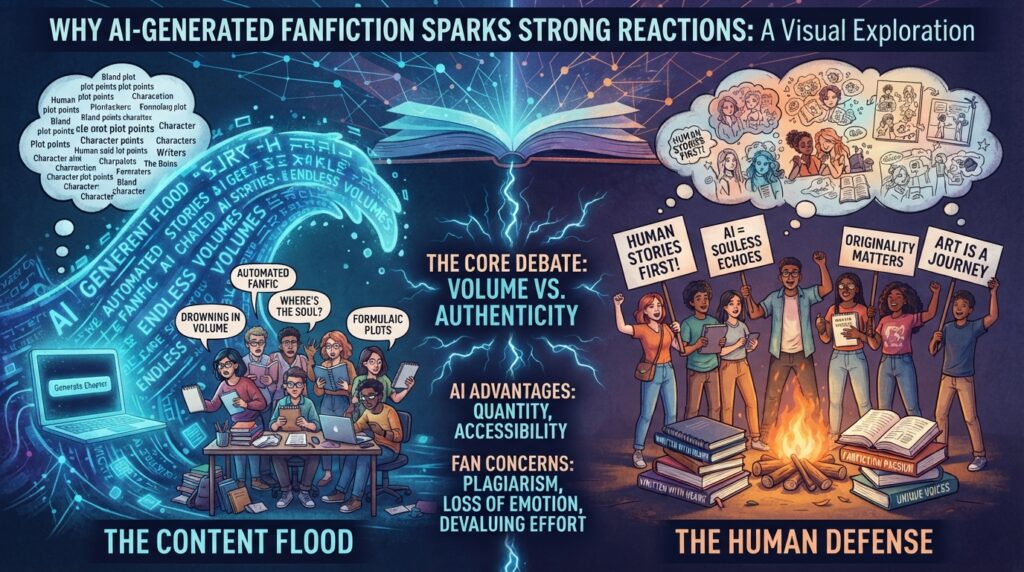
When AI-generated fanfiction first appeared on popular platforms, it triggered an immediate and intense backlash from the fanfiction community. The reaction was not simply about technology replacing human creativity. It was about something much deeper: the violation of an unspoken social contract that has governed fanfiction for generations.
Legal Gray Areas in Fan-Derived Works
Fanfiction exists in a space that is already legally ambiguous. Writers create derivative works without permission, operating under a culture of tolerance from rights holders who understand that fan engagement keeps franchises alive. This arrangement works because everyone understands the basic premise: fans write these stories out of love, share them freely, and never claim ownership of the original characters or worlds.
Copyright Claims and Fair Use Debates
AI-generated stories break this implicit agreement in multiple ways. When an artificial intelligence produces fanfiction, it is not writing out of love for the source material. It is not a fan contributing to a community. It is a tool generating text based on patterns it learned from reading thousands of human-written stories, many of which were created without compensation and shared freely within the community.
Community-Led Solutions Emerge
This feels like extraction to many members of the fanfiction community. The AI did not participate in the community that produced the training data. It did not earn the right to use those stories. It simply consumed them, learned from them, and now produces derivative works that compete for attention on the same platforms where humans share their passion projects.
The emotional response is understandable when you consider what fanfiction represents to its participants. For many people, writing and reading fanfiction is deeply personal. It is a way to process emotions, explore identity, connect with others who share specific interests, and create meaning from stories that matter to them. When AI enters this space, it feels like something intimate is being commodified without consent.
At the same time, some members of the fanfiction community see potential value in AI tools. Writers who struggle with writer’s block might use AI to generate ideas or overcome creative blocks. Readers with specific preferences might find AI-generated stories that perfectly match their tastes. Some writers experiment with AI as a collaborative tool, using it to brainstorm plot points or develop dialogue.
This division within the fanfiction community is perhaps the most interesting aspect of the controversy. The fanfiction community is not a monolith, and different members have different relationships with AI technology. Some demand complete bans on AI-generated content. Others see it as a natural evolution of creative tools. Many occupy a middle ground, uncomfortable with the current state of AI but willing to engage with the technology if certain ethical boundaries are established.
The Creative Rights Debate: Who Owns These Stories
Fanfiction and the Question of Authorship
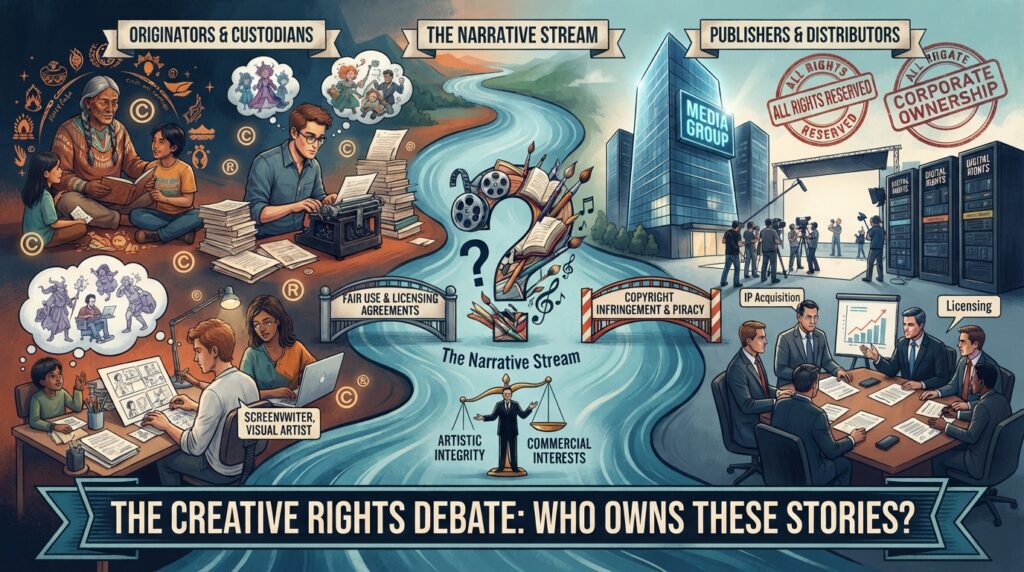
The debate over AI-generated fanfiction raises fundamental questions about authorship, ownership, and the nature of creativity itself. These questions are complicated by the fact that fanfiction already exists in a legal gray area, creating a unique situation where the rules of intellectual property are already being bent or ignored.
Major Platforms Face Content Moderation Challenges
Traditional copyright law does not recognize AI-generated works as copyrightable in most jurisdictions. The United States Copyright Office has stated that works created entirely by machines without human authorship cannot receive copyright protection. This means that AI-generated fanfiction exists in a particularly precarious legal position: it is derivative of copyrighted characters and worlds, written by a tool that cannot hold copyright, and distributed on platforms where human fanfiction occupies its own ambiguous legal space.
Automated Detection Systems Under Fire
For the fanfiction community, this legal ambiguity is secondary to the ethical question. The issue is not whether AI-generated stories can be copyrighted. The issue is whether it is right for an AI system trained on thousands of human-written fanfiction stories to produce derivative works that compete with the very people whose work taught it to write.
Community Policing and Self-Regulation
This raises questions about consent and compensation that are familiar from other debates about AI and creative work. Artists whose work was used to train image generation models did not consent to that use and received no compensation. Musicians face similar concerns as AI systems learn to generate music in specific styles. Writers are now asking the same questions about text generation.
The Future of Content Verification
The fanfiction community adds an interesting dimension to this debate because of its non-commercial nature. Most fanfiction is written and shared for free. Writers do not expect to earn money from their stories. They write because they love the characters and want to explore stories that the official sources did not tell. This non-commercial context makes the ethical questions even more complex.
If fanfiction is not about money, what is it about? For many participants, the answer is community, connection, and creative expression. The value of fanfiction lies not in the potential for profit but in the act of creation itself, in the relationship between writer and reader, in the shared understanding that these stories exist because of genuine enthusiasm for the source material.
When AI enters this space, it disrupts this relationship in ways that go beyond economics. An AI cannot share in the community. It cannot experience the joy of writing a scene that captures a character perfectly. It cannot feel the satisfaction of receiving feedback from readers who understand the references and emotional beats. It can produce text that looks like fanfiction, but it cannot participate in the culture that gives fanfiction its meaning.
How Different Fandoms Are Responding to AI
Varied Reactions Across Different Communities
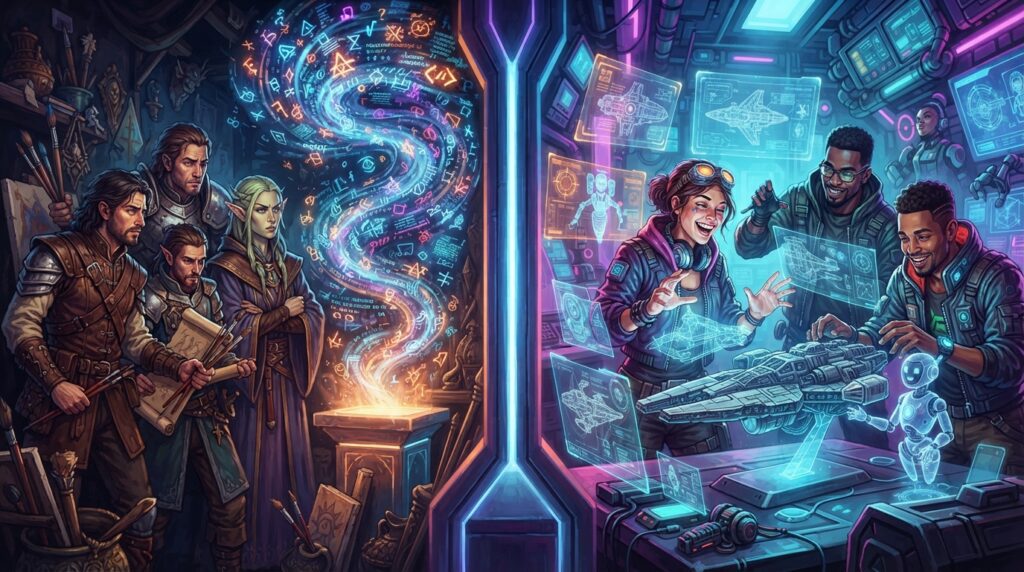
The fanfiction community is not a single unified entity. It consists of thousands of different fandoms, each with its own culture, norms, and attitudes toward external influences. Some fandoms have taken strong positions against AI-generated content. Others have been more open to experimentation. The diversity of responses reflects the broader diversity of opinions within the fanfiction community as a whole.
Tools for Transparency and Disclosure
Larger fandoms based on popular franchises tend to have more established moderation practices and clearer community guidelines. Some major fanfiction platforms have implemented policies requiring writers to disclose when they use AI tools in their creative process. Other communities have gone further, banning AI-generated content entirely and requiring moderators to review submissions for signs of machine authorship.
Building Trust Through Authenticity
The effectiveness of these moderation efforts is questionable. AI detection tools are imperfect, and the technology is improving rapidly. As language models become more sophisticated, distinguishing AI-generated text from human writing becomes increasingly difficult. This creates an ongoing arms race between detection methods and generation capabilities.
Hybrid Models of Human-AI Collaboration
Some fandoms have responded by focusing on the human elements that AI cannot replicate. They emphasize the community aspects of fanfiction: the comments, the kudos, the fan art, the discussions, the friendships formed around shared creative interests. The argument is that even if AI can produce stories, it cannot produce the community experience that makes fanfiction valuable.
Other communities have embraced AI more openly, experimenting with collaborative workflows where human writers guide AI systems to produce stories that align with their creative vision. These writers see AI not as a replacement for human creativity but as a tool that can help overcome creative limitations and explore new narrative possibilities.
The tension between these different approaches is creating fractures within the fanfiction community itself. Writers who embrace AI tools face criticism and sometimes harassment from community members who view their work as illegitimate. Writers who oppose AI face pressure from readers who enjoy AI-generated content and from writers who see no ethical problem with using these tools.
This internal conflict is perhaps the most painful aspect of the controversy for many long-time members of the fanfiction community. The spaces that were once defined by mutual respect and shared enthusiasm are now sites of heated debate, personal attacks, and community splits that may take years to heal, if they ever do.
The Technical Side: How AI Writes Fanfiction
Understanding the Technology Behind AI Stories
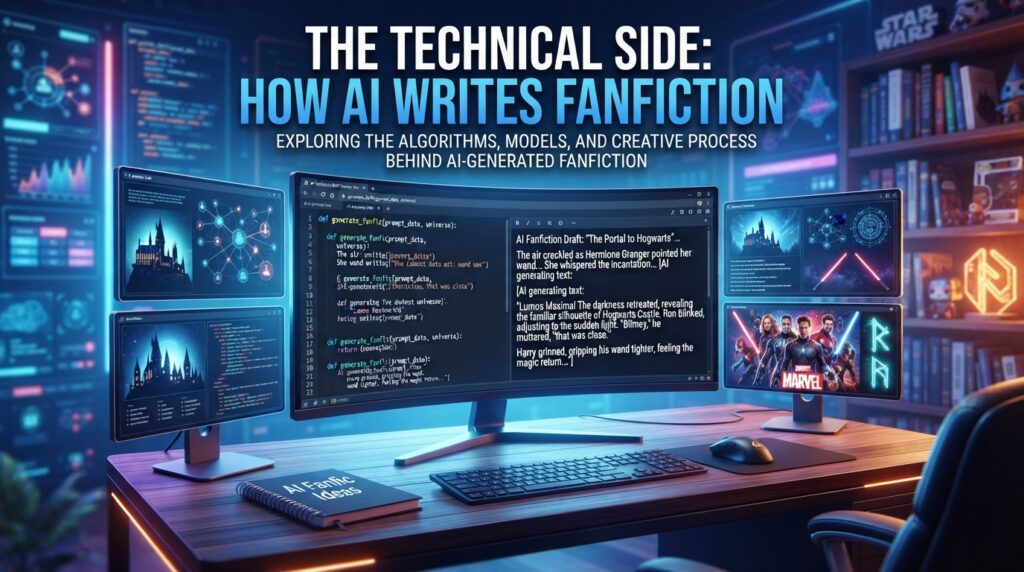
To understand the controversy surrounding AI-generated fanfiction, it helps to understand how these systems actually work. Modern language models are trained on massive datasets containing billions of words from books, articles, websites, and yes, fanfiction platforms. They learn patterns of language, narrative structure, character development, and dialogue that allow them to generate text that resembles human writing.
Preserving Community Values in the AI Era
When you prompt an AI system to write fanfiction, it does not have genuine understanding of the characters or the source material. It has statistical knowledge of how words tend to appear together in contexts similar to those found in fanfiction. It can produce text that feels authentic because it has learned the patterns that make human writing feel authentic.
The Importance of Human Connection in Fanworks
This technical reality is at the center of the debate. Critics argue that AI-generated fanfiction is fundamentally hollow because it lacks genuine understanding and emotional connection to the source material. Supporters counter that all writing involves pattern recognition and that the quality of the output is what matters, not the internal state of the writer.
Moving Forward Together
The training data question is particularly contentious. Many AI systems were trained on publicly available web content, including fanfiction that was shared freely on platforms like Archive of Our Own, FanFiction.Net, and various Tumblr blogs. This content was created by volunteers who shared their work with specific communities, not with the intention of training commercial AI systems.
Some AI developers have attempted to address these concerns by creating datasets with explicit consent from content creators or by licensing content from rights holders. However, these efforts are in their early stages, and the vast majority of AI language models in use today were trained on data scraped from the open web without specific permission.
The technical capabilities of these systems are improving rapidly. Early AI-generated text was often obvious in its artificiality, with repetitive phrasing, logical inconsistencies, and characterizations that felt flat. Modern models produce text that is increasingly difficult to distinguish from human writing, at least at a surface level. This improvement in quality is making the ethical questions more urgent, not less.
Understanding the technology does not resolve the debate, but it does clarify the stakes. This is not a simple question of humans versus machines. It is a question of consent, compensation, creative integrity, and the values that should govern the intersection of technology and culture.
What the Fanfiction Community Can Learn from This Crisis
Opportunities for Growth and Clarification
Controversies often force communities to examine their values and assumptions more carefully. The AI debate is challenging the fanfiction community to articulate what it stands for, what it considers acceptable, and what kind of creative space it wants to maintain for the future.
Embracing Technology Without Losing Identity
One positive outcome of this debate is that it has prompted more explicit discussion of community guidelines and moderation practices. Many fanfiction communities that previously operated on informal norms are now developing formal policies about AI use, disclosure requirements, and enforcement mechanisms. This institutionalization of community standards is a natural response to a technology that threatens to disrupt established practices.
The Enduring Spirit of Fan Creativity
The debate has also raised important questions about the future of creative communities in an age of artificial intelligence. How do communities maintain their human character while acknowledging that technology is changing the creative landscape? How do they balance openness to innovation with protection of their core values? These are questions that extend far beyond fanfiction to every creative community facing similar challenges.
A Call to Action for the Community
Some members of the fanfiction community are using this moment to reinforce the human connections that make fanfiction special. They are organizing writing events, community projects, and collaborative stories that emphasize the social aspects of creative participation. The argument is that by strengthening community bonds, they can create a fanfiction culture that is more resilient to external disruptions.
Others are exploring ways to integrate AI tools in ways that align with community values. This might include using AI for brainstorming while maintaining human authorship of the final text, or developing community-approved AI systems that are trained with explicit consent and operate under community governance.
The fanfiction community has shown remarkable adaptability throughout its history. It has survived changes in technology, shifts in popular culture, legal challenges, and internal conflicts over representation and ethics. The AI debate is another challenge that the community will navigate, and the outcome will likely shape not just fanfiction but the broader landscape of creative communities for years to come.
What emerges from this crisis will depend on the choices that community members make today. Will they close ranks and reject AI entirely? Will they embrace it without reservation? Or will they find a middle path that preserves the human-centered values that have always defined fanfiction while acknowledging the reality of technological change?
The Future of Fanfiction in an AI World
Where Do We Go from Here?
The question of AI and fanfiction is not going away. The technology will continue to improve, more people will experiment with AI-generated stories, and the fanfiction community will continue to grapple with what this means for the creative space they have built over decades. The outcome of this debate will shape the future of fanfiction in ways that are impossible to predict with certainty.
One scenario is that the fanfiction community successfully establishes clear boundaries around AI use, creating platforms and spaces where human-authored content is protected and AI-generated content is either banned or clearly labeled and separated from human work. This would preserve the human-centered nature of fanfiction while acknowledging that AI exists and will continue to evolve.
Another scenario is that AI-generated content becomes so prevalent that it changes the character of fanfiction platforms entirely. In this future, human writers compete with AI systems for reader attention, and the value of human-authored stories becomes tied to their authenticity and emotional connection rather than just their narrative quality.
A third possibility is that the fanfiction community evolves to incorporate AI in new ways that we cannot yet imagine. Perhaps AI becomes a collaborative tool that enhances human creativity rather than replacing it. Perhaps new forms of creative expression emerge that blend human and machine authorship in ways that create something genuinely new rather than simply replicating existing patterns.
What is clear is that the fanfiction community cannot ignore this technology and expect things to return to how they were. The creative landscape is changing, and the questions raised by AI about authorship, authenticity, and community are questions that every creative space will need to address. The fanfiction community has the opportunity to lead this conversation, drawing on decades of experience building inclusive, passionate, and resilient creative cultures.
The fanfiction community has always been about more than just stories. It is about connection, creativity, and the human need to imagine what could be. Whatever happens with AI, those fundamental human impulses will not go away. The challenge is to create a creative space that honors those impulses while navigating the complexities of a technological landscape that is changing faster than any community can fully adapt.
For readers and writers who love fanfiction, the most important thing is to stay engaged with the community, to participate in the conversations about its future, and to remember that the value of fanfiction has always lain in the human hearts and minds that create it. Technology will continue to evolve, but the desire to tell stories about characters we love, to explore what happens next, and to connect with others through shared creativity is something that no machine can replicate.
That is why this debate matters. It is not just about whether AI can write fanfiction. It is about what we value as creative beings, what kind of culture we want to build, and how we ensure that technology serves human creativity rather than replacing it. The fanfiction community is at the center of these questions, and its responses will resonate far beyond the boundaries of any single fandom.
For readers interested in exploring how technology intersects with creative communities, our team also covers related topics such as AI models and tools and SEO services for content creators navigating these changes.
The ultimate question is not whether AI will change fanfiction. It already has. The question is whether the fanfiction community can preserve the human values that make it special while adapting to a technological reality that shows no signs of slowing down. The answer will determine not just the future of fanfiction but the future of creative communities everywhere.
For readers interested in exploring how AI technology continues to evolve, the arXiv preprint server provides access to the latest research in artificial intelligence and machine learning.