
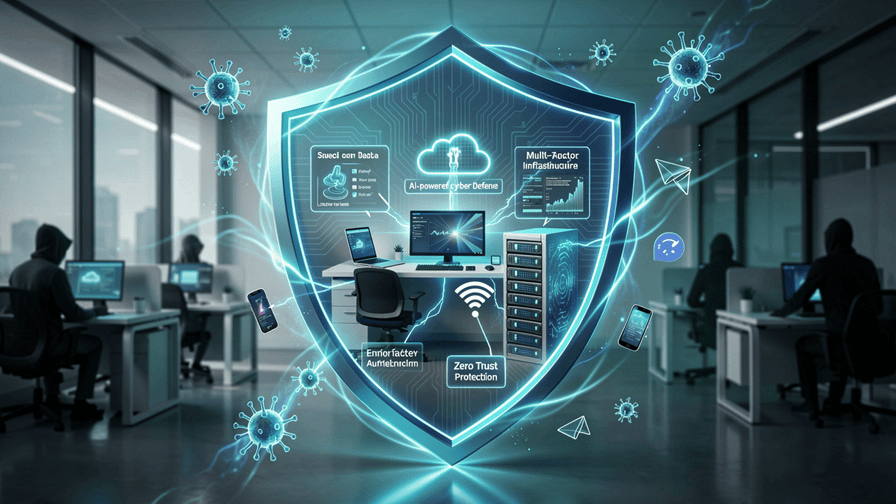
Cybersecurity for Small Businesses has become one of the most critical priorities for organizations operating in today’s digital economy. Whether a company employs five people or fifty, almost every business depends on email, cloud applications, online banking, digital payments, customer databases, remote collaboration tools, and internet-connected devices to conduct daily operations. While these technologies improve productivity and efficiency, they also expose organizations to an expanding range of cyber threats that continue growing in both sophistication and frequency.
For many years, business owners assumed cybercriminals focused almost exclusively on multinational corporations, government agencies, and major financial institutions. That assumption is no longer accurate. Modern attackers frequently target smaller organizations because they often maintain fewer security controls, have limited cybersecurity budgets, operate with small IT teams, and may lack formal security policies. Automated attack tools continuously scan the internet for vulnerable systems, making organizations of every size potential victims regardless of industry or geographical location.
Cyberattacks can have severe consequences for smaller organizations. A successful phishing campaign, ransomware infection, credential theft incident, or data breach may interrupt business operations, expose confidential customer information, damage business reputation, create legal liabilities, reduce customer confidence, and generate significant financial losses. Unlike larger enterprises with dedicated cybersecurity departments, many smaller organizations may require weeks or months to recover from a major security incident.
Fortunately, effective Cybersecurity for Small Businesses is not limited to organizations with enterprise-sized technology budgets. Many of the most valuable security improvements involve practical operational discipline rather than expensive infrastructure. Strong password management, multi-factor authentication, employee awareness training, regular software updates, encrypted backups, endpoint protection, and structured incident response planning can dramatically improve organizational resilience while remaining affordable for businesses with limited resources.
Modern cybersecurity should also be viewed as an ongoing business process rather than a one-time technology purchase. New vulnerabilities emerge continuously, software evolves rapidly, employees change roles, cloud services expand, and attackers constantly develop new techniques. Maintaining effective Cybersecurity for Small Businesses therefore requires continuous evaluation, regular improvement, proactive monitoring, and a security-focused organizational culture.
As digital transformation accelerates across every industry, cybersecurity increasingly supports broader business objectives including customer trust, regulatory compliance, operational continuity, intellectual property protection, financial stability, and sustainable growth. Organizations that invest consistently in cybersecurity are often better positioned to adapt to technological change while minimizing operational disruption.
This comprehensive guide explores Cybersecurity for Small Businesses, explains why cyber threats continue increasing, examines practical defensive strategies, provides a business-oriented security checklist, discusses common implementation challenges, and outlines how organizations can strengthen long-term cyber resilience through realistic, cost-effective security practices.
Key Takeaways
- Cybersecurity for Small Businesses protects business operations, customer information, financial assets, and organizational reputation.
- Small businesses increasingly face automated cyberattacks regardless of company size.
- Layered cybersecurity provides significantly stronger protection than relying on a single security product.
- Employee awareness remains one of the most effective cybersecurity investments.
- Practical security improvements can greatly reduce cyber risk without requiring enterprise-level budgets.
What Is Cybersecurity for Small Businesses?

Cybersecurity for Small Businesses refers to the collection of technologies, operational policies, employee practices, security procedures, and risk management strategies designed to protect smaller organizations from cyber threats, unauthorized access, malware, phishing attacks, ransomware, insider risks, and data breaches.
Rather than focusing only on preventing attacks, modern Cybersecurity for Small Businesses also emphasizes early threat detection, rapid incident response, secure recovery, continuous improvement, and long-term operational resilience.
An effective cybersecurity program protects every important business asset, including employees, customer information, financial records, cloud services, connected devices, communication systems, business applications, and operational infrastructure.
Why Small Businesses Are Increasingly Targeted
Cybercriminals frequently view smaller organizations as attractive targets because they often possess valuable information while maintaining fewer defensive resources.
Attackers may specifically look for businesses with:
- Weak passwords.
- Outdated operating systems.
- Unpatched software.
- Limited employee security awareness.
- Poor backup practices.
- Inadequate authentication controls.
- Weak cloud security.
- Limited cybersecurity monitoring.
Automated attack platforms continuously scan thousands of internet-connected systems every day, meaning organizations do not need to be famous or large to become potential victims.
Why Cybersecurity Matters More Than Ever
Every modern organization relies on digital information.
Protecting this information supports:
- Customer confidence.
- Business continuity.
- Regulatory compliance.
- Operational efficiency.
- Financial stability.
- Brand reputation.
- Competitive advantage.
- Long-term business growth.
Cybersecurity therefore functions as both an operational necessity and a strategic business investment.
How Cybersecurity for Small Businesses Works
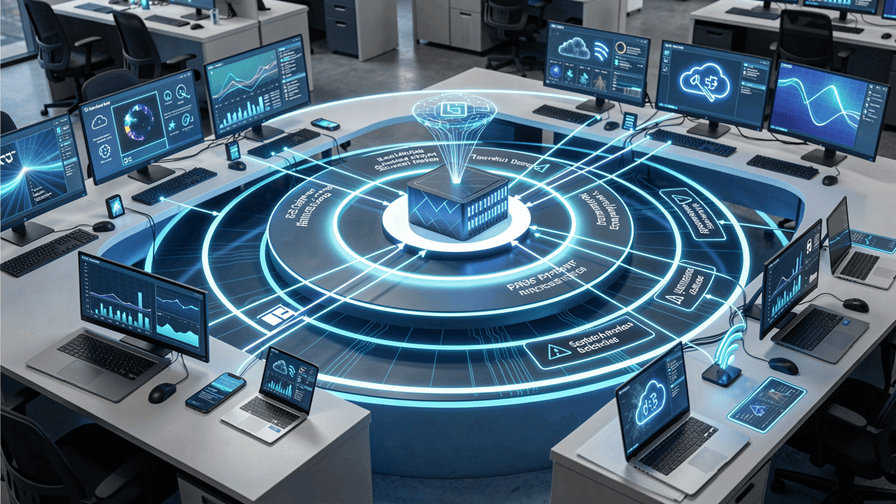
Cybersecurity for Small Businesses works by combining multiple layers of technical protection, operational procedures, employee awareness, and continuous monitoring to reduce cyber risk. Rather than depending on a single antivirus program or firewall, effective Cybersecurity for Small Businesses creates several independent security controls that work together. If one defensive layer fails, another layer helps detect, block, or limit the attack before serious damage occurs.
Modern attackers rarely rely on only one technique. A phishing email may steal employee credentials, those credentials may be used to access cloud services, malicious software may then spread through business devices, and finally sensitive information may be encrypted or stolen. Because attacks frequently involve multiple stages, Cybersecurity for Small Businesses must also defend every stage of the attack lifecycle.
Successful Cybersecurity for Small Businesses generally follows four continuous activities:
- Identify important assets.
- Protect business systems.
- Detect suspicious activity.
- Respond and recover quickly.
These activities repeat continuously as technology, threats, employees, and business operations evolve.
Begin with a Risk Assessment
Every Cybersecurity for Small Businesses program should begin with understanding risk.
Before purchasing security software, organizations should identify exactly what requires protection.
Typical business assets include:
- Customer databases.
- Financial information.
- Employee records.
- Business applications.
- Email systems.
- Cloud platforms.
- Company websites.
- Intellectual property.
Once critical assets are identified, organizations can prioritize security investments according to business impact rather than attempting to protect everything equally.
Understand Your Threat Landscape
Cybersecurity planning becomes more effective when businesses understand the threats they are most likely to face.
Common cyber threats affecting Cybersecurity for Small Businesses include:
- Phishing emails.
- Business email compromise.
- Ransomware.
- Malware.
- Credential theft.
- Insider mistakes.
- Cloud account compromise.
- Supply chain attacks.
Not every organization faces identical risks. Retail businesses, healthcare providers, manufacturers, financial firms, and professional service companies all have different security priorities.
Build a Layered Security Strategy
Cybersecurity for Small Businesses is strongest when multiple defensive technologies work together.
A layered approach commonly includes:
- Identity protection.
- Endpoint protection.
- Network security.
- Email filtering.
- Secure backups.
- Encryption.
- Security monitoring.
- Employee awareness.
No individual security product can stop every attack, but multiple coordinated controls dramatically improve resilience.
Security Policies Matter
Technology alone cannot protect an organization.
Every Cybersecurity for Small Businesses strategy should also include documented operational policies.
Examples include:
- Password requirements.
- Device usage rules.
- Remote work policies.
- Software installation procedures.
- Data handling standards.
- Backup schedules.
- Incident reporting.
- Access approval processes.
Clear policies reduce uncertainty while helping employees make safer security decisions.
Access Control
One of the most important principles of Cybersecurity for Small Businesses is limiting unnecessary access.
Employees should receive only the permissions required for their responsibilities.
Good access management includes:
- Individual user accounts.
- Role-based permissions.
- Administrative separation.
- Regular permission reviews.
- Temporary privileged access.
- Immediate account removal after employee departure.
- Secure authentication.
- Session management.
Restricting unnecessary privileges significantly reduces damage if an account becomes compromised.
Password Management
Strong password management forms one of the most important foundations of Cybersecurity for Small Businesses. Despite advances in cybersecurity technology, compromised passwords continue to be responsible for a large percentage of successful security breaches. Weak, reused, or easily guessed passwords allow attackers to gain unauthorized access to business systems without exploiting sophisticated technical vulnerabilities.
Organizations should establish password policies that encourage employees to create long, unique passwords for every business account. Password managers further improve Cybersecurity for Small Businesses by securely generating and storing complex credentials, eliminating the need for employees to remember dozens of different passwords.
Recommended password practices include:
- Use long passphrases.
- Never reuse passwords.
- Store credentials in a password manager.
- Change compromised passwords immediately.
- Protect administrator accounts separately.
- Eliminate shared passwords.
- Disable inactive accounts.
- Regularly review privileged credentials.
Consistent password management significantly reduces credential theft and unauthorized access.
Multi-Factor Authentication
Passwords alone should never be considered sufficient protection.
Cybersecurity for Small Businesses is greatly strengthened by enabling multi-factor authentication (MFA) across all important business systems. Even if attackers obtain valid passwords through phishing or data breaches, MFA introduces an additional verification step before access is granted.
Common authentication factors include:
- Authentication applications.
- Hardware security keys.
- Push notifications.
- Temporary verification codes.
- Biometrics.
- Smart cards.
- Certificate authentication.
- Trusted device verification.
Enabling MFA for email, cloud services, financial systems, remote access, and administrator accounts provides one of the highest security improvements relative to implementation cost.
National Institute of Standards and Technology (NIST).
Endpoint Security
Every computer, laptop, smartphone, tablet, or server connected to business systems represents an endpoint that requires protection.
Effective Cybersecurity for Small Businesses includes comprehensive endpoint security capable of identifying malware, suspicious behavior, unauthorized software, ransomware activity, and other threats before they spread throughout the organization.
Endpoint protection commonly includes:
- Antivirus software.
- Anti-malware protection.
- Behavioral detection.
- Application control.
- Device encryption.
- Automatic updates.
- Threat isolation.
- Centralized management.
Because employees increasingly work from multiple locations, protecting every endpoint has become essential for maintaining Cybersecurity for Small Businesses.
Network Protection
Business networks connect employees, cloud services, devices, and business applications. A poorly secured network increases the likelihood of unauthorized access and lateral movement after an attacker compromises one device.
Strong Cybersecurity for Small Businesses should include multiple network protections.
These commonly include:
- Business firewalls.
- Secure Wi-Fi encryption.
- Network segmentation.
- Virtual private networks (VPNs).
- Intrusion detection.
- Secure DNS.
- Traffic monitoring.
- Access control lists.
Proper network design limits opportunities for attackers to move throughout business systems.
Secure Data Backups
Backups remain one of the most valuable components of Cybersecurity for Small Businesses.
If ransomware encrypts company files or hardware unexpectedly fails, reliable backups allow organizations to restore operations quickly while minimizing downtime.
Effective backup strategies typically include:
- Automated backups.
- Encrypted backup storage.
- Cloud backups.
- Offline backup copies.
- Off-site backup storage.
- Multiple backup versions.
- Recovery testing.
- Documented restoration procedures.
Backups should be tested regularly because untested backups may fail when recovery becomes necessary.
Email Security
Email remains one of the most common delivery mechanisms for phishing, ransomware, malware, credential theft, and business email compromise.
Improving email protection significantly strengthens Cybersecurity for Small Businesses by preventing malicious messages from reaching employees.
Recommended email protections include:
- Spam filtering.
- Phishing detection.
- Attachment scanning.
- Malicious link analysis.
- Domain authentication.
- Secure email gateways.
- Malware inspection.
- User reporting tools.
Technology combined with employee awareness provides the strongest defense against email-based attacks.
Employee Cybersecurity Awareness

Technology alone cannot guarantee Cybersecurity for Small Businesses. Employees interact with email, cloud applications, customer information, financial systems, mobile devices, and business software every day, making them one of the most important components of an organization’s overall security posture. A well-trained workforce can identify suspicious activity early, while an uninformed workforce may unintentionally introduce serious security risks.
Cybersecurity awareness should become part of everyday business operations rather than an annual compliance exercise. Regular training helps employees recognize new attack techniques as cybercriminals continuously adapt their methods.
Important training topics include:
- Phishing email recognition.
- Social engineering attacks.
- Password security.
- Safe internet browsing.
- Secure document sharing.
- Mobile device protection.
- Remote work security.
- Incident reporting procedures.
Building a security-aware culture significantly strengthens Cybersecurity for Small Businesses while reducing the likelihood of successful human-targeted attacks.
Software Updates and Patch Management
Outdated software remains one of the easiest opportunities for attackers.
Cybersecurity for Small Businesses should include structured patch management to ensure operating systems, applications, firmware, browsers, cloud services, and security tools remain updated against newly discovered vulnerabilities.
Organizations should regularly update:
- Operating systems.
- Business applications.
- Web browsers.
- Server software.
- Network devices.
- Wireless equipment.
- Cloud applications.
- Security software.
Automating updates wherever possible reduces administrative workload while improving security consistency.
Mobile Device Security
Many employees now access business systems using smartphones and tablets.
Without proper controls, mobile devices may expose Cybersecurity for Small Businesses to unnecessary risk through lost devices, insecure applications, public Wi-Fi, or unauthorized access.
Recommended mobile security practices include:
- Device encryption.
- Screen lock protection.
- Multi-factor authentication.
- Remote device wiping.
- Mobile device management.
- Trusted application policies.
- Secure Wi-Fi usage.
- Automatic software updates.
Protecting mobile endpoints becomes increasingly important as remote and hybrid work continues expanding.
Cloud Security
Cloud computing has transformed how organizations operate.
Most Cybersecurity for Small Businesses strategies now include cloud platforms supporting email, document storage, collaboration, customer relationship management, accounting, and business applications.
Cloud security should include:
- Strong authentication.
- Least-privilege access.
- Encryption.
- Activity logging.
- Secure configuration.
- Regular permission reviews.
- Backup verification.
- Continuous monitoring.
Although cloud providers secure their infrastructure, businesses remain responsible for properly securing their own accounts, users, and data.
Incident Response Planning
Even organizations with excellent security controls should prepare for potential cyber incidents.
An incident response plan enables Cybersecurity for Small Businesses to minimize disruption by clearly defining how the organization detects, reports, investigates, contains, and recovers from security events.
An effective incident response plan typically defines:
- Detection procedures.
- Reporting responsibilities.
- Internal communication.
- External communication.
- System isolation.
- Backup restoration.
- Customer notification.
- Post-incident review.
Planning before an incident occurs significantly reduces recovery time and business interruption.
Practical Cybersecurity Checklist
Organizations can strengthen Cybersecurity for Small Businesses by consistently implementing practical security improvements.
A strong checklist includes:
- Perform regular risk assessments.
- Enable multi-factor authentication everywhere possible.
- Use password managers.
- Protect every endpoint.
- Keep software fully updated.
- Maintain encrypted backups.
- Secure business Wi-Fi networks.
- Monitor business accounts.
- Train employees regularly.
- Review user permissions frequently.
- Test incident response procedures.
- Evaluate third-party security risks.
Rather than attempting to implement everything simultaneously, organizations should continuously improve security through manageable incremental steps.
Challenges and Limitations of Cybersecurity for Small Businesses

Although Cybersecurity for Small Businesses has improved considerably through affordable cloud security services, managed detection platforms, and artificial intelligence-driven monitoring, protecting a small organization remains a continuous challenge. Cybersecurity is not a project that ends after installing antivirus software or configuring a firewall. New vulnerabilities appear every day, cybercriminals constantly change their attack techniques, and businesses continuously adopt new technologies that expand their digital environments.
Unlike large enterprises that often employ dedicated cybersecurity teams, many smaller organizations operate with limited IT resources. Business owners frequently balance cybersecurity investments against marketing, staffing, inventory, product development, and operational costs. As a result, Cybersecurity for Small Businesses requires careful prioritization to achieve maximum protection without exceeding available budgets.
Limited Security Budgets
Budget limitations remain one of the largest challenges affecting Cybersecurity for Small Businesses.
Smaller organizations frequently cannot afford enterprise-grade security platforms, full-time cybersecurity specialists, or around-the-clock security operations centers.
Budget limitations may affect:
- Security software.
- Hardware upgrades.
- Employee training.
- Vulnerability assessments.
- Penetration testing.
- Backup infrastructure.
- Managed security services.
- Compliance programs.
Fortunately, many highly effective cybersecurity improvements—including multi-factor authentication, password managers, automated updates, and employee awareness training—provide substantial protection at relatively low cost.
Phishing Continues to Evolve
Phishing remains one of the most successful cyberattack methods affecting Cybersecurity for Small Businesses.
Modern phishing campaigns are becoming increasingly convincing through:
- AI-generated emails.
- Executive impersonation.
- Fake invoices.
- Delivery notifications.
- Banking alerts.
- Customer support requests.
- Cloud service notifications.
- Business partner impersonation.
Even experienced employees may occasionally struggle to distinguish sophisticated phishing messages from legitimate business communications.
Continuous awareness training remains essential.
Ransomware Threats
Ransomware continues to pose one of the greatest operational risks for Cybersecurity for Small Businesses.
A successful ransomware attack may:
- Encrypt business files.
- Disable business systems.
- Interrupt customer services.
- Delay production.
- Prevent employee access.
- Cause financial losses.
- Damage customer confidence.
- Require extensive recovery efforts.
Organizations with well-tested backup strategies generally recover significantly faster than those without reliable backups.
Third-Party Security Risks
Modern organizations rarely operate independently.
Cybersecurity for Small Businesses increasingly depends upon the security practices of external providers such as:
- Cloud platforms.
- Payment processors.
- Managed IT providers.
- Accounting software.
- Marketing platforms.
- CRM providers.
- Software vendors.
- Supply chain partners.
A vulnerability affecting one trusted provider may indirectly expose multiple businesses.
Regular vendor security reviews help reduce third-party risk.
Remote Work Challenges
Remote and hybrid work environments introduce additional cybersecurity complexity.
Employees may connect using:
- Home internet connections.
- Public Wi-Fi.
- Personal devices.
- Mobile hotspots.
- Shared computers.
- Cloud applications.
- Remote desktop services.
- Collaboration platforms.
Protecting distributed workforces requires secure authentication, encrypted communications, endpoint protection, and continuous monitoring.
Compliance Requirements
Many industries must satisfy legal, contractual, or regulatory security obligations.
Cybersecurity for Small Businesses may involve protecting:
- Customer privacy.
- Financial information.
- Healthcare records.
- Employee information.
- Payment data.
- Intellectual property.
- Confidential business documents.
- Operational records.
Meeting compliance requirements often requires documented policies, security controls, access logging, encryption, and incident reporting capabilities.
Human Error
Technology cannot eliminate every cybersecurity risk.
Accidental mistakes continue to affect Cybersecurity for Small Businesses through:
- Weak passwords.
- Misconfigured cloud storage.
- Incorrect email recipients.
- Unsafe downloads.
- Lost devices.
- Unauthorized sharing.
- Improper permissions.
- Delayed software updates.
Building a strong security culture significantly reduces these avoidable risks.
Continuous Threat Evolution
Cybersecurity is constantly changing.
Attackers continuously develop:
- New malware.
- Advanced phishing techniques.
- Credential theft methods.
- Supply chain attacks.
- AI-assisted attacks.
- Cloud exploitation.
- Zero-day exploits.
- Social engineering campaigns.
Organizations must therefore view Cybersecurity for Small Businesses as a continuous improvement process rather than a fixed solution.
Incident Response Challenges
Even organizations that invest in strong Cybersecurity for Small Businesses should assume that security incidents may eventually occur. The objective of cybersecurity is not to guarantee that attacks never happen but to minimize their impact and restore business operations as quickly as possible. Unfortunately, many small organizations discover weaknesses in their incident response process only after an attack has already disrupted operations.
Without a documented response plan, employees may not know who should be notified, which systems should be isolated, how evidence should be preserved, or how customers should be informed. Delayed decision-making often increases financial losses and prolongs recovery.
A practical incident response capability should define:
- Detection procedures.
- Internal reporting.
- Escalation responsibilities.
- System isolation.
- Evidence preservation.
- Customer communication.
- Recovery priorities.
- Post-incident review.
Regular tabletop exercises help organizations improve their Cybersecurity for Small Businesses by identifying weaknesses before a real incident occurs.
Business Continuity Planning
Cybersecurity and business continuity are closely connected.
A cyberattack may interrupt:
- Customer service.
- Online sales.
- Manufacturing.
- Financial transactions.
- Internal communications.
- Employee productivity.
- Supply chain operations.
- Cloud applications.
Business continuity planning ensures critical operations can continue while technical teams recover affected systems. Organizations with well-documented continuity plans generally experience shorter recovery times and lower financial impact.
Cybersecurity Best Practices Checklist
An effective Cybersecurity for Small Businesses strategy does not require implementing every available security technology. Instead, organizations should consistently apply proven security practices that reduce overall business risk.
A practical cybersecurity checklist includes:
- Conduct regular cybersecurity risk assessments.
- Enable multi-factor authentication on all critical accounts.
- Use strong, unique passwords stored in password managers.
- Keep operating systems and applications fully updated.
- Protect every endpoint with modern security software.
- Secure wireless networks using strong encryption.
- Maintain encrypted cloud and offline backups.
- Train employees to recognize phishing attempts.
- Limit user permissions using least-privilege principles.
- Monitor systems for unusual activity.
- Review third-party vendor security regularly.
- Test backup restoration procedures.
- Maintain an incident response plan.
- Review cybersecurity policies periodically.
Consistently following these practices significantly strengthens Cybersecurity for Small Businesses while remaining manageable for organizations with limited resources.
Long-Term Security Strategy
Cybersecurity should evolve alongside business growth.
As organizations expand, Cybersecurity for Small Businesses should also mature by introducing:
- Security governance.
- Continuous monitoring.
- Regular vulnerability assessments.
- Cloud security optimization.
- Identity management.
- Security automation.
- Compliance management.
- Managed detection and response.
Rather than reacting only after problems occur, organizations should continuously improve their cybersecurity posture as technology and business requirements evolve.
Preparing for Future Threats
The cyber threat landscape will continue changing rapidly.
Future Cybersecurity for Small Businesses strategies should prepare for:
- AI-assisted cyberattacks.
- More advanced ransomware.
- Cloud-native attacks.
- Supply chain compromises.
- Identity-based attacks.
- Deepfake social engineering.
- Internet of Things vulnerabilities.
- Automated attack campaigns.
Businesses that continuously evaluate emerging threats will be better positioned to adapt their defenses before attackers exploit new opportunities.
The Future of Cybersecurity for Small Businesses
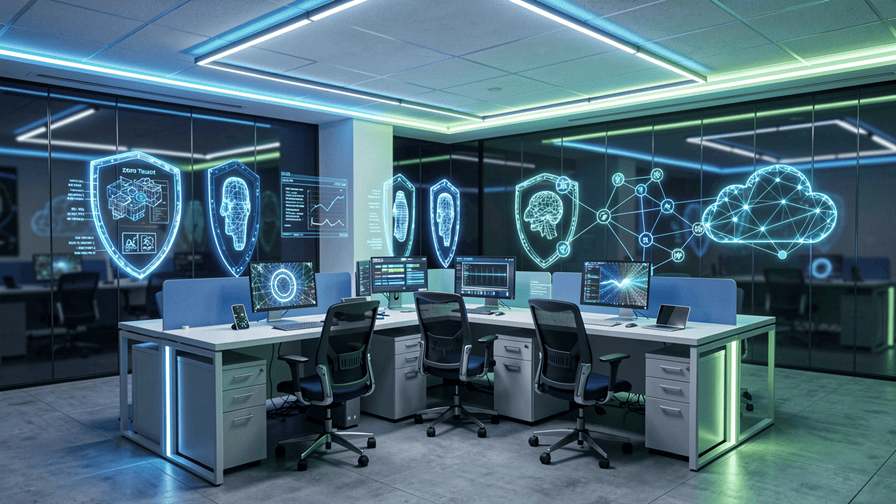
The future of Cybersecurity for Small Businesses will be driven by artificial intelligence, cloud-native security platforms, Zero Trust architectures, behavioral analytics, and increasingly automated security operations. As cyber threats continue becoming faster, more intelligent, and more difficult to detect, organizations will rely on integrated security ecosystems that continuously monitor business environments, identify suspicious behavior, and respond to attacks before they cause significant damage.
Artificial intelligence is expected to transform Cybersecurity for Small Businesses over the next decade. Rather than manually reviewing thousands of security alerts every day, businesses will increasingly use AI-powered systems capable of analyzing enormous volumes of network traffic, authentication events, endpoint activity, cloud workloads, and user behavior. These systems will automatically prioritize high-risk incidents, identify unusual patterns, and recommend appropriate remediation actions.
Cloud computing will also continue reshaping Cybersecurity for Small Businesses. Security capabilities that were previously available only to large enterprises are becoming accessible through managed cloud services. Automatic software updates, threat intelligence feeds, cloud-native firewalls, identity management platforms, and continuous monitoring services allow smaller organizations to improve security without maintaining large internal cybersecurity teams.
Several technologies are expected to shape the future of Cybersecurity for Small Businesses:
- Artificial intelligence threat detection.
- Extended Detection and Response (XDR).
- Zero Trust security.
- Passwordless authentication.
- Behavioral analytics.
- Managed detection services.
- Security automation.
- Continuous compliance monitoring.
These innovations will make Cybersecurity for Small Businesses more proactive, intelligent, scalable, and accessible.
Artificial Intelligence in Cybersecurity
Artificial intelligence is rapidly becoming one of the most valuable cybersecurity technologies.
Future AI platforms may assist Cybersecurity for Small Businesses by automatically:
- Detecting malware.
- Identifying phishing campaigns.
- Monitoring user behavior.
- Recognizing unusual network activity.
- Prioritizing security alerts.
- Investigating incidents.
- Recommending remediation.
- Predicting emerging threats.
Rather than replacing cybersecurity professionals, artificial intelligence will help organizations respond more quickly while reducing repetitive manual work.
Zero Trust Security
Traditional cybersecurity often assumed that devices connected to internal business networks could generally be trusted.
Modern Cybersecurity for Small Businesses increasingly follows the Zero Trust model, which assumes that every user, device, application, and connection should be continuously verified regardless of location.
Important Zero Trust principles include:
- Continuous authentication.
- Least-privilege access.
- Device verification.
- Identity validation.
- Network segmentation.
- Context-aware authorization.
- Continuous monitoring.
- Adaptive security policies.
Zero Trust significantly reduces opportunities for attackers to move laterally after compromising a single account or device.
Passwordless Authentication
Passwords continue creating security challenges for organizations of every size.
Future Cybersecurity for Small Businesses will increasingly adopt passwordless authentication technologies including:
- Passkeys.
- Hardware security keys.
- Biometrics.
- Certificate authentication.
- Trusted devices.
- Smart authentication platforms.
- Adaptive authentication.
- Identity verification services.
These technologies reduce phishing risk while simplifying secure user authentication.
Managed Security Services
Many organizations will increasingly outsource portions of their cybersecurity operations.
Managed security providers commonly offer:
- 24/7 monitoring.
- Threat intelligence.
- Endpoint management.
- Vulnerability scanning.
- Incident response.
- Security reporting.
- Compliance assistance.
- Cloud security management.
For many organizations, managed security services provide enterprise-quality protection without requiring full-time internal cybersecurity teams.
Strategic Takeaways
Organizations implementing Cybersecurity for Small Businesses should focus on continuous improvement rather than attempting to eliminate every possible risk.
Several important lessons emerge throughout this guide.
First, cybersecurity should become an ongoing business function rather than a one-time technology purchase.
Second, Cybersecurity for Small Businesses depends equally on technology, employee awareness, business processes, and leadership commitment.
Third, layered security—including authentication, endpoint protection, secure backups, network security, cloud security, monitoring, and employee education—provides significantly stronger protection than relying on individual security products.
Finally, preparing for incidents before they occur allows organizations to recover more rapidly while minimizing operational disruption.
Conclusion
Cybersecurity for Small Businesses has become an essential requirement for every modern organization. Regardless of industry or company size, businesses increasingly rely on cloud computing, digital communications, online payments, customer databases, remote work technologies, and internet-connected infrastructure to support daily operations. Protecting these digital assets has become fundamental to maintaining customer trust, operational continuity, financial stability, and long-term business success.
Fortunately, implementing effective Cybersecurity for Small Businesses does not require enterprise-scale budgets. Practical improvements such as strong password management, multi-factor authentication, regular software updates, encrypted backups, endpoint protection, employee awareness training, secure cloud configuration, and documented incident response planning dramatically reduce cyber risk while remaining achievable for smaller organizations.
As cyber threats continue evolving, organizations must also continuously strengthen their cybersecurity capabilities. Businesses that consistently evaluate risk, educate employees, implement layered defenses, monitor systems proactively, and embrace continuous improvement will be significantly better positioned to defend against future attacks while supporting sustainable growth.
Ultimately, Cybersecurity for Small Businesses is not simply about preventing cyberattacks. It is about creating resilient organizations capable of protecting customers, supporting employees, maintaining operations, and confidently adapting to an increasingly digital business environment.
Frequently Asked Questions (FAQs)
What is Cybersecurity for Small Businesses?
Cybersecurity for Small Businesses refers to the technologies, policies, security controls, employee practices, and risk management processes used to protect smaller organizations from cyber threats, malware, ransomware, phishing, unauthorized access, and data breaches.
Why is Cybersecurity for Small Businesses important?
Cybersecurity for Small Businesses protects customer information, financial assets, business operations, intellectual property, employee data, regulatory compliance, and overall business continuity while reducing the impact of cyberattacks.
What is the biggest cybersecurity threat for small businesses?
Phishing continues to be one of the most common threats affecting Cybersecurity for Small Businesses because it targets employees directly through deceptive emails, messages, and fraudulent websites.
Does every small business need multi-factor authentication?
Yes. Multi-factor authentication significantly improves Cybersecurity for Small Businesses by preventing unauthorized access even when passwords become compromised.
Can artificial intelligence improve Cybersecurity for Small Businesses?
Yes. Artificial intelligence increasingly supports Cybersecurity for Small Businesses by detecting suspicious activity, analyzing threats, automating investigations, prioritizing incidents, and improving overall security monitoring.
Strengthen Your Cybersecurity Today
Whether you’re building your first Cybersecurity for Small Businesses strategy, improving cloud security, protecting customer data, or preparing for regulatory compliance, our cybersecurity specialists can help you design secure, scalable, and cost-effective security solutions tailored to your organization.
Contact Us Today to Build Stronger Cybersecurity for Small Businesses