
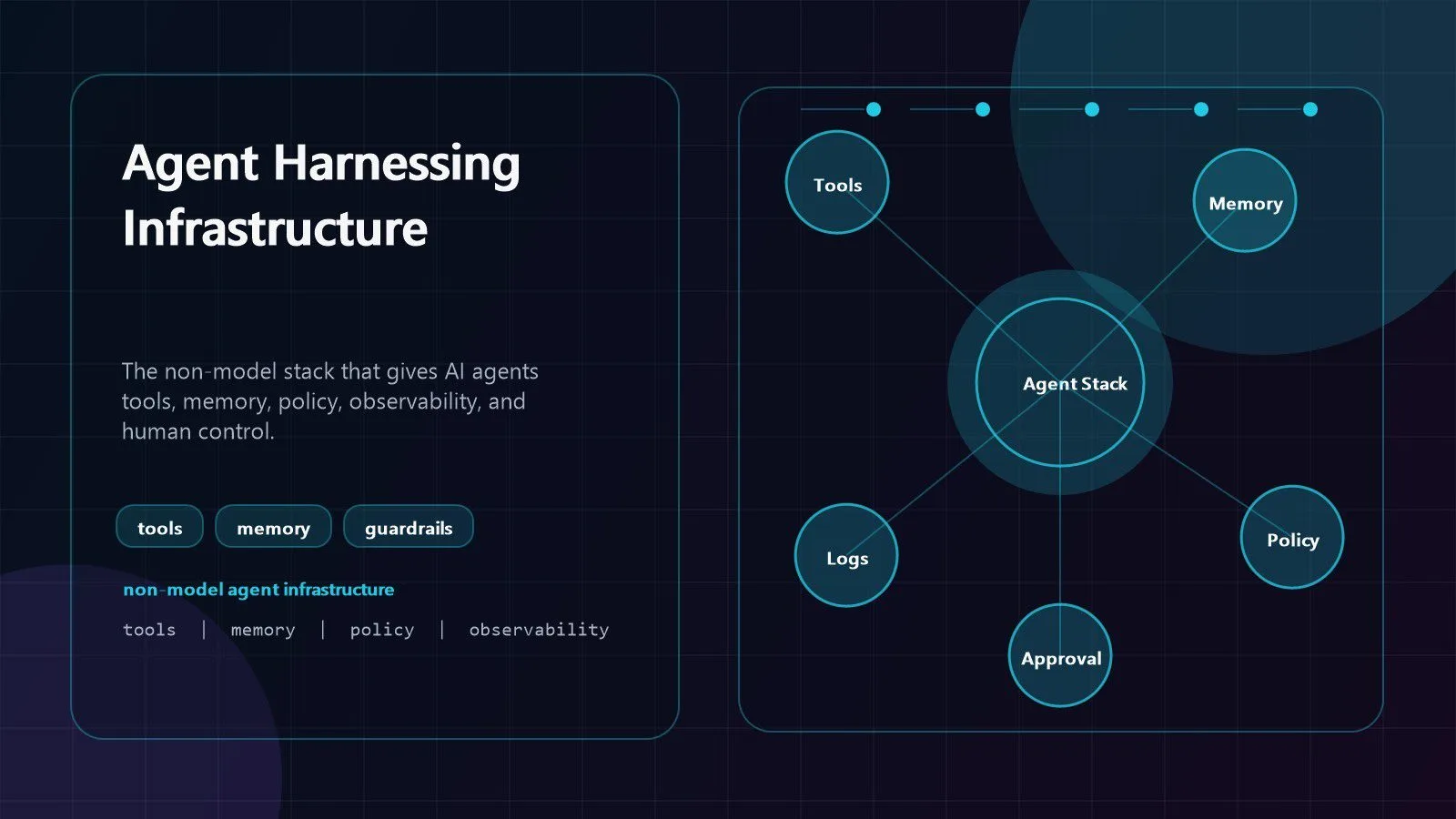
Agent Harnessing is the missing infrastructure layer between a clever model demo and an AI agent that can safely complete real work. Models can reason, draft, classify, and plan, but an agent only becomes useful when it has controlled access to tools, reliable context, memory, monitoring, and escalation paths.
That distinction matters because many agent projects fail for non-model reasons. The model may be strong, but the system around it cannot manage secrets, recover from errors, remember state, limit dangerous actions, or prove what happened. Agent Harnessing treats those details as the product, not as an afterthought.
For teams building with autonomous agents, the lesson is direct: do not only ask which model is best. Ask how the agent is harnessed. Progressive Robot teams can connect this discipline to broader AI strategy, workflow automation, DevOps services, and practical contact-led discovery for production automation.
| Layer | Why it matters |
|---|---|
| Tools | Let agents act through APIs, browsers, databases, and business systems |
| Permissions | Limit what each agent can read, change, send, or delete |
| Memory | Preserve context without leaking stale or sensitive information |
| Observability | Show prompts, actions, outputs, costs, failures, and approvals |
| Governance | Keep humans responsible for risky decisions and policy boundaries |
What Agent Harnessing means for AI teams
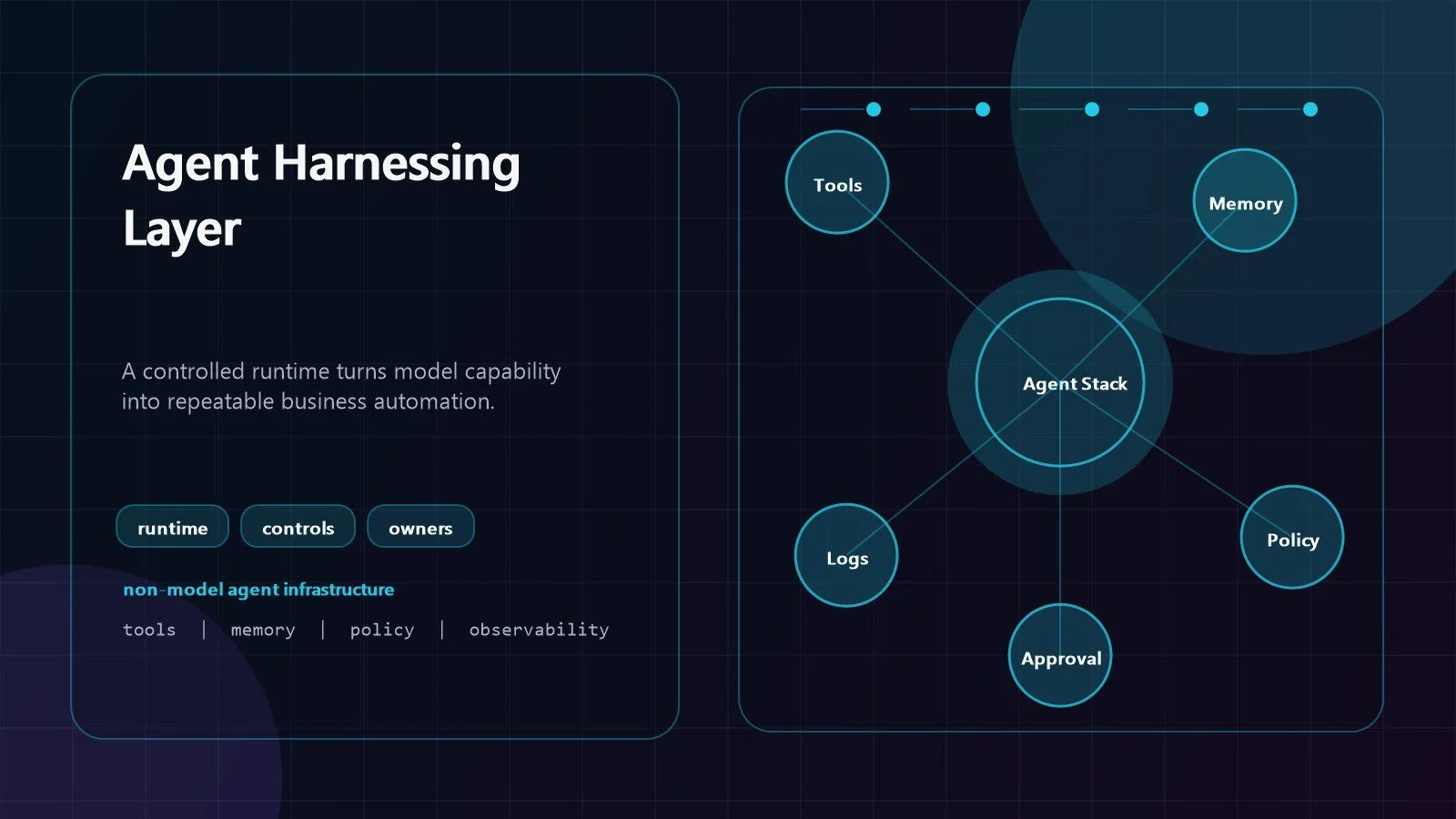
Agent Harnessing means designing the runtime, controls, and workflows that let an AI agent operate inside a business process. It is not a single library or prompt template. It is the complete set of systems that hold an agent in place while it uses tools and makes decisions.
The word harness is useful because power without control is not operational value. A horse harness channels energy. A wiring harness organizes signals. In the same way, Agent Harnessing channels model capability into defined jobs with boundaries, logs, checks, and outcomes.
A well-harnessed agent has a job description, approved tools, scoped credentials, memory rules, cost limits, escalation triggers, and a clear owner. It should not improvise across every system just because a model can generate a confident next step.
This is why AI teams should document the agent environment before they scale. The infrastructure should answer who can start the agent, what it may access, how it stores context, when it must stop, and how humans review important actions.
Why models are only one part of agent reliability
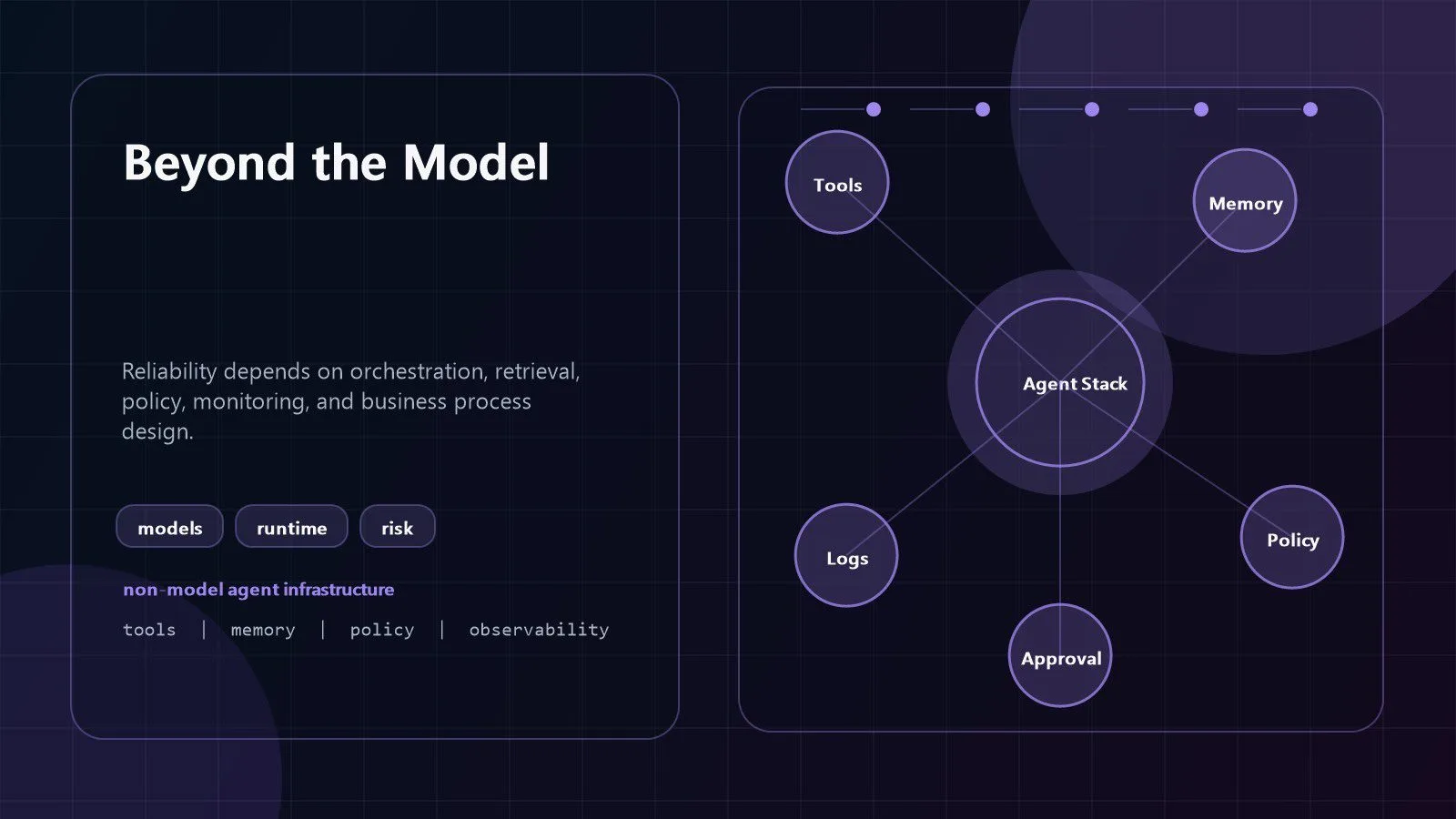
A better model improves reasoning, language quality, and task success, but it does not automatically create a reliable agent. The surrounding architecture decides whether the agent can repeat work safely under real conditions.
Consider a sales research agent. The model can summarize accounts, but it still needs current data, CRM access, rate limits, deduplication rules, source citations, and a way to avoid sending unapproved messages. Without those pieces, a polished summary may hide a fragile process.
This is why Agent Harnessing focuses on the non-model stack. Orchestration decides task order. Tool adapters translate intent into API calls. Retrieval supplies grounded context. Policy layers block prohibited actions. Monitoring shows whether the system is drifting, looping, or becoming too expensive.
External guidance supports this broader view. The NIST AI Risk Management Framework emphasizes governance, measurement, management, and mapping of AI risk. Agent builders should treat those disciplines as part of the engineering plan, not only compliance paperwork.
Tool access, permissions, and context boundaries
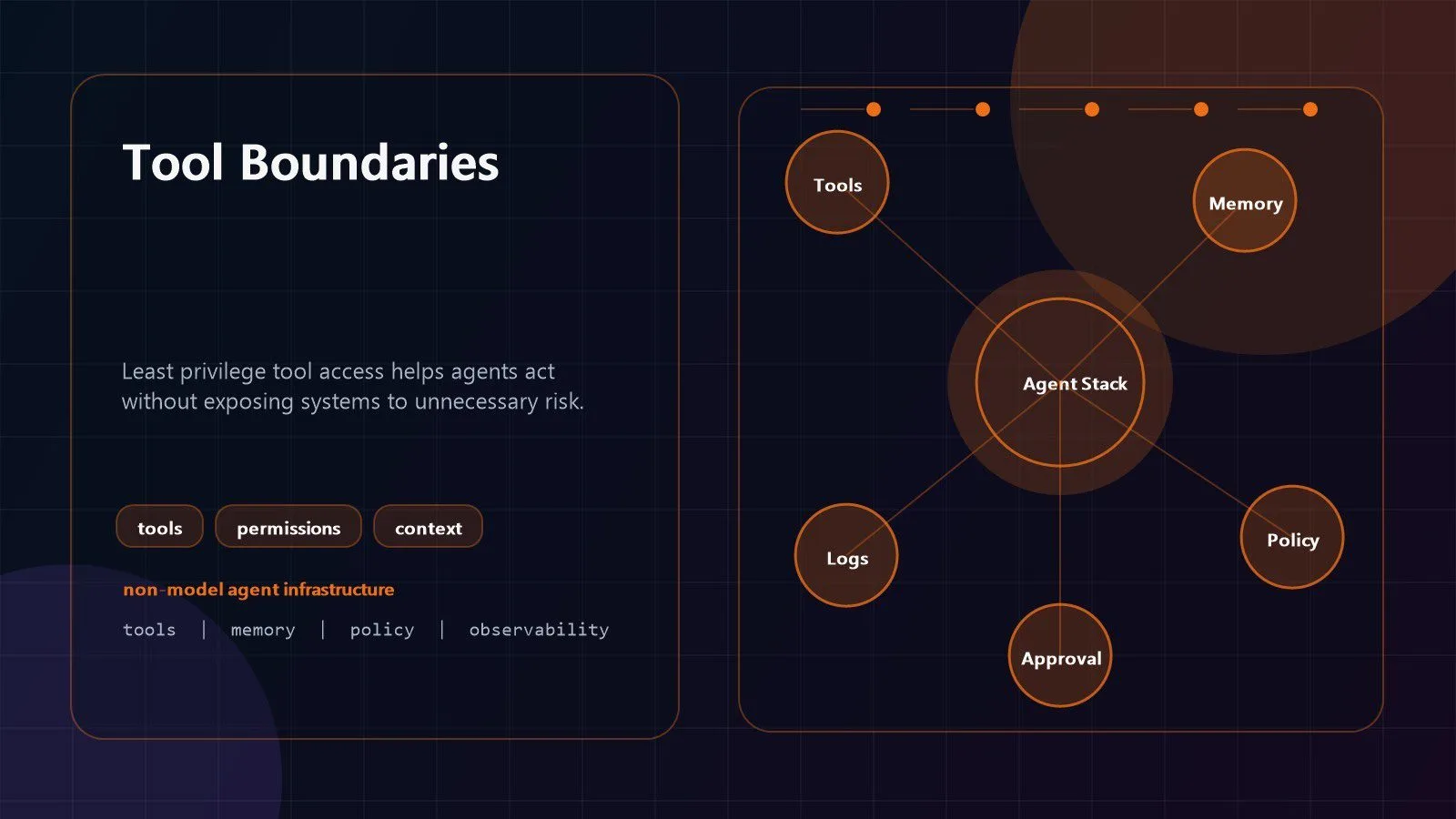
Tool access is where agent value and agent risk meet. An agent that cannot use tools may only chat. An agent with unlimited tools can accidentally expose data, overwrite records, trigger transactions, or follow malicious instructions from untrusted content.
Agent Harnessing starts tool design with least privilege. A lead enrichment agent may read public websites and update a draft CRM field, but it should not delete records or email prospects without approval. A support triage agent may label tickets, but it may need a human checkpoint before issuing refunds.
Context boundaries are equally important. Agents should know which sources are trusted, which documents are outdated, and which browser content may contain prompt injection. The harness should separate instructions from evidence and treat external text as data, not as authority.
Modern agent ecosystems are moving in this direction through structured tool protocols and connectors. The Model Context Protocol is one example of the industry trying to standardise how applications expose context and tools to AI systems.
Memory, state, and retrieval for Agent Harnessing
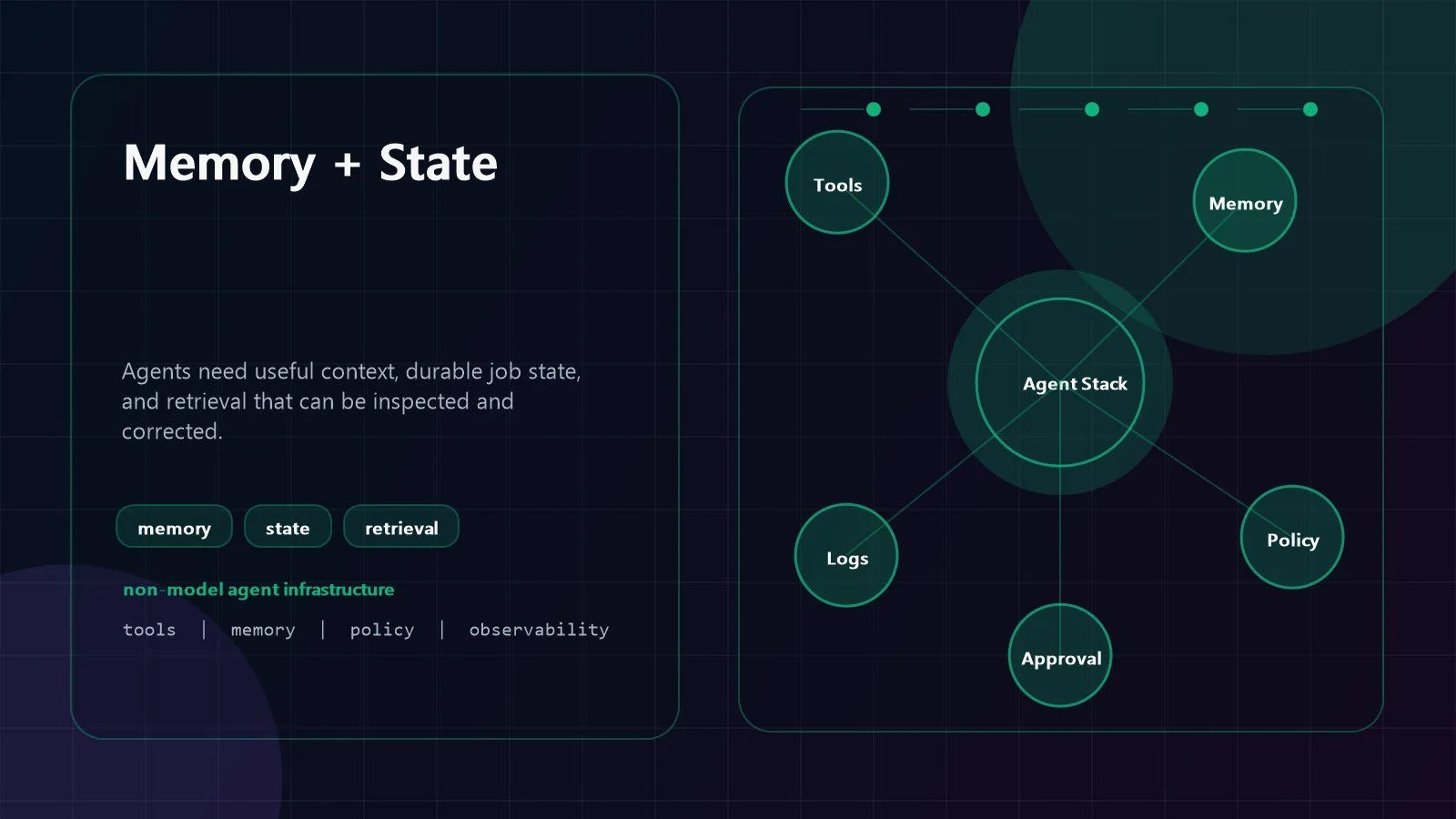
Agent Harnessing also depends on memory design. A one-off prompt can be stateless, but a working agent often needs to remember accounts, tasks, preferences, previous decisions, and unresolved exceptions.
Memory should not become an uncontrolled transcript dump. Teams need rules for what gets stored, how long it stays available, who can inspect it, and when it should be corrected or deleted. Bad memory can make an agent confidently repeat an old mistake.
State is different from memory. State tells the system where a job currently stands: waiting for approval, retrying a failed API call, finished with warnings, or blocked by missing data. This is essential for agentic workflow automation because humans and systems need to resume work without guessing.
Retrieval adds another layer. Agents should pull the right policies, product documents, CRM notes, knowledge base articles, or runbooks at the moment of action. Good retrieval makes the model less dependent on guesswork and makes outputs easier to audit.
Observability, evaluation, and human approval
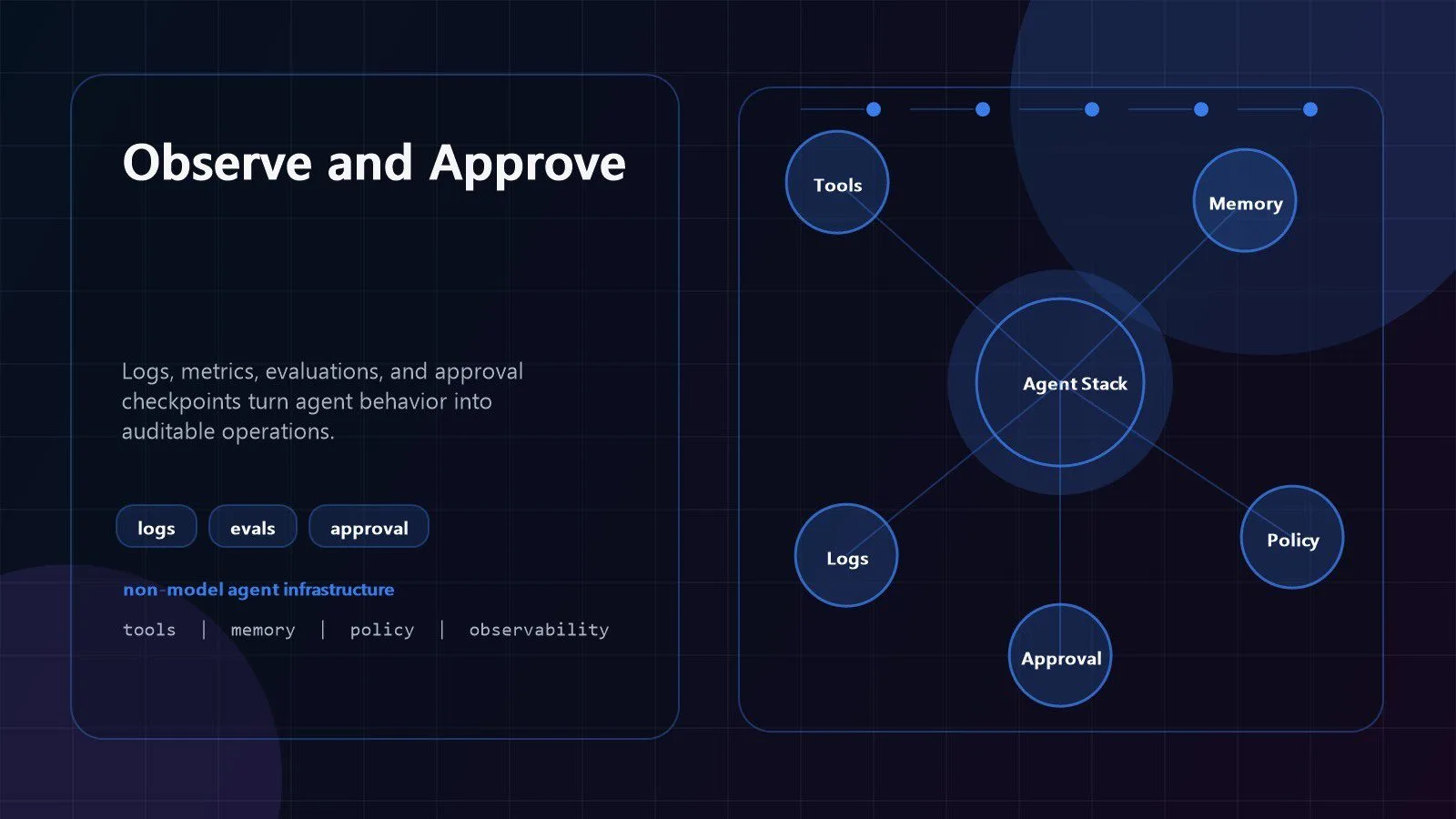
A production agent needs observability from day one. Teams should see inputs, retrieved context, model calls, tool calls, latency, token spend, decisions, errors, retries, and final outputs. If something goes wrong, the answer cannot be “the model did it.”
Evaluation is the other half of reliability. Before rollout, teams should test expected cases, edge cases, malicious content, missing data, slow tools, and policy conflicts. After rollout, they should keep measuring accuracy, completion rate, human override rate, cost per task, and business impact.
Agent Harnessing turns human approval into an explicit design feature. Some tasks can be fully automated. Others should stop for review before data is changed, money is moved, customers are contacted, or legal and security commitments are made.
The best approval systems are not vague. They show the evidence, proposed action, confidence level, policy notes, and undo path. That lets humans make faster decisions without blindly trusting or manually redoing the whole task.
How to build an Agent Harnessing roadmap
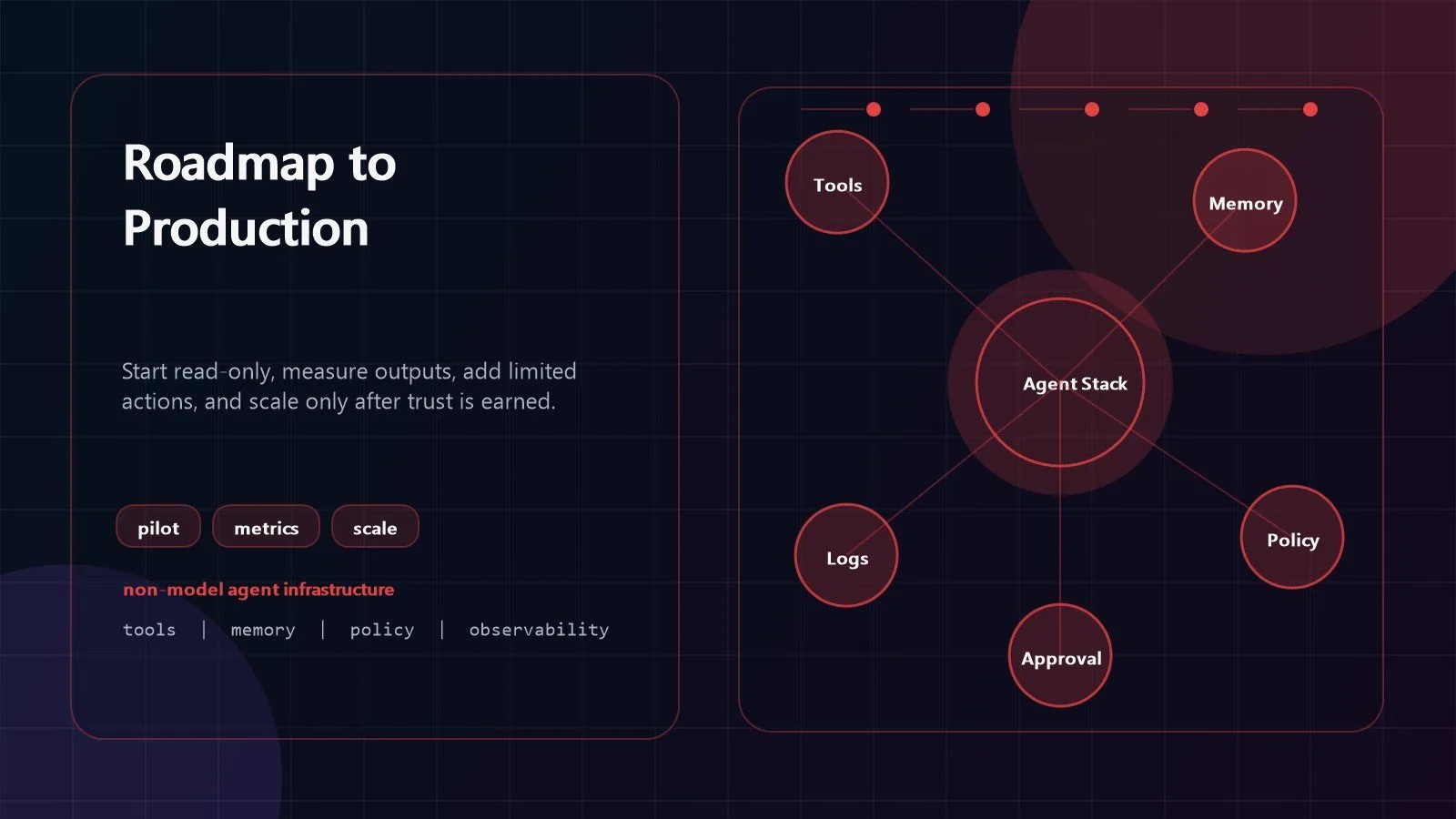
Start small. Choose a workflow where the agent can save time without creating major risk. Research briefs, ticket summaries, CRM enrichment drafts, document classification, release-note monitoring, and internal status reports are good first candidates.
Next, map the harness before selecting tools. Define the job, data sources, tools, credentials, permissions, memory policy, logging requirements, fallback behaviour, and approval points. This prevents the project from becoming a model-first experiment with no operational owner.
Then create a staged rollout. Run the agent in read-only mode, compare outputs against human work, add limited write actions, and expand only after metrics support the change. A disciplined roadmap is often faster than a rushed launch because it avoids trust failures.
Agent Harnessing should also be part of procurement. When evaluating agent platforms, ask how they handle audit logs, connectors, secrets, prompt injection, approvals, versioning, testing, cost control, and data retention. Those answers are often more important than a flashy demo.
Agent Harnessing FAQ
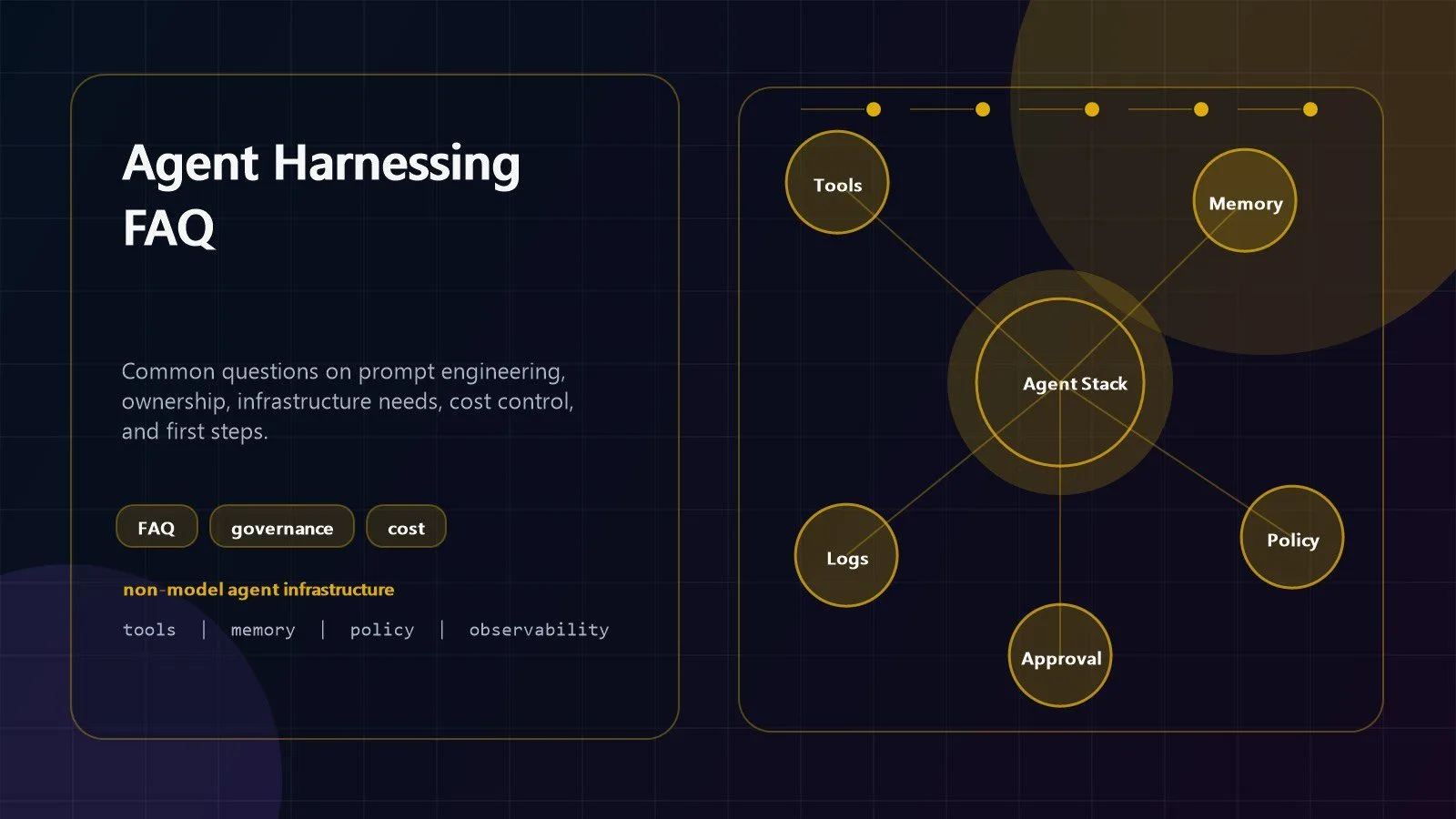
Is Agent Harnessing the same as prompt engineering?
No. Prompt engineering shapes model behaviour inside a request. Agent Harnessing shapes the full operating environment around the agent, including tools, memory, permissions, monitoring, evaluation, and human control.
Does every AI agent need this much infrastructure?
A small personal assistant may not. Any agent that touches business data, customers, money, regulated workflows, or production systems needs stronger infrastructure because mistakes become operational risk.
What is the first layer to build?
Start with tool permissions and observability. If the team cannot control what the agent may do or see what it did, the rest of the system will be hard to trust.
Can Agent Harnessing reduce AI costs?
Yes. Better orchestration, retrieval, caching, model routing, and evaluation can reduce unnecessary calls and prevent failed loops. Cost control should be measured per completed business task, not only per token.
Who should own Agent Harnessing?
Ownership should be shared across product, engineering, security, operations, and business process owners. The model may be AI work, but the harness is production infrastructure.
Agent Harnessing is becoming the practical difference between impressive demos and dependable AI operations. The winning teams will not be the ones that chase every new model first. They will be the teams that give agents the right tools, limits, feedback loops, and human accountability.
If your organisation wants to move from AI experimentation to reliable automation, start by designing the harness. The model is important, but the infrastructure is what makes the agent actually work.
More AI coverage: explore Progressive Robot's AI Models, Tools & Releases hub — hands-on reviews, setup guides and benchmarks in one place.