
Enterprise disaster recovery solutions are no longer only insurance for rare catastrophes. They are operating capabilities that keep revenue, customer trust, clinical workflows, logistics, payments, and executive decisions moving when a region, platform, database, vendor, identity service, or cyber event disrupts normal production.
The best enterprise disaster recovery solutions for sub-5 minute recovery times combine architecture and operations. They use workload tiering, replicated data, automated failover, resilient identity, immutable restore points, observability, tested runbooks, and clear business authority. Buying a backup product alone will not create a five-minute recovery capability.
For organizations improving DevOps services, planning for cloud region failure, calculating the cost of downtime, and maintaining a business continuity plan, disaster recovery should be designed as a measurable service. If your team needs help turning targets into a working roadmap, contact Progressive Robot before the next outage tests assumptions in public.
| Recovery question | Practical answer | Business result |
|---|---|---|
| Which workloads need five-minute recovery? | rank services by RTO, RPO, revenue, safety, and compliance | less overbuilding |
| Which pattern fits the workload? | choose hot standby, warm standby, active-active, DRaaS, or managed database failover | faster design decisions |
| How is data protected? | pair replication with consistency controls and immutable recovery points | lower data-loss risk |
| How does traffic move? | automate health checks, DNS, load balancing, and access controls | faster failover |
| How is proof captured? | run drills, measure recovery, and update runbooks | trustworthy resilience |
Enterprise disaster recovery solutions at a glance

Enterprise disaster recovery solutions help an organization restore critical technology and data after disruption, but the strongest programs also keep the business operating while recovery happens. They define what must recover first, how much data loss is acceptable, who can declare failover, what customers are told, and how teams prove the plan works.
Sub-5 minute recovery means the recovery time objective is less than five minutes for a specific workload or user journey. It does not mean every system in the company recovers that quickly. A payment authorization path may need near-instant recovery, while internal reporting can wait. Enterprise disaster recovery solutions should separate those tiers instead of applying one expensive target everywhere.
The NIST SP 800-34 Rev. 1 contingency planning guide remains useful because it connects contingency planning, impact analysis, recovery strategies, plan testing, and maintenance. The AWS Well-Architected disaster recovery guidance also explains backup and restore, pilot light, warm standby, and multi-site active-active patterns. Those concepts help leaders compare enterprise disaster recovery solutions by business need, not marketing labels.
The practical output should be evidence. Leaders should know which tier-one services can recover in under five minutes, which services need manual approval, which data stores may have replication lag, which backups are immutable, and which tests prove the current capability.
Why sub-5 minute recovery changes resilience planning

Sub-5 minute recovery changes the whole planning model because manual restoration is usually too slow. A team cannot discover the outage, find the runbook, restore a large database, reconfigure DNS, validate identity, notify stakeholders, and reopen a customer journey inside five minutes without prior automation and rehearsal.
Enterprise disaster recovery solutions that promise fast recovery must therefore be judged by architecture, not only by console screenshots. The solution has to keep recovery capacity close enough, synchronized enough, observable enough, and secure enough to activate quickly. That usually means hot standby, managed failover, active-active components, continuous data protection, or DRaaS with prebuilt orchestration.
The fastest design is not always the safest design. Automatic failover can help stateless web services, but it can damage transactional systems if replication is lagging or write ownership is unclear. A sub-5 minute target still needs guardrails: data integrity checks, split-brain prevention, emergency authority, rollback paths, and failback rules.
Cost also changes. Enterprise disaster recovery solutions with near-zero downtime may require duplicate infrastructure, higher database licensing, cross-region traffic, larger observability spend, and more frequent drills. The business case should compare that cost with revenue exposure, contractual commitments, safety impact, regulatory duties, and customer trust.
Step 1: rank workloads by RTO, RPO, and business impact

The first step is workload tiering. Enterprise disaster recovery solutions fail when every application is labeled critical. A stronger model ranks each service by recovery time objective, recovery point objective, maximum tolerable downtime, customer impact, revenue impact, operational dependency, compliance exposure, and safety risk.
Start with user journeys rather than servers. Login, payments, order intake, dispatch, clinical access, production control, support portals, and executive dashboards may deserve different recovery targets. Then map the systems, databases, APIs, queues, identity paths, certificates, vendors, network routes, and people needed to keep each journey alive.
A practical tier model may look like this:
- Tier 0: life-safety, regulated, payment, or revenue-critical workflows with sub-5 minute recovery and very low data-loss tolerance.
- Tier 1: major customer journeys with 15-minute to one-hour recovery.
- Tier 2: important internal workflows with same-day recovery.
- Tier 3: reporting, archives, development tools, or batch processes that can wait.
This tiering prevents waste. Enterprise disaster recovery solutions should focus the most expensive replication and failover patterns on the workloads that truly justify them. Lower tiers still need backups, documentation, and owners, but they may not need hot infrastructure.
Step 2: choose hot, warm, or active-active recovery patterns
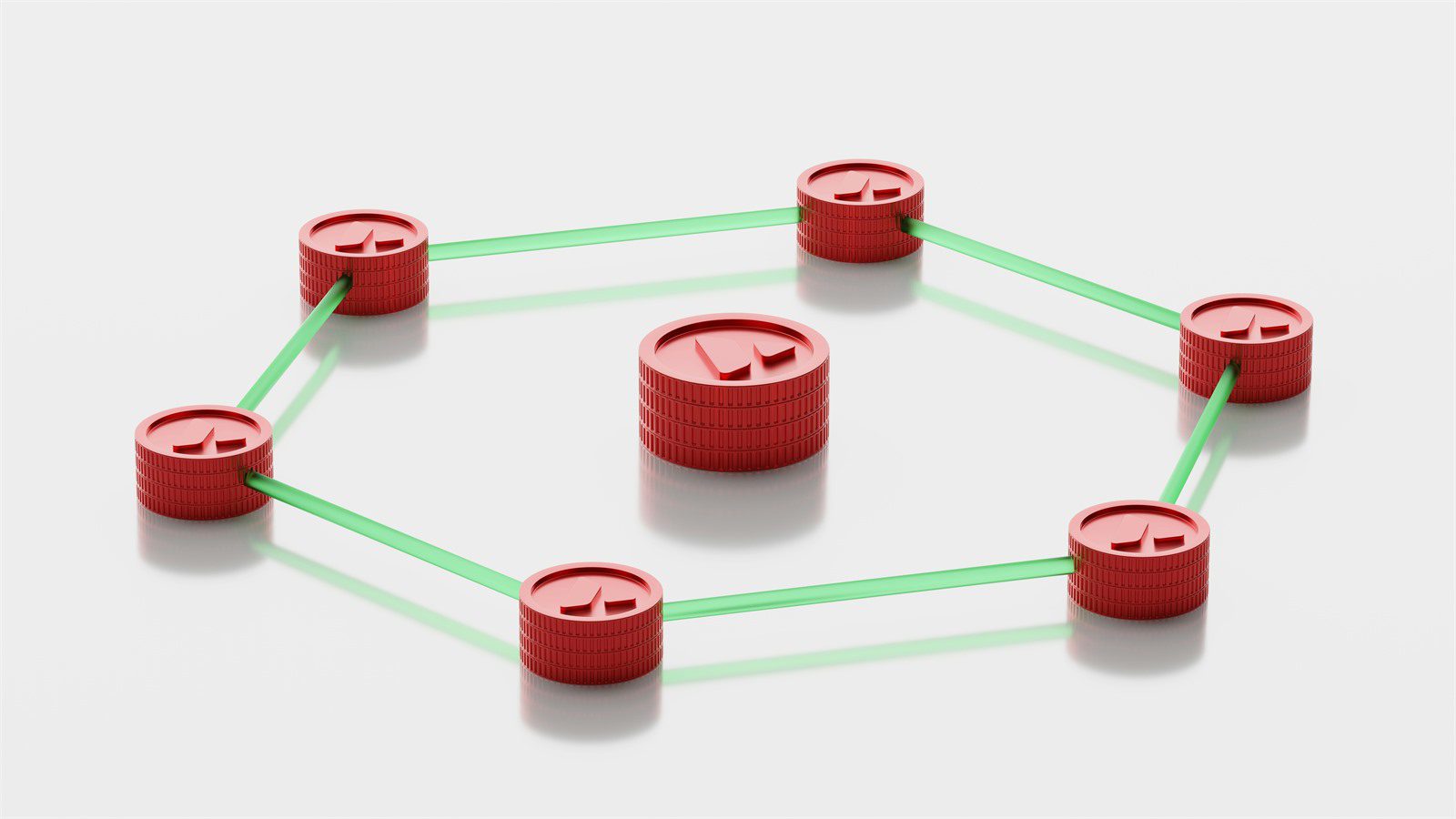
Different enterprise disaster recovery solutions solve different recovery targets. Backup and restore is simple and affordable, but it rarely meets a sub-5 minute objective for large systems. Pilot light keeps only core components running until activation. Warm standby keeps scaled-down capacity available. Hot standby keeps production-like recovery capacity ready. Active-active serves traffic from more than one environment at the same time.
The right pattern depends on workload behavior. Stateless applications can often recover quickly with automated redeployment, load balancing, and health checks. Stateful systems need careful data strategy. A database with strict consistency needs different treatment than a product catalog, cache, analytics pipeline, or notification service.
DRaaS can help when teams need orchestration across virtual machines, storage, network rules, and recovery plans. Managed database failover can help when the data platform already supports replicas and automated promotion. Kubernetes-based recovery can help cloud-native applications if cluster configuration, secrets, storage classes, ingress, and images are replicated safely.
Enterprise disaster recovery solutions should also include failback. Returning from the recovery environment to the primary environment can be riskier than the initial failover because data may have changed. The design should define reconciliation, validation, freeze windows, customer communication, and rollback criteria.
Step 3: replicate data without creating consistency risk

Data determines whether a fast recovery is useful or dangerous. Enterprise disaster recovery solutions need a clear data strategy for each critical system: synchronous replication, asynchronous replication, continuous data protection, log shipping, snapshots, backups, object replication, event replay, or application-level reconciliation.
Synchronous replication can reduce data loss, but it may add latency and tie availability to the remote location. Asynchronous replication supports distance and performance, but it creates possible lag. Continuous data protection can offer fine-grained recovery points, but it still needs testing and retention design. Snapshots are useful, but they are not the same as an always-ready application state.
Consistency rules matter most during failover. Which system is allowed to accept writes? What happens to transactions in flight? Can users operate in read-only mode? Are duplicate messages idempotent? How are conflicting updates reconciled? Enterprise disaster recovery solutions should answer those questions before the incident.
Backups remain essential because replication can copy corruption, deletion, or ransomware damage. The best design uses replication for fast continuity and immutable backups for clean recovery. That pairing protects against both infrastructure failure and bad data.
Step 4: automate failover, DNS, and traffic routing

Sub-5 minute recovery requires automation around the customer path. Enterprise disaster recovery solutions should coordinate health checks, load balancers, DNS, CDN behavior, API gateways, firewall rules, certificates, secrets, identity callbacks, monitoring, and incident notifications.
Health checks should measure the real journey. A server that responds to ping may still be unable to process payments, validate identity, read from a database, publish to a queue, or call a required vendor. Deep health checks reduce false confidence and help automation make better decisions.
Traffic routing should be designed for both speed and safety. Some services can fail over automatically when health checks fail. Others need a human-approved workflow that runs automated steps after an incident commander confirms data state. Enterprise disaster recovery solutions should make that distinction explicit.
DNS time-to-live settings, global load balancing, route health, and certificate readiness must be tested under real conditions. If a failover requires manual firewall edits, unavailable provider consoles, or one administrator with privileged access, the sub-5 minute objective is not credible.
Step 5: protect recovery with immutable backups and cyber controls

Modern recovery planning must assume disruption may be malicious. Ransomware, credential theft, destructive insiders, supply chain compromise, and mistaken automation can all damage production and recovery systems. Enterprise disaster recovery solutions should protect the recovery path as carefully as the production path.
Immutable backups are a key control. They help prevent attackers or administrators from deleting the last clean restore point. Strong designs also use separate credentials, multifactor authentication, privileged access management, backup encryption, retention locks, isolated vaults, and monitored restore permissions.
Identity resilience matters too. If administrators cannot authenticate during an outage, recovery stops. Plans should include break-glass accounts, emergency access procedures, backup MFA methods, and documented approval paths. These controls must be secure enough to resist abuse and usable enough to work during crisis.
Cyber recovery should include clean-room validation for high-risk events. Before restored systems return to production, teams may need malware scanning, log review, credential rotation, vulnerability checks, and endpoint validation. Enterprise disaster recovery solutions that ignore cyber controls can restore the outage and the attacker at the same time.
Step 6: test recovery times with controlled failover drills

A recovery target is only credible after testing. Enterprise disaster recovery solutions should be measured through controlled drills that prove actual recovery time, actual recovery point, staff readiness, data integrity, customer impact, and communication speed.
Start with low-risk tests. Restore a backup. Promote a replica in nonproduction. Run a read-only workload from the standby environment. Verify DNS changes. Check break-glass access. Confirm monitoring and alert routing. Then move toward planned production failover for carefully chosen services.
Sub-5 minute drills should capture timestamps. When was the outage detected? When was failover declared? When did automation start? When did traffic move? When did users recover? How much data was at risk? Which manual steps slowed the path? Enterprise disaster recovery solutions should produce this evidence automatically where possible.
Testing should include failure modes beyond infrastructure. Simulate identity provider degradation, regional API limits, backup vault access issues, expired certificates, unavailable vendors, and a distracted executive approval chain. The strongest drills reveal coordination gaps before customers do.
Step 7: choose enterprise disaster recovery solutions by fit

The best enterprise disaster recovery solutions are not the most expensive by default. They are the solutions that match workload tier, data consistency, cloud model, compliance requirements, staffing maturity, and financial exposure. A practical evaluation should compare capability, proof, and operating burden.
Use a short scorecard:
- Recovery fit: Can the solution meet the target RTO and RPO for the specific workload?
- Data fit: Does it support the replication, consistency, retention, and clean recovery model required?
- Automation fit: Can it orchestrate compute, network, identity, security, observability, and validation steps?
- Security fit: Does it protect backups, credentials, recovery environments, and restore workflows?
- Operations fit: Can the team test, monitor, maintain, and improve it without heroics?
- Cost fit: Does the avoided downtime justify the recurring infrastructure, licensing, and support cost?
Enterprise disaster recovery solutions should also integrate with existing incident management. A strong tool that no one monitors, tests, or owns will not recover the business. Ownership, runbooks, dashboards, and review cadence are part of the solution.
Vendors can provide important automation, but architecture still belongs to the business. Leaders should ask for proof: last tested recovery time, last tested recovery point, known gaps, incident owner, failback plan, and evidence from recent drills.
Enterprise disaster recovery solutions FAQ

What are enterprise disaster recovery solutions?
Enterprise disaster recovery solutions are platforms, architectures, processes, and services that restore critical systems and data after disruption. They may include DRaaS, backup and restore, continuous data protection, database replication, hot standby, warm standby, active-active architecture, failover automation, and recovery testing.
Can disaster recovery really deliver sub-5 minute recovery?
Yes, but only for workloads designed and tested for that target. Sub-5 minute recovery usually requires preprovisioned capacity, replicated data, automated traffic routing, resilient identity, monitoring, and rehearsed decision rules. Backup-only approaches rarely meet that goal for large enterprise systems.
Which workloads should get the fastest recovery target?
Give the fastest target to services where downtime quickly affects revenue, safety, legal obligations, customer trust, regulated operations, or core production. Enterprise disaster recovery solutions should reserve sub-5 minute recovery for the journeys where the business impact justifies the cost.
Is DRaaS enough for enterprise recovery?
DRaaS can be valuable, especially for orchestrating infrastructure recovery, but it is not enough by itself. Teams still need workload tiering, application validation, data consistency rules, cyber controls, communication plans, and regular drills.
How often should recovery be tested?
Test the highest-risk recovery paths at least twice per year, and test critical pieces after major architecture, cloud, identity, application, vendor, or staffing changes. For sub-5 minute objectives, smaller automated checks should run more often.
What is the biggest mistake when buying recovery tools?
The biggest mistake is buying a tool before defining recovery targets and proof requirements. Enterprise disaster recovery solutions should be selected after leaders know which workloads matter, what downtime costs, how much data loss is acceptable, and what evidence will prove readiness.
Enterprise disaster recovery solutions turn resilience from a document into a tested operating capability. The winning pattern is clear: prioritize the right workloads, pick the right recovery architecture, protect data, automate safely, secure the recovery path, and drill until the recovery time objective is proven.
Sub-5 minute recovery is achievable for selected workloads, but it must be engineered. If your organization needs a practical roadmap for enterprise disaster recovery solutions, Progressive Robot can help connect cloud architecture, DevOps automation, cyber resilience, and business continuity into one tested recovery model.