
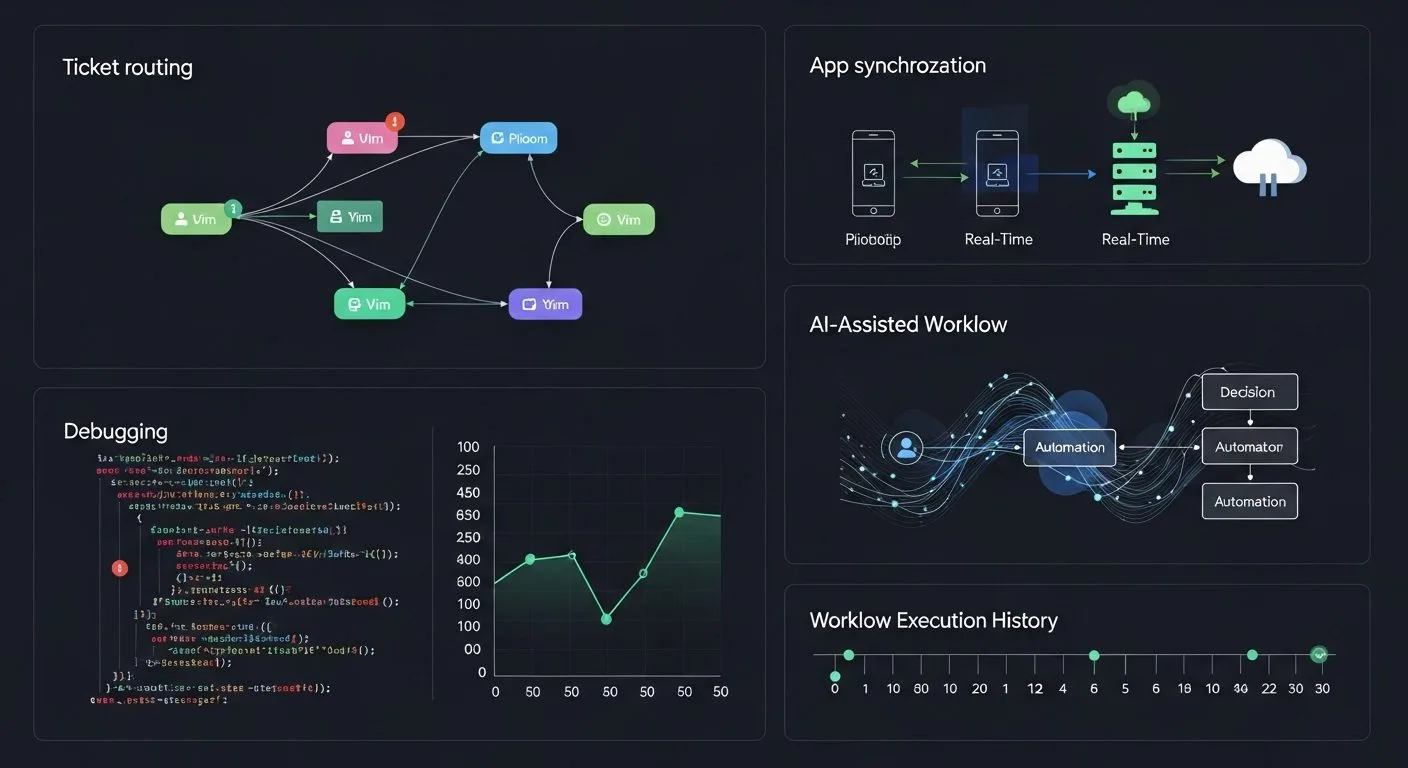
If you are asking what is AutoGPT, the short answer is that it is Significant Gravitas’ platform and toolkit for building, deploying, and running AI agents that can automate multi-step digital tasks. Official materials now frame AutoGPT less as a single viral autonomous-agent experiment and more as a broader platform with a low-code builder, continuous agents, cloud access, and self-hosting options.
This guide uses the official AutoGPT platform docs, AGPT website, and GitHub repository as the main sources.
If you want to understand what is AutoGPT in current terms, the key point is simple: AutoGPT now has two stories at once. There is the newer AutoGPT Platform for building and managing agent workflows, and there is AutoGPT Classic, the older agent project and tooling that still lives inside the same repository.
What is AutoGPT at a glance
What is AutoGPT at a glance? It is an AI agent platform plus a broader open development ecosystem around agent tooling.
AutoGPT’s official platform docs describe it as a system for creating, deploying, and managing continuous agents that work on your behalf.
The current platform is built around two main parts: an AutoGPT Frontend for building and managing agents, and an AutoGPT Server where those agents run.
In the platform, agents are built as workflows made of connected blocks that represent actions, integrations, scripts, models, and logic.
AutoGPT supports models from a wide range of providers, including OpenAI, Anthropic, Google DeepMind, DeepSeek, Meta, xAI, Mistral, Perplexity, Amazon, Microsoft, and others.
Official docs show both cloud and self-hosted options, with the hosted platform at platform.agpt.co and a self-hosting path using Docker and local setup tools.
The GitHub repository still includes AutoGPT Classic, Forge, benchmarking tools, a frontend, and a CLI in addition to the newer platform.
The licensing model is mixed: most of the repository is MIT licensed, while the newer `autogpt_platform` folder uses the Polyform Shield License.
Why understanding what is AutoGPT matters
If you want a better answer to what is AutoGPT, it helps to understand how much the project has changed in public perception versus official positioning. A lot of people still think of AutoGPT mainly as the early 2023 autonomous-agent craze: a prompt loop that tried to break big goals into smaller ones and keep going on its own.
That is only part of the story now. The official project has evolved into something more structured and platform-like, with workflows, builders, deployment controls, marketplaces, model support, and self-hosting guidance. That matters for anyone evaluating AutoGPT as a serious agent platform rather than as a historical AI meme.
If you are tracking how agent systems fit into broader workflow automation, AutoGPT is useful because it shows how AI-agent tooling is moving closer to automation infrastructure.
What is AutoGPT in simple terms

What is AutoGPT in plain English? It is a system for building AI assistants that can keep working through tasks using connected workflow blocks, instead of only replying once in a chat box.
The easiest way to think about AutoGPT is this:
- The new AutoGPT Platform is a builder-and-runtime environment for AI agents.
- AutoGPT Classic is the older toolkit and experimental agent ecosystem that helped make the name famous.
So if someone asks what is AutoGPT today, the most accurate answer is not just “an autonomous GPT agent.” It is now a broader AI-agent platform with legacy agent tooling still attached to the same project.
7 powerful facts behind what is AutoGPT

1. AutoGPT is now primarily positioned as a platform
The first thing to understand about what is AutoGPT is that the official docs now lead with the AutoGPT Platform. The AGPT site presents it as a way to create intelligent assistants that streamline digital workflows, while the platform docs describe it as a system for creating, deploying, and managing continuous agents.
That is a meaningful shift. AutoGPT is no longer just being presented as an autonomous-agent demo or a command-line curiosity. It is being framed as a platform product.
2. The platform is built around a frontend and a server
According to the official platform docs, AutoGPT consists of two main components.
The AutoGPT Frontend is the user-facing layer for building and interacting with agents. It includes the Agent Builder, workflow management, deployment controls, ready-to-use agents, marketplace-style discovery, and monitoring views.
The AutoGPT Server is the runtime layer where agents operate. The docs describe it as containing the core source code, infrastructure, and marketplace capabilities needed to run the platform.
This matters because what is AutoGPT is not just a prompt wrapper. It is a structured system with a builder side and an execution side.
3. AutoGPT agents are really workflows made of blocks
Another core part of what is AutoGPT is the workflow model. The platform docs say agents are essentially automated workflows that you design to perform specific tasks or processes.
Those workflows are built from blocks. Blocks can represent external service integrations, data-processing tools, AI models, custom scripts, or logic components. In practical terms, AutoGPT is trying to make agent construction modular.
That makes the platform easier to understand than the early “fully autonomous agent” idea. Instead of one mysterious loop doing everything, users assemble agents from explicit pieces.
4. AutoGPT supports a wide range of model providers
The platform docs also make clear that AutoGPT is not locked to one model vendor.
The supported-models section lists providers such as OpenAI, Anthropic, Google DeepMind, DeepSeek, Qwen, Meta, Mistral, xAI, Perplexity, Amazon, Microsoft, Nvidia, Cohere, and others.
That matters because what is AutoGPT today is partly a model-agnostic orchestration layer. It is meant to give users a platform for building agents across multiple model ecosystems rather than forcing one provider choice.
5. AutoGPT can run in the cloud or on your own infrastructure
The official docs show both hosted and self-hosted paths.
The cloud getting-started guide points users to platform.agpt.co and says no installation, Docker, or API keys are required to begin. It also says the hosted platform includes built-in credits and pre-configured API keys for services like OpenAI and Replicate so users can start using AI blocks immediately.
The self-hosting guide shows the technical route: Node.js, Docker, and Git are required, and the recommended setup uses an official install script or Docker-based manual setup. On Windows, the docs specifically recommend WSL 2 for Docker compatibility.
So the answer to what is AutoGPT access right now is broad: it is both a hosted platform and a self-hostable system.
6. AutoGPT Classic still exists inside the same repo
One reason people get confused about what is AutoGPT is that the repository still includes more than the new platform.
The official GitHub README still documents AutoGPT Classic, Forge, benchmarking tools, a frontend, and a CLI. Forge is described as a toolkit for building your own agent applications. The benchmark tooling is meant to evaluate agent performance. The frontend and CLI make the older tooling easier to use.
That means AutoGPT is not one single thing. It is both a current platform and a long-running agent ecosystem with older components still available.
7. AutoGPT’s licensing is more nuanced than people often assume
The licensing model is an important fact behind what is AutoGPT.
The official repo says the majority of the repository remains under the MIT License, but the newer `autogpt_platform` folder is licensed under the Polyform Shield License. That creates a dual-license structure rather than one simple open-source label covering everything equally.
This matters because many people casually think of AutoGPT as “just an open-source agent project.” The reality is more specific. Parts are MIT licensed, while the newer platform code has a different commercial and usage posture.
What is AutoGPT good at

What is AutoGPT in practical use? Based on the official product story, it is strongest where users want AI agents that can keep operating through structured workflows instead of only producing one-off chat responses.
Its clearest fits are:
- Building low-code agent workflows for recurring digital tasks.
- Combining AI blocks with logic, integrations, and deployment controls.
- Running continuous assistants that activate on relevant triggers.
- Prototyping marketing, research, content, and operational automations.
- Experimenting with custom agent blocks and model combinations.
- Benchmarking or extending agent behaviour through the broader Classic ecosystem.
The AGPT site specifically highlights examples such as content pipelines, viral video generation, dataset analysis, and sales prospecting. Those examples are still vendor examples rather than universal proof, but they show the intended use cases clearly.
What is AutoGPT access right now

What is AutoGPT access right now? Based on the official docs, there is both a hosted platform path and a self-hosting path.
The hosted cloud guide points users to platform.agpt.co and describes a live onboarding flow with sign-up, built-in credits, pre-configured API keys, AutoPilot access, the Marketplace, and the Builder.
The self-hosting guide describes a more technical setup path using Docker, Node.js, Git, and the AutoGPT repository. That makes AutoGPT accessible to both users who want a managed experience and teams who want local infrastructure control.
One caveat: the main official pages reviewed here make access clearer than pricing. They explain how to start, but they do not present a simple public pricing table in the same way many SaaS product sites do. So if pricing is a deciding factor, that likely requires a direct product-side check rather than assuming a standard self-serve SaaS model.
What is AutoGPT still limited by
What is AutoGPT not perfect at? Even from the official materials, several practical limits are clear.
- The project is broad enough now that the identity can feel confusing: platform, classic tooling, ecosystem, and agent brand all live under the same name.
- Self-hosting is clearly technical, and the docs explicitly warn users not to rely on outdated outside tutorials.
- Long-running agent systems still need supervision, testing, and reliability guardrails even when the marketing language sounds autonomous.
- The dual-license structure means teams should review usage assumptions carefully rather than assuming every part of AutoGPT is licensed the same way.
- Official use-case claims are compelling, but production value still depends on the specific workflow, integrations, models, and operational discipline behind the agent.
That means the best way to think about AutoGPT is as a promising agent platform and toolkit, not as a magic autonomous worker that removes the need for oversight.
Frequently asked questions
Is AutoGPT still the old autonomous agent project from 2023?
Partly, but not only that. The current repository still contains AutoGPT Classic and related tooling, but the official docs now center the newer AutoGPT Platform.
Is AutoGPT open source?
The careful answer is that the majority of the repository is MIT licensed, but the `autogpt_platform` folder uses the Polyform Shield License. So the project is not best described as one simple single-license open-source product.
Can AutoGPT be self-hosted?
Yes. The official docs provide a self-hosting guide with Docker-based setup, an install script, and manual configuration steps.
Does AutoGPT support multiple model providers?
Yes. The platform docs list support for a wide range of model developers, including OpenAI, Anthropic, Google DeepMind, Meta, xAI, Mistral, Perplexity, and others.
What is AutoGPT best understood as right now?
The clearest answer is that it is an AI agent platform and ecosystem for building, deploying, and managing agent workflows, with older classic agent tooling still available inside the same repository.
Final thoughts
If you came here asking what is AutoGPT, the most useful answer is that it is no longer just the famous autonomous-agent experiment many people remember. It is now a broader agent platform with cloud and self-hosted paths, low-code workflow building, multiple model options, and a still-active classic ecosystem.
That is what makes AutoGPT interesting in 2026. It sits at the intersection of agent infrastructure, workflow automation, and open developer tooling, while still carrying the legacy and complexity of one of the earliest breakout agent projects.
Whether AutoGPT is the right choice will depend on how much control, customisation, hosting flexibility, and agent-building depth you actually need. But if you want an accurate answer to what is AutoGPT today, the platform-plus-classic distinction is the place to start.
More AI coverage: explore Progressive Robot's AI Models, Tools & Releases hub — hands-on reviews, setup guides and benchmarks in one place.