
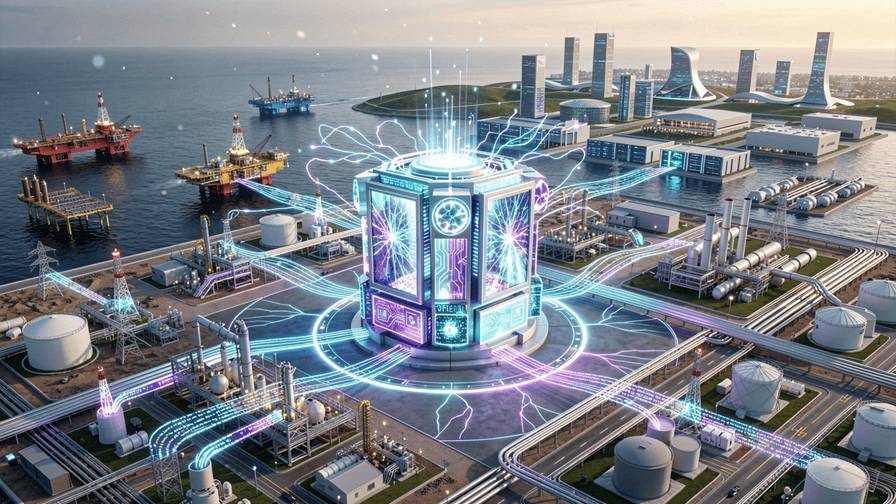
Artificial intelligence is rapidly transforming industrial operations, enabling organizations to optimize production, improve safety, reduce costs, and make better decisions using real-time data. One of the latest developments comes from Applied Computing, which aims to provide oil and gas operators with an AI model capable of understanding and optimizing entire industrial plants rather than isolated systems.
Traditionally, industrial facilities rely on numerous independent monitoring systems that oversee equipment, pipelines, pumps, compressors, valves, storage units, sensors, and production processes. While these systems generate enormous volumes of operational data, much of that information remains fragmented across different software platforms, making it difficult to gain a complete understanding of plant performance.
The concept behind AI for Oil and Gas is to create a unified artificial intelligence model that continuously analyzes data from every major component within an industrial facility. Instead of optimizing individual assets independently, the AI develops a comprehensive understanding of how equipment, workflows, maintenance schedules, environmental conditions, and operational decisions interact across the entire plant.
This holistic approach enables operators to identify inefficiencies, predict equipment failures, improve energy usage, optimize production, and support faster decision-making. As industrial organizations continue their digital transformation efforts, plant-wide AI models are becoming an increasingly valuable tool for improving operational efficiency while reducing downtime and maintenance costs.
For oil and gas companies operating complex facilities with thousands of interconnected assets, AI-powered plant intelligence represents a significant evolution beyond traditional monitoring systems. By combining machine learning, industrial Internet of Things (IIoT) data, predictive analytics, and real-time operational modeling, organizations can move toward more autonomous and intelligent industrial operations.
In this article, we’ll explore what AI for Oil and Gas is, how plant-wide AI models work, their key features, enterprise applications, advantages, challenges, and why intelligent industrial operations are shaping the future of energy production.
Key Takeaways
- AI for Oil and Gas enables plant-wide operational intelligence.
- AI models analyze entire industrial facilities rather than isolated equipment.
- Predictive analytics helps reduce downtime and maintenance costs.
- Real-time monitoring improves operational efficiency and safety.
- Industrial AI supports faster and more informed decision-making.
- Plant-wide digital intelligence is becoming central to energy sector innovation.
What Is AI for Oil and Gas?
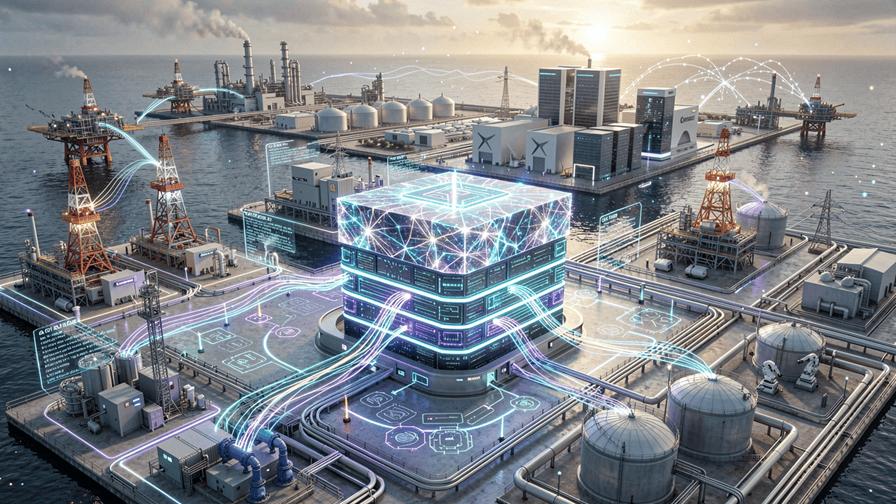
AI for Oil and Gas refers to the application of artificial intelligence technologies to improve exploration, production, refining, transportation, maintenance, safety, and operational efficiency throughout the energy industry.
Modern AI systems analyze vast amounts of operational data collected from industrial sensors, connected equipment, control systems, maintenance records, environmental monitoring devices, and production processes. By identifying patterns and relationships across these datasets, AI can provide recommendations that improve productivity while reducing operational risk.
Rather than focusing on individual machines, the latest generation of industrial AI models aims to understand the behavior of entire facilities. This allows operators to monitor complex interactions between assets, optimize plant-wide performance, and respond more effectively to changing operating conditions.
As digital transformation accelerates across the energy sector, AI for Oil and Gas is becoming an essential technology for organizations seeking greater efficiency, reliability, sustainability, and operational resilience.
How AI Models Understand Entire Industrial Plants
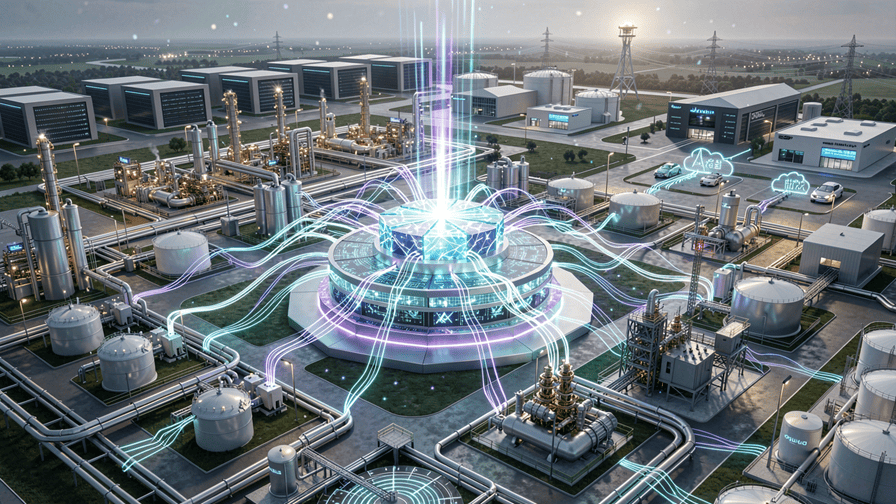
Traditional industrial monitoring systems often focus on individual assets such as pumps, compressors, pipelines, turbines, or storage tanks. While these systems provide valuable operational data, they rarely capture how every component interacts across the entire facility.
Modern AI for Oil and Gas takes a broader approach by creating a digital understanding of the complete industrial environment. Instead of analyzing equipment in isolation, AI continuously processes information from thousands of connected assets to identify relationships, predict operational outcomes, and recommend plant-wide optimizations.
Using machine learning algorithms, industrial sensors, operational databases, engineering models, and real-time telemetry, AI builds a comprehensive representation of plant behavior that supports faster and more informed decision-making.
Industrial IoT Integration
A plant-wide AI model depends on continuous data collection from Industrial Internet of Things (IIoT) devices distributed throughout the facility.
Typical data sources include:
- Pressure sensors.
- Temperature sensors.
- Flow meters.
- Vibration monitors.
- Pipeline monitoring systems.
- Energy management systems.
- Control systems.
- Environmental sensors.
By combining information from these sources, AI for Oil and Gas can identify operational trends that would be difficult for humans to detect manually.
Key Features of Plant-Wide AI Models
Modern industrial AI platforms provide far more than equipment monitoring.
Real-Time Operational Intelligence
AI continuously analyzes plant operations and provides operators with a live understanding of production performance.
This enables organizations to detect operational anomalies before they become major issues.
Predictive Maintenance
One of the most valuable applications of AI for Oil and Gas is predictive maintenance.
Instead of relying on fixed maintenance schedules, AI evaluates equipment condition using real-time operational data.
Potential benefits include:
- Reduced downtime.
- Lower maintenance costs.
- Longer equipment lifespan.
- Improved reliability.
- Better spare parts planning.
- Increased production availability.
- Reduced emergency repairs.
- Higher operational efficiency.
Process Optimization
Industrial AI can analyze entire production workflows to identify opportunities for greater efficiency.
Examples include:
- Optimizing production rates.
- Reducing energy consumption.
- Improving resource utilization.
- Increasing equipment performance.
- Minimizing bottlenecks.
- Improving throughput.
- Enhancing operational consistency.
- Supporting continuous improvement.
Operational Decision Support
Rather than replacing experienced engineers, AI for Oil and Gas provides intelligent recommendations that support operational decision-making.
Plant operators can evaluate potential outcomes before implementing process changes, reducing operational risk while improving confidence in complex decisions.
Digital Plant Visibility
Plant-wide AI models provide a unified operational view of facilities that traditionally rely on multiple disconnected software systems.
This enables engineering teams to better understand interactions between equipment, production systems, maintenance activities, and environmental conditions.
Enterprise Applications
Industrial AI supports a wide range of operational scenarios across the energy industry.
Oil Production
AI monitors drilling operations, production equipment, well performance, and facility operations to improve efficiency and reduce unplanned downtime.
Refineries
Refineries can use AI to optimize processing units, improve product quality, monitor equipment health, and reduce energy consumption across complex manufacturing processes.
Natural Gas Processing
AI assists operators by monitoring compressors, pipelines, pressure systems, storage facilities, and gas treatment equipment while improving operational reliability.
Pipeline Operations
Pipeline operators can use AI for Oil and Gas to monitor infrastructure health, detect anomalies, predict maintenance requirements, and improve asset management across large transportation networks.
Industrial Safety
AI supports workplace safety by monitoring equipment conditions, identifying operational risks, detecting abnormal behavior, and providing early warnings that help prevent incidents before they occur.
Benefits for Oil and Gas Companies
Organizations implementing plant-wide AI systems may achieve significant operational improvements.
Potential benefits include:
- Increased productivity.
- Reduced downtime.
- Lower maintenance costs.
- Better energy efficiency.
- Improved asset utilization.
- Faster operational decisions.
- Enhanced safety.
- Greater operational resilience.
As industrial facilities become increasingly connected, plant-wide AI intelligence is expected to become a core component of digital transformation strategies throughout the energy sector.
Challenges and Limitations of AI for Oil and Gas
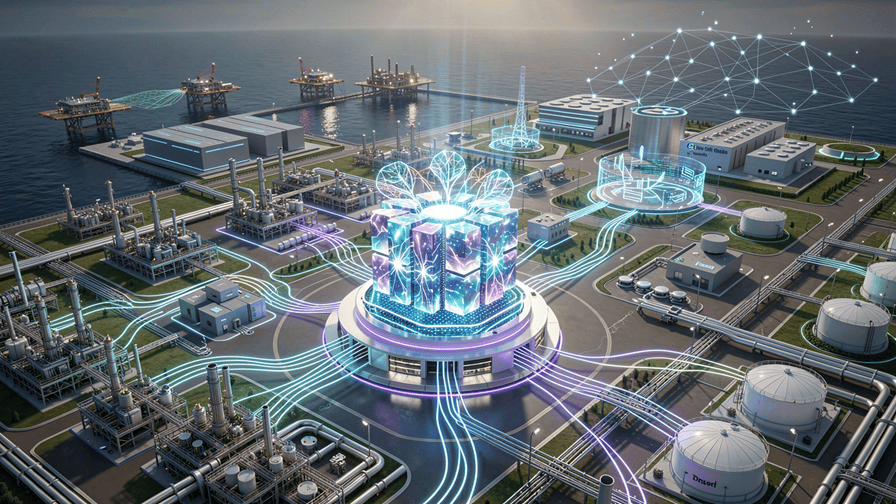
Although AI for Oil and Gas has the potential to transform industrial operations, implementing plant-wide artificial intelligence is a complex undertaking. Oil and gas facilities generate enormous volumes of operational data from thousands of interconnected assets, making integration, governance, cybersecurity, and system reliability critical success factors.
To maximize the value of industrial AI, organizations must combine advanced technology with strong engineering practices, high-quality data management, and effective operational oversight.
Data Quality and Integration
A plant-wide AI model is only as reliable as the data it receives.
Many industrial facilities operate with equipment from multiple vendors, legacy control systems, and separate monitoring platforms that may not communicate seamlessly.
Common challenges include:
- Inconsistent sensor data.
- Missing operational records.
- Legacy industrial systems.
- Data silos.
- Integration complexity.
- Communication delays.
- Incomplete historical datasets.
- Equipment compatibility issues.
Creating a unified operational model requires careful integration of these diverse data sources.
Cybersecurity Risks
As industrial facilities become increasingly connected, cybersecurity becomes a major concern.
Organizations deploying AI for Oil and Gas should establish comprehensive security strategies covering:
- Network protection.
- Identity and access management.
- Industrial control system security.
- Data encryption.
- Continuous monitoring.
- Threat detection.
- Incident response.
- Regulatory compliance.
Protecting operational technology (OT) environments is essential for maintaining safe and reliable plant operations.
High Infrastructure Requirements
Plant-wide AI systems require significant computing resources to process continuous streams of industrial data.
Organizations may need to invest in:
- High-performance servers.
- Edge computing devices.
- Industrial networking infrastructure.
- Cloud computing platforms.
- Data storage systems.
- AI inference hardware.
- Backup and disaster recovery solutions.
- Real-time analytics platforms.
Proper infrastructure planning helps ensure reliable performance and long-term scalability.
Model Accuracy and Human Oversight
Although AI can identify patterns and predict operational outcomes, it should not replace experienced engineers or plant operators.
Industrial AI models may occasionally:
- Misinterpret unusual operating conditions.
- Generate inaccurate predictions.
- Miss rare failure scenarios.
- Produce false alarms.
- Require recalibration.
- Struggle with incomplete data.
- Reflect outdated operational assumptions.
- Need continuous retraining.
Human expertise remains essential for validating recommendations and making critical operational decisions.
Organizational Change Management
Introducing AI into industrial environments often requires changes to existing workflows and organizational culture.
Successful adoption depends on:
- Employee training.
- Cross-functional collaboration.
- Executive support.
- Operational readiness.
- Clear governance policies.
- Performance measurement.
- Continuous improvement.
- User confidence in AI-assisted decision-making.
Organizations that invest in workforce education and change management are more likely to achieve long-term success.
Best Practices for Implementing AI for Oil and Gas
Companies can maximize the benefits of industrial AI by following proven implementation strategies.
Start with High-Value Use Cases
Begin with applications such as predictive maintenance or equipment monitoring before expanding AI across the entire facility.
Improve Data Quality
Ensure sensors, operational databases, and maintenance records provide accurate, complete, and consistent information.
Strengthen Cybersecurity
Protect industrial AI systems using secure network architectures, continuous monitoring, access controls, and compliance frameworks.
Keep Engineers in the Loop
Use AI to augment engineering expertise rather than replace human judgment, particularly for safety-critical operations.
Continuously Monitor AI Performance
Evaluate system accuracy, operational impact, equipment reliability, maintenance outcomes, energy efficiency, and business value to ensure ongoing improvement.
The Evolution of Intelligent Industrial Operations
Industrial AI is evolving from isolated predictive maintenance tools into comprehensive operational intelligence platforms.
Future industrial AI ecosystems are expected to combine:
- Plant-wide digital twins.
- Autonomous operational optimization.
- Advanced predictive analytics.
- AI-driven workflow automation.
- Edge AI computing.
- Real-time industrial simulation.
- Cross-facility intelligence.
- Sustainability optimization.
These capabilities will enable energy companies to operate more efficiently while improving safety, reliability, and environmental performance.
The Future of AI for Oil and Gas
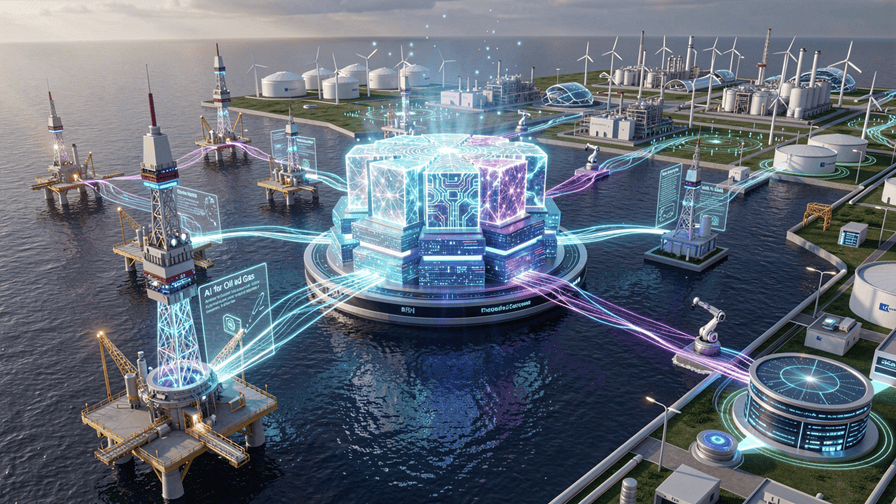
The future of AI for Oil and Gas extends far beyond equipment monitoring and predictive maintenance. As industrial facilities become increasingly connected through Industrial Internet of Things (IIoT) devices, cloud computing, edge AI, and digital twins, artificial intelligence will play a central role in managing entire production environments.
Companies are moving toward plant-wide intelligence where AI continuously analyzes operational data, predicts equipment behavior, recommends process improvements, and supports engineers with real-time decision-making. Instead of reacting to equipment failures, organizations will increasingly use AI to anticipate operational changes, optimize production, and improve long-term asset performance.
Future developments in AI for Oil and Gas are expected to include:
- Autonomous plant optimization.
- Advanced digital twins.
- Smarter predictive maintenance.
- AI-powered operational planning.
- Real-time process simulation.
- Greater edge AI deployment.
- Improved sustainability analytics.
- Stronger industrial cybersecurity integration.
As these technologies mature, industrial AI platforms will evolve into intelligent operational assistants capable of helping organizations maximize efficiency, safety, reliability, and environmental performance across entire facilities.
Strategic Takeaways
The development of plant-wide AI models marks an important shift in industrial digital transformation.
Key insights include:
- AI is evolving from monitoring individual assets to understanding complete industrial plants.
- Plant-wide intelligence improves operational visibility and supports better decision-making.
- Predictive analytics reduces downtime while optimizing maintenance planning.
- Industrial AI complements engineering expertise rather than replacing it.
- High-quality operational data is essential for accurate AI recommendations.
- Organizations adopting AI-driven operations today will be better positioned for the next generation of intelligent energy infrastructure.
Businesses that invest in scalable industrial AI platforms can improve competitiveness while preparing for increasingly autonomous industrial operations.
Conclusion
The emergence of AI for Oil and Gas demonstrates how artificial intelligence is transforming one of the world’s most complex industries. Rather than focusing solely on isolated equipment, next-generation AI models are designed to understand entire industrial plants, enabling operators to optimize production, reduce downtime, improve safety, and make more informed decisions.
By integrating machine learning with Industrial IoT data, predictive analytics, cloud computing, and plant-wide operational intelligence, organizations can build smarter, more resilient facilities capable of responding rapidly to changing operating conditions. This holistic approach creates opportunities to improve efficiency while reducing operational costs and extending equipment life.
Although challenges related to data integration, cybersecurity, infrastructure investment, and organizational change remain, the long-term benefits of industrial AI continue to drive adoption across exploration, production, refining, transportation, and processing operations.
As digital transformation accelerates throughout the energy sector, AI for Oil and Gas will become an increasingly important foundation for intelligent industrial operations, helping companies operate safer, more efficiently, and more sustainably in an increasingly competitive global market.
Frequently Asked Questions (FAQs)
What is AI for Oil and Gas?
AI for Oil and Gas refers to the use of artificial intelligence, machine learning, predictive analytics, and industrial data to improve exploration, production, refining, maintenance, safety, and operational efficiency throughout the energy industry.
How does plant-wide AI differ from traditional monitoring systems?
Traditional systems monitor individual equipment or processes, while plant-wide AI analyzes data from the entire industrial facility to understand relationships between assets and optimize overall plant performance.
What are the benefits of AI for oil and gas companies?
Organizations can improve operational efficiency, reduce downtime, optimize maintenance, enhance safety, lower operating costs, increase asset utilization, and make faster, data-driven decisions.
What technologies support industrial AI?
Industrial AI combines machine learning, Industrial Internet of Things (IIoT), cloud computing, edge AI, predictive analytics, digital twins, industrial sensors, and real-time operational data.
Will AI replace engineers in industrial facilities?
No. AI is designed to assist engineers by providing insights, predictions, and recommendations. Human expertise remains essential for validating AI outputs, ensuring safety, and making critical operational decisions.
Modernize Industrial Operations with AI
Artificial intelligence is reshaping the future of industrial operations. Whether you’re exploring predictive maintenance, plant-wide AI models, Industrial IoT integration, or intelligent automation, our experts can help you design secure, scalable, and data-driven AI solutions tailored to your operational goals.
More AI coverage: explore Progressive Robot's AI Models, Tools & Releases hub — hands-on reviews, setup guides and benchmarks in one place.










