
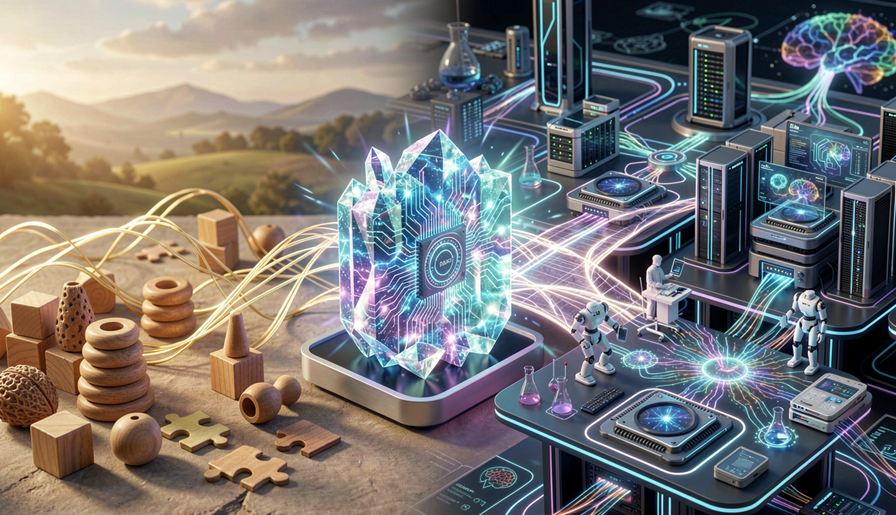
Artificial intelligence has made extraordinary progress over the past few years. Modern AI systems can generate realistic images, write computer code, summarize research papers, translate dozens of languages, and even assist scientists with complex discoveries. These remarkable capabilities have led many people to believe that AI intelligence is approaching—or even surpassing—human intelligence.
However, many AI researchers argue that this perception is misleading. Despite impressive performance on specific tasks, today’s AI intelligence still lacks many of the basic cognitive abilities that even a young baby develops naturally. While AI can outperform humans in chess, mathematics, and large-scale data analysis, it struggles with common sense, causal reasoning, adaptability, and understanding the physical world in the way a child does.
A baby learns continuously by interacting with its environment. Every movement, sound, object, and social interaction contributes to cognitive development. This process allows children to build an intuitive understanding of how the world works without requiring billions of training examples. In contrast, modern AI models depend on enormous datasets and extensive computational resources to learn patterns rather than genuine understanding.
The discussion surrounding AI intelligence is becoming increasingly important as businesses, educators, governments, and researchers integrate AI into everyday life. Understanding both the strengths and limitations of AI helps organizations make informed decisions about where these technologies can provide value—and where human judgment remains essential.
Rather than asking whether AI can outperform humans in isolated benchmarks, researchers are increasingly asking a deeper question: can AI develop the flexible reasoning, curiosity, adaptability, and common sense that characterize human intelligence from infancy?
In this article, we’ll explore why AI intelligence remains fundamentally different from human cognition, examine how babies learn compared with AI systems, discuss the limitations of today’s large language models, and consider what future breakthroughs may be required before AI reaches truly general intelligence.
Key Takeaways
- AI intelligence excels at pattern recognition but still lacks human-like understanding.
- Babies learn through real-world experiences rather than massive datasets.
- Common sense reasoning remains one of AI’s biggest challenges.
- Modern AI is highly specialized instead of generally intelligent.
- Researchers continue exploring new approaches inspired by human cognitive development.
- Human intelligence remains the benchmark for future AI innovation.
What Is AI Intelligence?
Before comparing machines with humans, it’s important to understand what AI intelligence actually means.
Artificial intelligence refers to computer systems designed to perform tasks that typically require human cognitive abilities. These include:
- Language understanding.
- Image recognition.
- Problem solving.
- Decision making.
- Pattern analysis.
- Content generation.
Modern AI intelligence is primarily powered by machine learning and deep learning models trained on enormous datasets. These systems identify statistical relationships within data and use those patterns to generate predictions or responses.
Although this approach enables remarkable performance across many applications, it differs significantly from how humans learn and understand the world.
Why AI Still Isn’t Smarter Than a Baby
The statement that AI isn’t smarter than a baby may sound surprising considering today’s technological advances.
However, intelligence involves far more than answering questions correctly or generating convincing text.
Even a young infant possesses abilities that current AI intelligence has not fully replicated, including:
- Learning from very few examples.
- Understanding cause and effect.
- Recognizing physical relationships.
- Adapting to unfamiliar situations.
- Developing intuitive common sense.
- Learning continuously through experience.
Babies do not memorize billions of examples before recognizing objects or understanding basic interactions. Instead, they build knowledge gradually through exploration, observation, and social engagement.
Current AI systems remain largely dependent on extensive training data and predefined learning methods.
Comparing AI and Human Cognitive Development
One of the biggest differences between AI intelligence and human intelligence lies in how learning occurs.
Human cognitive development begins almost immediately after birth.
Babies learn by:
- Watching people.
- Listening to language.
- Touching objects.
- Moving through physical environments.
- Observing consequences.
- Interacting socially.
Every experience contributes to a continuously evolving mental model of the world.
Modern AI learns very differently.
Instead of exploring physical environments naturally, AI typically processes enormous digital datasets during training.
While these datasets enable impressive capabilities, they do not necessarily provide genuine understanding of how the physical world operates.
The Limits of Today’s AI Intelligence
Despite rapid progress, AI intelligence still faces important limitations.
Current AI models often struggle with:
- Long-term reasoning.
- Causal understanding.
- Abstract planning.
- Physical intuition.
- Common sense.
- Novel situations.
- Self-directed learning.
- Reliable memory.
Large language models generate responses by predicting likely sequences of words rather than reasoning about reality in the same way humans do.
This distinction explains why AI sometimes produces highly convincing answers that nevertheless contain factual errors or flawed reasoning.
Why Data Alone Isn’t Enough
One reason researchers believe AI intelligence still trails human cognition is that larger datasets alone may not produce genuine understanding.
Babies acquire enormous amounts of knowledge using surprisingly limited examples.
For instance, a child may learn to recognize a dog after seeing only a few examples.
Many AI systems require thousands—or even millions—of training examples to achieve similar recognition performance.
This difference suggests that human learning mechanisms remain significantly more efficient than current machine learning approaches.
AI Excels in Narrow Intelligence
Although AI intelligence has limitations, it also possesses remarkable strengths.
Modern AI performs exceptionally well in specialized tasks such as:
- Medical image analysis.
- Language translation.
- Scientific research.
- Software development.
- Financial forecasting.
- Content generation.
- Data analysis.
- Pattern recognition.
These achievements demonstrate that AI has become an invaluable tool across numerous industries.
However, success in specialized tasks does not necessarily translate into the broad, flexible intelligence displayed by humans—even very young children.
Why Researchers Continue Studying Human Intelligence
Understanding how babies learn may provide important clues for improving future AI intelligence.
Researchers are increasingly investigating:
- Cognitive science.
- Developmental psychology.
- Neuroscience.
- Robotics.
- Reinforcement learning.
- Embodied AI.
- Multimodal learning.
- Lifelong learning.
These disciplines may help scientists develop AI systems capable of learning more naturally through interaction rather than relying almost entirely on massive datasets.
How Babies Learn Differently from AI

One of the biggest reasons AI intelligence still cannot match a baby’s cognitive abilities is the way learning occurs. Human infants begin learning from the moment they are born. Every sight, sound, touch, movement, and interaction contributes to their understanding of the world.
Babies are naturally curious. They explore objects, observe people’s reactions, imitate behaviors, and constantly test their surroundings. Without reading textbooks or processing billions of examples, they gradually develop an understanding of language, emotions, physical objects, and social relationships.
Modern AI intelligence, on the other hand, primarily learns by analyzing enormous datasets during training. Instead of experiencing the world directly, AI identifies statistical patterns within text, images, audio, and video.
This difference explains why humans can often learn new concepts after only a few experiences, while AI systems typically require vast amounts of training data before achieving similar performance.
The Power of Human Curiosity
Curiosity plays a fundamental role in human intelligence.
Children constantly ask questions, experiment with objects, and learn through trial and error. This self-directed exploration enables continuous cognitive development without requiring explicit instructions for every situation.
Today’s AI intelligence does not possess genuine curiosity. While AI can simulate questioning or generate exploratory responses, it lacks intrinsic motivation to discover new knowledge independently.
Researchers believe that developing more autonomous learning mechanisms could become one of the next major breakthroughs in artificial intelligence.
Strengths of Modern AI Intelligence
Although AI is not yet comparable to a baby’s overall cognitive abilities, AI intelligence excels in many specialized domains.
Current AI systems can process enormous volumes of information much faster than humans.
Key strengths include:
- Natural language processing.
- Computer vision.
- Speech recognition.
- Data analysis.
- Pattern recognition.
- Software development.
- Scientific research.
- Content generation.
These capabilities have transformed industries including healthcare, finance, education, manufacturing, cybersecurity, and customer service.
Rather than replacing human intelligence, AI often works best as a powerful tool that augments human expertise.
Why Common Sense Remains Difficult
One of the greatest challenges facing AI intelligence is common sense reasoning.
Humans naturally understand thousands of everyday facts without consciously thinking about them.
For example, people know that:
- Ice melts in warm temperatures.
- Objects fall when dropped.
- Water makes things wet.
- Glass can break.
- Babies require care.
- Fire is dangerous.
These simple concepts seem obvious because humans acquire them through lifelong interaction with the physical world.
AI models frequently struggle with similar reasoning because they primarily learn statistical relationships instead of developing intuitive physical understanding.
This remains one of the biggest obstacles to achieving artificial general intelligence.
AI Learning vs Human Learning
Comparing learning methods highlights why AI intelligence differs so significantly from human cognition.
Human Learning
People learn through:
- Observation.
- Experience.
- Social interaction.
- Curiosity.
- Emotion.
- Physical exploration.
- Memory.
- Continuous adaptation.
Learning never truly stops.
Humans continually refine their understanding throughout life.
AI Learning
Modern AI primarily learns through:
- Large datasets.
- Mathematical optimization.
- Pattern recognition.
- Machine learning algorithms.
- Neural network training.
- Statistical prediction.
- Reinforcement learning.
- Fine-tuning.
While these methods are highly effective for many applications, they still differ fundamentally from biological learning.
Memory and Understanding
Another important distinction involves memory.
Human memory is flexible and contextual.
People connect experiences, emotions, sensory information, and prior knowledge when making decisions.
Current AI intelligence stores learned parameters within mathematical models rather than memories resembling human cognition.
Although modern AI systems can maintain conversational context, retrieve information, and summarize previous interactions, they do not remember experiences in the same way people do.
Can AI Develop Human-Like Reasoning?
Researchers around the world are actively exploring whether future AI intelligence can move beyond statistical prediction toward genuine reasoning.
Several promising research areas include:
- Embodied AI.
- World models.
- Neurosymbolic AI.
- Cognitive architectures.
- Reinforcement learning.
- Self-supervised learning.
- Continual learning.
- Multimodal intelligence.
These approaches aim to help AI understand relationships, consequences, and environments more like humans rather than relying exclusively on massive datasets.
Current Research Directions
Leading AI laboratories are investing heavily in improving AI intelligence beyond today’s language models.
Research focuses on developing systems that can:
- Learn continuously.
- Adapt with minimal data.
- Understand physical environments.
- Plan long-term actions.
- Improve reasoning.
- Explain decisions.
- Collaborate with humans.
- Transfer knowledge across tasks.
These capabilities represent important milestones on the path toward more general artificial intelligence.
Why Human Intelligence Remains Unique
Despite rapid advances in AI, human cognition remains extraordinarily complex.
A baby’s brain simultaneously develops language, motor skills, emotional intelligence, social awareness, creativity, and physical understanding while continuously adapting to new experiences.
Replicating these interconnected capabilities remains one of the greatest scientific and engineering challenges.
For this reason, most researchers believe AI intelligence should currently be viewed as highly capable narrow intelligence rather than true human-level intelligence.
Challenges and Limitations of AI Intelligence
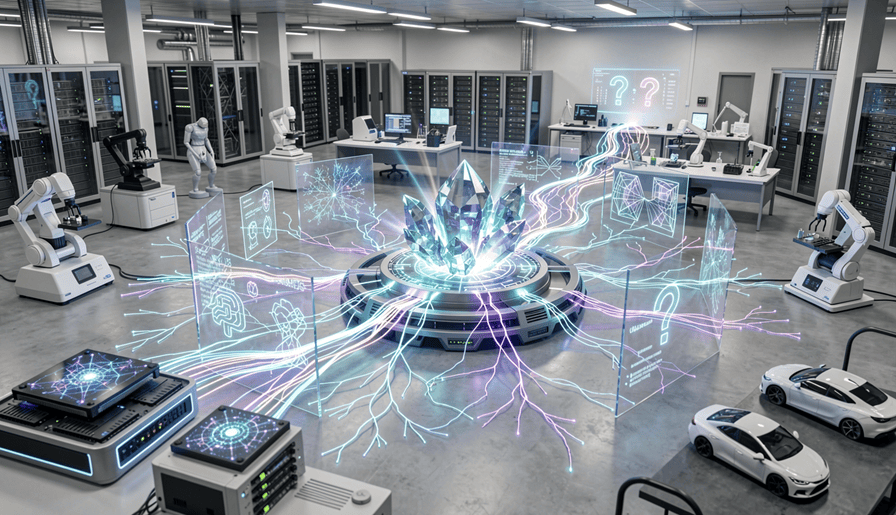
Despite remarkable progress, AI intelligence still faces significant challenges before it can approach the flexible thinking and adaptability of human cognition. Today’s AI systems are exceptionally good at specialized tasks, but they continue to struggle when faced with unfamiliar situations that require common sense, contextual understanding, or long-term reasoning.
Researchers agree that improving AI intelligence involves far more than simply building larger models or using more computing power. Future breakthroughs will likely require new learning methods inspired by neuroscience, cognitive science, and developmental psychology.
Understanding these limitations helps organizations adopt AI realistically while recognizing where human expertise remains indispensable.
Limited Common Sense Reasoning
One of the biggest weaknesses of AI intelligence is its lack of common sense.
Humans naturally understand relationships between people, objects, and events because they experience the physical world every day.
AI models often struggle with questions involving:
- Cause and effect.
- Physical interactions.
- Social behavior.
- Everyday reasoning.
- Contextual judgment.
- Unexpected situations.
Although modern language models can generate convincing explanations, they sometimes fail on simple reasoning tasks that young children solve effortlessly.
Improving common sense remains one of the highest priorities in AI research.
Dependence on Massive Training Data
Another limitation of AI intelligence is its dependence on enormous datasets.
Large AI models often require:
- Billions of words.
- Millions of images.
- Extensive computing resources.
- Long training periods.
- High energy consumption.
By comparison, babies can learn new concepts after only a handful of real-world experiences.
Researchers are therefore investigating learning methods that allow AI to generalize from much smaller amounts of information, making systems more efficient and adaptable.
Hallucinations and Reliability
Modern AI systems occasionally produce responses that sound confident but are factually incorrect. These errors, often referred to as “hallucinations,” remain one of the biggest obstacles to deploying AI intelligence in high-stakes environments.
Hallucinations can affect:
- Medical recommendations.
- Legal research.
- Financial analysis.
- Scientific information.
- Software development.
- Business decision-making.
For this reason, AI-generated content should always be reviewed by qualified professionals when accuracy is essential.
Ethical Considerations
As AI intelligence becomes more capable, ethical questions become increasingly important.
Organizations developing and deploying AI should carefully consider:
- Transparency.
- Fairness.
- Bias mitigation.
- Privacy protection.
- Data security.
- Accountability.
- Human oversight.
- Responsible innovation.
Building trustworthy AI requires more than technical excellence—it also demands clear governance, regulatory compliance, and ethical decision-making.
Business Implications of AI Intelligence
Businesses are rapidly integrating AI intelligence into daily operations to improve productivity, automate repetitive tasks, and support data-driven decision-making.
Common business applications include:
- Customer service automation.
- Intelligent document processing.
- Software development assistance.
- Marketing content generation.
- Business analytics.
- Workflow automation.
- Cybersecurity monitoring.
- Knowledge management.
However, organizations should avoid assuming that AI can independently replace experienced professionals. Human review remains essential for strategic planning, compliance, creativity, and complex problem-solving.
Societal Impact
The evolution of AI intelligence will influence nearly every industry over the coming decades.
Potential benefits include:
- Better healthcare.
- Personalized education.
- Faster scientific research.
- Improved accessibility.
- Smarter transportation.
- Sustainable energy management.
- Enhanced productivity.
- Accelerated innovation.
At the same time, society must address challenges related to workforce transformation, digital literacy, privacy, misinformation, and responsible AI governance.
Balancing innovation with accountability will determine how successfully AI benefits humanity.
Best Practices for Using AI Responsibly
Organizations can maximize the benefits of AI intelligence by following several best practices.
Keep Humans in the Loop
AI should assist experts rather than replace critical human judgment, particularly in healthcare, finance, law, education, and public services.
Verify AI-Generated Information
Always review AI-generated recommendations, reports, or content before making important decisions or publishing information.
Protect Sensitive Data
Avoid exposing confidential business or personal information to AI systems without appropriate security controls and organizational policies.
Invest in Employee Training
Successful AI adoption depends on helping employees understand both the capabilities and limitations of modern AI systems.
Monitor AI Performance
Organizations should regularly evaluate AI outputs, measure accuracy, identify biases, and update governance policies as technologies evolve.
The Future of AI Intelligence
Although AI intelligence is not yet comparable to a baby’s overall cognitive abilities, progress continues at an extraordinary pace.
Researchers are developing next-generation systems capable of:
- Lifelong learning.
- Better reasoning.
- Stronger memory.
- Improved planning.
- Physical world understanding.
- Multimodal learning.
- Autonomous adaptation.
- Human-AI collaboration.
Future advances may enable AI to learn more efficiently, understand context more deeply, and interact with the world in increasingly human-like ways.
However, most experts believe achieving true artificial general intelligence (AGI) remains a long-term scientific challenge rather than an immediate reality.
The Future of AI Intelligence

The future of AI intelligence is one of the most exciting areas of technology research. While today’s AI systems have demonstrated remarkable capabilities in language processing, image generation, coding, and data analysis, researchers continue working toward systems that can learn, reason, and adapt more like humans.
Future breakthroughs in AI intelligence are expected to focus on improving reasoning, memory, common sense, and real-world learning rather than simply increasing model size. Instead of relying solely on massive datasets, next-generation AI systems may become more efficient learners capable of understanding new concepts from only a few examples, much like human children.
Researchers are exploring several promising directions, including:
- Embodied AI that learns through interaction with the physical world.
- World models that simulate how environments behave.
- Lifelong learning that allows AI to continuously acquire new knowledge.
- Multimodal AI capable of understanding text, images, audio, and video simultaneously.
- Neurosymbolic AI that combines neural networks with symbolic reasoning.
- More energy-efficient AI architectures.
- Improved long-term memory systems.
- Better collaboration between humans and AI.
These innovations could significantly expand the capabilities of AI intelligence while making future systems more reliable, adaptable, and trustworthy.
Strategic Takeaways
The discussion surrounding AI intelligence offers several important lessons for businesses, researchers, educators, and policymakers.
First, today’s AI excels at specialized tasks but still lacks the broad cognitive flexibility that humans develop naturally from infancy.
Second, human intelligence remains the benchmark for future AI research. Understanding how babies learn, reason, and adapt may help scientists build more capable AI systems.
Third, organizations should adopt AI as a tool that enhances human productivity rather than replacing human expertise entirely. Human oversight remains essential for creativity, ethics, critical thinking, and complex decision-making.
Finally, continued investment in responsible AI development will be critical to ensuring that future AI intelligence benefits society while minimizing risks related to bias, misinformation, privacy, and security.
Conclusion
Artificial intelligence has achieved extraordinary milestones over the past decade, transforming industries ranging from healthcare and education to finance and scientific research. Yet despite these advances, AI intelligence still falls short of the remarkable cognitive abilities displayed by even a young child.
Babies learn through curiosity, physical interaction, observation, and continuous exploration. They build common sense, understand cause and effect, adapt to unfamiliar situations, and develop social awareness with remarkable efficiency. Current AI systems, while exceptionally powerful in specific domains, continue to rely primarily on statistical learning and large-scale data processing.
The statement that “AI isn’t smarter than a baby—yet” highlights an important distinction between narrow artificial intelligence and general human intelligence. It reminds us that impressive benchmark performance does not necessarily equate to genuine understanding.
As researchers continue improving AI intelligence, future systems may become more adaptable, efficient, and capable of learning from real-world experiences. However, achieving human-like intelligence will likely require breakthroughs that extend far beyond larger datasets and more computational power.
For businesses and individuals, the best approach is to embrace AI as a powerful assistant while recognizing its current limitations. Combining advanced AI technologies with human creativity, judgment, and ethical decision-making will produce the most effective outcomes as artificial intelligence continues to evolve.
Frequently Asked Questions (FAQs)
What is AI intelligence?
AI intelligence refers to the ability of artificial intelligence systems to perform tasks such as reasoning, language processing, pattern recognition, learning, and decision-making that typically require human intelligence.
Why isn’t AI smarter than a baby?
Although modern AI excels at specialized tasks, babies naturally develop common sense, causal reasoning, adaptability, emotional understanding, and physical awareness through real-world experiences. These abilities remain difficult for current AI systems to replicate.
Can AI develop human-level intelligence?
Researchers continue working toward more advanced AI systems, but true human-level or artificial general intelligence (AGI) has not yet been achieved. Significant scientific and technological breakthroughs are still required.
What are the biggest limitations of AI intelligence?
Current limitations include weak common sense reasoning, dependence on large datasets, occasional hallucinations, limited contextual understanding, and difficulties adapting to unfamiliar situations without additional training.
How should businesses use AI intelligence?
Businesses should use AI intelligence to improve productivity, automate repetitive tasks, support decision-making, analyze data, and enhance customer experiences while maintaining human oversight for critical decisions.
Build Smarter Solutions with Artificial Intelligence
Artificial intelligence is transforming the way organizations innovate, automate, and solve complex problems. Whether you’re exploring AI strategy, developing machine learning applications, or integrating intelligent automation into your business, our experts can help you create secure, scalable, and future-ready AI solutions.
More AI coverage: explore Progressive Robot's AI Models, Tools & Releases hub — hands-on reviews, setup guides and benchmarks in one place.










