
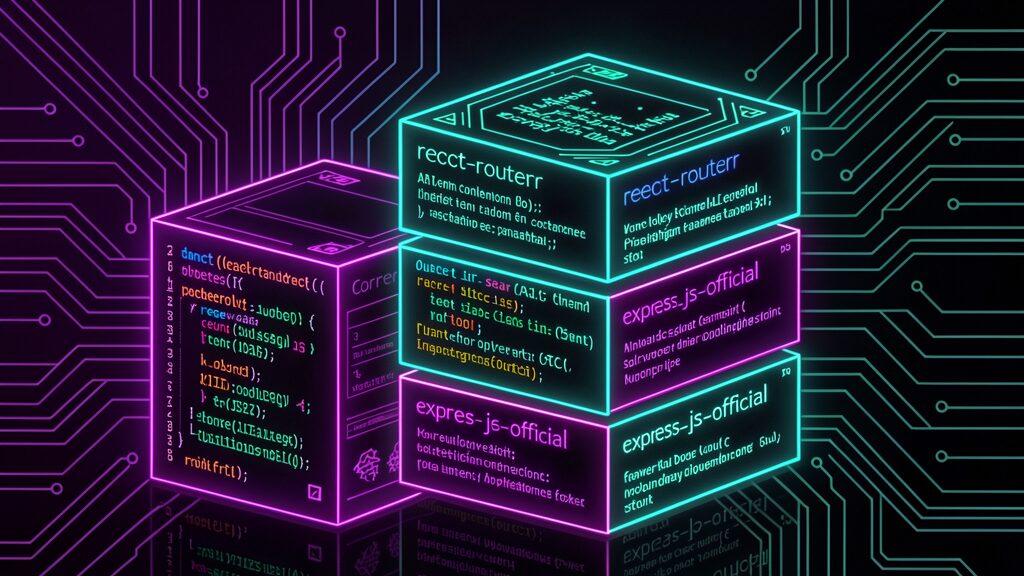
Slopsquatting is a new security threat that has emerged from the rapid adoption of AI coding tools across the software industry. As developers increasingly rely on artificial intelligence to generate code, dependencies, and entire project scaffolds, a malicious practice has begun to take shape. Attackers are exploiting the trust developers place in AI-generated suggestions by registering domain names, package names, and repository URLs that look legitimate but are actually designed to inject malicious code into software supply chains.
This threat represents a significant evolution in supply chain attacks. Where traditional typosquatting relied on human error and careful observation of similar-looking names, slopsquatting exploits the automated nature of AI coding assistants. These tools do not verify the legitimacy of suggested packages — they simply generate code based on patterns learned from millions of repositories. When an AI assistant suggests a malicious package that closely resembles a legitimate one, developers often accept it without question, unaware they are importing compromised code into their projects.
The scale of this problem is growing rapidly. With millions of developers using AI coding assistants daily, and with these tools generating billions of lines of code, the attack surface for slopsquatting is enormous. Organizations that have not yet considered this threat may find themselves vulnerable to sophisticated supply chain compromises that bypass traditional security controls.
Anthropic Claude Code Browser — Wikipedia — Typosquatting provides background on traditional typosquatting. Snyk offers ongoing supply chain security research.
What Is Slopsquatting?
Slopsquatting combines two concepts: “slop,” referring to low-quality, AI-generated content, and “squatting,” the practice of registering deceptive names or domains. The term was coined to describe a specific type of supply chain attack where attackers register package names, domain names, or repository identifiers that closely resemble legitimate software projects, but are designed to be accepted by AI coding assistants rather than human reviewers.
Unlike traditional typosquatting, which depends on a developer carefully noticing a subtle misspelling in a package name, slopsquatting works because AI systems do not perform the same quality checks that humans would. An AI coding assistant trained on public repositories may suggest a malicious package simply because it looks statistically similar to a legitimate one. The AI does not understand the concept of legitimacy — it only understands patterns.
The mechanics of slopsquatting are straightforward but devastating. An attacker identifies a popular open-source package or framework. They then register a similar name on the relevant package registry, create a repository with a nearly identical name, or register a domain that looks like the official project site. When a developer asks their AI assistant for help with that framework, the AI may suggest the malicious variant because it appears in training data or public repositories. The developer, trusting the AI, accepts the suggestion and introduces the malicious code into their project.
This process is particularly dangerous because it operates at the speed and scale of AI generation. A single slopsquatting campaign can target thousands of developers simultaneously, with the AI assistant doing the work of identifying and suggesting the malicious package to each individual developer. The attacker does not need to craft personalized attacks — the AI does that automatically.
How Slopsquatting Differs From Traditional Typosquatting
The distinction between slopsquatting and traditional typosquatting is critical for understanding why this threat requires new defensive strategies. Traditional typosquatting relies on human error. A developer might type react-dom as react-dome or express-js as express-js-official. These mistakes happen because humans are fallible, and they require the attacker to register each deceptive variant individually.
Slopsquatting, by contrast, exploits the automated decision-making of AI systems. The AI coding assistant does not make typos — it makes suggestions based on statistical patterns. When an AI has been trained on millions of repositories, it learns that certain package names are commonly used together. If a malicious package is registered with a name that fits these patterns, the AI will suggest it with the same confidence it would suggest the legitimate package.
Another key difference is scale. Traditional typosquatting requires manual registration of each deceptive variant. An attacker might register a handful of similar names and hope developers make the mistake. Slopsquatting can target an entire ecosystem simultaneously. The attacker registers one or two similar names, and the AI assistant propagates the suggestion to every developer who asks about that framework. The attack scales automatically with the adoption of the AI tool.
The verification gap is also fundamentally different. When a human developer sees a suspicious package name, they can perform basic checks — visiting the official project website, reading documentation, checking the package author. An AI assistant has no such verification capability. It generates suggestions based on pattern matching, not on understanding the legitimacy or safety of the suggested code. This creates a verification gap that slopsquatting attacks exploit systematically.
Real-World Examples and Attack Vectors
Several attack vectors have emerged as slopsquatting has evolved. Understanding these vectors is essential for developers and security teams to recognize and mitigate the threat.
Package Registry Squatting
The most common form of slopsquatting targets package registries like npm, PyPI, and RubyGems. Attackers register packages with names that closely resemble popular libraries. For example, if react-router is a popular framework, an attacker might register react-routerr (with an extra ‘r’) or react-router-official. These packages may contain minimal code — sometimes just a single file that imports and executes malicious payloads from a remote server.
When an AI coding assistant suggests one of these packages, the developer accepts it because the name looks legitimate. The malicious code then executes during installation or at runtime, potentially stealing credentials, exfiltrating data, or installing additional malware. The attacker benefits from the widespread distribution of the malicious package through legitimate project dependencies.
Repository Name Squatting
GitHub and other repository hosting platforms are also targets. Attackers create repositories with names that mimic popular open-source projects. These repositories may contain legitimate-looking code with hidden malicious functionality, or they may be set up as phishing sites to steal credentials when developers attempt to clone or contribute to them.
AI coding assistants that reference GitHub repositories in their suggestions may recommend these malicious repositories because they appear in search results or have similar naming patterns to legitimate projects. Developers who follow these suggestions may inadvertently clone malicious code or expose their credentials to attackers.
Domain Squatting for Documentation Sites
Many open-source projects maintain documentation sites at predictable domain names. Attackers register similar domains and create documentation sites that look official but contain malicious code examples or download links. When an AI assistant suggests visiting a documentation site for a framework, it may suggest the malicious domain because it looks like the official site.
Developers who follow these suggestions may download compromised code examples, install malicious browser extensions, or expose their credentials on phishing sites. The attack is particularly effective because documentation sites are trusted resources — developers rarely question the legitimacy of what appears to be official project documentation.
Dependency Confusion Exploitation
Slopsquatting often works in conjunction with dependency confusion attacks. In a dependency confusion attack, an attacker registers a package on a public registry with the same name as a private package used by an organization. When the organization’s build system is misconfigured to check public registries before private ones, it may install the malicious public package instead of the legitimate private one.
Slopsquatting amplifies this threat by making the malicious package appear in AI-generated code suggestions. Even organizations with strong dependency management practices may be vulnerable if their developers use AI assistants that suggest compromised packages. The combination of dependency confusion and slopsquatting creates a multi-vector attack that is difficult to defend against with traditional security controls.
Why AI Coding Tools Are the Perfect Attack Surface
The rise of AI coding assistants has created unique vulnerabilities that slopsquatting attackers exploit with increasing sophistication. Understanding why these tools are vulnerable is essential for developing effective defenses.
Lack of Verification Capabilities
AI coding assistants are trained on vast corpora of code from public repositories. They learn patterns of how developers write code, which packages they use together, and how projects are structured. However, they do not understand the concept of legitimacy or trustworthiness. An AI cannot distinguish between a package maintained by the original authors of a framework and one registered by an attacker.
This limitation is fundamental to how these systems work. They generate suggestions based on statistical likelihood, not on security analysis. When a malicious package name fits the pattern of legitimate packages in the training data, the AI will suggest it with high confidence. The developer, seeing a suggestion that looks correct, has no reason to doubt it.
Speed and Scale of Code Generation
AI coding assistants generate code at unprecedented speed. A single prompt can produce hundreds of lines of code with multiple dependencies in seconds. Developers who rely on these tools often accept large portions of generated code without thorough review, trusting that the AI has produced correct and safe output.
This speed creates a massive attack surface. A slopsquatting campaign can target thousands of developers simultaneously, with each developer receiving a personalized suggestion from their AI assistant. The attacker does not need to craft individual attacks — the AI does that automatically, at scale, and without any additional effort from the attacker.
Developer Trust and Automation Bias
Research on human-computer interaction has consistently shown that users tend to over-trust automated systems. This phenomenon, known as automation bias, leads developers to accept AI suggestions without the critical scrutiny they would apply to code from an unknown human contributor. When an AI assistant suggests a package, developers assume it has been vetted for quality and security.
This trust is not entirely unfounded — AI coding assistants do produce useful and often correct code. However, the very reliability that makes these tools valuable also makes developers vulnerable to attacks that exploit their trust. Slopsquatting attackers know that developers are likely to accept AI suggestions without verification, and they design their attacks accordingly.
Integration Into Development Workflows
Modern AI coding assistants are deeply integrated into development workflows. They operate within IDEs, suggest code as developers type, and can generate entire project structures from natural language descriptions. This integration means that AI suggestions appear at the exact moment when developers are making decisions about which packages to use and which code to include.
The context in which these suggestions appear is also significant. When an AI assistant suggests a package in response to a specific coding task, the developer is focused on solving that task and is less likely to question the suggestion. The urgency of meeting deadlines and the flow state of productive coding further reduce the likelihood of careful verification.
The Supply Chain Impact of Slopsquatting
The implications of slopsquatting extend far beyond individual compromised projects. Because modern software relies on complex supply chains with hundreds or thousands of dependencies, a single slopsquatting attack can cascade through entire ecosystems.
Cascading Failures Through Dependencies
Most software projects depend on dozens or hundreds of packages. When a malicious package is introduced into one dependency, it can propagate to every project that uses it. This cascading effect means that a single slopsquatting campaign can compromise thousands of applications, each of which may serve millions of users.
The supply chain nature of modern software development amplifies this risk. A package published to a registry can be downloaded and installed by projects across the entire industry. Unlike traditional attacks that target individual organizations, slopsquatting attacks can affect organizations of all sizes, across all industries, simultaneously.
Difficulty of Detection
Detecting slopsquatting attacks is exceptionally difficult. The malicious packages often contain minimal code, making them hard to distinguish from legitimate packages through static analysis. The code may execute only under specific conditions, such as when certain environment variables are present or when the package is imported in a particular context.
Traditional security tools are not designed to detect this type of attack. Vulnerability scanners check for known vulnerabilities in package versions, but they do not verify whether a package is the legitimate one published by the original authors. Code review processes may catch obvious malicious code, but they are unlikely to detect subtle supply chain compromises, especially when the code is generated by AI and appears technically correct.
Long-Term Persistence
Once a malicious package is published to a registry, it can remain there indefinitely. Package registries rarely remove packages, even when they are reported as malicious. This persistence means that a single slopsquatting campaign can continue to compromise projects for years after the initial attack.
Additionally, once a malicious package has been downloaded and used by projects, removing it requires updating every affected project. This is often impractical, especially for projects that are no longer actively maintained. The malicious package becomes a permanent part of the software supply chain, continuing to pose a risk even after the attack is discovered.
Defending Against Slopsquatting
Protecting against slopsquatting requires a multi-layered approach that combines technical controls, process improvements, and developer education. No single defense is sufficient — organizations must implement several complementary strategies.
Package Verification and Integrity Checks
Organizations should implement package verification processes that go beyond simple version checking. This includes verifying package signatures, checking package metadata against official sources, and maintaining allowlists of approved packages. Software Bill of Materials (SBOM) tools can help track exactly which packages are used in each project and flag any that are not on the approved list.
Package integrity verification should be automated where possible. Continuous integration pipelines should check that every package matches its expected hash and signature before installation. Any package that fails verification should be blocked and reported, regardless of how similar it appears to a legitimate package.
AI Tool Security Policies
Organizations that use AI coding assistants should establish clear security policies for their use. These policies should include requirements for manual review of all AI-suggested dependencies, prohibition of automatic acceptance of AI-generated code that introduces new packages, and mandatory verification of package legitimacy before installation.
Developers should be trained to question AI suggestions that introduce new dependencies, especially packages that are not widely known or do not have established reputations. Security teams should provide easy access to package verification tools and processes, making it simple for developers to confirm the legitimacy of suggested packages.
Registry and Ecosystem Security
Package registry operators play a critical role in preventing slopsquatting. Registries should implement name similarity detection to identify and block registration of packages that closely resemble existing popular packages. Registration verification processes should require proof of ownership or authorization before allowing registration of names that match existing projects.
Registry operators should also implement monitoring systems that detect unusual patterns of package downloads or installations, which may indicate slopsquatting campaigns in progress. Early detection can limit the damage of attacks before they spread widely through the developer community.
Developer Education and Awareness
Perhaps the most important defense against slopsquatting is developer education. Developers need to understand that AI coding assistants are not infallible and that their suggestions should be treated as starting points, not final answers. Training should emphasize the importance of verifying every dependency, regardless of how it was suggested.
Security awareness programs should include specific modules on supply chain security and AI-assisted development risks. Developers should learn to recognize the signs of potential slopsquatting, such as packages with names that are slightly different from well-known projects, packages with minimal documentation or few downloads, and packages maintained by authors who are not associated with the original project.
The Future of Slopsquatting and AI Security
As AI coding tools become more sophisticated and more widely adopted, slopsquatting attacks are likely to become more sophisticated as well. Understanding the trajectory of this threat is essential for preparing effective long-term defenses.
Increasingly Sophisticated Attacks
Attackers are already developing more sophisticated slopsquatting techniques. Rather than registering packages with obviously similar names, some attackers are creating packages that implement the same API as the legitimate package but with malicious behavior. These packages are functionally compatible with existing code, making them harder to detect because they do not break applications.
Future attacks may involve AI-generated packages that are specifically designed to evade detection by security tools. These packages could use obfuscation techniques, conditional execution, or other methods to hide malicious functionality until after the package has been widely distributed.
Regulatory and Industry Responses
The growing awareness of supply chain security risks is driving regulatory and industry responses. Governments are developing requirements for software supply chain security, including mandates for package verification, vulnerability disclosure, and incident reporting. Industry standards organizations are creating frameworks for secure software development that address AI-assisted coding risks.
Organizations should monitor these developments and prepare to comply with emerging requirements. Proactive adoption of supply chain security best practices will position organizations to meet future regulatory requirements while also improving their overall security posture.
The Role of AI in Defense
Interestingly, AI itself may play a role in defending against slopsquatting. Machine learning models trained to detect anomalous package behavior, unusual naming patterns, or suspicious dependency relationships could help identify slopsquatting attacks before they cause significant damage. These models would need to be continuously updated to keep pace with evolving attack techniques, but they offer the potential for automated detection at the scale that slopsquatting requires.
Conclusion
Slopsquatting represents a fundamental shift in how supply chain attacks are conducted. By exploiting the automated nature of AI coding assistants, attackers can compromise software at a scale and speed that traditional typosquatting could never achieve. The threat is real, growing, and requires immediate attention from developers, security teams, and organizations of all sizes.
Defending against slopsquatting requires a comprehensive approach that combines technical controls, process improvements, and education. No single solution is sufficient — organizations must implement multiple layers of defense to protect against this evolving threat. The cost of inaction is far greater than the investment in proactive security measures, as the impact of a successful slopsquatting attack can extend across entire software ecosystems.
As AI coding tools continue to transform software development, the relationship between developers and AI assistants will evolve. Trust must be balanced with verification, and automation must be complemented by human oversight. By understanding the nature of slopsquatting and implementing effective defenses, the software industry can continue to benefit from AI-assisted development while protecting itself from this new class of supply chain threats.
The time to act is now. Slopsquatting is not a hypothetical future threat — it is happening today, and its impact will only grow as AI coding tools become more prevalent. Organizations that prepare now will be better positioned to protect their software supply chains and maintain the trust of their users and customers.










