
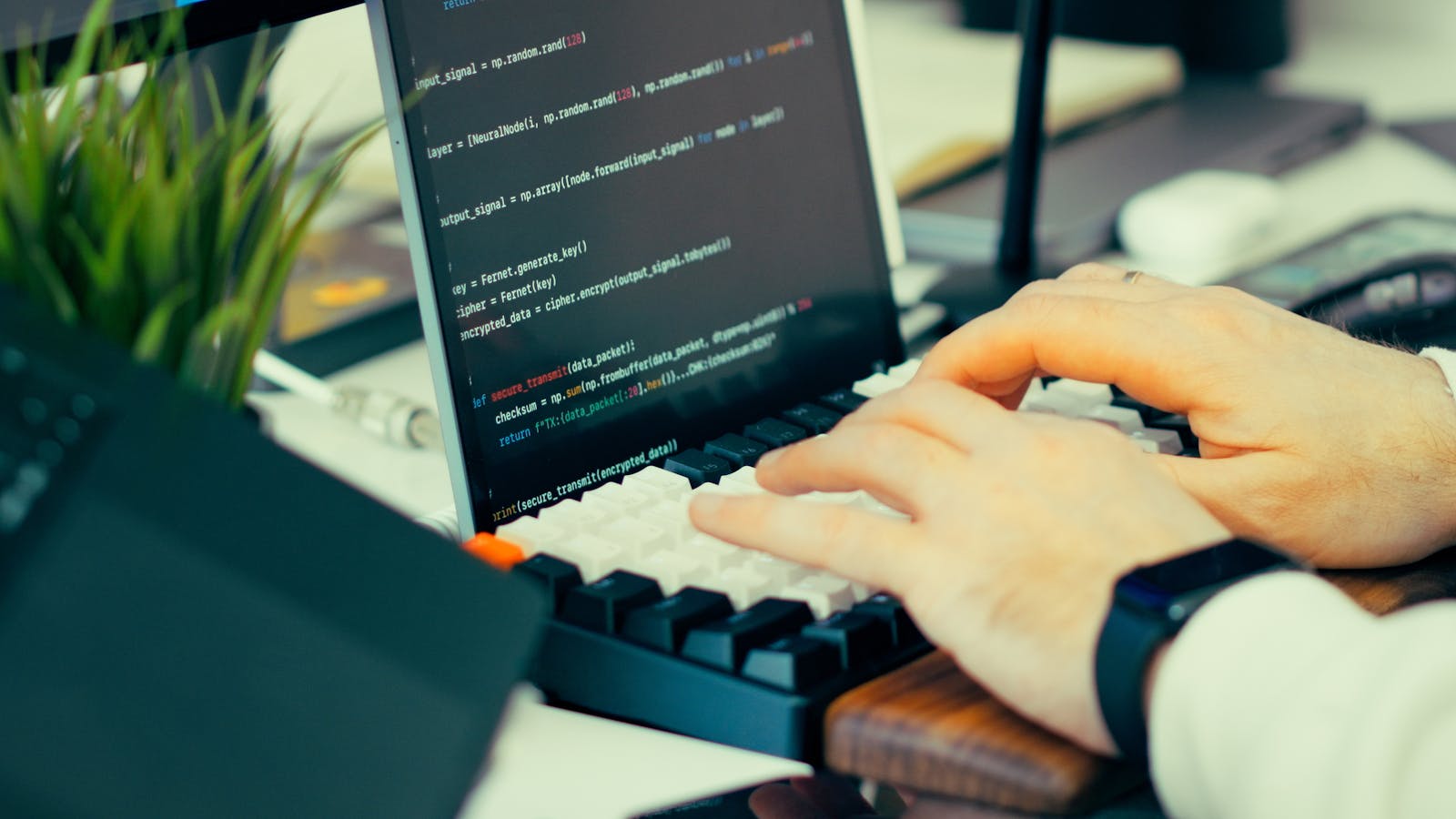
Zero-Day AI: 7 Critical Defenses for Bug-Hunting Models
Zero-Day AI is no longer a distant research concern. As frontier models become better at reading repositories, reasoning through control flow, generating exploits, and chaining tools, they can help defenders find software bugs faster than traditional testing. The same capability can also help attackers discover weaknesses before vendors, maintainers, or customers know they exist.
That does not mean every autonomous security model is dangerous by default. It means software teams need a new operating model for discovery, validation, disclosure, and remediation. The right answer is not to block every AI-assisted testing workflow. The right answer is to govern how models access code, run tools, create proof-of-concepts, and escalate findings.
This guide explains how organizations can defend against Zero-Day AI while still using AI to improve engineering speed, vulnerability management, and secure delivery.
The practical challenge is timing. Zero-Day AI compresses discovery cycles from weeks to hours, so governance must move just as quickly. Teams need controls that approve safe experiments, contain risky actions, and convert validated discoveries into patches before the same class of automation is used against them.
Zero-Day AI at a glance

Zero-Day AI describes models and agentic systems that can autonomously search for previously unknown software vulnerabilities. A system may inspect source code, infer data flows, run fuzzers, generate payloads, compare patch histories, write proof-of-concept code, or recommend exploit chains with limited human direction.
The term matters because the economics of bug discovery are changing. A skilled researcher still provides judgment, creativity, and ethics. Yet automation can now multiply the number of repositories, libraries, APIs, and configurations that can be examined in a short window. That compression of time is what makes Zero-Day AI strategically important.
For defenders, the opportunity is clear. AI-assisted testing can surface hidden defects, expand coverage across legacy systems, and reduce the manual burden on AppSec teams. For attackers, the same techniques can lower the cost of reconnaissance and vulnerability discovery. The security perimeter therefore shifts from network edges alone to the entire software supply chain and the AI workflows touching it.
A practical defense starts with three questions: which models can access which code, which tools can they invoke, and who approves high-risk outputs before they leave a controlled environment?
The answer should be documented before the first scan runs. A Zero-Day AI pilot that begins with clear scope, owners, and evidence standards is far safer than an informal experiment that only becomes visible after it finds something dangerous.
Why autonomous bug finding changes security

Traditional vulnerability discovery is constrained by expert time. Penetration testers, red teams, and security engineers choose targets, build hypotheses, and manually validate results. Automated scanners help, but they are often rule-based and noisy. Zero-Day AI changes the balance because models can reason across code, documentation, dependency graphs, tickets, commits, and runtime traces.
That broader context can reveal subtle paths. For example, an agent might notice that an input validation function changed in one microservice but not another, then generate a test that reaches the older path. Another model might compare an upstream open-source patch with an internal fork and identify that the local version still contains the vulnerable logic.
The risk is not only faster discovery. The risk is faster weaponization. A model that can find a bug may also draft a proof-of-concept, identify exposed assets, suggest bypasses, and package steps for repeatable exploitation. Even if the system is not perfect, partial automation can accelerate adversaries and overwhelm slow response processes.
Defenders need to treat autonomous bug finding as both a security tool and a potential threat model. The same governance used for AI strategy should connect with secure development, incident response, and DevSecOps operations.
This is where executive alignment matters. Zero-Day AI affects engineering roadmaps, legal disclosure decisions, vendor risk, and incident response capacity. A security team cannot manage that alone if the model discovers a critical flaw in a customer-facing product hours before a release.
Where AI-discovered vulnerabilities create risk

Zero-Day AI creates risk when discovery speed exceeds an organization’s ability to triage, patch, and communicate. The first exposure point is code access. If models can read proprietary source code, infrastructure templates, secrets, customer logic, or build scripts without guardrails, they may generate sensitive findings that require tight handling.
The second exposure point is tool access. Bug-finding agents often need compilers, test harnesses, fuzzers, package managers, container runtimes, web proxies, and cloud credentials. Poorly scoped permissions can turn a testing workflow into a lateral movement path. A model does not need malicious intent to cause damage if it can run unsafe commands in the wrong environment.
The third exposure point is output handling. A vulnerability report can contain exploit details, credentials found during scanning, system diagrams, or vulnerable endpoints. If those outputs are copied into unmanaged chat tools, tickets, or documents, the organization may lose control of sensitive security information.
The fourth exposure point is false confidence. AI-generated findings can look authoritative even when they are wrong. Teams may waste time chasing hallucinated bugs, or worse, dismiss a real issue because previous model reports were noisy. A mature Zero-Day AI program separates discovery from verification and treats every high-impact claim as evidence to be tested.
The fifth exposure point is disclosure pressure. If a model identifies a bug in open-source software, a third-party library, or a supplier integration, the team needs a coordinated path for responsible reporting. Zero-Day AI can create valid findings faster than traditional vendor processes are prepared to absorb.
Build a model-aware vulnerability intake process

The first defense is an intake process designed for model-generated findings. A normal security ticket often assumes a human reporter, a stable reproduction path, and a clear asset owner. AI-generated reports may include partial traces, generated proof-of-concepts, uncertain severity, and missing environmental context.
Create a standard intake template for autonomous bug finding. It should capture the model or agent name, version, prompt or task objective, code scope, tool permissions, test environment, generated artifacts, confidence level, and validation steps already performed. This turns an opaque AI output into an auditable security record.
Routing rules should also change. Findings from Zero-Day AI should not automatically flood engineering backlogs. Route them through AppSec or a security champion who can check reproducibility, map the issue to affected assets, and assign severity. Critical findings should trigger incident response paths if there is evidence of external exposure or active exploitation.
This process can connect with DevOps services and secure release workflows. The goal is not bureaucracy. The goal is to keep useful AI discoveries moving while preventing unverified reports, sensitive exploit details, or duplicate tickets from creating chaos.
Make the intake workflow measurable. Every Zero-Day AI finding should have an owner, status, validation result, severity decision, and remediation deadline. That record helps leaders see whether autonomous discovery is reducing risk or merely creating a faster stream of unresolved alerts.
Sandbox autonomous testing before it touches production

Autonomous testing belongs in a sandbox by default. Zero-Day AI agents should run in isolated environments with synthetic data, limited network egress, temporary credentials, and monitored execution. If the model needs to compile code, run tests, or call dynamic analysis tools, those actions should happen away from production systems.
A good sandbox has clear boundaries. It blocks access to customer data, production secrets, internal admin panels, and unrelated repositories. It logs commands, file changes, network calls, and generated outputs. It also limits runtime, compute, and tool invocation so an agent cannot spiral into uncontrolled activity.
Use staged permissions. A model may start with read-only repository access and static analysis. If a finding looks plausible, a human can approve a higher-trust stage that runs dynamic tests against a cloned environment. Only after validation should the team consider safe testing against staging or production-like systems.
This approach mirrors the discipline described in the NIST Secure Software Development Framework: define secure practices, verify implementation, and respond to vulnerabilities with repeatable processes. Zero-Day AI makes those practices more urgent because automation increases both coverage and blast radius.
For higher-risk research, add a kill switch. Security operators should be able to pause a Zero-Day AI run, revoke credentials, preserve logs, and quarantine generated artifacts if the system behaves unexpectedly or uncovers live exploit conditions.
Prioritize findings with exploitability and business context

A model may produce dozens of plausible issues in a single run. Not every issue deserves emergency treatment. Prioritization should combine technical severity, exploitability, asset exposure, compensating controls, business impact, and patch complexity.
Exploitability is especially important. A bug in unreachable test code is different from a bug in an internet-facing authentication path. A generated proof-of-concept that works in a sandbox is different from a theoretical path with missing preconditions. Ask whether the finding has a reachable input, a realistic attacker path, a meaningful security impact, and a reliable reproduction.
Business context prevents overreaction. A vulnerability in a revenue-critical API, healthcare workflow, financial transaction service, or privileged admin function should move faster than a low-impact internal utility. Tie Zero-Day AI findings to asset inventory, service ownership, data classification, and incident response tiers.
Teams can automate part of this scoring. Connect model-generated reports to vulnerability management platforms, dependency data, runtime exposure signals, and business process automation workflows. Keep humans in the loop for final severity decisions, especially when generated artifacts include exploit logic or ambiguous impact.
A useful rule is to separate urgency from alarm. Zero-Day AI may produce dramatic language, but remediation priority should come from evidence. Confirm reachability, affected versions, affected data, and available mitigations before declaring an emergency.
Govern model access to code, secrets, and tools
The strongest defense is least privilege. Bug-finding models should only access the repositories, branches, files, logs, and tools required for the approved task. Do not let a general-purpose agent browse every repository or execute arbitrary commands because it is convenient.
Separate roles for different use cases. A secure-code assistant may review pull requests but cannot run exploit tools. A vulnerability research agent may run fuzzing in a sandbox but cannot access production secrets. A remediation assistant may suggest patches but cannot merge without human approval. These role boundaries reduce the chance that Zero-Day AI workflows become shadow infrastructure.
Secrets deserve special treatment. Models should not receive raw production credentials, signing keys, customer tokens, or privileged cloud access. Use temporary credentials, scoped service accounts, secret scanning, and output filters. If an AI workflow discovers a secret, rotate it and treat the event as a security incident until proven otherwise.
Governance should also cover third-party tools. If employees paste code into external AI systems to hunt bugs, they may expose intellectual property or vulnerability details. Approved AI tooling, clear usage policies, and workflow automation can give teams safer paths without slowing experimentation.
Access reviews should be recurring. As repositories, models, plugins, and agent tools change, old permissions can become excessive. Quarterly reviews help ensure Zero-Day AI capabilities stay aligned with approved use cases rather than quietly expanding into unmanaged security research.
Add human review to AI-generated proof-of-concepts

Proof-of-concepts are where Zero-Day AI becomes most sensitive. A report that says “possible injection” is one thing. A working exploit script, payload chain, or bypass technique is another. Organizations should define who can generate, view, store, and share those artifacts.
Human review should occur before exploit code leaves the sandbox, before it is attached to broad tickets, and before it is shared with vendors or customers. Reviewers should confirm that the proof-of-concept is necessary, scoped to validation, stripped of unnecessary secrets, and stored in a restricted system.
Use a simple approval model. Low-risk reproduction steps may be included in normal tickets. High-risk exploit artifacts require AppSec approval. Critical exploit chains with public exposure require incident response involvement and need-to-know distribution.
The OWASP Top 10 for LLM Applications is useful here because it highlights risks such as insecure output handling, excessive agency, sensitive information disclosure, and supply chain concerns. Those risks become concrete when models are allowed to generate security tooling and execute follow-on actions.
Keep proof-of-concepts boring on purpose. A Zero-Day AI workflow should produce the minimum evidence needed to validate and fix the issue, not polished exploit kits, reusable attack chains, or instructions that broaden harm if copied outside the security team.
Measure resilience against Zero-Day AI

You cannot govern what you do not measure. Start with coverage metrics: how many critical repositories have AI-assisted review, which languages and frameworks are included, how often scans run, and whether high-risk components receive deeper analysis.
Then measure quality. Track true positive rate, false positive rate, average validation time, duplicate report rate, severity distribution, and the percentage of findings with reliable reproduction steps. These metrics show whether Zero-Day AI is improving security or just creating more noise.
Response metrics matter most. Track mean time to triage, mean time to remediate, percentage of critical findings fixed within SLA, and number of externally exposed findings discovered internally before public disclosure. If autonomous discovery speeds up but patching does not, risk may increase rather than decrease.
Finally, measure control health. Review sandbox logs, permission exceptions, secret exposure events, model access requests, and human approval records. A mature program can prove not only that models found bugs, but that the organization handled those discoveries safely.
Turn autonomous discovery into safer engineering
The long-term goal is not simply to defend against AI-generated zero days. It is to make software engineering resilient enough that automated discovery benefits defenders more than attackers. That requires secure design, tested dependencies, fast patch paths, and tight feedback loops between security and engineering.
Integrate Zero-Day AI into secure development practices. Run controlled model reviews on high-risk pull requests. Use AI-assisted test generation for authentication, authorization, input validation, and deserialization paths. Ask models to explain why a patch fixes the bug, then require humans and automated tests to verify the claim.
Pair discovery with remediation. A bug-finding model that only creates tickets may overload teams. A safer workflow also suggests tests, patches, migration notes, and rollback plans. Engineers still own the code, but AI can reduce repetitive work when governed properly.
Progressive Robot helps teams design AI-enabled security, automation, and engineering workflows that are practical for real organizations. If you are planning a secure AI program, connect it with artificial intelligence and machine learning services and clear operating controls from day one.
The best outcome is a feedback loop. Zero-Day AI identifies weakness patterns, engineers fix root causes, security teams improve guardrails, and future scans become more precise. Over time, the organization becomes harder to surprise because autonomous discovery is part of everyday secure delivery.
Zero-Day AI FAQ

Is Zero-Day AI the same as an AI cyberattack?
No. Zero-Day AI refers to the capability of models or agents to autonomously find unknown software bugs. It can be used defensively by security teams or offensively by attackers. The risk depends on access, intent, controls, and how outputs are handled.
Should companies ban autonomous bug-finding models?
A blanket ban usually pushes experimentation into unmanaged channels. A better approach is to approve specific tools, restrict code and tool access, require sandboxing, and define review paths for high-risk outputs. This gives employees a safe way to use useful capabilities.
What is the biggest operational risk?
The biggest risk is uncontrolled agency: a model that can read too much code, execute too many tools, or share sensitive findings too broadly. Least privilege, logging, sandboxing, and human approval reduce that risk.
How can smaller teams start?
Start with one high-value repository, read-only model access, a sandboxed test environment, and a simple intake template. Measure true positives, validation time, and remediation speed before expanding. If you need help designing the workflow, contact Progressive Robot for a practical AI security assessment.
More AI coverage: explore Progressive Robot's AI Models, Tools & Releases hub — hands-on reviews, setup guides and benchmarks in one place.