
Mistral Workflows is Mistral AI’s new orchestration layer for enterprise AI processes that need reliability, visibility, and controlled human oversight. The product is now in public preview and is designed to move AI systems beyond fragile demos into business workflows that can survive failures, pauses, retries, and long-running execution.
That is important because many AI pilots break when they touch real operations. A chatbot can answer one prompt, but a production process may need to extract documents, call models, check rules, ask a person for approval, update a downstream system, and keep a complete audit history. Mistral Workflows turns those multi-step processes into code-defined workflows that run through Studio and can be triggered from Le Chat.
For organizations building an AI strategy, the launch is a reminder that model quality is only one part of enterprise AI. The harder work is orchestration: deciding how systems recover, who approves risky actions, where data runs, and how every decision is monitored after deployment.
Mistral Workflows at a glance

Mistral Workflows is part of Mistral Studio. According to the official Mistral AI announcement, it is built to provide durability, observability, and fault tolerance for AI-powered business processes. Mistral says customers such as ASML, ABANCA, CMA-CGM, France Travail, La Banque Postale, and Moeve are already using the platform in production.
The core idea is simple: developers write workflows in Python, business users trigger them from Le Chat, and Studio records the execution timeline. Instead of stitching together separate queues, schedulers, retry loops, agent frameworks, dashboards, and approval tools, teams get one orchestration layer that is native to the Mistral platform.
The product targets processes that combine deterministic business logic with AI steps. A workflow might call a model, use an agent, retrieve knowledge, validate rules, wait for a reviewer, and then execute an action. Mistral Workflows is not just another prompt interface. It is an execution system for work that must finish correctly, or fail in a traceable way.
That makes it relevant to workflow automation teams that are moving from simple task automation to AI-assisted processes with governance requirements.
Why durable execution matters for AI automation
The strongest technical claim behind Mistral Workflows is durable execution. In normal application code, a crash, timeout, worker restart, or network error can leave a multi-step process half-finished. Teams then need custom state management and recovery logic.
Durable execution changes that pattern. Every important step is recorded in an event history. If a worker stops, another worker can replay the workflow history and resume from the last completed point. This is especially valuable when a process runs for minutes, hours, days, or even longer.
The platform is built on Temporal, the open-source durable execution engine used for fault-tolerant orchestration. Mistral says it extended Temporal for AI-specific workloads, including streaming, payload handling, multi-tenancy, and observability.
For AI teams, the practical win is reliability. A document review should not restart from zero because an API timed out. A cargo release should not lose its approval state because a worker crashed. A support routing workflow should not silently fail without evidence. Mistral Workflows puts those recovery concerns into the orchestration layer so developers can focus on business logic.
Python SDK and workflow design
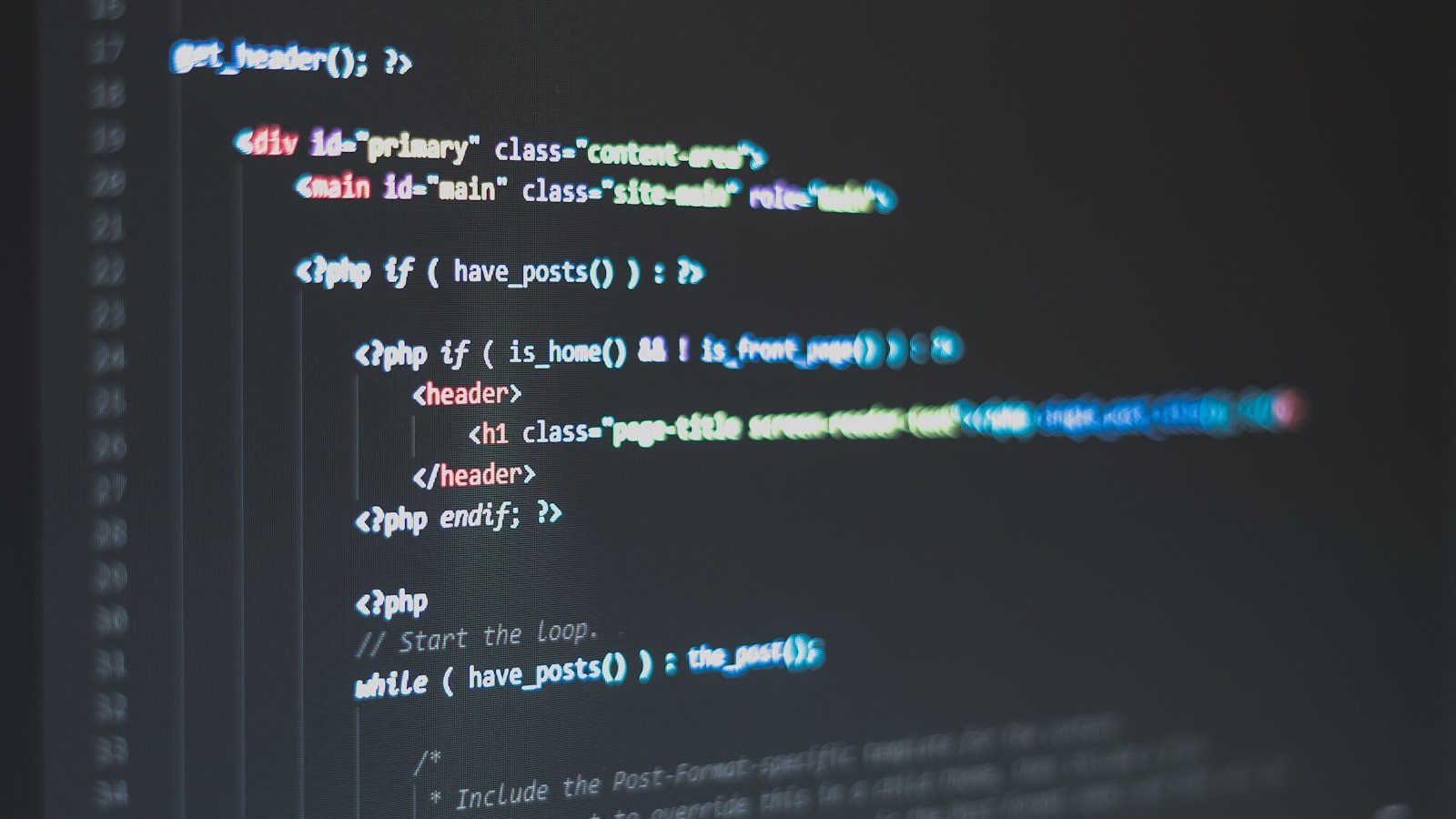
Mistral Workflows is code-first. The Mistral Workflows documentation says developers define workflows in Python, while activities perform external work such as LLM calls, HTTP requests, database writes, file reads, and tool invocations.
That separation matters. The workflow is the deterministic orchestration brain. It coordinates steps, holds state, branches, waits, and decides what happens next. Activities are where side effects happen. They can call models, fetch files, query systems, or write records, and the platform can retry them with policies and timeouts.
The quickstart requires a Mistral account, Python 3.12 or later, and uv. Developers can scaffold a project with the Workflows CLI, define workflows with decorators, run a worker, and trigger executions through the Mistral Console, API, or SDK. The PyPI package mistralai-workflows is described as a Python SDK for reliable AI workflows with observability, scalability, retries, timeouts, and Pydantic validation.
This approach favors engineering teams that want version control, review, tests, and clear deployment practices. Low-code builders are useful for simple automations, but code-defined orchestration is often safer for high-impact business process automation where failures must be reviewable.
Human-in-the-loop approvals in Le Chat

AI automation becomes more useful when it can pause at the right point. It becomes more dangerous when it acts without review. Mistral Workflows addresses that with human-in-the-loop approval steps.
Mistral’s announcement describes a single-line approval step using wait_for_input(). The workflow pauses, waits without compute consumption, notifies the reviewer, and resumes exactly where it left off after input arrives. The reviewer can respond from Le Chat, a webhook, or another connected surface.
This is important for regulated and high-value processes. Cargo release, KYC review, fraud escalation, refunds, account changes, procurement exceptions, and compliance reporting all need a clear point where human judgment can override automation.
Human approval also improves accountability. The system should show who approved, what evidence they saw, what action followed, and why the branch was chosen. Mistral Workflows supports that pattern by recording execution history in Studio instead of leaving approvals scattered across email, chat, tickets, and spreadsheets.
Observability and audit trails
Observability is one of the biggest differences between a convincing AI demo and a production AI process. Mistral says every branch, retry, and state change is recorded in Studio, with native support for OpenTelemetry.
That means teams can inspect what happened after the fact. If a workflow routed a ticket incorrectly, an operator can see the path. If a compliance review produced a risk score, an auditor can inspect the supporting steps. If a model call failed, engineers can see the retry behavior and timing.
This matters for AI governance platforms because governance is not just a policy document. It is the ability to prove how an AI-assisted process behaved, which controls were active, and who was accountable for each decision.
Good observability should also shape rollout decisions. Teams should track execution volume, failure rate, approval latency, retry frequency, cost per completed process, model quality, and user overrides. Mistral Workflows gives the execution layer, but each organization still needs operating metrics that connect automation to business value.
Hybrid deployment and data control
Mistral Workflows uses a split architecture. Mistral hosts the orchestration infrastructure, Workflows API, and Studio, while workers run in the customer’s environment. In production, those workers can run in Kubernetes or other infrastructure close to internal services and data.
This design separates the control plane from the data plane. The orchestrator tracks state and dispatches work, while business logic and sensitive processing can stay inside the customer’s perimeter. The docs also describe SDK-layer payload encryption and payload offloading for large inputs and outputs above 2MB.
That matters for banks, insurers, manufacturers, logistics companies, healthcare groups, and public-sector organizations. These teams may want Mistral’s orchestration layer without sending every internal document or system call through an external cloud service.
Mistral’s legal materials also distinguish consumer use from business processing. Its data processing addendum says commercial customers are controllers and Mistral AI processes personal data on their behalf as a processor. Buyers should still review the exact terms, deployment model, retention settings, and training defaults before using Mistral Workflows with sensitive data.
Real-world use cases for enterprises

Mistral highlights three practical use cases: cargo release automation, document compliance checking, and customer support triage. Each one shows why enterprise AI needs orchestration instead of isolated model calls.
Cargo release automation involves customs declarations, dangerous goods classifications, safety inspections, regulatory checks, anomaly detection, and approvals. A process like that needs durability because delays, missing evidence, or partial execution can create expensive operational risk.
Document compliance checking is another strong fit. KYC reviews require extraction, sanctions checks, PEP database screening, jurisdiction-specific rules, and structured evidence. Mistral says workflows can reduce hours of manual review to minutes while keeping a detailed timeline.
Customer support triage is more familiar but still operationally complex. Tickets must be categorized, prioritized, routed, corrected, and audited. If a routing decision is wrong, teams need to fix the workflow logic without retraining a model every time.
These examples show where Mistral Workflows is most useful: high-volume, multi-step processes with clear value, enough structure for automation, and enough risk to justify approvals and monitoring.
Preview status, pricing, and rollout risks

Mistral Workflows is in public preview. Mistral’s docs say the company does not plan major API or feature changes, but changes might still happen. That means early adopters should treat the platform as production-oriented but still evolving.
Public pricing for Workflows is not presented like a simple self-serve plan in the launch materials. Teams should expect to evaluate Studio access, model usage, worker deployment, support needs, and enterprise terms with Mistral. Costs may include orchestration usage, model calls, infrastructure for workers, observability storage, and implementation effort.
The main rollout risk is over-automation. A reliable workflow can still automate the wrong decision. Before deploying Mistral Workflows broadly, teams should define the business owner, failure modes, human approval thresholds, data boundaries, rollback paths, and audit evidence requirements.
Start with a bounded process. Good candidates have repeated steps, measurable outcomes, accessible data, clear escalation paths, and manageable downside. Avoid beginning with workflows that require ambiguous judgment, unclear legal authority, or incomplete data controls.
Mistral Workflows FAQ
What is Mistral Workflows?
Mistral Workflows is Mistral AI’s public-preview orchestration layer for production-grade AI processes. It lets developers define multi-step workflows in Python, run workers in their environment, trigger executions through Studio, API, or Le Chat, and track execution history.
Is Mistral Workflows only for developers?
Developers write the workflows, but business users can trigger published workflows from Le Chat. That gives engineers control over logic, versioning, and integrations while letting non-technical teams run approved processes.
How is Mistral Workflows different from a chatbot?
A chatbot usually responds to a prompt. Mistral Workflows coordinates a full process: activities, model calls, tool use, retries, waits, approvals, schedules, and external system actions. It is built for work that needs state and reliability.
Does Mistral Workflows replace existing automation tools?
Not automatically. It is best viewed as an AI orchestration layer that can work alongside existing systems. Some simple automations may remain in current workflow tools, while complex AI processes move into code-defined orchestration.
Who should evaluate Mistral Workflows first?
Teams already building enterprise AI, agentic workflows, compliance automation, support routing, logistics automation, or document processing should evaluate it first. The best starting point is a process where reliability, audit trails, and human approval matter.
Final take
Mistral Workflows is a serious step in the shift from AI chat to AI operations. Its biggest promise is not that it makes models smarter. Its promise is that AI-powered processes can become durable, observable, correctable, and safer to run inside enterprise systems.
That distinction matters. In 2026, enterprises do not just need better models. They need orchestration layers that connect models to real work without losing control. Mistral Workflows gives Mistral AI a clearer position in that battle: not just as a model provider, but as a platform for governed enterprise AI execution.
More AI coverage: explore Progressive Robot's AI Models, Tools & Releases hub — hands-on reviews, setup guides and benchmarks in one place.