
Identity-First Security is becoming a practical requirement because the old perimeter story no longer matches how work happens. People sign in from homes, offices, hotels, phones, managed laptops, personal tablets, SaaS platforms, APIs, developer tools, support desks, AI copilots, and automated agents. The business boundary is no longer a neat network edge. The account is now where trust is granted or lost.
That is why account-level protection matters in 2026. A compromised account can approve invoices, reset passwords, read customer files, change cloud settings, connect an integration, invite an external user, export data, or authorize an AI workflow. The attacker does not always need malware or a dramatic firewall breach. Often, the fastest route is to look like a legitimate user, service, device, or admin.
The official security direction has been moving this way for years. NIST SP 800-207 on zero trust architecture says zero trust moves defenses away from static network perimeters and toward users, assets, and resources. It also says no implicit trust should be granted to assets or user accounts based only on network location or ownership. The NCSC’s zero trust design principles put identity near the centre too: know user, service, and device identities; authenticate and authorise everywhere; monitor users, devices, and services; and avoid trusting any network, including your own.
Identity-First Security turns those principles into an operating model. It asks a sharper question than “is this request inside the network?” It asks who or what is making the request, what account is being used, what device or workload is involved, what privilege is being exercised, what session is active, what risk signals have changed, and whether the requested action still makes sense.
Identity-First Security is the practical answer to that change because it makes every access decision accountable to context instead of inherited trust.
For executives, IT leaders, product teams, and security owners, the message is simple. Perimeter controls still matter, but they are no longer enough. If the account layer is weak, the organisation is exposed wherever its users, cloud services, partners, and automated systems can sign in.
Identity-First Security at a glance

Identity-First Security is a security strategy that treats identity as the primary control point for access. It does not mean firewalls, endpoint protection, secure configuration, patching, and monitoring disappear. It means those controls are connected to the question that now drives many incidents: should this account, on this device, in this context, be allowed to do this action right now?
In a perimeter model, the network often carried too much trust. If traffic came from an office, VPN, trusted IP range, or internal subnet, systems often gave it a friendlier path. That made sense when applications lived in a data centre, employees worked mostly in offices, and vendors touched only a small number of systems. It is a poor fit for cloud platforms, remote work, SaaS sprawl, identity providers, API ecosystems, and outsourced operations.
Identity-First Security uses identity as the security fabric across those environments. It brings together user identity, device posture, privileged access, session management, authentication strength, application authorization, machine identity, service accounts, and behavioural signals. The best version is not just an MFA rollout. It is a repeatable way to decide whether access should be granted, limited, challenged, logged, or blocked.
| Security layer | Account-level question | Practical control |
|---|---|---|
| User identity | Is this the right person? | SSO, MFA, passkeys, lifecycle management |
| Device identity | Is this a trusted device? | Device compliance, certificates, endpoint posture |
| Privilege | Does this account need this level of access? | Least privilege, PAM, just-in-time admin |
| Session | Is this session still trustworthy? | Token rotation, reauthentication, timeout rules |
| Application access | Is this action allowed for this role? | RBAC, ABAC, policy engines, audit trails |
| Machine identity | Is this service or workload legitimate? | Secrets management, certificate rotation, workload identity |
The business value is clarity. Identity-First Security gives leaders a way to reduce account takeover risk, harden remote access, govern SaaS, control privileged actions, protect customer workflows, and make AI automation safer. It also gives procurement and compliance teams a more useful evidence trail than a broad claim that the network is protected.
Identity-First Security also gives teams a common language for investment: protect the accounts that can create the biggest business impact first.
Why old perimeter security fails in 2026

The perimeter is not gone, but it is too porous to be the centre of trust. A modern organisation may still run offices, firewalls, VPNs, switches, servers, and private networks. Yet the most valuable work often happens across services that are not neatly inside that boundary. A sales team works in a CRM. Finance approves payments in cloud tools. Developers push code to hosted repositories. HR manages employee data in SaaS. Executives approve board packs from mobile devices. Customers authenticate through portals. Partners exchange data through shared platforms.
If security decisions still rely on network location, attackers have a simple goal: get an account into a trusted path. That may mean phishing a user, stealing a session token, tricking support into account recovery, abusing an old service account, compromising a contractor, or using password reuse from another breach. Once the attacker can authenticate, the network may become less relevant than the permissions attached to the identity.
NIST’s zero trust architecture guidance is useful because it names the shift directly. The focus is not the network segment as the primary object of protection. The focus is the resource, the subject, the device, and the policy decision before access is granted. Identity-First Security is one of the practical ways organisations make that shift real.
The perimeter model also struggles with scale. A business can have hundreds of SaaS apps, thousands of accounts, multiple identity providers, unmanaged external collaborators, API keys, browser sessions, shared mailboxes, admin roles, break-glass accounts, and automation tokens. No firewall rule can fully explain who should be able to export customer records, add a new payment destination, change an access policy, or approve a high-value workflow.
This is where workflow automation becomes relevant. The more workflows move across apps, the more access decisions need to follow the workflow rather than the building. Identity-First Security lets the organisation connect identity, approval, logging, and reauthentication to the actual task being performed.
A perimeter-first organisation may still pass a basic scan and still fail the account test. Former employees may retain SaaS access. Admin accounts may be shared. MFA may be optional for legacy apps. Device checks may be absent. Sessions may last too long. Recovery flows may be weaker than login. Service accounts may never expire. That is why account-level protection is critical in 2026: the real boundary is often the identity plane.
Identity-First Security closes that gap by making the trusted path conditional every time an account reaches for meaningful access.
What account-level protection really means

Account-level protection is the discipline of protecting the full life cycle of every account and every authenticated session. It starts before login and continues after access is granted. It covers user accounts, admin accounts, customer accounts, service accounts, API credentials, machine identities, shared mailboxes, contractor profiles, and AI agent identities.
The first requirement is clean identity proofing and onboarding. The organisation should know who owns an account, why it exists, which business process it supports, and who approves changes. For employees, that means joining, moving, and leaving processes that connect HR, IT, managers, and application owners. For customers, it means sensible registration, verified contact details, strong authentication options, and secure recovery.
The second requirement is strong authentication. NIST SP 800-63B describes authentication assurance levels and makes a clear distinction between different strengths of authentication. At AAL2, proof of two distinct authentication factors is required and verifiers must offer at least one phishing-resistant option. At AAL3, phishing-resistant cryptographic authentication with stronger key protection is required. Identity-First Security uses that thinking to match authentication strength to business risk.
The third requirement is authorization. Authentication proves that a claimant controls an authenticator bound to an account. It does not prove the account should be allowed to perform every action. A user may be valid and still not need admin access. A partner may be legitimate and still not need bulk export rights. A service account may be necessary and still not need broad write access. Account-level protection therefore includes role design, least privilege, policy enforcement, and periodic access review.
The fourth requirement is session control. OWASP’s Session Management Cheat Sheet makes the point plainly: once an authenticated session exists, the session ID or token is temporarily equivalent to the strongest authentication method used by the application. If a session token is stolen, guessed, fixed, or reused, the attacker may not need the password. Identity-First Security treats sessions as sensitive security objects, not afterthoughts.
The fifth requirement is recovery control. Many account compromises begin where login ends: password reset, device replacement, email change, help desk override, or new authenticator binding. NIST SP 800-63B gives detailed guidance on authenticator event management, account recovery, notifications, and binding new authenticators. In practice, the recovery path must be at least as carefully governed as the login path.
The sixth requirement is monitoring. Account-level protection means watching for impossible travel, new devices, risky IPs, unusual data exports, unexpected privilege changes, suspicious OAuth grants, repeated failed logins, dormant account activity, and anomalous service account use. Identity-First Security does not assume the first successful login is the end of the decision. It keeps evaluating trust as context changes.
Identity-First Security works best when those requirements are treated as one programme rather than separate technical projects.
The Identity-First Security control stack

The Identity-First Security control stack should be simple enough to explain and strong enough to operate. A common mistake is to buy one identity product and treat the job as finished. The better approach is to build layered controls around the way accounts are created, authenticated, authorised, monitored, and retired.
Start with a central identity provider where possible. Single sign-on reduces password sprawl, gives security teams a consistent policy point, and makes it easier to remove access when people leave. It also gives users fewer credentials to remember, which helps reduce reuse and weak passwords. SSO is not magic, but it is a practical foundation for account-level governance.
Add phishing-resistant authentication for high-risk access. Passkeys, FIDO2 security keys, platform authenticators, and other cryptographic authenticators can bind authentication to the legitimate service in ways that passwords and one-time codes cannot. Identity-First Security should prioritize phishing resistance for administrators, executives, finance users, developers, remote access, customer accounts with sensitive data, and any action that can change security settings or move money.
Add device and endpoint signals. The NCSC zero trust guidance says user behaviour and device or service health are important indicators for policy engines. That matters because the same account may carry different risk depending on whether it is used from a managed laptop, a newly enrolled phone, a jailbroken device, a browser with suspicious extensions, or an unknown endpoint. Device posture should not become the only gate, but it should inform the decision.
Add least privilege and privileged access management. Permanent admin access is one of the highest-risk habits in business technology. A better model uses named admin accounts, just-in-time elevation, approval workflows, session recording for sensitive activity, break-glass controls, and periodic review. If an attacker compromises a normal user account, least privilege limits blast radius. If an attacker compromises an admin account, strong privileged access controls make misuse harder and easier to detect.
Add application-level authorization. Identity-First Security should reach beyond login screens. Applications need role-based access control, attribute-based rules where useful, secure direct object access, transaction approval, and audit trails. This is where product teams matter. A cloud identity provider cannot fix an application that lets any logged-in user retrieve records by changing an ID in the URL.
Add session and token controls. Secure cookies, token lifetimes, refresh token rotation, server-side invalidation, logout, step-up authentication, and risk-triggered reauthentication all reduce the value of stolen sessions. OWASP recommends reauthentication after high-risk events such as account recovery, suspicious device or IP changes, and critical user information changes. That is exactly the kind of account-level policy Identity-First Security needs.
Finally, add identity monitoring and response. Alerts should not only say that a login occurred. They should explain what changed: new country, new device, new authenticator, new admin role, new OAuth consent, new mailbox rule, new API key, new token use, or new data export. The response path should be clear: revoke session, disable account, force password reset, remove authenticator, rotate secret, notify user, or escalate to incident response.
Identity-First Security is strongest when those response actions are rehearsed before an account takeover forces the issue.
Why AI makes account compromise more dangerous

AI changes the account problem because accounts are no longer used only by people clicking through screens. Increasingly, accounts are used by copilots, agents, connectors, integrations, scripts, and workflow engines that can read, write, summarize, move, approve, and trigger actions across systems.
That raises the value of each account. A compromised user account may not only expose email. It may expose the tools connected to an AI assistant. A compromised service account may not only run a scheduled task. It may allow an automation workflow to retrieve data, call APIs, or push changes into production. A compromised admin account may not only change settings. It may change the guardrails that decide what automated systems are allowed to do.
Identity-First Security is therefore a prerequisite for safer AI adoption. Before an organisation gives an AI system access to tickets, documents, CRM records, code repositories, financial data, or customer conversations, it needs to know which identity the system uses, what permissions it has, how those permissions are approved, how actions are logged, and how access can be revoked quickly.
This is especially important for autonomous AI agents. As agents move from answering questions to taking action, they need clear account boundaries. An agent should not inherit broad human access by default. It should have a named identity, scoped permissions, strong secrets handling, policy checks, and human approval for high-risk actions.
AI also helps attackers. Better phishing, voice cloning, realistic business email compromise, automated credential stuffing, and faster reconnaissance all make account defence harder. Even when the attacker does not use AI directly, the availability of stronger tooling means organisations should assume login attacks will be more convincing, more automated, and more persistent.
The answer is not to freeze automation. The answer is to make identity the control layer for automation. Identity-First Security gives every workflow a security context: which user requested it, which service executed it, which resource it touched, which approvals were required, which policy allowed it, and which session or token made it possible.
Identity-First Security is therefore an AI governance control as much as an access control.
Human, device, service, and machine identities
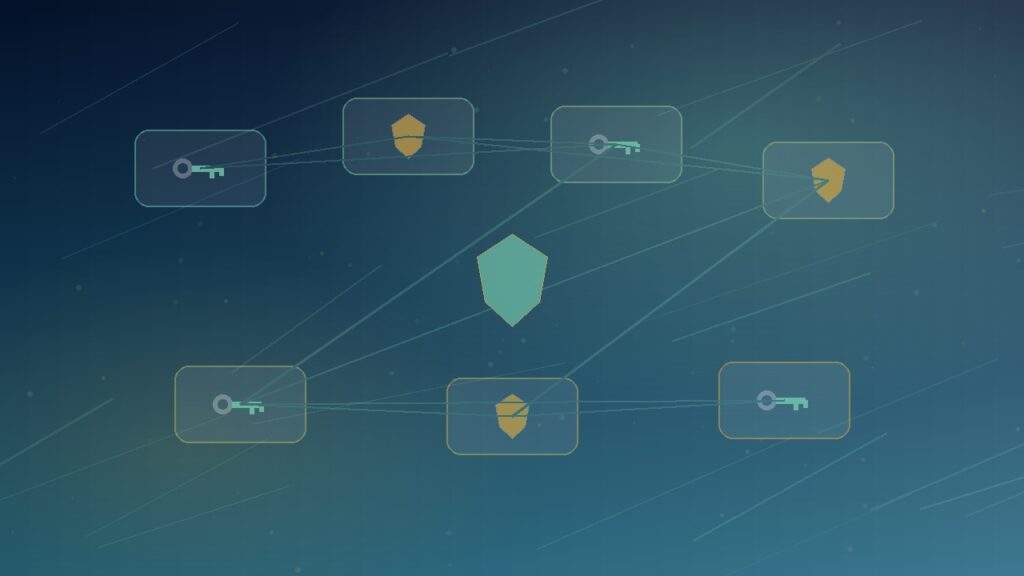
A mature programme does not protect only employee logins. It protects every identity that can access a system. That includes humans, devices, services, workloads, APIs, certificates, bots, shared accounts, customer accounts, vendor accounts, and automation identities.
Human identities need the familiar controls: verified onboarding, SSO, MFA or passkeys, least privilege, joiner-mover-leaver governance, access reviews, password manager support where passwords remain, and clear recovery rules. The hard part is not knowing these controls exist. The hard part is applying them consistently across old apps, new SaaS, contractors, subsidiaries, and privileged roles.
Device identities are the next layer. A device can be managed, compliant, encrypted, patched, and known – or it can be unknown and risky. Identity-First Security uses device signals as part of access decisions, especially for sensitive work. For example, a user may read low-risk information from a browser, but need a managed device for exports, admin consoles, source code, or regulated records.
Service identities are often the quiet risk. A script that runs every night, a CI/CD job, a database connector, a backup tool, an integration platform, and a support automation can all hold powerful credentials. These identities may not have owners, may not rotate secrets, may bypass MFA, and may keep working long after the business process changes. Attackers know this. Service accounts deserve inventory, ownership, least privilege, rotation, logging, and retirement rules.
Machine and workload identities are growing because cloud-native systems talk to each other constantly. Containers, functions, APIs, data pipelines, AI models, and microservices need credentials too. If those credentials are static, over-permissioned, copied into code, or stored in weak locations, account-level protection fails outside the human login page.
Customer identities also matter. A customer portal with weak recovery, poor session management, or predictable user IDs can create operational, legal, and reputational risk. Identity-First Security should include customer identity and access management, not only workforce identity.
The central governance question is ownership. Every identity should have a business owner, a technical owner, a purpose, a risk level, an access scope, a review frequency, and an exit path. If no one can answer those questions, the account is probably a future incident waiting quietly.
Identity-First Security makes that ownership visible before neglected accounts become attacker infrastructure.
Passkeys, phishing-resistant MFA, and risk-based access

Passwords are not disappearing overnight, but they are no longer strong enough to carry the access model alone. The NCSC’s 2026 passkeys guidance says passkeys are resistant to phishing because they cannot be intercepted, reused, or stolen like passwords. The NCSC also says users should opt for passkeys over passwords wherever they are available.
That does not mean every organisation can migrate every account immediately. Legacy systems, customer adoption, device coverage, support readiness, and compliance constraints all matter. But Identity-First Security should treat passkeys and other phishing-resistant authenticators as the direction of travel, not as a niche option for security enthusiasts.
The NCSC’s corporate MFA guidance is also useful because it warns that not all MFA types offer the same protection. SMS codes, email codes, push approvals, authenticator apps, hardware keys, platform authenticators, and passkeys do not carry identical risk. A one-time code can still be phished or relayed. A poorly designed push flow can create authentication fatigue. A cryptographic authenticator can provide stronger phishing resistance.
OWASP’s Authentication Cheat Sheet states that MFA is by far the best defence against most password-related attacks and cites Microsoft analysis suggesting MFA would have stopped 99.9% of account compromises. That is a strong argument for coverage. But Identity-First Security goes further than coverage. It asks whether the MFA method is appropriate for the risk of the account and action.
Risk-based access is the bridge. A user signing in from a known device to read a low-risk dashboard may be allowed after normal authentication. The same user changing payroll details from a new device may need step-up authentication. An administrator changing identity provider settings may need phishing-resistant MFA, just-in-time approval, and session recording. A customer changing recovery details may need reauthentication and notification to the old address.
The goal is not friction everywhere. The goal is meaningful friction at the right points. Identity-First Security should make safe work smooth and risky work deliberate. That is how organisations avoid the familiar trap of strong controls on paper and frustrated users finding workarounds in practice.
Session, token, and recovery controls

Login is only the start of account protection. A user can authenticate strongly and still be compromised later through a stolen session, insecure cookie, weak refresh token, exposed API key, abused recovery flow, or malicious OAuth grant. Identity-First Security treats the post-login state as part of the threat model.
Session controls should include short enough idle timeouts, sensible absolute timeouts, secure cookies, HttpOnly where applicable, SameSite protection, token rotation, server-side revocation, and logout that actually invalidates the server-side session. OWASP warns that disclosure, capture, prediction, brute force, or fixation of a session ID can lead to session hijacking, where an attacker impersonates the user.
Recovery controls deserve the same discipline. Password reset, email change, phone number change, new authenticator binding, backup code generation, and help desk override are all sensitive events. NIST SP 800-63B treats authenticator binding, account recovery, invalidation, and notifications as explicit parts of the authentication life cycle. That matters because attackers often target the weakest path into an account, not the most secure path.
Good recovery starts with reducing dependency on one fragile factor. Users should have more than one recovery route where appropriate, but those routes need safeguards. Recovery codes should be protected. Email-based recovery should be monitored. Help desk processes should resist social engineering. New authenticator enrollment should require strong proof. Notifications should be sent when sensitive account events occur.
OAuth and API tokens also need account-level governance. Users often grant third-party apps access to mailboxes, files, calendars, repositories, or CRM records. Some grants persist long after the user forgets them. Identity-First Security should monitor app consent, restrict high-risk scopes, require admin approval where appropriate, and remove unused integrations.
The same logic applies to developer and cloud tokens. Long-lived keys in repositories, local files, CI/CD variables, and support scripts are a common way for attackers to move from one system to another. Secrets should be stored in managed vaults, rotated regularly, scoped narrowly, and tied to named workloads.
The practical test is simple: if a session, recovery method, or token can act like the account, it should be protected like the account. Anything less leaves a side door open beside the polished front entrance.
Identity-First Security keeps that side door in scope instead of stopping at the login form.
The 90-day Identity-First Security roadmap
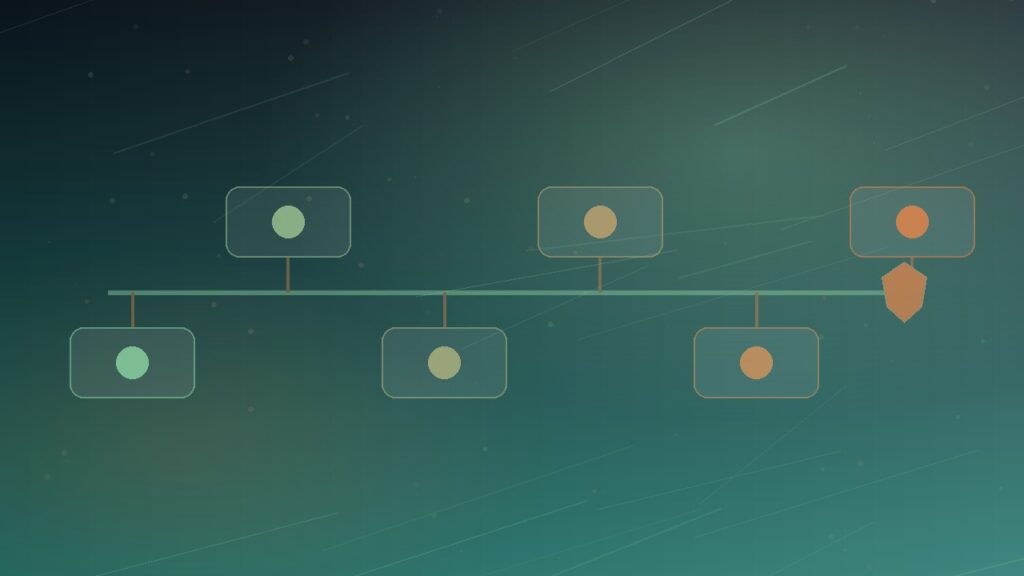
A 90-day roadmap should start with visibility, not a shopping list. The first 15 days should map identities, systems, and risk. List the identity providers, major SaaS platforms, VPNs, privileged accounts, customer portals, developer tools, service accounts, API keys, machine credentials, and recovery channels. Identify which accounts can move money, access customer data, change security settings, deploy code, or administer other identities.
Days 16 to 30 should focus on quick containment. Disable dormant accounts. Remove former users. Turn on MFA for all administrators. Stop shared admin accounts. Review break-glass access. Block legacy authentication where possible. Require stronger controls for finance, executives, IT admins, HR, developers, and customer support. These actions are rarely glamorous, but they reduce immediate account takeover risk.
Days 31 to 45 should focus on authentication strength. Decide where passkeys, FIDO2 keys, platform authenticators, or other phishing-resistant options should be mandatory first. Prioritize administrators, remote access, cloud consoles, password managers, finance workflows, developer platforms, and customer identity systems. If full passkey adoption is not ready, create a migration plan.
Days 46 to 60 should focus on privilege. Build a simple access review for high-risk systems. Remove standing admin rights where they are unnecessary. Add just-in-time access for sensitive roles. Separate daily-use accounts from admin accounts. Review third-party access. Assign owners to service accounts and integrations. Start measuring how many privileged identities exist and why.
Days 61 to 75 should focus on sessions, tokens, and recovery. Review session lifetimes, refresh token policies, OAuth grants, API keys, recovery flows, email change flows, phone change flows, backup codes, and help desk scripts. Add reauthentication for sensitive changes. Add notifications for account recovery and authenticator changes. Rotate secrets that have unclear ownership.
Days 76 to 90 should focus on governance and metrics. Create a lightweight identity risk dashboard. Track MFA coverage, phishing-resistant coverage, dormant accounts, privileged accounts, service account owners, risky OAuth grants, recovery events, token age, and access review completion. Tie the dashboard to management decisions, not just technical reporting.
This is where the vCIO advantage becomes useful for mid-market organisations. Identity-First Security is not only a tool deployment. It is governance across IT, HR, finance, operations, legal, product, and suppliers. Someone needs to make risk-based decisions, set policy, and keep the roadmap moving after the first 90 days.
Common mistakes that weaken account-level protection
The first mistake is treating MFA as the whole strategy. MFA is essential, but weak account recovery, over-permissioned roles, risky sessions, unmanaged service accounts, and broad OAuth grants can still create serious exposure. Identity-First Security includes MFA, but it is bigger than MFA.
The second mistake is protecting employees while ignoring administrators. Every user matters, but privileged accounts deserve a different standard. Admin actions should be named, logged, approved where appropriate, and protected with stronger authentication. Shared admin credentials are especially dangerous because they destroy accountability.
The third mistake is forgetting machine identities. Service accounts, API keys, certificates, and workload credentials often hold more power than normal user accounts. They may also be less visible because they do not complain, leave the company, or fail phishing simulations. A mature programme inventories and reviews them.
The fourth mistake is trusting the device too much or too little. Device posture is valuable, but it is only one signal. A managed laptop can still be misused by a phished user. An unmanaged device may be acceptable for low-risk access but not for exports or administration. Identity-First Security uses device trust as part of a decision, not as the whole decision.
The fifth mistake is leaving sessions alive for convenience. Long-lived sessions may reduce login friction, but they increase the value of stolen tokens. Sensitive systems need risk-based reauthentication, token rotation, logout, and server-side invalidation. Convenience should be designed, not assumed.
The sixth mistake is underestimating support and recovery. A perfectly strong login process can be undermined by a weak help desk process. Account recovery needs scripts, verification, logging, escalation, and user notification. The same is true for adding new authenticators or changing contact details.
The seventh mistake is measuring only deployment. Saying “MFA is enabled” is less useful than knowing which accounts still lack strong authentication, which privileged accounts are permanent, which tokens are old, which service accounts have no owner, and which applications bypass central policy. Identity-First Security needs operational metrics.
The final mistake is failing to connect identity to business workflows. If security owners do not understand payment approval, customer support, code deployment, supplier access, and AI automation, they cannot protect the accounts that matter most. Account-level protection should follow business impact.
Identity-First Security FAQ
What is Identity-First Security?
Identity-First Security is a security strategy that makes identity the primary control point for access decisions. It focuses on users, devices, service accounts, sessions, tokens, privileges, recovery flows, and context instead of relying mainly on network location.
Why is Identity-First Security critical in 2026?
Identity-First Security is critical in 2026 because work is spread across cloud platforms, SaaS tools, remote devices, partners, APIs, and AI workflows. A compromised account can now reach far beyond one application, so account-level protection becomes a business control, not only an IT control.
Does identity-first replace firewalls and endpoint security?
No. Firewalls, endpoint security, patching, secure configuration, logging, and network controls still matter. Identity-First Security changes the centre of trust. It says account, device, session, and policy context must decide access even when network controls are present.
Is MFA enough for account-level protection?
MFA is necessary, but it is not enough by itself. Account-level protection also needs phishing-resistant options, least privilege, secure recovery, session controls, token governance, service account management, monitoring, and reauthentication for sensitive actions.
Where should a business start?
Start with visibility. List high-risk accounts, administrators, SaaS apps, identity providers, service accounts, recovery flows, and privileged workflows. Then protect administrators and high-risk users first, remove dormant accounts, enforce MFA, and build a plan for phishing-resistant authentication.
What is the role of passkeys?
Passkeys are a strong direction for Identity-First Security because they are designed to resist phishing and reduce password dependence. They are not available everywhere yet, but they should be prioritized for high-risk users, customer accounts, and services that already support them.
How does identity-first help with AI agents?
AI agents need scoped identities, not inherited broad access. Identity-First Security helps define which agent can access which data, which actions require approval, how activity is logged, and how credentials can be revoked when risk changes.
How often should access be reviewed?
High-risk access should be reviewed more frequently than ordinary access. Admin roles, finance permissions, developer privileges, service accounts, and external collaborator access should have scheduled reviews, clear owners, and automatic removal when no longer needed.
What metrics should leaders track?
Useful metrics include MFA coverage, phishing-resistant coverage, dormant accounts, privileged account count, permanent admin rights, service accounts without owners, old API keys, risky OAuth grants, recovery events, failed login patterns, and access review completion.
Final thoughts on Identity-First Security
Identity-First Security is not a fashionable label for a login project. It is a practical response to the way modern businesses now operate. The network still matters, but the account has become the control point that decides who can act, what they can reach, and how much damage a mistake or compromise can cause.
The organisations that move early will not only reduce account takeover risk. They will make cloud adoption, supplier access, customer portals, developer workflows, and AI automation easier to govern. That is the real prize: safer access without pretending the old perimeter can carry a modern business on its own.
For 2026, the standard should be clear. Know every identity. Protect every high-risk account. Challenge risky sessions. Retire unused access. Govern machine credentials. Use phishing-resistant authentication where it matters most. Build account-level protection into the workflows that run the business. That is how Identity-First Security becomes operational rather than aspirational.










