
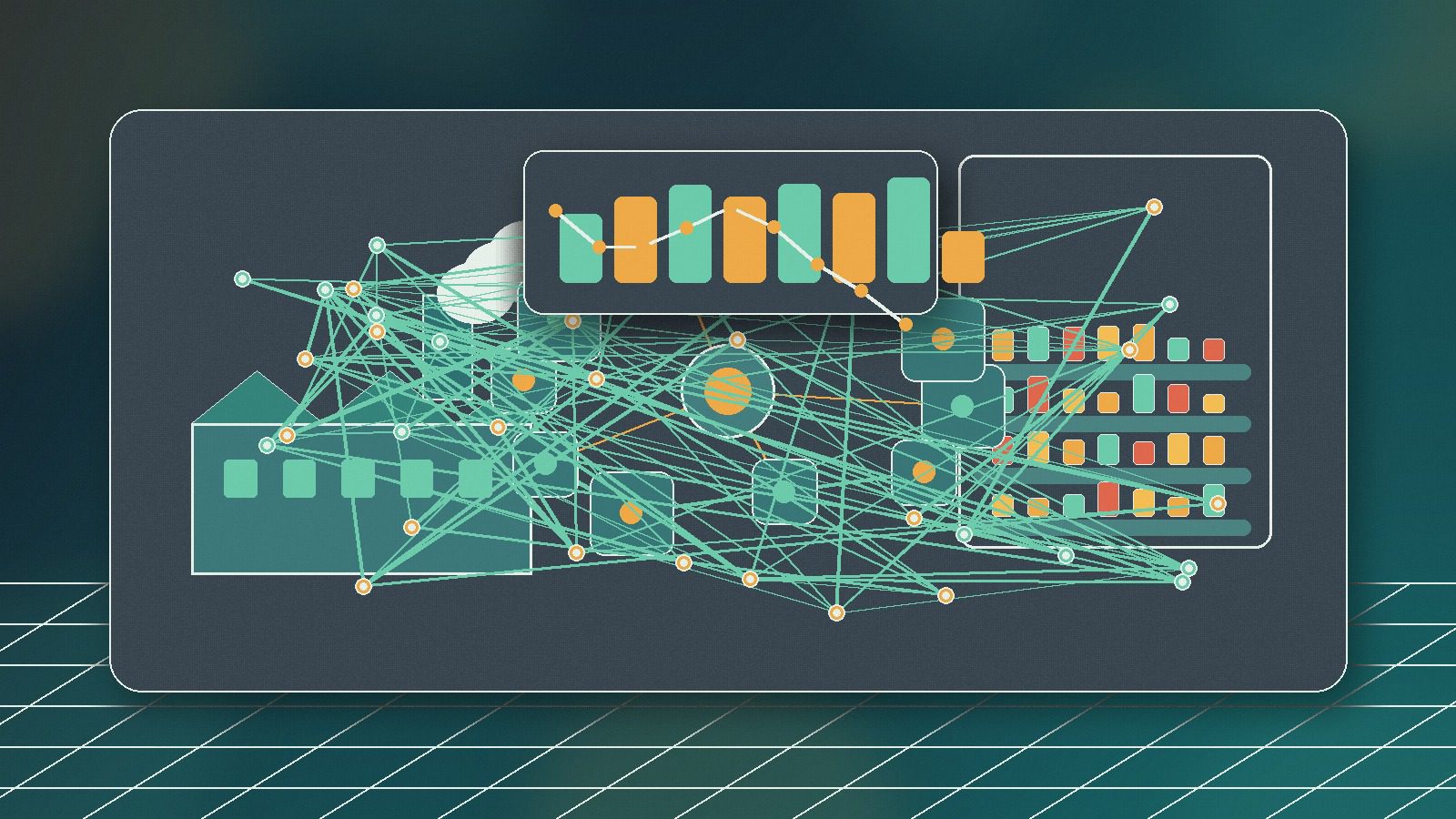
Digital Twins 2027 is the point where virtual models stop sounding like a large-enterprise experiment and start becoming a practical option for UK SMEs that need better visibility, faster decisions, and fewer expensive surprises. A digital twin is not simply a dashboard, a 3D model, or a simulation. The Digital Twin Consortium defines it as an integrated, data-driven virtual representation of real-world entities and processes, with synchronised interaction at a specified frequency and fidelity.
That definition matters because UK SMEs do not need cinematic replicas of their whole business. They need useful virtual models of the things that create cost, delay, risk, waste, stock-outs, downtime, service failures, and missed demand. In 2027, the most valuable SME twins are likely to be focused models: a production line, a cold room, a delivery route, a retail stock flow, a warehouse process, a service desk, a maintenance schedule, or an energy-intensive facility.
Digital Twins 2027 also sits inside a wider business squeeze. The Department for Business and Trade says the UK had 5.7 million private sector businesses at the start of 2025, and SMEs made up 99.85% of that population. SMEs employed 16.9 million people and generated an estimated 2.8 trillion pounds of turnover. These businesses are not a side market. They are the market.
The pressure is real. ONS business survey data from April 2026 found economic uncertainty was the most reported challenge affecting turnover, while 40% of trading businesses said prices of goods or services bought had increased in March 2026. Two-thirds of businesses reported some concern about energy prices. Against that backdrop, virtual models are attractive because they can make invisible operational patterns visible before money leaks out.
Digital Twins 2027 will not reshape every SME in the same way. Manufacturing firms will use virtual models to reduce downtime, improve quality, and understand production constraints. Retailers will use them to connect stock, demand, store operations, energy use, and fulfilment choices. Service and operations teams will use them to model queues, handoffs, assets, facilities, field work, and recurring exceptions.
The practical question is not whether digital twins are impressive. It is whether UK SMEs can build small enough, useful enough, governed enough virtual models to improve decisions without creating another expensive technology layer.
Digital Twins 2027 at a glance
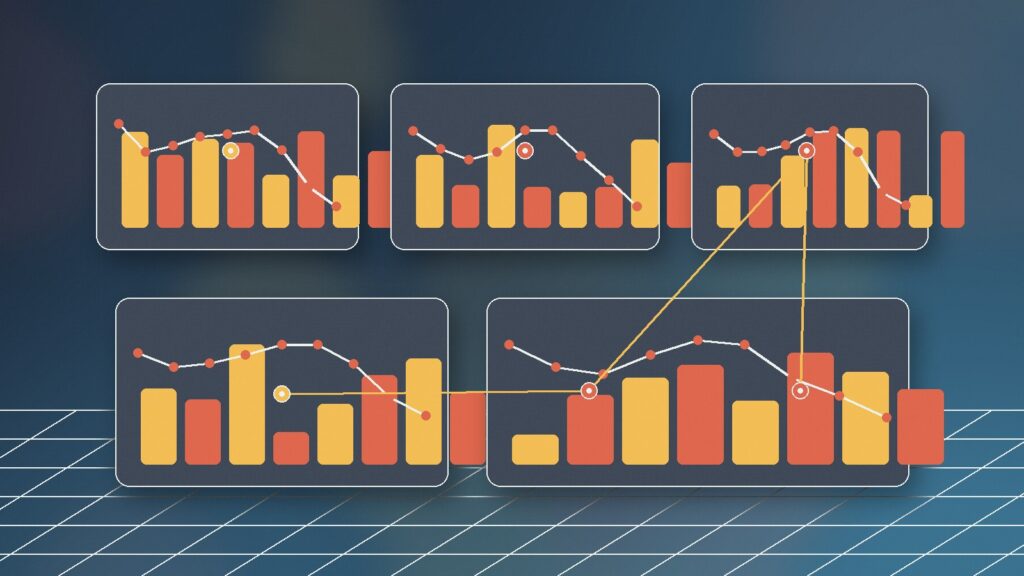
Digital Twins 2027 is best understood as a shift from static reporting to operational modelling. A normal report tells a manager what happened. A dashboard shows what is happening. A digital twin links data, context, rules, behaviour, and scenarios so a business can ask what is likely to happen next and what would change if it acted differently.
AWS explains that a digital twin uses real-time data from sensors to simulate behaviour and monitor operations across the lifecycle of a physical object or system. It highlights benefits such as improved performance, predictive capabilities, remote monitoring, and faster production planning. For SMEs, those benefits are useful only when tied to a defined outcome.
Digital Twins 2027 is therefore not one technology. It is a stack of practical capabilities.
| Layer | SME question | Example |
|---|---|---|
| Asset model | What are we representing? | Machine, shelf, vehicle, room, line, stock flow, queue |
| Data feed | What keeps the model current? | Sensors, ERP, POS, CRM, WMS, finance, maintenance records |
| Behaviour model | What do we want to understand? | Capacity, failure risk, demand, delay, energy use, waste |
| Scenario layer | What can we test safely? | New shift pattern, supplier delay, promotion, maintenance plan |
| Decision workflow | Who acts on the insight? | Supervisor, buyer, engineer, operations manager, finance lead |
| Governance | What makes it trustworthy? | Data ownership, security, audit, review, thresholds, human control |
The important point is scope. A small manufacturer may not need a full factory twin. It may need a twin of a bottleneck machine and its upstream and downstream dependencies. A retailer may not need a full customer-behaviour twin. It may need a stock and demand twin for fast-moving lines across two locations. A service business may not need an enterprise process twin. It may need a queue twin that shows why work piles up every Thursday.
Digital Twins 2027 will reward that kind of narrow design. The winning SME use cases will be concrete, measurable, and close to operational pain.
Why the 2027 timing matters for UK SMEs
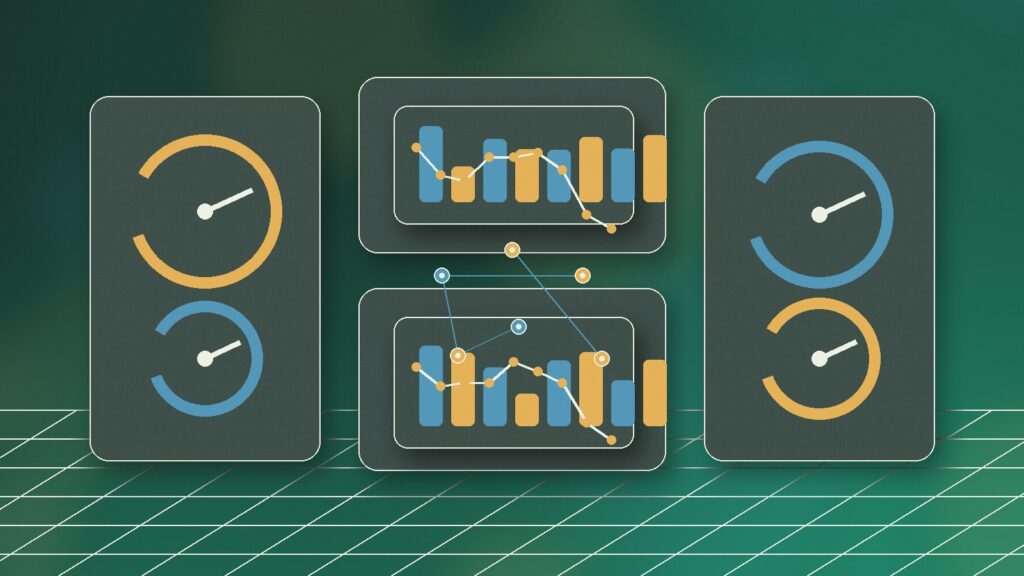
Digital Twins 2027 matters because several trends are arriving at the same time. Sensors are cheaper. Cloud and edge computing are easier to access. AI can help interpret messy operational data. Industrial software is becoming more modular. SMEs are under pressure to make better decisions with fewer spare people. The result is a window where virtual models become more realistic for smaller firms.
The UK SME base is large, but it is also uneven. DBT’s 2025 business population estimate shows three quarters of private sector businesses had no employees other than owners, while small businesses with 0 to 49 employees made up more than 99% of the business population. That means most UK SMEs cannot absorb heavy transformation programmes. They need targeted, low-friction operational improvements.
Digital Twins 2027 also arrives after a period of practical digitalisation in manufacturing. Made Smarter describes Industry 4.0 as a way for manufacturers to collect and analyse data through machines, automate and streamline processes, and become faster, more flexible, and more efficient. Its guidance highlights interoperability, real-time analytics, virtualisation, modularity, and scalability. Those are digital twin building blocks.
The same is true for AI adoption. ONS reported in October 2025 that 23% of businesses were using some form of AI technology, up from 9% when the question was introduced in September 2023. Made Smarter’s AI manufacturing toolkit also warns that manufacturing AI is harder than office AI because physical assets, people, processes, safety, quality, and compliance are tightly linked. That warning is important. Virtual models must respect the physical business, not float above it.
Digital Twins 2027 should therefore be seen as a bridge between basic digital reporting and more confident AI-enabled operations. A twin gives AI more context. Instead of asking a model to guess from disconnected records, the business gives it a structured representation of assets, flows, states, and constraints.
For SMEs, that can turn AI from a general assistant into a more useful operating tool. But the foundation has to come first. A business that cannot trust its stock records, maintenance history, sensor data, or process ownership will struggle to trust a virtual model built on top of them.
That is why AI process redesign matters alongside digital twin work. If the process is broken, a virtual model may only reveal the breakage faster. The better move is to simplify the process, clean the data, define ownership, and then model the part of the business where insight will change action.
Manufacturing: from machine visibility to safer production decisions
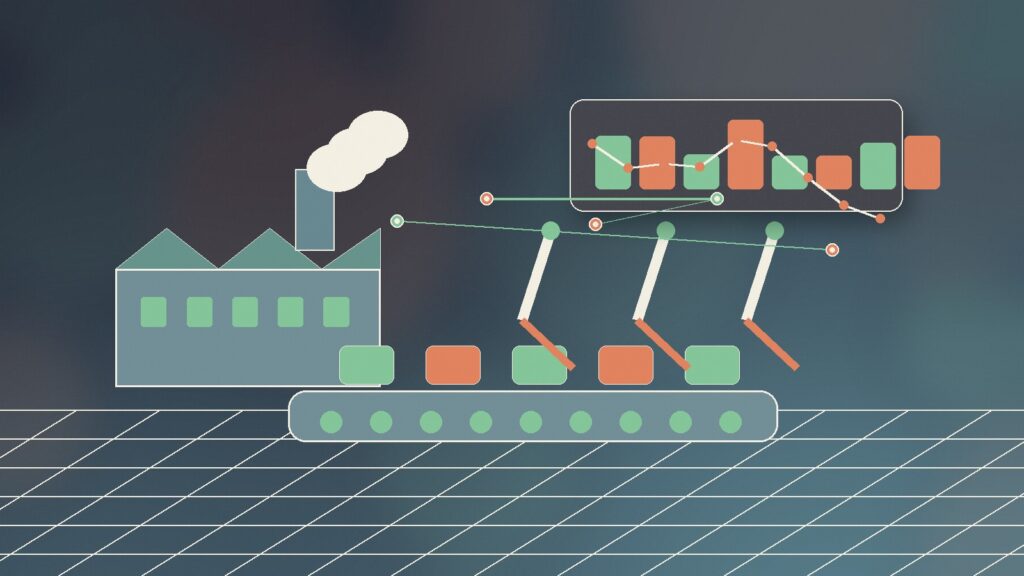
Digital Twins 2027 will be most visible in manufacturing because the connection between physical assets and business outcomes is direct. A machine stops, a line slows, quality slips, waste increases, energy use rises, orders miss dates, and margin disappears. A focused virtual model can help a manufacturer see those relationships before the end-of-month review.
AWS lists manufacturing as a major digital twin use case across design, planning, monitoring, and maintenance. For SMEs, the practical starting point is often less ambitious: connect the most important machine, line, cell, or process to a model that shows utilisation, downtime, throughput, defect rates, energy use, and maintenance events.
Digital Twins 2027 manufacturing use cases will likely cluster around five areas.
| Use case | What the twin models | Business value |
|---|---|---|
| Bottleneck visibility | Line speed, queue build-up, changeovers, downtime | Better scheduling and faster constraint removal |
| Predictive maintenance | Vibration, temperature, run hours, fault history | Fewer unplanned stoppages and better parts planning |
| Quality control | Process settings, defect patterns, batch history | Earlier defect detection and less rework |
| Energy optimisation | Machine load, shift pattern, peak use, idle time | Lower avoidable energy cost |
| Capacity planning | Orders, labour, tooling, machine availability | Better promises to customers |
The advantage is not only automation. It is shared operational truth. A production manager, finance lead, maintenance engineer, and sales manager can look at the same model and understand why a delivery promise is risky or why a machine investment matters.
Digital Twins 2027 also helps SMEs avoid overbuying technology. Instead of buying another machine because capacity feels tight, a manufacturer can model whether the constraint is machine time, setup time, inspection delay, material availability, labour scheduling, or maintenance. That distinction matters because each cause has a different fix.
This is where data and AI in manufacturing becomes practical. A virtual model needs clean operational data, but it also needs human context. Operators know which alarms are noise. Engineers know which vibration pattern is worrying. Supervisors know which setup times are unrealistic. The best SME twins combine sensor data with domain knowledge rather than pretending data alone knows the shop floor.
Digital Twins 2027 will not remove the need for experienced manufacturing people. It should give them better evidence, earlier warnings, and safer ways to test decisions before changing the real line.
Retail: stock, stores, energy, and customer demand
Digital Twins 2027 could be just as important in retail, but the models will look different. Retail twins are less likely to focus on one machine and more likely to connect stock, demand, stores, fulfilment, staffing, energy use, promotions, and supplier lead times.
DBT’s 2025 estimates show Wholesale and Retail Trade accounted for 14% of all SME employment and 32% of SME turnover in the UK private sector. That makes retail a major SME arena for operational modelling. Small improvements in stock accuracy, labour allocation, replenishment, waste, returns, and energy use can matter quickly.
Digital Twins 2027 retail use cases may start with inventory because stock is where data problems become visible. A retailer can have sales data, supplier records, warehouse counts, shop-floor counts, ecommerce orders, returns, substitutions, and promotion plans, but still lack one trusted picture of availability.
A practical retail twin can model:
- what stock is available, reserved, damaged, delayed, or likely to sell;
- where demand is changing by location, channel, season, and promotion;
- which products create repeat stock-outs or overstock;
- how supplier delays affect store-level availability;
- how staffing and opening hours affect service levels;
- how energy use changes by refrigeration, lighting, footfall, and trading hours.
Digital Twins 2027 will be especially useful for retailers that operate across physical and digital channels. A small chain may need to decide whether to fulfil an order from a store, warehouse, supplier, or third-party partner. A twin can show the operational tradeoff: delivery time, margin, stock risk, store availability, and return likelihood.
This connects directly to IoT-driven inventory management. Sensors, shelf systems, RFID, point-of-sale data, and warehouse events can all feed a better model. But the twin only creates value if someone changes the buying, replenishment, pricing, or fulfilment decision because of it.
Digital Twins 2027 will also matter for store energy costs. ONS found in April 2026 that 66% of businesses had some concern about energy prices. Retailers with refrigeration, lighting, heating, and extended trading hours may use virtual models to identify waste and test changes without guessing. A twin can show, for example, whether a store’s energy pattern is driven by opening hours, equipment performance, poor maintenance, weather, or footfall.
For retail SMEs, the biggest risk is trying to model the whole customer journey before the basics are stable. Start with stock, fulfilment, waste, and energy. These areas have measurable outcomes and direct cost impact.
Operations: facilities, field work, service queues, and process control
Digital Twins 2027 is not only about factories and stores. Many UK SMEs are operations-heavy even when they do not describe themselves that way. They run assets, schedules, service queues, facilities, vehicles, engineers, tickets, documents, approvals, inspections, and recurring handoffs.
Operations twins are useful because many SMEs manage work through a patchwork of spreadsheets, inboxes, calendars, accounting systems, job-management tools, CRM notes, and staff memory. That creates blind spots. A virtual model can show where work enters, where it waits, who touches it, what data is missing, and which constraints create delays.
Digital Twins 2027 operations use cases include:
| Operations area | Twin focus | Decision improved |
|---|---|---|
| Facilities | Rooms, equipment, occupancy, temperature, maintenance | Energy, comfort, repair timing, asset replacement |
| Field service | Jobs, routes, engineers, parts, customer priority | Scheduling, first-time fix, travel time, service promises |
| Service desk | Tickets, categories, queues, SLAs, escalations | Staffing, automation, backlog control, customer updates |
| Finance operations | Invoice flows, approval paths, exceptions, supplier records | Faster processing and fewer errors |
| Compliance work | Evidence, inspections, renewal dates, control owners | Better audit readiness and fewer missed actions |
| Logistics | Vehicles, jobs, delays, capacity, delivery windows | Route choices and customer communication |
The National Digital Twin Programme, run by the Centre for Digital Built Britain, focused on connected digital twins for the built environment and an information management framework for secure and effective data sharing. Although that programme was infrastructure-focused, its principles translate well to SMEs: purpose, trust, function, security, quality, openness, and governance all matter when models influence real decisions.
Digital Twins 2027 should push operations leaders to ask a sharper question: what part of the operation is expensive because we cannot see it clearly enough? Sometimes the answer is a facility. Sometimes it is a queue. Sometimes it is the handoff between sales, delivery, finance, and support.
This is where workflow automation and virtual models can reinforce each other. The twin shows where work is stuck. Automation moves routine work through agreed paths. AI can summarise, classify, and recommend. Humans handle judgement, exceptions, relationships, and accountability.
Digital Twins 2027 will be most powerful when the model is connected to a redesigned workflow. A queue twin that nobody owns becomes another report. A queue twin connected to staffing rules, escalation paths, and customer notifications becomes an operating system for better service.
What could change by 2027
Digital Twins 2027 does not mean every SME will have a fully connected digital replica by the end of the year. A more realistic forecast is that digital twin patterns will become embedded in everyday tools. The language may remain specialist, but the behaviour will spread: systems will model assets, states, flows, and scenarios in ways that help managers decide.
The first change is that digital twins will become smaller. Instead of one grand transformation project, SMEs will build operational slices. A stock twin. A line twin. A refrigeration twin. A job-flow twin. A maintenance twin. A supplier-risk twin. This is good news because smaller models are easier to fund, govern, and improve.
Digital Twins 2027 will also be shaped by AI. AI can help interpret unstructured records, maintenance notes, support tickets, images, product descriptions, call summaries, and supplier messages. But the twin provides structure. It tells the AI what the business is modelling and how different entities relate. That makes the AI less isolated and more operationally useful.
The second change is a move from hindsight to scenario testing. Managers will use virtual models to ask practical questions:
- What happens if demand rises 15% next month?
- Which machine creates the biggest delivery risk?
- Which store is likely to run out before the next replenishment cycle?
- Which customer jobs will miss SLA if one engineer is unavailable?
- Which energy pattern looks abnormal?
- Which approval step creates the most avoidable delay?
Digital Twins 2027 will also change supplier conversations. SMEs will ask vendors not only for dashboards, but for data access, integration paths, model transparency, export options, and clear ownership of operational data. This is important because a twin that cannot share data becomes another silo.
The third change is that operational resilience will become part of the business case. ONS reported in May 2026 that 38% of businesses with 10 or more employees were concerned about international conflict affecting supply chains over the next year, and that import and export costs had risen for many trading businesses. Virtual models can help SMEs test supply disruption, lead-time changes, route costs, and stock buffers before they make risky commitments.
Digital Twins 2027 will therefore reshape some UK SMEs by making operational decisions more evidence-based, more connected, and more forward-looking. The firms that benefit most will not be the ones with the flashiest visuals. They will be the ones that use the model to change a decision.
Risks and limits SMEs should not ignore
Digital Twins 2027 has obvious promise, but SMEs should be careful. A digital twin can become expensive, brittle, misleading, or unused if the business treats it as a technology purchase rather than an operating model change.
The first risk is data quality. A virtual model is only as trustworthy as the data and assumptions behind it. If stock records are wrong, sensor calibration is poor, maintenance logs are incomplete, or customer orders are coded inconsistently, the twin may produce confident-looking nonsense.
Digital Twins 2027 also creates integration risk. A useful model often needs data from machines, IoT devices, ERP, accounting, CRM, POS, ecommerce, WMS, maintenance tools, energy meters, spreadsheets, and supplier systems. SMEs should not underestimate the work required to connect those sources safely.
The second risk is cost drift. Cloud storage, sensor installation, integration work, licensing, analytics, AI inference, vendor support, and internal time can all expand. That is why inference economics matters when AI is part of the twin. A model that runs useful analysis every hour may be affordable. A model that processes too much data too often without changing decisions may not be.
The third risk is security. A digital twin may expose asset layouts, operational weaknesses, supplier relationships, customer flows, service capacity, or facility data. If it can trigger actions, the risk is higher. SMEs need role-based access, logging, backup, supplier review, and incident response.
Digital Twins 2027 also raises a trust problem. Staff may ignore the twin if it contradicts their experience and nobody explains why. Managers may overtrust it if the visuals look authoritative. The answer is not blind faith or resistance. The answer is review loops: compare predictions to outcomes, capture overrides, explain assumptions, and improve the model.
| Risk | Symptom | Control |
|---|---|---|
| Poor data | Model disagrees with reality | Clean core records and assign data owners |
| Over-scope | Project becomes too large to finish | Start with one process, asset, or location |
| Vendor lock-in | Data cannot move easily | Require export, API access, and exit terms |
| Cost drift | More feeds and compute than value justifies | Set budget thresholds and usage reporting |
| Security gaps | Too many users see sensitive operations | Apply access control, logging, and review |
| Low adoption | Team keeps using spreadsheets | Connect twin outputs to real decisions |
Digital Twins 2027 should therefore be governed like a business capability. It needs an owner, a value metric, a data model, a security model, and a decision workflow. Without those, even a technically impressive twin can become another orphaned platform.
A practical 90-day roadmap for SME leaders
Digital Twins 2027 becomes manageable when SMEs start with a 90-day roadmap. The goal is not to build the final twin in three months. The goal is to prove whether a narrow model can improve a real decision.
Days 1 to 15 should define the business problem. Pick one area where delay, waste, downtime, energy, stock, service failure, or uncertainty has a visible cost. Avoid vague goals such as “become data-driven”. Use a clear outcome: reduce unplanned downtime, improve stock accuracy, cut job scheduling delay, lower energy waste, or reduce invoice exceptions.
Digital Twins 2027 discovery should include the people who run the work. Ask what decisions they make, what data they trust, what they check manually, what surprises them, and where they think the official process differs from reality.
Days 16 to 30 should map the model boundary. Decide what the twin will represent and what it will ignore. A good boundary might be one production line, one store category, one refrigeration system, one service queue, one warehouse flow, or one field-service route. List the entities, events, states, and relationships needed.
Days 31 to 45 should assess data readiness. Identify source systems, owners, gaps, refresh frequency, quality issues, and security constraints. This is the point where many projects should pause and clean data before buying tools. A small, trusted dataset is better than a large, messy one.
Digital Twins 2027 build work should start only when the business can answer three questions: what decision will improve, who will act, and how success will be measured?
Days 46 to 70 should create the first working model. This may be a lightweight dashboard, simulation, process model, or IoT-connected view. It does not need every feature. It needs enough fidelity to test whether the model explains the problem better than current reporting.
Days 71 to 90 should run the model against real work. Compare twin outputs with actual outcomes. Ask users where it is wrong. Measure whether it changes decisions. Decide whether to improve, expand, automate, or stop.
| Phase | Question | Output |
|---|---|---|
| Discover | What costly decision needs better evidence? | Business outcome and owner |
| Boundary | What will the twin represent? | Scope, entities, relationships |
| Data | Can we trust the inputs? | Source list and cleanup plan |
| Build | Can the model explain reality? | Minimum useful twin |
| Test | Does it change decisions? | Evidence, adoption, next step |
Digital Twins 2027 should be iterative. The first version is a learning asset. If it helps, expand carefully. Add another machine, store, route, queue, or dataset only when the existing model is trusted and used.
This is the same logic behind digital transformation and Industry 4.0: technology creates value when it changes the operating rhythm of the business, not when it sits beside the old rhythm.
Digital Twins 2027 FAQ
What is a digital twin?
A digital twin is a data-driven virtual representation of a real asset, process, place, or system. The useful version is synchronised often enough and accurately enough to help people monitor, understand, simulate, or improve the real thing.
Why is Digital Twins 2027 important for UK SMEs?
Digital Twins 2027 is important because costs, uncertainty, AI adoption, sensor data, and operational complexity are converging. SMEs need better ways to understand assets, stock, energy, queues, and capacity without running large transformation programmes.
Will every SME need a digital twin by 2027?
No. Digital Twins 2027 is not a universal requirement. Some SMEs will get more value from basic process redesign, better reporting, workflow automation, or data cleanup. A twin makes sense when modelling a real-world system improves a repeated decision.
What are the best first use cases?
The best first use cases are narrow and measurable: machine downtime, stock availability, energy use, delivery scheduling, field-service capacity, service queues, invoice exceptions, or maintenance planning. Avoid starting with a full-company model.
How are digital twins different from dashboards?
A dashboard usually displays current or historical data. A digital twin represents how a real asset or process behaves, so the business can test scenarios, understand dependencies, and predict likely outcomes.
Do digital twins require IoT sensors?
Not always. IoT sensors are useful for machines, facilities, vehicles, shelves, and environmental conditions. But some operational twins can start with data from ERP, POS, CRM, finance, workflow, or maintenance systems.
What should SMEs fix before building a twin?
SMEs should fix data ownership, process scope, integration basics, security, and decision rights. Digital Twins 2027 projects fail when businesses model messy processes without agreeing who owns the data or who acts on the insight.
Can AI make digital twins more useful?
Yes, when used carefully. AI can summarise records, detect patterns, classify events, forecast demand, identify anomalies, and help users interrogate the model. But AI needs reliable structure and governance, or it can amplify weak data.
Final thoughts
Digital Twins 2027 will reshape UK SMEs selectively, not magically. The biggest gains will come from focused virtual models that help businesses understand and improve specific decisions in manufacturing, retail, and operations.
For manufacturers, that may mean fewer surprises on the line. For retailers, better stock and demand decisions. For operations teams, clearer queues, assets, field work, facilities, and service constraints. The pattern is the same: model the part of the business where better evidence changes action.
Digital Twins 2027 is not about building a perfect replica. It is about giving SMEs a safer, faster way to ask operational questions before reality sends the invoice.










