
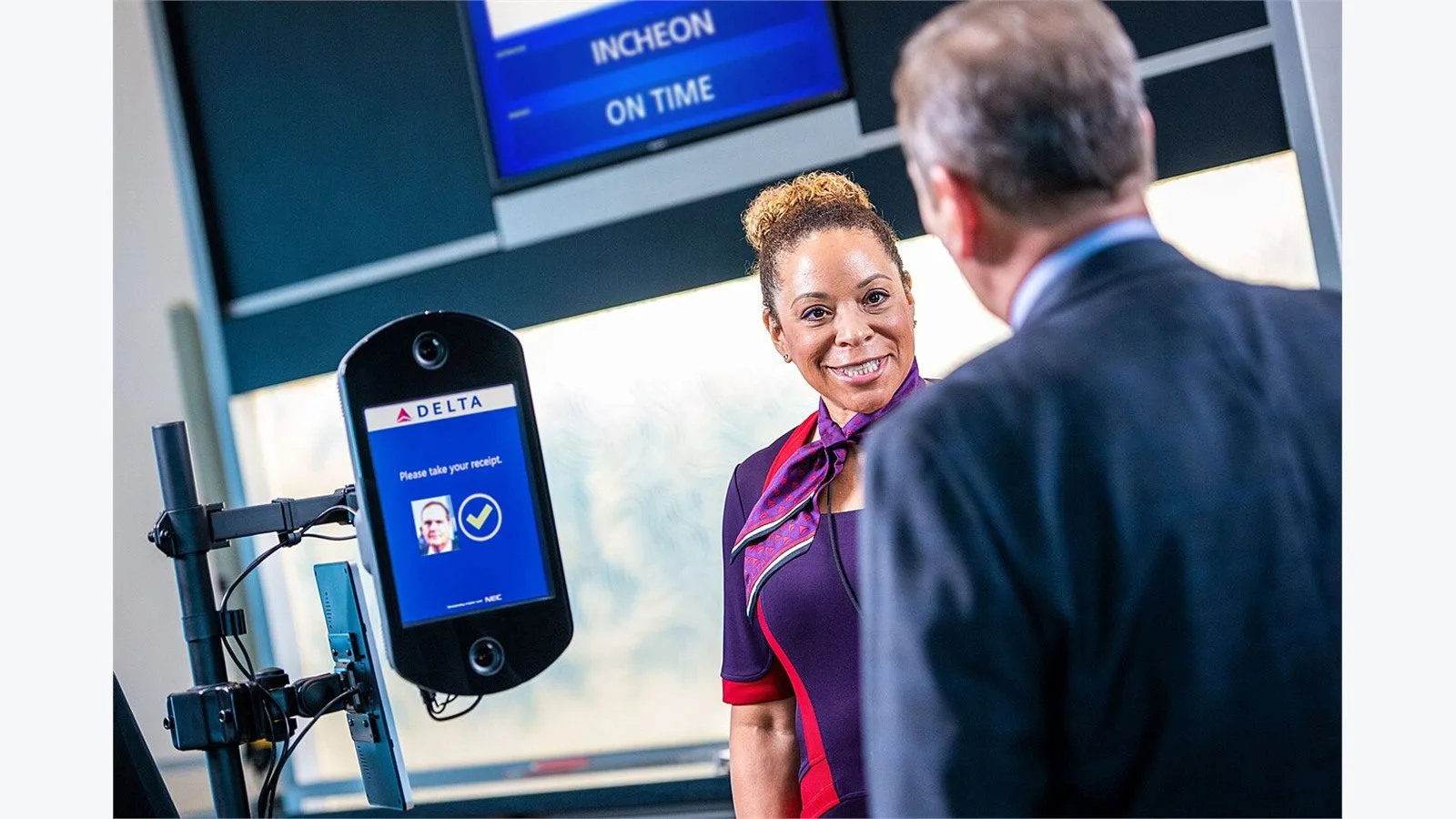
Clarifai OkCupid photos have become a sharp case study in what can go wrong when consumer data, facial recognition, and weak consent rules collide. The latest reporting says Clarifai deleted 3 million photos that OkCupid had provided for facial recognition AI training, along with the models built from that data. That makes this story much bigger than one company cleaning up old datasets. It is a direct warning about how casually sensitive consumer images can move into machine learning pipelines.
The reason Clarifai OkCupid photos matter now is that regulators have finally put a clear public frame around what allegedly happened. In its March 2026 action against Match and OkCupid, the FTC said OkCupid shared nearly 3 million user photos plus related location and other information with an unrelated third party, even though OkCupid’s privacy promises did not describe that kind of transfer and users were not given a meaningful opt-out path. Reuters later reported that Clarifai deleted the images and any models trained on them after the scrutiny intensified.
Primary coverage for this story includes Reuters on the post-FTC deletion of OkCupid user data, TechCrunch on Clarifai deleting the 3 million photos and models, and Ars Technica on the FTC’s allegation that OkCupid shared nearly 3 million photos.
For teams working on Artificial Intelligence (AI) and Machine Learning (ML), AI strategy, and workflow automation, Clarifai OkCupid photos are not just a privacy story. They are a governance story about data lineage, vendor control, consent integrity, and what happens when product growth logic outruns policy discipline.
| Topic | What to know |
|---|---|
| Core allegation | The FTC said OkCupid shared nearly 3 million user photos and related data with an unrelated third party |
| Third party | The data recipient was allegedly Clarifai, which was seeking training data for facial recognition models |
| Time period | The FTC says the sharing dates back to 2014 |
| Why it surfaced | A 2019 New York Times report drew attention to Clarifai’s use of dating-app images in facial analysis work |
| What changed | Reuters reported that Clarifai deleted the photos and models trained on them |
| Legal result | Match and OkCupid settled with the FTC without admitting the allegations |
| Strategic lesson | AI teams need stronger consent, provenance, and third-party training-data controls |
What the FTC says happened
The clearest public account of Clarifai OkCupid photos comes from the FTC’s own complaint and settlement summary. The commission says OkCupid shared nearly three million user-uploaded photos, along with location and other information, with a third party that was not a service provider, family affiliate, or disclosed business partner under the app’s own privacy framing. According to the agency, consumers were not properly informed and were not given a meaningful opportunity to opt out.
That point matters because Clarifai OkCupid photos were not presented by regulators as a routine vendor-processing arrangement. The FTC’s theory is that the transfer sat outside the kinds of data sharing OkCupid had told users to expect. The agency also said the third party asked for large datasets because OkCupid’s founders were financial investors in that company, which turns the story from a vague privacy lapse into something that looks more like a hidden strategic data handoff.
The FTC further alleged that Match and OkCupid took extensive steps to deny or conceal the sharing after it became public, including conduct that the agency says obstructed its investigation. Whether one frames the case as a privacy-policy failure, a consent failure, or a disclosure failure, Clarifai OkCupid photos now sit inside a formal regulator narrative rather than rumor or forum speculation.
How nearly 3 million photos moved from OkCupid to Clarifai

The most uncomfortable part of the Clarifai OkCupid photos story is not only the scale. It is the data path. Per the FTC and later reporting, the transfer appears to have started in 2014, when Clarifai sought large image datasets that could help it train facial recognition and related classification systems. TechCrunch, citing Reuters and court documents, reported that Clarifai later said it deleted the photos and the models trained from them.
That means Clarifai OkCupid photos were allegedly not just stored as dormant files. They were valuable as training material. A 2019 New York Times report had already drawn attention to Clarifai’s use of dating-app imagery in tools that could estimate age, sex, and race from facial photos. Once that older report is combined with the FTC’s complaint and Reuters’ latest deletion update, a clearer pipeline emerges: acquisition, model training, public scrutiny, regulatory pressure, and eventual deletion.
For AI builders, the operational lesson is straightforward. Data ingestion is never just a collection step. The moment a dataset enters a model-development workflow, it can shape embeddings, weights, benchmarks, demos, and internal assumptions. Clarifai OkCupid photos show why deleting raw files later is important, but also why companies need to know exactly which downstream artifacts were influenced by those files in the first place.
Why Clarifai’s deletion matters now
On one level, the deletion is the right move. If Clarifai OkCupid photos were obtained through a chain that regulators say violated user expectations and privacy promises, then removing the images and trained models is the bare minimum corrective action. Reuters’ report matters because it suggests the cleanup was not symbolic. The reported deletion extended to model outputs tied to the dataset, which is the harder and more consequential part of the remedy.
But Clarifai OkCupid photos also show why remediation is always slower and more expensive than governance on the way in. Once a dataset has touched training workflows, every team has to answer hard questions. Were internal models fine-tuned on it? Were benchmarks built from it? Were derivative models or feature demonstrations influenced by it? Was any downstream customer output shaped by those systems? Deletion is necessary, but it is still a late-stage response to an avoidable control failure.
This is why the case matters beyond privacy headlines. Clarifai OkCupid photos highlight a broader AI accountability problem: the industry still does a better job scaling model experimentation than tracing consent boundaries through the full lifecycle of training data. For organisations building serious intelligent automation programs, that is not a side issue. It is a core operating risk.
Why dating-app photos are especially sensitive training data

Not all image datasets carry the same ethical weight. Clarifai OkCupid photos are especially sensitive because dating-app images are deeply personal, identity-linked, and highly contextual. Users upload them for self-presentation, matching, and communication in a narrow social environment. They do not reasonably expect those images to become inputs for facial recognition training unless the app clearly explains that possibility and obtains meaningful consent.
That context is what makes Clarifai OkCupid photos more troubling than a generic dispute over ad-tech sharing or internal analytics. Dating profiles often combine face images with age, location, preferences, and other traits that can heighten inference risks. When that kind of material becomes machine learning input, the sensitivity is not just visual. It is relational. It ties a face to a behavioral and social context the user never meant to donate to an AI lab.
There is also a public-trust cost. If users believe profile photos can quietly migrate into training datasets, they will not simply worry about one app. They will worry about the wider ecosystem of platforms asking for intimate, identity-rich media. Clarifai OkCupid photos therefore sit at the intersection of privacy law, biometric anxiety, and platform trust erosion.
What the Match and OkCupid settlement changes
The settlement does not magically erase the history behind Clarifai OkCupid photos, but it does set a clearer compliance boundary. The FTC said OkCupid and Match are permanently prohibited from misrepresenting how they collect, use, disclose, delete, or protect personal information, including photos, demographic data, and geolocation data. They also cannot misrepresent the purpose of those practices or the consumer controls attached to them.
One detail worth understanding is that the case did not produce a monetary penalty. That has led some observers to understate the seriousness of the matter. But in privacy enforcement, declarative restrictions can still matter because they formalize future liability. Clarifai OkCupid photos pushed the issue into a posture where any repeat misrepresentation could become far more costly.
The settlement also matters as a signal to product teams. If your privacy policy says one thing and your data-sharing relationships do another, regulators will treat that mismatch as an actionable deception issue. Clarifai OkCupid photos are a reminder that privacy language is not just marketing copy. It is an operational commitment that must match engineering reality.
What AI companies should learn next
The first lesson from Clarifai OkCupid photos is provenance discipline. AI teams should be able to document where training data came from, why it was collected, what permissions covered it, what restrictions governed it, and which models or experiments it touched. If a company cannot answer those questions quickly, it is not ready for high-stakes data partnerships.
The second lesson is that consent has to survive translation from policy to pipeline. Legal approval, product assumptions, vendor handoffs, and model experimentation can each distort the original user expectation. Clarifai OkCupid photos became a problem because the consent boundary appears to have broken before it reached the technical workflow. That is exactly the kind of failure companies should pressure-test during reviews of AI strategy and delivery design.
The third lesson is practical governance. Companies should maintain model lineage logs, data-retention maps, deletion playbooks, vendor restrictions, and escalation paths for challenged datasets. Clarifai OkCupid photos are not a weird corner case. They are what happens when dataset hunger collides with weak controls. If your team wants to turn those lessons into a more durable operating model, contact Progressive Robot to design a privacy-aware AI workflow that can scale without drifting into preventable risk.
FAQ

What are Clarifai OkCupid photos?
Clarifai OkCupid photos refers to the nearly three million OkCupid user photos that regulators say were shared with an unrelated third party and later reported as deleted by Clarifai after scrutiny over facial recognition training.
Did Clarifai really delete the images?
Reuters reported that Clarifai deleted the photos and the models trained on them. That report is the strongest public update so far on what happened after the FTC action against Match and OkCupid.
Why is this story important for AI governance?
Clarifai OkCupid photos show how easily sensitive user media can move into training pipelines when provenance, consent, and vendor oversight are weak. The case is a practical warning for any team building image-based AI systems.
Did Match and OkCupid admit wrongdoing?
No. The companies settled with the FTC without admitting the allegations, but the settlement still imposes binding restrictions on how they can describe and manage user data practices going forward.
What is the biggest lesson for product teams?
The biggest lesson from Clarifai OkCupid photos is that privacy promises must match real system behaviour. If there is a gap between policy, partner access, and model training workflows, a later cleanup will be far more expensive than preventing the issue up front.
More AI coverage: explore Progressive Robot's AI Models, Tools & Releases hub — hands-on reviews, setup guides and benchmarks in one place.










