
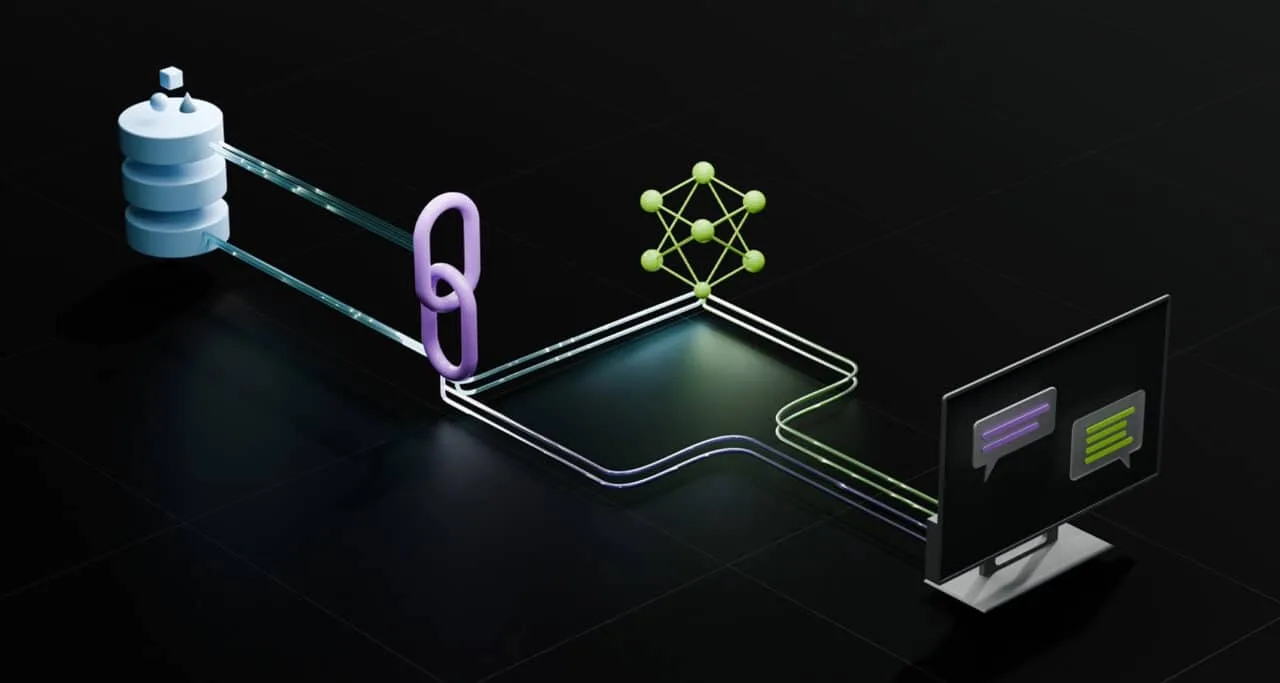
Customer service departments face growing pressure to deliver instant, accurate responses. A RAG application provides the perfect solution by combining AI smarts with your company’s specific knowledge. This powerful technology is changing how businesses handle customer inquiries.
Traditional chatbots often struggle with company-specific queries. RAG technology solves this by accessing your business documents and knowledge bases. This ensures responses reflect your actual policies, products, and procedures rather than generic information.
Implementing this technology offers multiple advantages for customer service teams. Response times decrease dramatically while answer quality improves significantly. Support staff can focus on complex cases while routine inquiries get automated.
This guide explores how RAG systems function and their benefits for customer support. We’ll examine the technical components and implementation process. You’ll discover how this solution enhances both customer and employee experiences.
What Is a RAG Application?

RAG systems merge two advanced AI capabilities. First, they search through organizational knowledge sources to find relevant information. Then, they formulate natural-sounding responses using this retrieved content.
The retrieval component scans documents, FAQs, and databases. It identifies the most pertinent information for each customer question. The generation component then crafts coherent, conversational replies based on this data.
Unlike standard language models, RAG systems maintain current knowledge. They incorporate updates to policies or products immediately. This eliminates the need for frequent model retraining while ensuring accuracy.
These systems excel at handling diverse customer inquiries. They can address product questions, troubleshooting, and policy explanations with equal competence. Performance improves continuously as more organizational knowledge gets added.
Various industries successfully employ this technology. Retailers use it for product specifications. Financial institutions apply it to account inquiries. Healthcare providers utilise it for patient information delivery.
Why Customer Service Needs RAG Applications

Customer expectations continue rising while support teams face resource constraints. RAG technology effectively bridges this gap by automating quality responses.
Immediate response capability reduces customer wait times substantially. The system provides accurate answers within seconds, available 24/7. This boosts satisfaction metrics while alleviating agent workload.
Response consistency improves dramatically across all channels. Unlike human agents who may interpret information differently, the system delivers uniform answers. This ensures all customers receive correct, up-to-date information.
New team members benefit from built-in knowledge access. The system serves as an always-available training resource. Seasoned agents can concentrate on complex cases requiring human judgment.
Scalability becomes more manageable with automated solutions. The technology handles thousands of simultaneous inquiries effortlessly. Business growth or seasonal spikes no longer require proportional staffing increases.
Key Components of a RAG Application

Effective implementations require several integrated elements. The knowledge repository stores organizational information in accessible formats. This includes manuals, policies, product details, and historical support interactions.
The retrieval mechanism identifies relevant document segments for each query. It employs semantic understanding rather than simple keyword matching. This ensures truly pertinent information gets selected for response formulation.
Advanced language models generate natural-sounding responses. Contemporary systems produce human-like text while maintaining brand voice consistency. Response quality continues improving with technological advancements.
Text embedding converts information into numerical representations. This enables the system to understand content relationships and meanings. High-quality embeddings significantly enhance both retrieval accuracy and response relevance.
User interfaces facilitate customer and agent interactions. Integration options include website chat widgets and support desk software. Intuitive design ensures accessibility for all users.
Performance monitoring tools provide continuous improvement insights. They identify successful interactions and areas needing enhancement. Regular updates maintain system effectiveness over time.
Building Your RAG Application: Step-by-Step

Begin by compiling and organising knowledge resources. Gather support documents, product manuals, and policy guidelines. Remove outdated or duplicate content to ensure data quality.
Select appropriate AI models balancing performance and cost. Consider factors like accuracy requirements and data privacy concerns. Both open-source and commercial options exist for different needs.
Develop the information retrieval pipeline. This involves creating searchable knowledge representations and establishing relevance algorithms. Multiple approaches may require testing to determine optimal performance.
Integrate the retrieval system with response generation capabilities. Implement quality controls to prevent incorrect or inappropriate answers. Establish protocols for escalating complex queries to human agents.
Design user-friendly interaction interfaces. Ensure seamless customer experiences across all touchpoints. Include clear options for connecting with live support when necessary.
Conduct thorough testing before full deployment. Involve actual users to identify improvement opportunities. Monitor initial performance closely and make necessary adjustments.
Best Practices for RAG Application Success
Prioritise knowledge base quality and organisation. Well-structured, accurate content directly impacts system performance. Establish processes for regular content reviews and updates.
Implement comprehensive monitoring from launch. Track resolution rates and customer satisfaction metrics. Use these insights to guide continuous system improvements.
Maintain appropriate human oversight mechanisms. Regularly review system interactions for quality assurance. Ensure smooth escalation paths for complex or sensitive matters.
Customise the solution for specific industry requirements. Different sectors have unique compliance and communication needs. Tailor the system accordingly for optimal results.
Train support teams to collaborate effectively with the technology. Help them understand its capabilities and limitations. Encourage feedback to identify enhancement opportunities.
Plan for ongoing system evolution. Both technological advancements and business changes necessitate regular updates. Maintain a roadmap for continuous improvement.
Real-World Benefits of RAG Applications
Organisations report substantial operational improvements. Response time reductions often exceed 80%, dramatically enhancing customer experiences.
Support costs decrease significantly through automation efficiency. Teams reallocate saved time to high-value interactions, improving both productivity and job satisfaction.
Customer satisfaction metrics typically show marked improvement. Accurate, immediate responses create positive experiences that boost loyalty and retention.
Knowledge management processes become more effective. The system highlights documentation gaps, strengthening organizational knowledge assets.
Scalability challenges diminish substantially. The technology effortlessly handles volume fluctuations without additional staffing requirements.
Future of RAG Applications in Customer Service
Technological advancements will continue enhancing capabilities. Models will become more sophisticated while implementation simplifies.
Multimodal systems incorporating visual elements will emerge. Voice interfaces and real-time translation will expand accessibility.
Integration with business systems will deepen. Automated interaction logging and CRM updates will create seamless customer journeys.
Personalisation capabilities will advance significantly. Systems will recall individual preferences and interaction histories for tailored responses.
Proactive support features will develop further. Predictive capabilities will address issues before customers recognise them.
Getting Started with Your RAG Application
Begin with a focused pilot project to demonstrate value. Select high-impact use cases that showcase quick wins.
Consider expert partnerships for optimal results. Progressive Robot specializes in AI solutions for customer service transformation.
Establish clear success metrics from the outset. Track performance indicators like resolution rates and satisfaction scores.
Plan for iterative expansion based on results. Use initial successes to build support for broader implementation.
Develop a long-term optimisation roadmap. Continuous improvement maximizes ongoing value from the investment.
Conclusion
RAG technology represents a transformative opportunity for customer service. It combines organizational knowledge with advanced AI for superior support experiences.
Implementation delivers measurable business benefits. Reduced costs, improved efficiency, and enhanced satisfaction make the investment compelling.
Progressive Robot helps businesses harness this technology effectively. Our expertise ensures successful deployment and maximum value realization.
More AI coverage: explore Progressive Robot's AI Models, Tools & Releases hub — hands-on reviews, setup guides and benchmarks in one place.










