Green IT sustainability is moving from a broad environmental promise to a measurable business discipline. For UK organisations, the pressure is no longer only to say that technology estates are becoming more efficient. The pressure is to show what changed, what it saved, what it reduced, and how those numbers connect to reporting obligations.
That matters because energy-efficient systems now sit at the intersection of IT strategy, finance, operations, and compliance. A server refresh, cloud optimisation project, building management upgrade, endpoint replacement cycle, or smart metering programme may all reduce consumption. But under stronger transparency expectations, the useful question is not simply whether the system is greener. It is whether the organisation can prove the tangible value.
Green IT sustainability gives leaders a practical way to connect technology work to energy use, emissions, cost, resilience, and disclosure. The companies that do this well will not treat energy efficiency as a side project. They will treat it as evidence that technology decisions are being governed.
This article draws on the UK government’s UK Sustainability Reporting Standards exposure drafts, the environmental reporting guidance for Streamlined Energy and Carbon Reporting, the Energy Savings Opportunity Scheme, and IFRS S1 and S2 to explain how to measure the value of energy-efficient systems.

Green IT sustainability at a glance

Green IT sustainability is the discipline of reducing the environmental and financial impact of digital systems while preserving, or improving, business performance. It covers hardware, software, cloud, data centres, workplace devices, building technology, energy monitoring, procurement, and lifecycle management.
The tangible value comes from turning technical improvements into numbers that executives can defend.
| Measurement area | What to track | Why it matters |
|---|---|---|
| Energy | kWh avoided, peak demand reduced, load shifted | Shows whether systems are actually using less energy |
| Carbon | Scope 2 and relevant Scope 3 emissions reduced | Connects technology projects to climate reporting |
| Cost | Energy spend avoided, cloud waste removed, maintenance savings | Gives finance a measurable business case |
| Performance | Uptime, response time, utilisation, asset life | Prevents efficiency from weakening service quality |
| Governance | owner, baseline, assumptions, evidence, review cadence | Makes the numbers audit-ready and repeatable |
The programme is strongest when each project has a baseline, a calculation method, and a named owner. Without that structure, the organisation may have activity, but it will not have evidence.

Why UK transparency rules change the business case

The UK’s reporting landscape is becoming more evidence-led. The government’s UK Sustainability Reporting Standards consultation says the UK SRS will serve as a foundation for sustainability-related financial information and is based on IFRS S1 and IFRS S2. Those standards focus on governance, strategy, risk management, and performance against sustainability-related risks and opportunities.
That does not mean every organisation must immediately report under UK SRS. It does mean the direction of travel is clear: sustainability claims need to be decision-useful, financially relevant, and connected to governance. Green IT sustainability therefore has to be expressed in the language of risk, opportunity, cost, and performance.
Existing UK rules already push in the same direction. Streamlined Energy and Carbon Reporting requires quoted companies to report global energy use and greenhouse gas emissions in the Directors’ Report. Large unquoted companies and large LLPs must disclose annual energy use, emissions, and related information. The government guidance also encourages other organisations to report similarly on a voluntary basis.
ESOS adds another layer for qualifying large UK undertakings. The scheme requires assessments of energy used by buildings, industrial processes, and transport. It also requires energy intensity ratios, evidence packs, board-level sign-off, and, for Phase 3, action plans followed by annual progress updates. The guidance notes that participants are expected to produce an ESOS report, action plan, and annual progress reports, and that high-level recommendations will be publicly disclosed.
This matters because technology teams control many of the systems that generate the evidence. If IT cannot show baselines, kWh reductions, cost impacts, and operational tradeoffs, sustainability reporting becomes a manual scramble.
What tangible value means for energy-efficient systems
The phrase tangible value is useful because it stops Green IT sustainability from becoming a branding exercise.
A tangible value claim should answer five questions.
- What system changed?
- What baseline was used?
- What energy, emissions, cost, or risk changed after implementation?
- What assumptions were used to calculate the result?
- Who owns the evidence and review cycle?
For example, replacing ageing servers with more efficient hardware is not automatically a sustainability win. The organisation needs to compare the old estate with the new estate, include utilisation, cooling impact, expected service life, embodied carbon considerations where possible, and any shift to cloud or colocation. A cloud rightsizing project should not only report lower monthly spend. It should show whether fewer instances, storage tiers, idle workloads, and scheduling rules reduced energy-linked activity without damaging user experience.
The work becomes tangible when projects can be translated into measurable outcomes: kWh avoided, carbon reduced, spend avoided, assets retired, downtime reduced, or reporting effort removed.
That last category is easy to miss. A system that automates energy data capture may not reduce electricity use by itself, but it can reduce reporting labour, improve data quality, and make ESOS or SECR evidence easier to defend. For many firms, workflow automation will be part of the sustainability stack because manual spreadsheets are a weak foundation for transparent reporting.
7 metrics that show tangible Green IT sustainability value
Green IT sustainability needs a short list of metrics that executives, finance, facilities, and IT can all understand. The goal is not to measure everything. The goal is to measure enough to show whether energy-efficient systems are producing real value.
1. Energy consumption before and after the project
Start with kWh. It is the simplest bridge between engineering decisions and reporting obligations.
For each project, define the boundary. Is the measurement for one office floor, one data room, one application, one building, one cloud environment, or one device fleet? Then capture a baseline period long enough to avoid misleading comparisons. For seasonal systems, such as heating, cooling, and building management, a short comparison window may distort the result.
This depends on a defensible baseline. If the baseline is unclear, the savings figure will be hard to trust.
2. Energy intensity ratios
ESOS guidance requires participants to calculate energy intensity ratios for buildings, transport, industrial processes, and other energy uses. The purpose is comparison over time.
IT leaders can adapt the same logic. Useful ratios might include kWh per employee, kWh per transaction, kWh per square metre, kWh per server workload, kWh per production unit, or cloud spend per business output. These ratios help leaders avoid a common trap: celebrating lower absolute consumption when business activity also fell.
Green IT sustainability should show whether technology became more efficient relative to the work the business actually performed.
3. Emissions impact
Energy-efficient systems usually affect emissions through reduced electricity consumption, better load timing, lower fuel use, or reduced demand for cooling. The emissions calculation should use an agreed conversion method and be kept with the project evidence.
For SECR and climate-related reporting, emissions value is not a marketing line. It is part of the link between operational activity and disclosed environmental performance. If a project reduces electricity consumption but shifts compute to a supplier, the organisation may also need to understand whether the impact moved from direct energy reporting into supplier or cloud-related emissions.
The measurement model should therefore track both direct reductions and boundary changes.
4. Cost avoided and payback period
Energy efficiency has to compete with other investment priorities. Finance teams need a clear view of capital cost, implementation cost, operational savings, maintenance savings, and payback period.
A good model separates one-off savings from recurring savings. It also avoids double counting. For example, a building controls upgrade may reduce electricity use, cut reactive maintenance, and improve comfort. Those benefits are related, but they should be calculated separately so the business case stays credible.
Green IT sustainability earns executive attention when it can show which projects create fast payback, which create risk reduction, and which support longer-term compliance.
5. Utilisation and waste reduction
Energy-efficient hardware can still be wasteful if utilisation is poor. Cloud platforms can still be inefficient if idle instances, oversized databases, orphaned storage, and unnecessary test environments keep running.
Measure utilisation before buying more capacity. Track server utilisation, storage growth, cloud instance rightsizing, endpoint replacement cycles, and workload scheduling. For AI and analytics workloads, include usage windows and demand peaks. If the organisation is experimenting with autonomous AI agents, energy and cloud governance should be part of the operating model from the beginning.
Green IT sustainability is not only about buying efficient systems. It is about using systems efficiently.
6. Service quality and resilience
Efficiency gains are not valuable if they weaken operations. Track uptime, response times, thermal events, support tickets, maintenance windows, user experience, and recovery objectives.
This matters because poorly designed energy cuts can create hidden costs. Under-cooled equipment may fail earlier. Aggressive device power policies may frustrate users. Cloud shutdown schedules may interrupt teams working across time zones. A credible Green IT sustainability model shows the tradeoff between lower consumption and service quality.
The best projects reduce waste while improving resilience.
7. Evidence quality
Evidence quality is a metric in its own right. A project is more valuable if the result can be reproduced, reviewed, and explained.
Track where the data came from, who approved the assumptions, how often the metric is refreshed, and where supporting files are stored. For ESOS, organisations must keep records in an evidence pack. For broader sustainability reporting, the same discipline helps finance, audit, and leadership trust the numbers.
Green IT sustainability becomes more valuable when evidence is audit-ready by design.
How to build a measurement model

A measurement model does not need to be complicated. It needs to be consistent.
Start with an inventory. List the systems that materially affect energy use or reporting quality: data rooms, cloud platforms, end-user devices, building management systems, HVAC controls, lighting controls, UPS units, networking equipment, manufacturing systems, smart meters, and reporting tools.
Then group projects into three categories.
- Efficiency projects reduce energy consumption directly.
- Control projects improve monitoring, scheduling, automation, and utilisation.
- Evidence projects improve data quality, reporting speed, and auditability.
For each project, define a baseline, measurement period, owner, calculation method, and review cadence. The baseline should be specific enough to survive scrutiny. A vague statement such as “old systems used more energy” will not help a board sign off a progress update. A better baseline states the metered kWh, period measured, activity level, and the reason that period is representative.
Green IT sustainability also needs a value stack. The same project may create several types of value: lower energy cost, lower emissions, reduced failure risk, improved staff comfort, better reporting data, and a clearer procurement standard. List those benefits separately and mark which are measured, estimated, or qualitative.
Finally, make the model visible. Put the Green IT sustainability scorecard in the same governance rhythm as budget reviews, cyber risk, cloud cost, and capital planning. That is how energy-efficient systems move from facility upgrades into executive decision-making.

Where energy-efficient systems create value

The biggest opportunities vary by sector, but several systems commonly matter.
Cloud and hosting. Rightsizing, scheduling, storage tiering, region selection, workload retirement, and better architecture can reduce waste. The business value is lower spend, cleaner supplier governance, and better visibility into digital demand.
Data rooms and on-prem infrastructure. Server consolidation, more efficient cooling, airflow management, UPS modernisation, virtualisation, and hardware lifecycle planning can reduce energy use while improving resilience.
Building management systems. Smart controls, occupancy-linked lighting, HVAC optimisation, and sensor data can reduce waste in offices, warehouses, and production environments.
End-user devices. Laptop refreshes, power management, repairability, device sharing, and responsible disposal affect both energy use and procurement impact.
Industrial and operational technology. Motors, controls, monitoring systems, and production scheduling can produce large energy improvements when IT and operations share data.
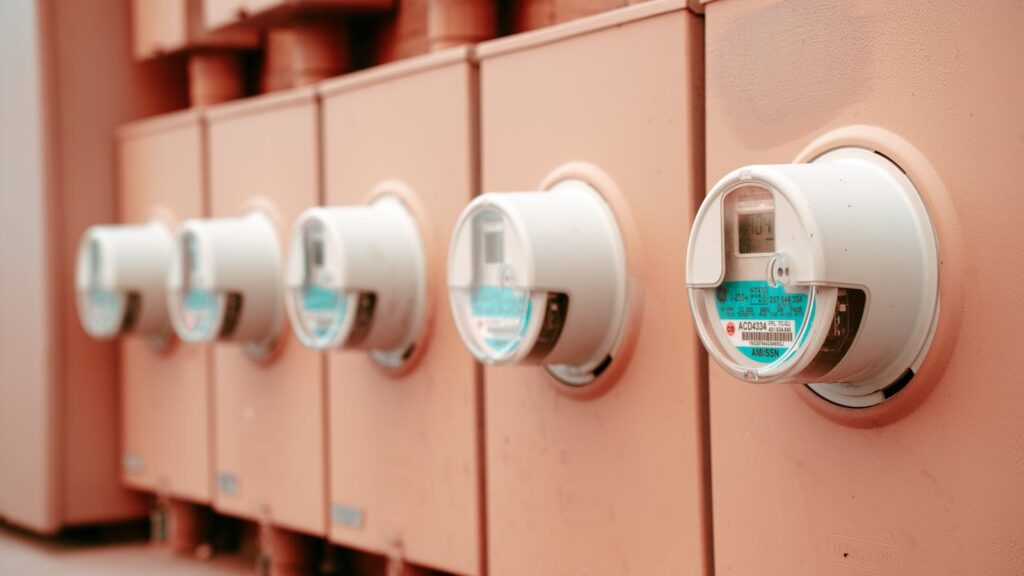
Reporting systems. Energy data platforms, finance integrations, supplier data workflows, and automated checks can reduce the manual effort behind SECR, ESOS, and emerging sustainability reporting.
Green IT sustainability should not treat all systems equally. Start with materiality: where energy use is high, where reporting risk is high, and where improvement can be measured.
Governance: who owns the numbers?
The hard part is rarely the spreadsheet. The hard part is ownership.
Green IT sustainability needs a governance model that connects IT, finance, facilities, sustainability, procurement, and operations. Each team sees part of the picture. IT sees systems and workloads. Facilities sees meters, cooling, buildings, and maintenance. Finance sees costs and capital planning. Sustainability sees reporting obligations. Procurement sees suppliers and contracts. Operations sees whether changes work in the real world.
A practical governance model has four roles.
- Data owner. Responsible for source data and measurement quality.
- Project owner. Responsible for implementation and benefit tracking.
- Finance reviewer. Responsible for cost, savings, payback, and double-count checks.
- Reporting owner. Responsible for SECR, ESOS, UK SRS readiness, or voluntary reporting use.
Green IT sustainability gets stronger when these roles are named before a project starts. Otherwise, the organisation may finish the technical work and only later discover that nobody captured the baseline.
Director sign-off under ESOS also makes governance important. A board-level director or equivalent must sign off action plans and annual progress updates. That sign-off is easier when technology projects have clear ownership and evidence from the beginning.
A 90-day roadmap for UK organisations
A 90-day roadmap can make Green IT sustainability practical without waiting for a full transformation programme.
Days 1 to 30: find the material systems. Identify the systems with the highest energy use, cost exposure, reporting relevance, or improvement potential. Gather existing meters, invoices, cloud cost reports, asset data, and maintenance records. Map what already feeds SECR, ESOS, or internal sustainability reporting.
Days 31 to 60: build the measurement model. Choose metrics, baselines, owners, and calculation methods. Select a small number of pilot projects, such as cloud rightsizing, lighting controls, HVAC optimisation, server consolidation, or energy-data automation.
Days 61 to 90: prove value and standardise. Review the first results with finance and sustainability owners. Decide which evidence belongs in the ESOS evidence pack, which numbers support SECR reporting, and which projects should be added to the capital plan. Create a standard template so every future energy-efficient system is assessed in the same way.
Green IT sustainability works best when it becomes a repeatable operating habit. The first goal is not perfection. It is a trusted measurement loop.
The bottom line on Green IT sustainability
Green IT sustainability is no longer just about choosing efficient hardware or buying cleaner technology. It is about proving value in a reporting environment that increasingly rewards credible, decision-useful data.
UK SRS, SECR, ESOS action plans, and IFRS-style climate disclosures all point in the same direction: organisations need to connect sustainability claims to governance, metrics, targets, risk, and financial relevance. Energy-efficient systems can support that story, but only if the organisation measures them well.
The tangible value is not one number. It is a chain of evidence: less energy used, fewer emissions created, lower costs, stronger resilience, better reporting quality, and clearer accountability.
For UK organisations, the real Green IT sustainability opportunity is to make every technology upgrade easier to justify, easier to report, and easier to improve.
Green IT sustainability FAQ

What is Green IT sustainability?
Green IT sustainability is the practice of designing, buying, operating, and retiring technology in ways that reduce environmental impact while supporting business performance. It includes energy-efficient systems, cloud optimisation, device lifecycle management, data centre efficiency, automation, and sustainability reporting evidence.
Why does Green IT sustainability matter for UK transparency rules?
Green IT sustainability matters because UK reporting expectations increasingly require credible data about energy use, emissions, governance, risk, and progress. SECR already requires energy and emissions disclosures for many companies, ESOS requires energy assessments and progress updates for qualifying organisations, and UK SRS points toward decision-useful sustainability reporting.
How do you measure tangible value from energy-efficient systems?
Measure tangible value by comparing a clear baseline with post-implementation results. Useful metrics include kWh avoided, emissions reduced, cost saved, payback period, utilisation improvement, service quality, maintenance impact, and evidence quality.
Which systems should be measured first?
Start with systems that are material to energy use, cost, or reporting risk. Common priorities include cloud workloads, data rooms, building management systems, HVAC controls, lighting, workplace devices, smart meters, and reporting workflows.
Is Green IT sustainability only an IT responsibility?
No. Green IT sustainability needs IT, finance, facilities, procurement, operations, and sustainability teams working together. IT may own many digital systems, but finance validates value, facilities controls buildings, procurement manages suppliers, and reporting teams use the evidence.