

Google Cloud AI chips became one of the most important infrastructure stories from Cloud Next once Google unveiled Ironwood and broadened its newest Nvidia-backed cloud options. The headline shorthand about two new AI chips needs a little cleanup, but the strategic point is still right: Google is trying to make enterprise buyers evaluate a full AI infrastructure platform, not just a single accelerator.
The reason Google Cloud AI chips matter is that enterprise AI buying has moved beyond raw model quality. Teams now care about inference efficiency, high-bandwidth memory, interconnect speed, operating cost, workload fit, software tooling, and how quickly hardware can support real assistants, search systems, and agent workflows in production.
For teams already investing in Artificial Intelligence (AI) and Machine Learning (ML), AI strategy, workflow automation, business process automation, and intelligent automation, this announcement is a planning signal. It tells buyers that Google wants to offer both custom Google silicon and top-tier Nvidia silicon inside one coordinated operating model.
Google’s official Ironwood announcement and the AI Hypercomputer update make the framing clearer than some headlines do. Google Cloud AI chips are not just about one benchmark win. They are about Google building leverage across inference, scale, and procurement.
| Key challenge | Why it matters |
|---|---|
| Ironwood changes the TPU story | Google now has an inference-first TPU to position against heavy GPU demand |
| The headline needs nuance | Official material clearly introduces one new Google chip and new Nvidia-based cloud offerings |
| Performance claims are getting bigger | Google is using compute, memory, and interconnect numbers to shift buyer attention |
| Inference is the real battleground | The fastest-growing enterprise AI workloads need efficient serving, not only giant training runs |
| Google wants a full-stack buying motion | Chips, networking, software, and managed services are being sold together |
| Nvidia remains part of the strategy | Google is competing with Nvidia while also selling Nvidia infrastructure |
| Enterprise evaluation gets harder | Buyers now have to map workloads to the right chip path instead of defaulting to one answer |
Google Cloud AI chips at a glance
The quickest way to understand Google Cloud AI chips is to stop thinking about this as a narrow hardware announcement. Google is trying to prove that it can give enterprises more than one credible path for serious AI workloads. On one side is Ironwood, a new TPU built specifically for inference. On the other side is an expanded Google Cloud path for Nvidia Blackwell-based infrastructure, including A4 and A4X instances.
That mix matters because most enterprises do not buy chips for their own sake. They buy working systems that can serve models, route data, support latency-sensitive tasks, and scale across teams without turning infrastructure into a permanent bottleneck. Google Cloud AI chips are relevant because Google is packaging silicon choice together with managed cloud infrastructure, networking, and orchestration.
The other important detail is timing. Ironwood was introduced at Google Cloud Next ’25 and is scheduled for availability later in 2025. Google also said A4 VMs powered by Nvidia B200 were already generally available, while A4X VMs powered by Nvidia GB200 were in preview. That makes this a live procurement story, not just a distant roadmap slide.
Why Ironwood is the real chip launch
The clearest new Google-designed accelerator in the official launch material is Ironwood. Google describes it as a seventh-generation TPU and, more importantly, its first TPU designed specifically for the age of inference. That is a meaningful shift because inference is where more enterprise AI usage now turns into everyday business value.
Google says Ironwood delivers five times more peak compute capacity than Trillium, six times more high-bandwidth memory capacity, and stronger inter-chip connectivity. The announced numbers are deliberately attention-grabbing: 192 GB of HBM per chip, 7.37 TB per second of HBM bandwidth, and 1.2 TB per second of bidirectional inter-chip bandwidth. Google is clearly using specs to tell the market that its custom silicon can handle scale, not just niche internal workloads.
In practical terms, Google Cloud AI chips are being anchored by Ironwood because the chip gives Google something Nvidia cannot fully control: a Google-owned inference story. Google is also touting 256-chip and 9,216-chip pod configurations, plus major power-efficiency gains versus earlier TPU generations. That combination is meant to appeal to buyers who care about throughput, cost per served query, and long-term operating efficiency.
What the second chip headline actually means
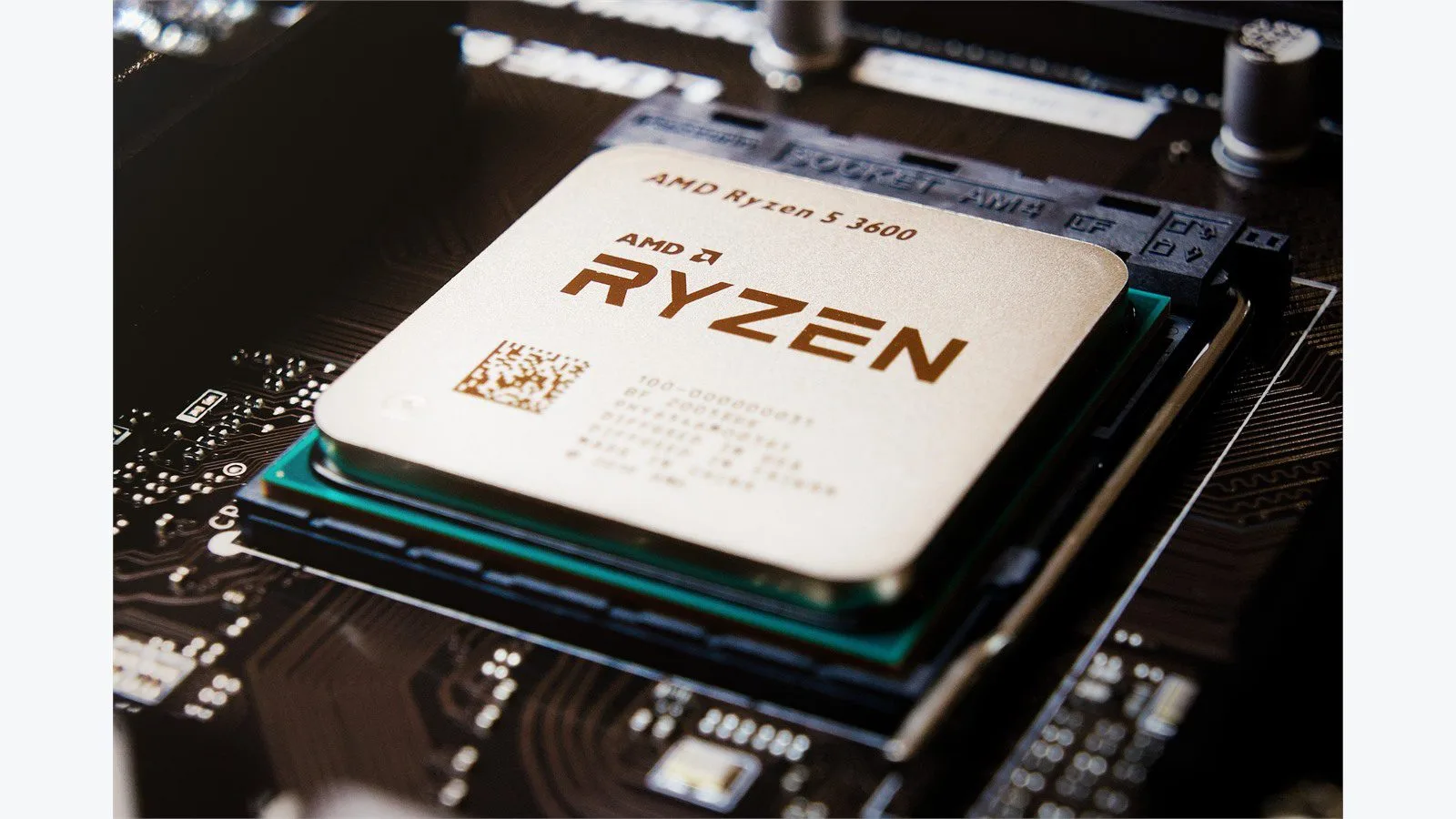
This is where the headline needs precision. The most defensible reading is not that Google launched two newly designed Google chips. The cleaner interpretation is that Google launched Ironwood and, at the same time, expanded its newest Nvidia Blackwell-based infrastructure options inside Google Cloud.
That distinction matters because buyers can make the wrong comparison if they assume Google announced two fresh in-house rivals to Nvidia. Officially, Ironwood is the major new Google chip. The second piece of the story is Google Cloud’s broader access to Nvidia hardware through A4 and A4X systems, not a second new Google-designed TPU.
Even so, the broader headline still captures the business tension. Google Cloud AI chips now sit inside a portfolio where Google can pitch its own TPU for some workloads while also giving customers access to Nvidia B200 and GB200-based options. That is competitive because it keeps Google in the buying conversation even when the final workload decision does not land on a TPU.
How Google Cloud AI chips challenge Nvidia
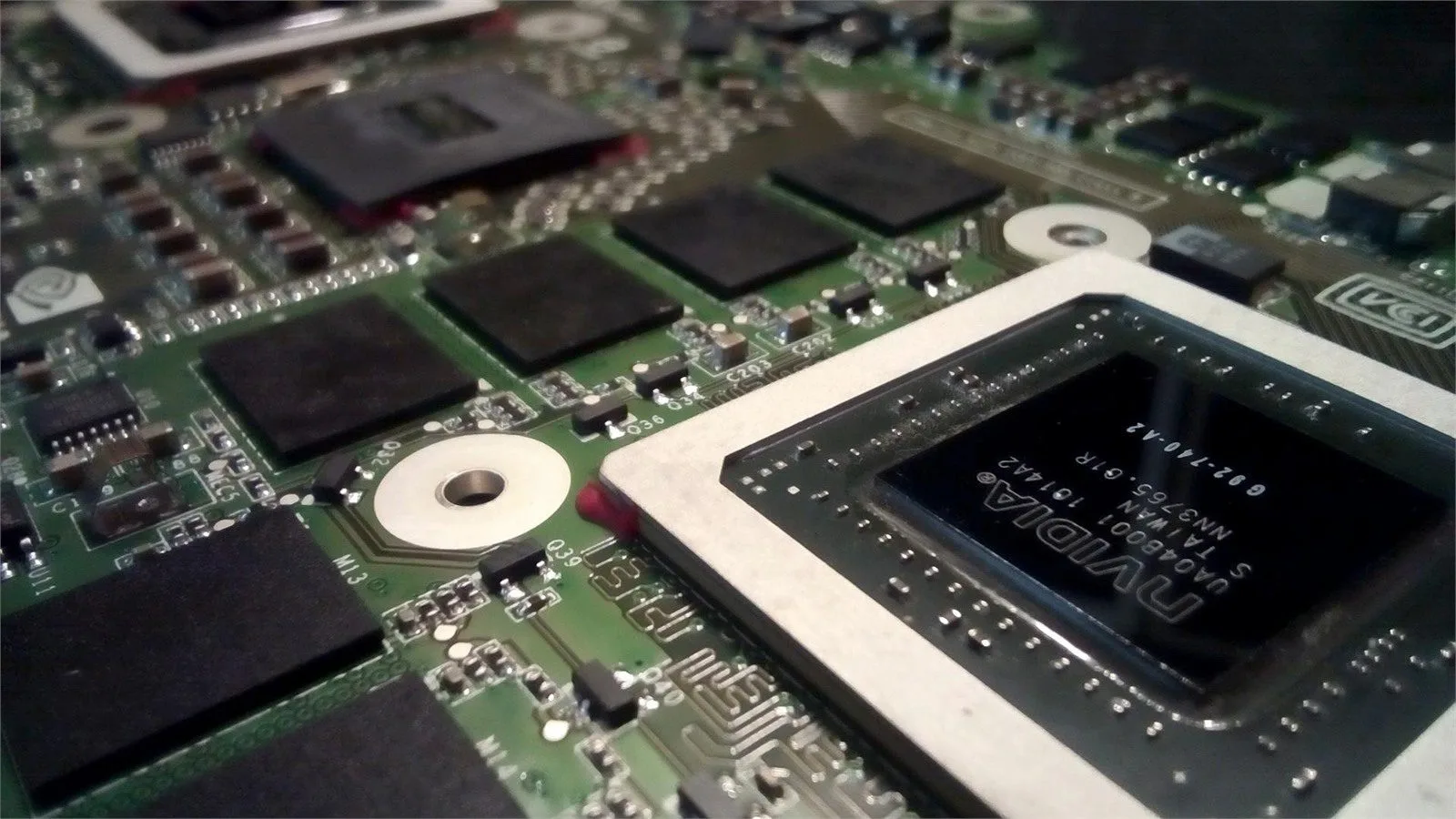
The most interesting part of the competition is that Google is not trying to challenge Nvidia by excluding Nvidia. Instead, Google is challenging Nvidia’s dominance by weakening the assumption that every important enterprise AI workload must begin and end with Nvidia hardware. That is a smarter cloud move than fighting only on headline chip performance.
Google Cloud AI chips are part of a stack contest. Ironwood gives Google a differentiated TPU path for inference-heavy deployments. Nvidia-backed A4 and A4X systems give Google a premium GPU path for customers that want Blackwell performance. AI Hypercomputer ties the story together with networking, software, and managed infrastructure. The result is a portfolio argument rather than a single-chip argument.
That matters because Nvidia’s real advantage has not been only chip design. It has been ecosystem gravity. Nvidia wins when buyers treat the GPU, software layers, and deployment model as one default package. Google Cloud AI chips are a challenge to that pattern because Google is trying to make chip choice feel more conditional, workload specific, and cloud-platform dependent.
Another way to say it is this: Google is competing for the control plane of enterprise AI infrastructure. If it can steer buyers toward TPU-based inference where that makes sense and keep Nvidia-based demand inside Google Cloud where it does not, Google still wins strategic ground.
What enterprise buyers should watch

Enterprise teams should not treat this as a simple Google-versus-Nvidia scoreboard. They should treat it as an architecture question. The first thing to watch is workload fit. Inference-heavy products, retrieval systems, assistants, and agent orchestration may benefit from one path, while large-scale training, model adaptation, or vendor-specific stacks may fit another.
The second issue is availability. Google Cloud AI chips sound strongest when they are presented as a complete menu, but enterprises still need to know what is available now, what arrives later in 2025, and what is only in preview. A promising chip matters less if the scheduling, software support, and regional access do not line up with deployment needs.
Third, buyers should watch total operating cost rather than launch-day compute claims alone. Memory, bandwidth, interconnect, power efficiency, and orchestration costs all affect the real economics of production AI. The more mature your inference workload becomes, the more these details matter.
Google Cloud AI chips also raise a governance question. If different teams end up on different hardware paths, platform leadership has to manage portability, observability, vendor dependencies, and support overhead. The better Google gets at abstracting that complexity, the stronger its position becomes.
How to plan around Google Cloud AI chips now
The best response to Google Cloud AI chips is not hype or dismissal. It is structured evaluation. Start by mapping which workloads are training-heavy, which are inference-heavy, and which need the tightest latency or cost controls. That forces the hardware discussion to follow business requirements rather than announcements.
Next, ask sharper vendor questions. If Ironwood is positioned as inference-first, what does that mean for your serving stack, model tooling, and portability? If Nvidia-backed A4 and A4X are the better fit, what premium are you paying for ecosystem familiarity and speed to deployment? Google Cloud AI chips become useful only when those questions are answered at workload level.
For many teams, Google Cloud AI chips will matter first in pilots for search, summarization, recommendation, and agentic workflow support. Those are the places where inference economics and infrastructure design become visible quickly. If you are evaluating how that fits into a broader automation roadmap, contact Progressive Robot to connect the chip decision to a real operating model instead of a one-off experiment.
The biggest takeaway is simple. Google is no longer asking the market to judge TPUs as side notes. Google wants its silicon, cloud network, and managed AI stack to be considered together. That is why Google Cloud AI chips deserve close attention over the next buying cycle.
Google Cloud AI chips FAQ
What are Google Cloud AI chips?
Google Cloud AI chips describe the infrastructure lineup Google is using to support enterprise AI workloads across its cloud platform, including the new Ironwood TPU and expanded Nvidia Blackwell-based cloud options.
Did Google really launch two new Google-designed chips?
Not in the cleanest official reading. Google clearly introduced Ironwood as the new Google-designed chip, while the second part of the story is the rollout of new Nvidia-backed cloud infrastructure on Google Cloud.
Why is Ironwood important?
Ironwood matters because Google says it was designed specifically for inference. That makes it relevant to the kinds of production AI tasks enterprises increasingly run every day, from assistants and search to agent workflows and large-scale response serving.
Does this mean Google is replacing Nvidia?
No. Google Cloud AI chips are part of a dual-path strategy. Google is trying to expand TPU credibility while also giving customers access to the latest Nvidia systems through Google Cloud.
What should enterprises do next?
Review your workload mix, separate training needs from inference needs, compare availability and software support, and test infrastructure options against real operating constraints before making long-term commitments.
More AI coverage: explore Progressive Robot's AI Models, Tools & Releases hub — hands-on reviews, setup guides and benchmarks in one place.










