

Large Language Models have transformed artificial intelligence, powering tools like ChatGPT and Google’s Gemini. These systems understand and generate human-like text with unprecedented accuracy. This guide explains how they work, how to build them, and their real-world impact.
The rise of these Language Models marks a turning point in AI capabilities. Businesses now use them for customer service, content creation, and data analysis. Understanding their development process helps organisations leverage their potential effectively.
Understanding Large Language Models

Large Language Models are AI systems trained on vast text datasets. They analyse patterns in language to predict and generate coherent responses. The most advanced models use neural networks with billions of parameters.
These models differ from traditional software by learning from data rather than following fixed rules. These Language Models excel at tasks like translation, summarization, and conversation. Their ability to process context makes them invaluable across industries.
Core Technologies Behind Large Language Models
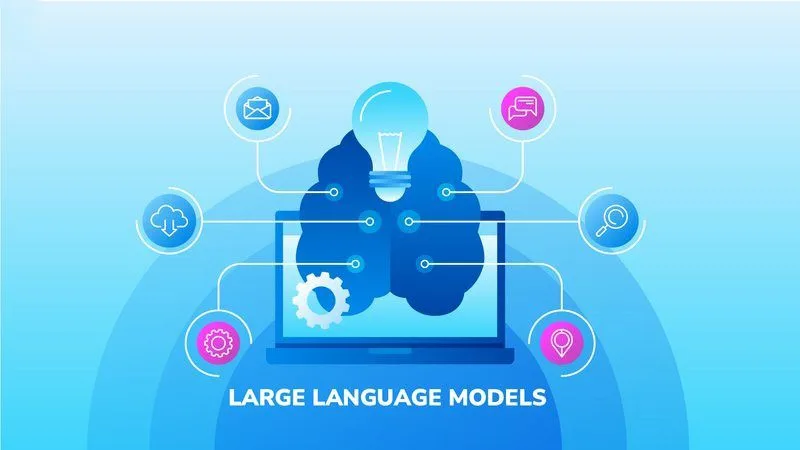
Developing Large Language Models requires specialised infrastructure. Transformer architectures form the foundation, enabling efficient text processing. This breakthrough design allows models to weigh the importance of different words in a sentence.
Training demands massive computing power, typically using GPU clusters. Cloud platforms provide the necessary scalability for such workloads. Frameworks like TensorFlow and PyTorch offer tools for building and refining these complex systems.
The Development Process

Creating Large Language Models begins with data collection. Developers gather diverse text sources to ensure broad language understanding. This data undergoes cleaning and formatting to remove inconsistencies and noise.
Next comes model architecture selection. Choices like GPT or BERT determine how the system processes information. Training occurs in phases, starting with general knowledge before specialising for specific tasks. This staged approach improves efficiency and performance.
Practical Applications

Large Language Models power modern virtual assistants, enabling natural conversations. They help customer service teams handle inquiries faster while maintaining quality. Content creators use them for drafting and editing written material.
In software development, These Language Models assist with code generation and debugging. Researchers employ them for data analysis and knowledge synthesis. Their versatility makes them valuable across multiple professional fields.
Challenges in Large Language Model Development

Despite their potential, Large Language Models present significant challenges. Training requires substantial computational resources, creating high costs. Energy consumption raises environmental concerns that the industry continues addressing.
Bias mitigation remains an ongoing priority since models learn from existing data. Ensuring fair and accurate outputs demands careful oversight. Additionally, legal frameworks around AI usage continue evolving worldwide.
The Future of Large Language Models

Ongoing research focuses on making Large Language Models more efficient. Smaller, specialised versions are reducing resource requirements while maintaining capability. Multimodal systems combining text with images and audio represent the next frontier.
As the technology matures, expect more industry-specific applications. These advancements will make Large Language Models more accessible to businesses of all sizes while expanding their practical uses.
Implementing Large Language Models Strategically

Organisations should approach Large Language Models with clear objectives. Identifying specific use cases ensures effective implementation. Partnering with experienced developers helps navigate technical complexities while optimising results.
A phased rollout allows for testing and refinement. This approach balances innovation with risk management, ensuring sustainable adoption. With proper planning, businesses can harness this transformative technology successfully.
Final Thoughts on Large Language Models
Large Language Models represent a significant leap in AI capabilities. Their ability to process and generate human-like text opens new possibilities across sectors. While challenges exist, ongoing advancements continue expanding their potential.
Businesses that understand and adopt this technology strategically will gain competitive advantages. The key lies in aligning Large Language Models with real-world needs while addressing ethical considerations responsibly.
Professional Support for Large Language Model Projects
Progressive Robot specializes in custom AI solutions, including Large Language Model integration. Our team delivers tailored implementations that meet specific business requirements. Contact us to explore how this technology can benefit your organisation.










