

Cloud Computing Trends for 2025 are set to reshape how businesses operate, innovate, and deliver value in an increasingly digital-first world. As cloud technologies evolve, organisations must adapt to keep pace with new capabilities, tools, and security demands. Let’s explore the key developments defining the future of cloud computing this year.
Edge Computing Goes Mainstream

In 2025, edge computing is no longer an emerging trend—it’s becoming a standard part of cloud infrastructure. As businesses generate more data from IoT devices, smart sensors, and mobile endpoints, there’s a growing need to process data closer to the source.
Edge computing minimizes latency, reduces bandwidth use, and improves response time for mission-critical applications. Cloud providers are investing in edge networks to support low-latency services across industries like healthcare, manufacturing, and logistics.
Multi-Cloud Strategies Gain Momentum
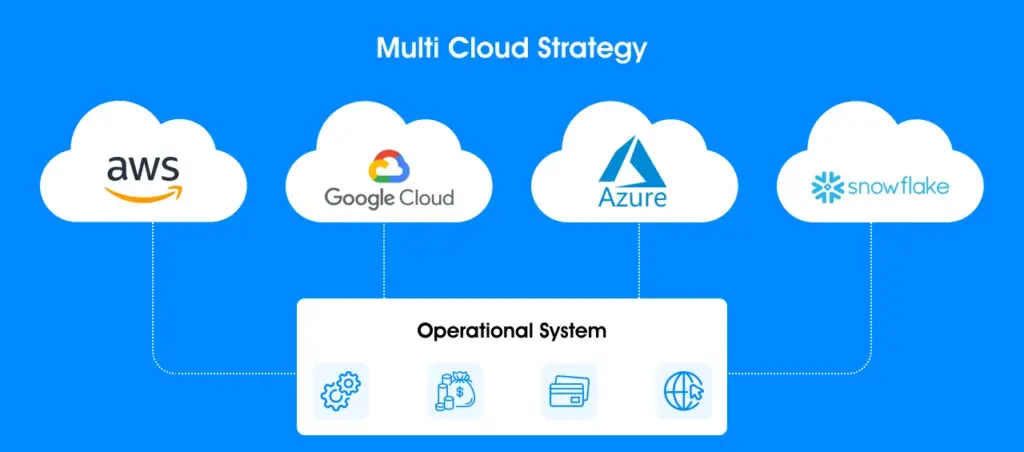
More companies are moving away from single-vendor cloud models in favour of multi-cloud environments. In 2025, this trend continues as businesses seek flexibility, cost optimisation, and risk reduction.
By leveraging multiple cloud providers, organisations avoid vendor lock-in and can use the best services from each platform. Multi-cloud strategies also enhance resilience and ensure compliance with global data regulations by distributing workloads more intelligently.
AI and Cloud: A Perfect Partnership

One of the most important cloud computing trends for 2025 is the tight integration of artificial intelligence with cloud platforms. Major cloud providers are embedding AI into everything—from automation tools and data analytics engines to security and customer support.
AI workloads require vast computing power and storage. The cloud offers scalable infrastructure to train and deploy complex models. Businesses are using AI-driven cloud services for predictive maintenance, sentiment analysis, personalised recommendations, and real-time data processing.
Sustainable Cloud and Green Computing

Sustainability is no longer optional. In 2025, cloud providers are doubling down on eco-friendly practices, aiming for carbon neutrality and greater energy efficiency.
Green data centers, powered by renewable energy and optimised for low-power operations, are becoming standard. Organisations are also using cloud-native tools to measure their digital carbon footprint and optimise resource usage.
Sustainable cloud computing aligns with corporate ESG goals and helps businesses reduce both costs and environmental impact.
Serverless Architecture on the Rise
Serverless computing is gaining strong traction in 2025, especially for developers building agile, scalable applications. In a serverless model, cloud providers manage all infrastructure tasks, allowing developers to focus solely on writing code.
This architecture enables faster deployment, auto-scaling, and lower operational costs. Startups and enterprises alike are embracing serverless for event-driven applications, microservices, and APIs.
Industry-Specific Cloud Solutions Expand

Cloud providers are launching more specialised services tailored to specific industries. These solutions offer pre-built templates, compliance support, and integrations designed for verticals such as healthcare, retail, finance, and education.
In 2025, industry clouds are becoming the go-to option for businesses that want faster time-to-market and out-of-the-box compliance. These purpose-built solutions reduce the complexity of deploying cloud applications while meeting industry-specific regulatory requirements.
Cloud Security Gets Smarter

As cyber threats become more sophisticated, cloud security in 2025 is leveraging AI and machine learning to stay ahead. Modern security tools now detect anomalies in real-time, respond autonomously to attacks, and offer deep visibility across environments.
Zero Trust architecture continues to be a top priority. Cloud providers are enhancing identity management, endpoint protection, and secure access policies. Data encryption, compliance automation, and continuous monitoring are now standard features in most platforms.
Hybrid Cloud Models Thrive

Hybrid cloud—combining public and private cloud resources—is more popular than ever. In 2025, this model allows businesses to keep sensitive data on-premises while enjoying the scalability of public cloud services.
Enterprises with legacy systems or strict data compliance needs find hybrid cloud ideal. The rise of tools like Kubernetes and containers also make it easier to move workloads between environments seamlessly.
Quantum Computing in the Cloud

While still in early stages, quantum computing is becoming part of the cloud computing conversation in 2025. Cloud platforms now offer access to quantum simulators and basic quantum processing units (QPUs) as a service.
Industries such as pharmaceuticals, cryptography, and finance are beginning to experiment with quantum cloud resources for solving complex problems faster than classical computers can handle.
Cloud-Native Development Becomes the Norm

In 2025, cloud-native development isn’t just an option—it’s the default. Applications are now designed to run in the cloud from the ground up, using microservices, containers, and DevOps practices.
This shift leads to faster deployment cycles, easier updates, and better scalability. Teams are adopting CI/CD pipelines, Infrastructure as Code (IaC), and container orchestration tools like Kubernetes to streamline the entire software lifecycle.
Conclusion: Preparing for the Future of Cloud

The Cloud Computing Trends for 2025 show how rapidly the landscape is evolving. From AI integration to sustainable infrastructure, businesses must embrace these shifts to remain competitive.
Whether adopting multi-cloud strategies, exploring edge computing, or investing in serverless development, companies that prioritise innovation and flexibility will lead in the cloud-first era. As cloud services mature, they’re becoming smarter, greener, and more aligned with industry-specific needs.
If you’re looking to future-proof your business, now is the time to reimagine your cloud strategy for 2025 and beyond.










