

Overcoming the Top 10 Challenges in DevOps begins with recognising that DevOps is far more than a toolset or workflow. It is a way of working that eliminates waste, connects teams and accelerates delivery by aligning people, processes and platforms. DevOps uses modern automation, continuous testing, continuous deployment and ongoing feedback loops to build, test and ship high-quality software faster.
When executed well, DevOps transforms organisations by making teams quicker, systems more resilient and problems smaller. It is not a single practice or product but a holistic shift in how companies think about value, quality and collaboration. DevOps emerged from the need to fix something fundamentally broken: the wall that once separated developers focused on change from operations teams focused on stability.
As more companies recognise the competitive advantage offered by DevOps ways of working, investment has climbed rapidly. The DevOps market was valued at about $4.3 billion in 2020. A year later, it grew to $5.1 billion. If growth continues at its current pace, it is projected to reach $12.2 billion by 2026. This represents almost threefold expansion in six years. The growth clearly shows that teams understand the value DevOps services bring to product delivery.
However, despite this rapid adoption, many organisations still struggle with implementing DevOps effectively. The root of these struggles is rarely the tools themselves. DevOps lives and dies based on communication. Without communication, even the best tools fail. With communication, teams can spot issues earlier, respond faster and deploy software that works reliably.
The DevOps Infinity Loop and Its Importance in Overcoming the Top 10 Challenges in DevOps

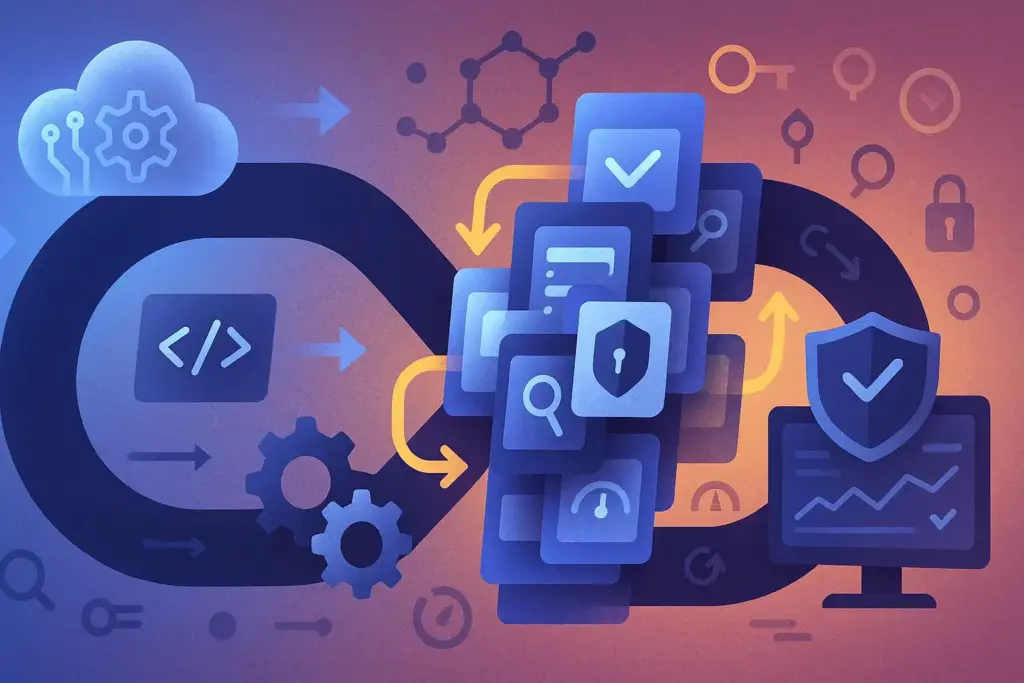
The foundation of overcoming the Top 10 Challenges in DevOps lies in understanding the DevOps infinity loop. Unlike traditional linear development processes, DevOps moves in an interconnected cycle that never ends. The phases include Plan, Develop, Test, Release, Deploy, Operate, Monitor and Feedback. As soon as one cycle completes, the next begins, continually feeding improvement back into the system. Each phase depends on the output of the previous phase.
Each stage informs the next. DevOps is not about speed alone. It is about coordination, rhythm and shared goals. This loop only works when teams communicate and remain aligned. If planning is disconnected from development, mismatched expectations form. If developers do not speak with operations, deployments break. If monitoring data is not communicated back into planning, blind spots remain unresolved.
The loop breaks wherever communication stops. Bugs hide, releases fail, customer satisfaction drops and trust erodes. Tools such as CI/CD pipelines, Kubernetes clusters or cloud platforms can carry the workload, but communication is what keeps the loop turning smoothly. When companies understand this loop holistically, they begin to recognise that overcoming the Top 10 Challenges in DevOps is fundamentally a human and cultural challenge rather than a purely technical one.
Why Challenges Persist and Why Overcoming the Top 10 Challenges in DevOps Matters

Even organisations with advanced tools encounter friction. Too often, the work gets stuck not because of technology but because of people, inconsistent environments, skill gaps or legacy processes that slow progress. The challenges become invisible roadblocks that drain productivity and limit innovation. To achieve true DevOps maturity, teams must acknowledge the reality of these obstacles.
Environment inconsistencies remain one of the most disruptive issues. When development, testing and production environments differ, software behaves unpredictably. A feature that works locally may break entirely in production, leading to wasted time chasing phantom bugs caused not by faulty code but by mismatched dependencies, versions or configurations. This unpredictability slows teams, disrupts release cycles and erodes confidence.
Another major challenge is the existence of team silos and skill gaps. Developers often prioritise speed and change. Operations teams prioritise stability and uptime. QA teams prioritise quality assurance. Product teams prioritise user needs and business outcomes. Without shared understanding or cross-functional training, these teams move in different directions, causing friction, delays and mutual frustration. Overcoming the Top 10 Challenges in DevOps requires breaking down these silos and building shared ownership across the lifecycle.
Outdated practices also hinder DevOps adoption. Some teams still rely on manual approvals, long release cycles and slow, repetitive processes. These antiquated workflows act like rust on machinery, slowing everything down and making it impossible to keep pace with the demands of modern software development.
Monitoring gaps represent yet another issue. Without clear visibility into system performance, teams cannot identify issues early enough to prevent downtime. They end up reacting to problems instead of preventing them. Customers often notice issues before engineering teams do, damaging credibility.
CI/CD pipelines are also prone to becoming bottlenecks. Slow test suites, misconfigured environments, missing dependencies or inefficient build processes can turn fast deployments into gridlock. When pipelines break, teams stop shipping. When they slow down, teams lose momentum.
Automation compatibility issues arise when different tools fail to integrate or when conflicting versions break workflows. Automation is meant to reduce friction, but without careful management, it becomes another source of instability.
Security vulnerabilities persist when security remains an afterthought. When teams focus solely on features and releases without embedding security throughout the entire pipeline, systems become vulnerable to breaches. A single vulnerability can compromise trust and disrupt operations.
Test infrastructure that does not scale is another challenge. As user counts grow, test suites must expand in scope and complexity. However, many organisations maintain test platforms that cannot keep pace with real-world usage patterns, allowing defects to slip through unnoticed.
Debugging suffers when logs and reports are unclear. Cryptic errors, disordered logs or misaligned dashboards make it difficult to identify root causes. Engineering teams spend more time decoding errors than solving actual problems.
Finally, decision-making delays also pose challenges. When there is no clear ownership or authority, teams stall. Without fast decision cycles, releases lag and morale declines. Overcoming the Top 10 Challenges in DevOps requires clarity around ownership, autonomy and accountability.
How Communication Solves Most DevOps Problems and Supports Overcoming the Top 10 Challenges in DevOps
There is no magic platform that fixes DevOps overnight. However, one consistent force drives DevOps success: communication. People talking to each other. Goals clarified. Decisions aligned. Work shared. When this foundation is strong, tools amplify effectiveness. When it is weak, the entire system collapses.
Creating a shared language is essential. When developers, operations, QA and product teams use different terminology or measure different outcomes, misalignment grows.
Shared metrics such as mean time to recovery, lead time for changes, deployment frequency and change failure rate anchor teams to a common definition of success. Without alignment, different teams optimise for competing objectives. Developers may push for more features while operations teams focus on minimising change. Overcoming the Top 10 Challenges in DevOps requires shared purpose and shared vocabulary.
Cross-functional pods represent another powerful strategy. When teams sit together metaphorically or physically and collaborate daily, silos crumble. Pods composed of developers, operations, QA engineers and product owners break down barriers. Face-to-face or real-time communication builds trust, enables faster decisions and promotes shared accountability. It becomes difficult to operate in isolation when collaboration is part of the daily routine.
Psychological safety is equally important. DevOps thrives in cultures where people feel safe raising concerns, admitting mistakes and suggesting improvements. When teams hide issues, systems degrade. When teams blame individuals instead of examining processes, nothing improves. Real incident reviews seek truth, not blame. This continuous learning mindset fuels improvement and resilience.
Standardising environments is another critical step. Infrastructure-as-code tools ensure consistency between development, testing and production. When environments are predictable, teams spend more time building features and less time troubleshooting inconsistencies.
Tuning CI/CD pipelines improves velocity and reliability. High-performing DevOps teams evaluate and optimise their pipelines continuously. They automate critical paths, prioritise tests that catch the most severe issues early and measure pipeline performance as rigorously as application performance.
Continuous monitoring is vital.
Teams cannot fix what they cannot see. Modern monitoring platforms such as Prometheus or cloud-native observability suites ensure teams detect problems early and understand them clearly. Security, too, becomes continuous rather than episodic. Instead of being bolted on at the end, security is integrated into every stage of the DevOps loop.
Improving report readability is another overlooked component. Reports filled with unnecessary complexity slow decision-making. Clear dashboards, visual insights and simplified logs help both technical and non-technical stakeholders understand and act on information quickly.
A Real-World Example of DevOps Success: What an Effective Culture Looks Like
To understand how high-performing organisations excel at overcoming the Top 10 Challenges in DevOps, it helps to observe companies that mastered DevOps at scale. Netflix is a well-known example. Netflix needed to scale rapidly without breaking systems or slowing innovation. They succeeded not because they adopted the perfect pipeline but because they built a strong culture of communication, collaboration and learning.
Teams were reorganized into cross-functional squads that included developers, operations engineers and QA experts. These teams did not simply work near each other—they worked together with transparency and trust. They talked constantly, shared failures openly and conducted consistent retrospectives.
Tools such as Slack for communication, Jira for workflow management and GitHub for code collaboration supported the cultural shift, but tools were never the reason Netflix excelled. The real differentiators were trust, communication and psychological safety. When something went wrong, teams discussed it, documented it and improved.
They built a culture where feedback was constant and failure was informative. As a result, they achieved faster deployments, fewer failures and higher system reliability. Their DevOps success stems from cultural alignment, not technological perfection.
The Bottom Line: Communication Is the Core of Overcoming the Top 10 Challenges in DevOps
DevOps is not built into code. It is built into routines, habits and conversations. The most successful DevOps teams communicate daily, resolve concerns quickly and reflect deeply on what worked and what did not. They do not wait for problems—they proactively talk through risks, uncertainties and dependencies. They conduct retrospectives after every sprint and incident. They document learnings, share them broadly and make changes without fear.
Overcoming the Top 10 Challenges in DevOps requires alignment more than automation. Pipelines matter. Tools matter. But DevOps succeeds or fails at the level of communication, shared purpose and cultural integrity. The best teams move quickly because they move together, not because they push harder. They define success collectively. They speak a shared language. They resolve issues before they impair performance.
If your organisation struggles with alignment, clarity or consistency, that is where the work begins. Ask the following questions: Are teams communicating regularly and transparently? Are they listening to each other? Do they share the same understanding of success? If the answers are uncertain, your DevOps foundation requires strengthening.
At Progressive Robot, we help organisations align people, processes and platforms, ensuring that DevOps does not merely function but excels. To learn more about how our experts can support your DevOps transformation, get in touch with us by completing the contact form.










