
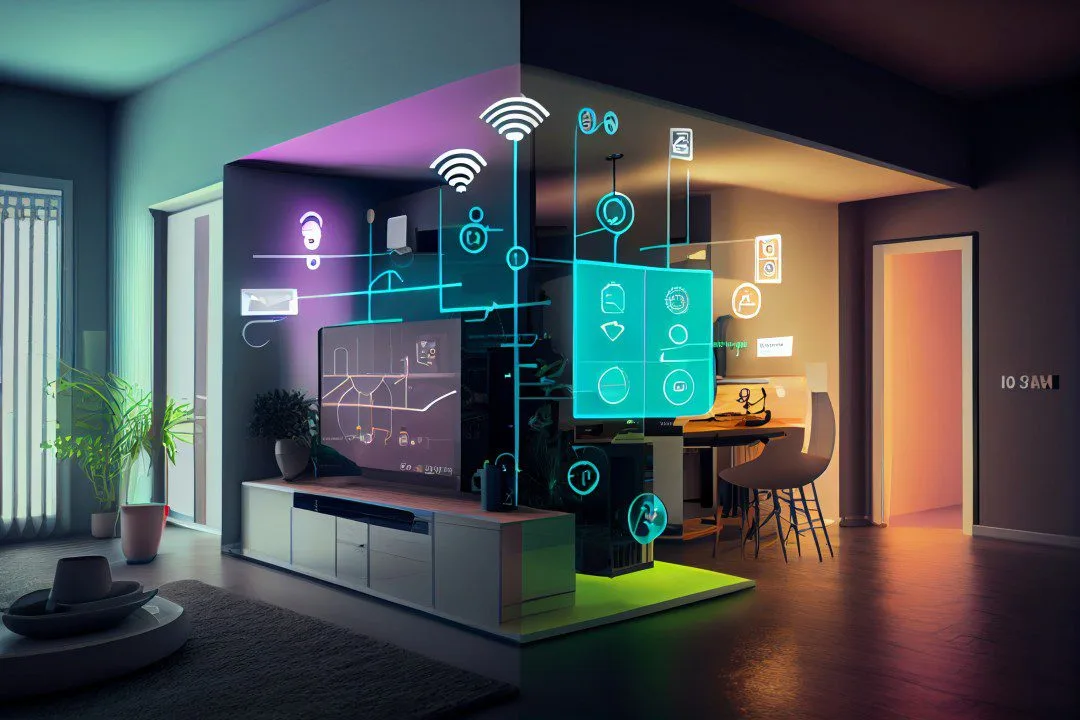
Smart home technology did not emerge suddenly. It evolved gradually as ordinary household devices became capable of connecting to the internet and communicating with one another through what is now known as the Internet of Things (IoT). This continuous development has transformed how people interact with their homes and how homes respond to human behaviour.
In the past, homeowners had to manage appliances, lighting, heating, and security systems separately and often manually. Today, the Internet of Things in smart home environments allows these operations to be managed within a unified and automated ecosystem.
With IoT-enabled systems, devices exchange data, coordinate actions, and adjust their settings autonomously. This shift has dramatically increased convenience, improved energy efficiency, strengthened security, and made homes more adaptive than ever. The ability to combine data collection, automation, and remote management has positioned IoT as a core foundation of modern living spaces.
This article explores how the Internet of Things in smart home environments works, the primary use cases that shape modern household experiences, the technologies that operate behind the scenes, and the future direction of IoT-based home automation. It also examines how these advancements impact homeowners and businesses, and why IoT is becoming an essential component of contemporary digital living.
Key IoT Use Cases in Smart Homes

Before examining the internal mechanisms that support IoT systems, it is important to understand the real-world scenarios in which people experience smart home technologies. Most individuals do not interact directly with the technical layers of IoT. Instead, they encounter practical, intuitive features that shape day-to-day life. These scenarios demonstrate the true value of integrating the Internet of Things in smart home environments and reveal how connected systems make living spaces more comfortable, efficient, and secure.
Lighting That Adapts to Conditions and Habits
Smart lighting systems remove the need for constant manual adjustments. Connected lights respond automatically to different conditions such as occupancy, time of day, and natural light availability. When a person enters a room, lights activate instantly. When natural sunlight increases, indoor lighting adjusts or turns off to conserve energy. Over time, the system learns household routines and adapts light levels accordingly. This minimizes electricity usage without requiring active involvement from the homeowner and ensures that lighting remains both efficient and intuitive.
Climate Control Without Constant Adjustments
Heating and cooling management has become one of the most popular applications of the Internet of Things in smart home systems. Smart thermostats analyse patterns such as daily schedules, occupancy changes, and external temperature variations. Based on this data, the system automatically regulates heating and air conditioning to maintain a comfortable environment. Occupants no longer need to adjust settings throughout the day. The IoT-driven climate system anticipates their needs and manages temperature predictively, making indoor comfort seamless and energy-efficient.
Home Security and Fast Response to Events
Security represents a core driver behind the adoption of smart home technologies. Cameras, motion sensors, smart locks, and alarm systems can now work together to offer real-time monitoring and automated responses. When suspicious activity is detected, the system sends an instant alert to the homeowner’s mobile device, allowing rapid action even when the individual is not at home. Some systems automatically activate cameras, lock doors, or trigger alarms. Through IoT connectivity, homes become more secure and capable of reacting proactively to potential threats.
Smarter Energy Usage
Energy management is an essential benefit of IoT in smart home contexts. IoT systems collect and analyse data about energy consumption patterns and automatically reduce usage during low-activity periods. Devices that are not in use can be turned off automatically, while systems such as heating, lighting, and appliances can operate at optimal efficiency. This intelligent energy management not only leads to lower utility bills but also helps reduce the overall environmental impact of the household.
Remote Home Management
Remote access is one of the defining advantages of modern smart home systems. Homeowners can check the status of devices, adjust settings, monitor security feeds, and receive alerts from anywhere in the world. Remote access offers convenience, flexibility, and peace of mind, especially for frequent travelers, individuals with multiple properties, and those looking to maintain a consistent living environment even when away from home. This capability has become a cornerstone of the Internet of Things in smart home adoption.
How IoT Works in a Smart Home: What Happens Behind the Scenes

The Internet of Things in smart home environments is built on continuous communication and coordination among connected devices. A smart home does not rely on isolated gadgets that work independently. Instead, it is powered by interconnected devices that gather data, exchange information, and make automated decisions that enhance daily living.
Device Interaction and Data Exchange
At the center of IoT functionality lies constant data exchange between devices. Sensors, appliances, lighting systems, and security components send information to each other and to a central processing hub. This data flow enables the home to react holistically rather than device by device. For example, the system may dim lights based on temperature or adjust climate settings according to occupancy patterns. Instead of responding to individual commands, the home becomes a dynamic, data-driven environment in which devices influence one another.
Automation Logic and Process Control
Automation in a smart home operates according to predefined rules and adaptive logic. The system analyzes incoming data and triggers specific actions without requiring user input. The Internet of Things in smart home systems allows lighting, climate, entertainment, and security workflows to function automatically based on time, occupancy, environmental conditions, or learned behavioral patterns. This reduces the need for manual involvement and enhances both convenience and operational efficiency.
Remote Access and Monitoring
Remote access forms an essential layer of smart home functionality. Through mobile applications and web platforms, homeowners can view real-time device status, adjust settings, and respond to alerts from any location. Remote monitoring not only increases control but also enables immediate decision-making in urgent situations. This capability ensures the home remains responsive and manageable even when the homeowner is not present.
Data Collection and Decision-Making
Sensors are the critical components that enable the Internet of Things in smart home systems to operate effectively. These sensors measure movement, temperature, humidity, lighting levels, air quality, and user activity patterns. The data they collect is processed by the system, which then makes informed decisions such as adjusting heating, switching off lights, or activating security features. This continuous data loop forms the backbone of smart home automation and ensures that actions are timely and context-aware.
Security and Safety System Integration
Security and safety systems are integrated into a unified IoT-enabled environment. Cameras, smart locks, motion detectors, smoke alarms, and gas sensors all communicate with one another. When an irregular event occurs, the system can automatically perform a series of coordinated actions such as sending alerts, locking doors, recording video footage, or activating emergency protocols. This integrated approach enhances homeowner safety and ensures rapid responses to potentially dangerous situations.
Personalisation Based on User Behaviour
Over time, smart home systems collect data on household routines and preferences. Using this information, the system adjusts automation scenarios to better align with individual habits. Lighting, temperature settings, entertainment preferences, and daily schedules adapt automatically. The Internet of Things in smart home logic evolves with the occupants, making the environment increasingly personalised and intuitive.
Energy Consumption Optimisation
IoT systems analyse long-term energy usage trends and optimise device operation accordingly. Lights, thermostats, and appliances make adjustments based on occupancy, time of day, and usage patterns. This leads to more efficient energy consumption and ensures that households minimise unnecessary power usage. Over time, the system’s predictive capabilities become more accurate, driving long-term cost savings and sustainability.
Scaling IoT Principles Beyond Smart Homes
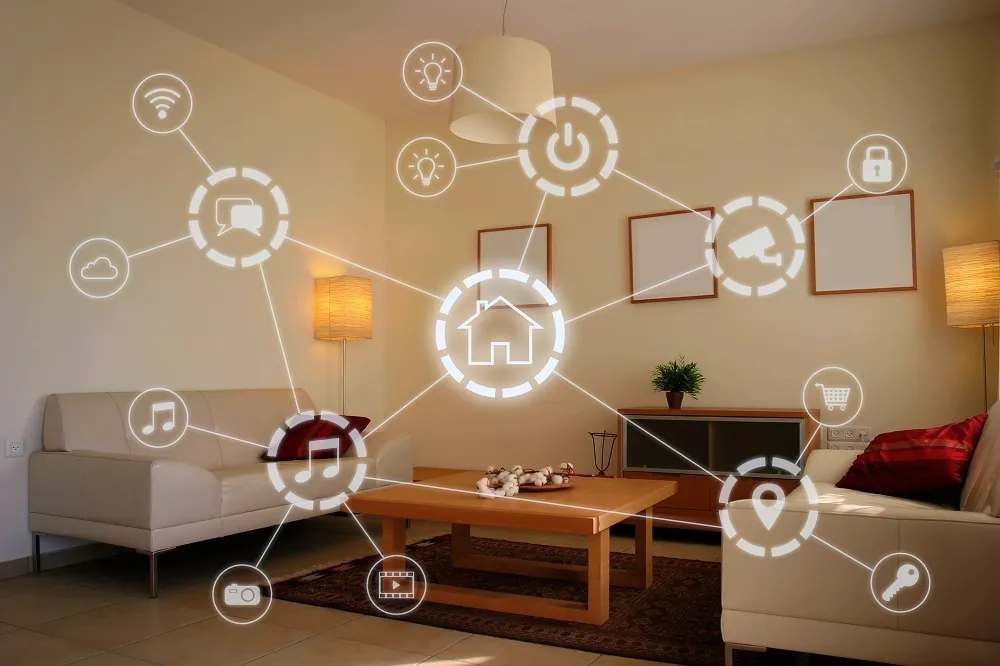
The principles behind smart home IoT solutions extend far beyond residential settings. Data-driven automation, system integration, remote access, and real-time analytics are widely applied across industries such as manufacturing, healthcare, transportation, and retail. Smart homes provide a relatable example of how interconnected systems can function seamlessly, demonstrating how similar models can be expanded into more complex environments.
How IoT Works in a Smart Home: From Events to Actions

A smart home built on IoT principles revolves around the idea of responding to events rather than waiting for direct user commands. The system continuously detects changes, processes data, and reacts automatically. This event-driven architecture distinguishes IoT homes from traditional smart gadgets.
When Someone Enters the Home
When a person enters a room, presence or motion sensors detect activity and activate appropriate actions. Lights turn on, temperature adjusts, and preferred routines begin automatically. The system responds instantly, creating a seamless transition for the homeowner without the need for manual intervention.
When the Home Is Empty
An unoccupied home is another event that triggers specific actions. The system conserves energy by turning off lights, lowering heating or cooling levels, and ensuring that unnecessary devices are powered down. This event-driven approach reduces waste and maintains an optimal balance between efficiency and convenience.
When Something Unusual Happens
IoT-enabled homes respond quickly to unexpected events. Unusual movement, unauthorized entry, smoke detection, or gas leaks activate alerts and emergency protocols. Homeowners receive real-time notifications, and the system may automatically take protective actions to reduce risk. This rapid response mechanism enhances safety and ensures issues are addressed promptly.
When the Home Is Managed Remotely
Remote management capabilities make it possible for homeowners to interact with their smart home from anywhere. Commands sent from mobile devices take effect immediately, allowing users to monitor, adjust settings, or address emergencies regardless of their physical location.
How the System Works in the Background
Much of the smart home’s intelligence operates quietly in the background. The system analyzes recurring behaviours, learns preferences, and makes autonomous adjustments to enhance comfort and efficiency. Over time, the Internet of Things in smart home environments becomes increasingly responsive and personalised, reducing the need for manual control.
IoT Technologies Used in Smart Homes

Smart home functionality depends on several core IoT technologies that work together to collect data, process information, automate tasks, and provide user-friendly interaction.
Sensors and Data Collection
Sensors form the foundation of IoT-based smart home systems. They continuously gather data about the home environment and supply the information needed for automation. Sensors track movement, temperature, humidity, lighting levels, air quality, and other conditions. This data allows the system to make accurate decisions without requiring direct user involvement.
Control Interfaces and Voice Interaction
Homeowners interact with smart home systems through applications, dashboards, and voice assistants. These interfaces provide an intuitive way to monitor and control connected devices, though they do not manage the automation logic itself. Instead, they act as the bridge between the user and the automated environment, making the system accessible and easy to manage.
Smart Home Appliances
IoT-enabled appliances communicate their operational status, maintenance needs, and energy consumption levels. This transparency helps homeowners use appliances more efficiently and maintain optimal performance. Connected appliances become part of the home’s automated routines, contributing to overall energy savings and convenience.
Security Systems
Security technologies operate as a coordinated unit within IoT systems. Connected cameras, smart locks, and motion sensors provide continuous monitoring and automated responses. Real-time alerts ensure that homeowners remain informed and able to react promptly, even when they are away from home.
Energy Management
Energy management is supported by smart thermostats, lighting systems, and connected appliances that adjust their operation based on usage patterns. Over time, these adjustments result in more efficient energy consumption and reduced operational costs.
The Future of IoT Automation in Smart Homes
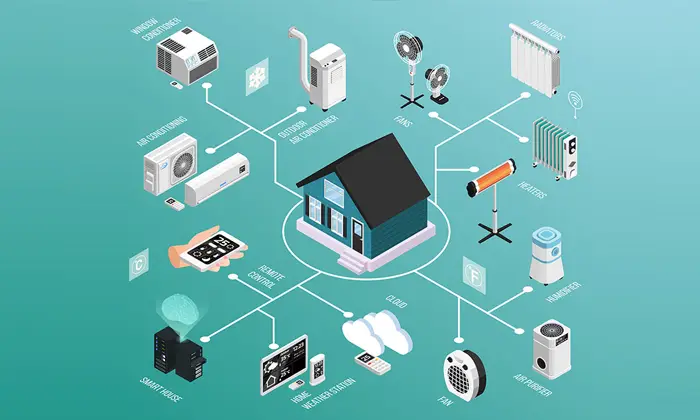
The future of the Internet of Things in smart home automation appears promising, driven by growing adoption, technological advancements, and increasing consumer expectations. Current market projections indicate that the global smart home industry will surpass 250 billion dollars by 2029, with strong annual growth rates that reflect the rising demand for connected living environments.
Growing Adoption and Scalable Solutions
In the coming years, smart home technologies are expected to be present in more than 77 percent of households, with penetration approaching 92 percent by 2029. As adoption increases, homeowners seek scalable and flexible systems where devices from different manufacturers can integrate seamlessly. This shift highlights the growing expectation for interoperability and long-term adaptability within smart home ecosystems.
Deeper Integration and Intelligent Automation
As IoT platforms evolve, smart homes are moving toward deeper system integration and advanced automation. Instead of relying solely on user-defined rules, systems are beginning to make predictions based on long-term data. Automation becomes more intelligent and less visible, improving the user experience by delivering results without requiring daily adjustments.
Expansion of the Smart Home Ecosystem
The IoT ecosystem continues to expand beyond conventional areas such as lighting and climate control. Enhanced entertainment systems, health monitoring devices, connected kitchen appliances, and wellness-focused technologies are becoming fundamental elements of connected homes. Increasing revenue per smart home drives innovation and encourages businesses to create new service models and device categories.
Security and Data Protection as Critical Factors
With the increasing number of connected devices, data security and privacy have become essential considerations. The future of smart home IoT implementation will depend heavily on advancements in encryption, authentication, and secure data management. Ensuring robust protection is critical for maintaining user trust and enabling large-scale expansion of connected living environments.
Conclusion

The Internet of Things in smart home environments is transforming how people understand and experience modern living. A smart home is far more than a collection of connected devices. It is an intelligent system capable of responding to events, analysing context, and adapting autonomously to daily routines. IoT systems quietly manage comfort, efficiency, and security in the background, resulting in a living environment that is both intuitive and highly functional.
As technology evolves, smart homes are shifting toward greater practicality, seamless interoperability, and enhanced long-term reliability. Users expect systems to operate effortlessly, protect their data, and adapt to their changing lifestyles. For businesses, this growing demand underscores the importance of developing IoT solutions that are scalable, secure, and future-proof.
This is the type of work that the Progressive Robot team focuses on. The company helps design and implement smart home IoT systems with scalability, stability, and long-term development in mind. These are not one-time technology showcases, but real-world solutions built to support modern living today and into the future.










