

Imagine you are launching a new digital service where you need to verify the authenticity of customer documents in real time, securely store sensitive data, and ensure seamless settlements with global partners. In such cases, even the smallest error could cost a business millions, while a slow or unreliable system could drive customers away. These high-stakes challenges are the reason companies worldwide are increasingly turning to Distributed Ledger Technologies (DLT).
According to Statista, the global DLT market is projected to exceed $127 billion by 2030, a dramatic leap of more than $100 billion compared to 2020. Supply chain audits alone will account for $103 billion, but the growth does not stop there. Digital identity, smart contracts, decentralized finance, and immutable records are also fueling adoption. Against this backdrop, the debate of Hashgraph vs Blockchain has become central to organizations choosing the right distributed ledger platform for their business strategies.
Blockchain has already cemented itself as the foundation for cryptocurrencies like Bitcoin and Ethereum, proving the viability of decentralized systems. At the same time, Hashgraph has emerged as a powerful alternative, offering faster transaction speeds, energy-efficient consensus, and enterprise-level scalability. For businesses, this is no longer a question of adopting technology for its own sake. It is a strategic decision about which platform will drive competitive advantage in the years ahead.
Understanding Distributed Ledger Technologies
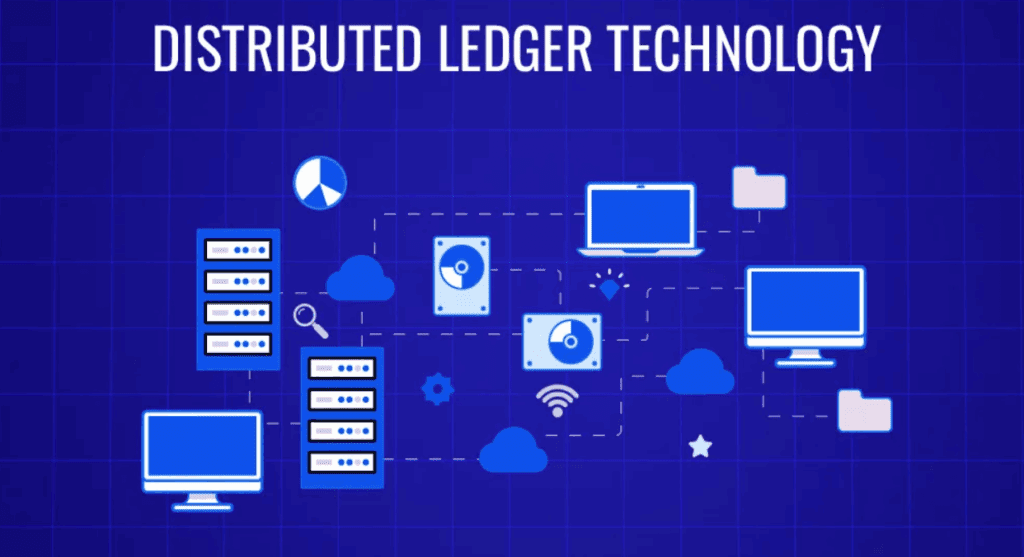
The foundation of both blockchain and hashgraph lies in distributed ledger technologies. Unlike centralized systems where a single authority controls and verifies data, DLT distributes data storage and synchronization across all participants in a network. Each participant, or node, maintains an identical copy of the ledger, ensuring transparency, resilience, and immutability.
In traditional centralized systems, if the central server fails, the entire operation is disrupted. With distributed ledgers, every participant sees the same version of records, and no single failure can compromise the system. This property allows businesses to establish trust in data without relying on intermediaries.
The first breakthrough in DLT came with the invention of blockchain. Bitcoin demonstrated in 2009 that it was possible to exchange value directly between individuals without banks or payment processors. Later, Ethereum expanded blockchain’s utility by introducing smart contracts, programmable agreements that execute automatically when predefined conditions are met. These innovations expanded the use of DLT far beyond cryptocurrencies, laying the groundwork for supply chain management, decentralized applications, and digital identity solutions.
What Makes Hashgraph Different?

While blockchain was the first mass adoption of DLT, hashgraph represents its evolution. Rather than storing data in sequential chains of blocks, hashgraph relies on a structure called a directed acyclic graph (DAG), where multiple transactions can be recorded simultaneously. This parallelization significantly increases throughput, allowing hashgraph networks to process thousands of transactions per second at minimal cost.
One of the defining characteristics of hashgraph is its use of the gossip-about-gossip protocol combined with virtual voting. Instead of miners competing to solve puzzles, as in blockchain’s Proof-of-Work, nodes in a hashgraph network share transaction information with each other, and consensus is reached quickly and efficiently. This design enables higher speed, lower energy consumption, and near-instant transaction finality, all of which are critical for enterprise-grade solutions.
How Blockchain Works
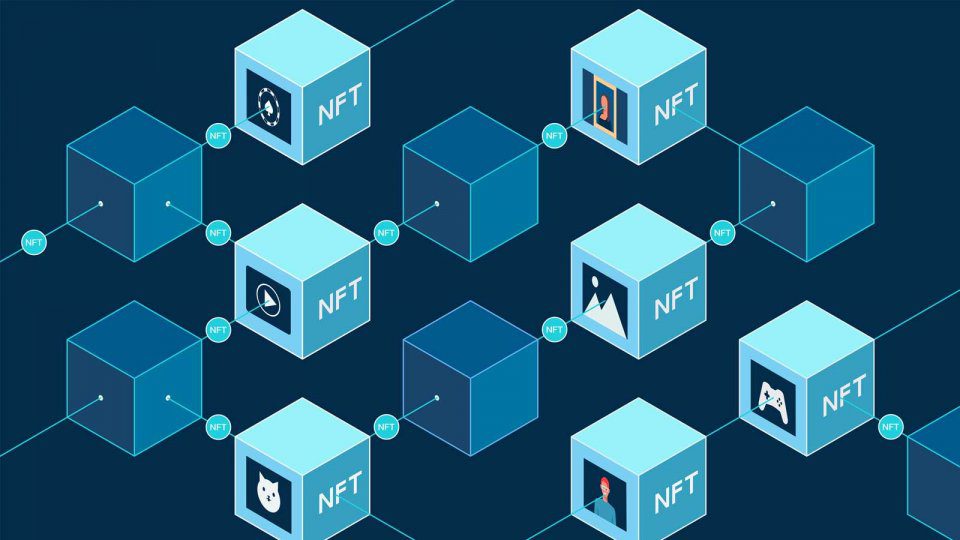
Blockchain technology organizes data into blocks, each linked to the previous block, forming a chronological chain. Every block contains a group of validated transactions, and altering historical records would require rewriting the entire chain, which is computationally infeasible in large networks.
Consensus in blockchain networks is achieved through mechanisms like Proof-of-Work (PoW) and Proof-of-Stake (PoS).
Proof-of-Work, used by Bitcoin, relies on miners solving complex mathematical puzzles to validate blocks, which ensures security but consumes enormous amounts of energy. Proof-of-Stake, as seen in Ethereum after its transition, replaces energy-intensive mining with validators staking cryptocurrency to secure the network, significantly reducing resource usage while maintaining decentralization.
Smart contracts add another layer of functionality, enabling automated execution of agreements. These features have made blockchain the backbone of decentralized finance (DeFi), non-fungible tokens (NFTs), and enterprise blockchain solutions.
How Hashgraph Works
Hashgraph departs fundamentally from blockchain’s sequential block structure. Instead of blocks, it leverages the DAG approach, recording transactions in parallel across the network. Nodes share data through the gossip protocol, spreading transaction information quickly and efficiently.
Consensus is achieved through virtual voting. Since every node receives the same information, they can independently calculate the consensus without needing to vote explicitly. This makes the process both fast and fair, with security provided by asynchronous Byzantine Fault Tolerance (ABFT). Even if some nodes behave maliciously or fail, the network as a whole remains reliable.
The result is a platform capable of achieving thousands of transactions per second, with extremely low fees and instant confirmation of transactions. For businesses requiring real-time settlement, digital identity verification, or IoT microtransactions, these features make hashgraph highly attractive.
Hashgraph vs Blockchain: A Comprehensive Comparison
When businesses weigh the decision of hashgraph vs blockchain, they often focus on performance, scalability, energy efficiency, and ecosystem maturity. Blockchain, with its linear architecture, is proven and trusted but limited by throughput and cost. Bitcoin, for instance, can handle only about seven transactions per second, while Ethereum manages roughly thirty. Under heavy load, transaction fees can spike to several dollars or more.
Hashgraph, in contrast, boasts speeds of up to 10,000 transactions per second with fees as low as fractions of a cent. Blockchain transactions often require multiple confirmations, which in Bitcoin can take up to an hour for full settlement, while hashgraph provides instant finality. Energy efficiency is another major distinction.
Proof-of-Work blockchains consume vast amounts of electricity, raising environmental concerns, whereas hashgraph’s gossip and virtual voting mechanism uses negligible resources.
Security in blockchain depends on preventing 51% attacks, where an entity with majority computing or staking power could manipulate the ledger. Hashgraph, however, achieves ABFT security, ensuring the network remains honest even if some nodes fail or act maliciously.
From a scalability standpoint, blockchain networks tend to slow down and increase fees as user activity grows. Hashgraph, designed for enterprise environments, maintains low-cost, high-speed performance even under heavy loads.
Hedera Hashgraph as a Practical Implementation
The most prominent implementation of hashgraph technology is Hedera Hashgraph, a public network designed to provide businesses with a scalable, secure, and energy-efficient DLT platform. Unlike blockchains that often focus on cryptocurrency, Hedera emphasizes enterprise applications such as micropayments, digital identity systems, and supply chain tracking.
Hedera is governed by the Hedera Governing Council, which includes major global companies such as Google, IBM, and Boeing. This governance model reassures enterprises that decisions are made transparently by reputable organizations rather than by anonymous developers or miners. With thousands of transactions per second, low transaction fees, and near-zero energy consumption, Hedera positions itself as a viable platform for mainstream adoption of distributed ledger technology.
Hashgraph and Blockchain: Rivals or Partners?
The debate of hashgraph vs blockchain is often framed as a zero-sum contest, but in practice, these technologies are more complementary than competitive. Blockchain continues to dominate areas like cryptocurrencies, decentralized finance, and NFTs, where its ecosystem maturity and market trust are unmatched.
Meanwhile, hashgraph is carving out niches in areas that require high throughput, instant settlement, and minimal transaction costs, such as micropayments, IoT, and enterprise systems.
Rather than replacing each other, blockchain and hashgraph are likely to coexist in hybrid architectures. Businesses may use blockchain to access cryptocurrency markets while leveraging hashgraph for applications requiring speed and scalability. Together, they expand the possibilities of distributed ledger technologies, offering organizations the ability to choose the right tool for each specific use case.
The Future of Distributed Ledger Technologies
As the distributed ledger market accelerates toward $127 billion by 2030, both blockchain and hashgraph are poised to share in the growth. Blockchain has already proven its resilience and continues to evolve with innovations such as Ethereum’s Proof-of-Stake upgrade and layer-2 scaling solutions. Hashgraph, through Hedera and other emerging implementations, is gaining traction thanks to its efficiency, speed, and governance model.
It is unlikely that one technology will completely displace the other. Instead, the future will be characterized by coexistence and collaboration, with blockchain and hashgraph each addressing specific needs. For businesses, the real challenge lies not in choosing one technology over the other, but in strategically aligning their digital services with the strengths of each platform.
Progressive Robot and Distributed Ledger Innovation
At Progressive Robot, we specialize in helping businesses unlock the full potential of distributed ledger technologies. Our expertise spans blockchain solutions such as smart contract development, crypto wallets, decentralized applications, and Web3 platforms, as well as emerging opportunities in hashgraph-based systems. We work closely with enterprises to build custom digital solutions that enhance transparency, security, and efficiency across business processes.
In recent years, we have expanded our focus to include the Hedera Hashgraph platform, recognizing its potential to transform industries through high-speed transactions, energy efficiency, and instant finality. From micropayments to supply chain management and digital identity systems, we design solutions tailored to meet the evolving needs of modern businesses.
Progressive Robot is more than a development company. We position ourselves as long-term partners who help organizations navigate the complexities of DLT adoption. By combining deep technical expertise with strategic insight, we ensure that businesses not only adopt new technologies but also harness them for sustainable growth and competitive advantage.
Conclusion

The conversation around hashgraph vs blockchain reflects a broader shift in how businesses view distributed ledger technologies. Blockchain has already demonstrated its strength in building decentralized ecosystems, while hashgraph introduces new possibilities for speed, scalability, and efficiency. Rather than viewing these technologies as adversaries, companies should see them as complementary tools within the expanding DLT landscape.
For organizations embarking on their digital transformation journey, the choice of DLT platform will play a critical role in shaping long-term success. Whether building on blockchain, hashgraph, or a hybrid approach, the key is to align technological capabilities with business goals. At Progressive Robot, we help companies make this alignment a reality, delivering solutions that are not only technologically advanced but also strategically valuable.