

E-publishing has emerged as a defining force in the digital age. What once was a traditionally print-based industry is now moving toward digital transformation at an accelerated pace. With millions of businesses and educational institutions shifting from printed materials to electronic formats, E-publishing is reshaping how content is created, shared, and consumed.
This movement has intensified especially since the post-pandemic era. As the world became more reliant on digital communication and content delivery, educational institutions, corporations, and publishers began adopting E-publishing as a preferred method. From increased accessibility to reduced operational costs, the benefits are pushing more organizations to embrace this model.
The Growth of E-Publishing
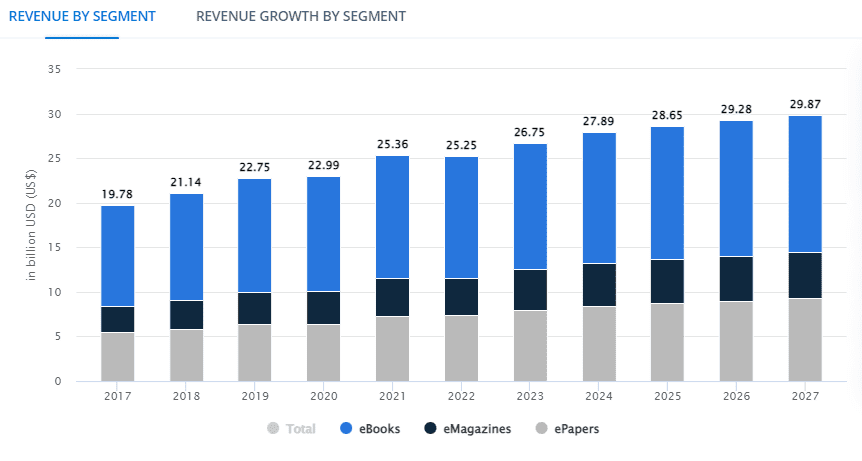
The publishing world is undergoing a technological revolution. According to The Statista E-Publishing Global Outlook, this market is projected to reach over 26 billion USD in 2023. Even more, it is expected to grow annually by over 3% and reach more than 30 billion USD by 2027.
This steady growth reflects a widespread shift in user preferences. Readers increasingly prefer digital formats due to convenience, affordability, and immediate access. At the same time, publishers benefit from reduced printing costs and broader distribution channels. The rise in personal device usage and the availability of lightweight e-book readers are fueling this transformation.
Improvements in internet access and bandwidth, as well as the growing trend of online learning, further support this move to digital. The demand for fast, flexible, and personalized access to information is stronger than ever.
What Is E-Publishing?

E-publishing is the digital production and distribution of all types of publishing content. It includes converting printed materials into digital formats and creating digital-first content that can be delivered via the internet, apps, and dedicated e-reading devices.
It caters to a diverse audience including students, professionals, businesses, and general readers. Today, E-publishing goes beyond just e-books. It includes digital journals, academic content, technical documentation, manuals, and even interactive and multimedia-rich publications.
Types of E-Publishing

While many associate E-publishing primarily with e-books, the scope is much broader. It encompasses a wide range of digital formats such as online newspapers, magazines, blogs, research papers, digital reports, white papers, e-learning modules, and web publications.
These various types are distributed through channels including mobile applications, dedicated e-reading devices, online platforms, and even institutional repositories. This diversity enables content creators and publishers to target specific audiences with precision.
Key Advantages of E-Publishing
One of the biggest benefits of E-publishing is on-demand publishing. Users receive only the content that fits their preferences or subscription criteria, reducing waste and increasing engagement. It also enables retrospective searching and selective content delivery.
Updating content is quick and seamless. Readers always get the most current version without needing to wait for new print editions. This is especially valuable in academic and technical fields where content evolves rapidly.
Multiple access points are another advantage. With a single license or login, multiple users can access content simultaneously, often across devices and locations. This improves collaboration and usability, especially in institutional settings.
Real-time content delivery makes information instantly available. Readers no longer have to wait for delivery or physically visit libraries. Instead, they can access, download, or print what they need on demand. E-publishing platforms also support interactive features like note-taking, document revision, and multimedia playback.
E-publishing significantly reduces turnaround time. Traditional processes like editing, printing, binding, and shipping are replaced by faster digital workflows. This allows for quicker communication of ideas, especially in journals where time-sensitive information is crucial.
Digital content offers global distribution without the cost of physical shipping. Hyperlinked references, universal access via web and mobile, and search functionality make finding relevant material faster than ever. Most platforms also allow users to bookmark content, highlight sections, and take personal notes, offering full control over information management.
Emerging Trends in E-Publishing
Print-on-demand, or POD, is one of the most promising innovations in E-publishing. It allows readers to order physical copies of digital books without the need for large inventory or mass printing. This supports sustainability and cost efficiency for both publishers and consumers.
Interactive e-books are redefining the reading experience. By embedding videos, animations, quizzes, and clickable diagrams, publishers enhance reader engagement. These features are particularly helpful in educational and technical content where visual explanation is critical. While interactivity improves learning, the visual appeal of an e-book—such as unique covers and smart layouts—still plays a significant role in drawing attention.
Audiobooks are rapidly gaining popularity as well. They allow users to absorb content while multitasking, making reading possible during workouts, commutes, or household chores. This flexibility has made audiobooks a preferred choice among busy professionals and tech-savvy learners.
Another futuristic trend is augmented books or “a-books”. These are physical books enhanced with embedded technology that connects the physical page to digital content. Projects like the Climate Domesday Book demonstrate how turning a page in a printed book can trigger multimedia content on a nearby screen. This hybrid model offers the emotional comfort of physical books with the dynamic capabilities of E-publishing.
The Digital Shift and Progressive Robot’s Role
The publishing world is at a digital turning point. With more people turning to digital content for speed, convenience, and versatility, E-publishing is becoming the standard.
At Progressive Robot, through our partnership with Progressive Robot, we are constantly developing tailored software solutions for publishers moving into the digital age. Our proprietary product, epuBear, is a flexible and cross-platform EPUB SDK that enables businesses to build custom e-readers with ease. It helps publishers deliver professional digital reading experiences across platforms and devices.
Conclusion

The world of publishing is undergoing rapid transformation, and E-publishing is at the heart of this evolution. From the rise of digital books and journals to interactive and audio-based content, the publishing landscape is becoming more versatile and user-friendly. For publishers, educators, and content creators, embracing E-publishing is no longer an option—it is a necessity.
By adopting the latest trends and technologies, businesses can deliver content faster, at a lower cost, and with greater engagement. Whether through print-on-demand services, interactive formats, or cross-platform digital solutions, the possibilities of E-publishing are expanding every day. As digital becomes the new default, companies like Progressive Robot are ready to lead the change with innovative tools and future-ready platforms.