
Modern software development moves quickly. Teams need to adapt constantly to changing requirements. While code evolves rapidly, documentation often lags behind. This creates knowledge gaps and confusion.
Documentation as Code solves this problem effectively. It treats documentation like software source code. Teams version, review, and deploy docs alongside application code. This approach aligns perfectly with Agile principles.
The method creates a single source of truth for projects. Everyone works from the same updated information. This article explains Documentation as Code thoroughly. We cover benefits, implementation, and real-world examples.
What Is Documentation as Code?
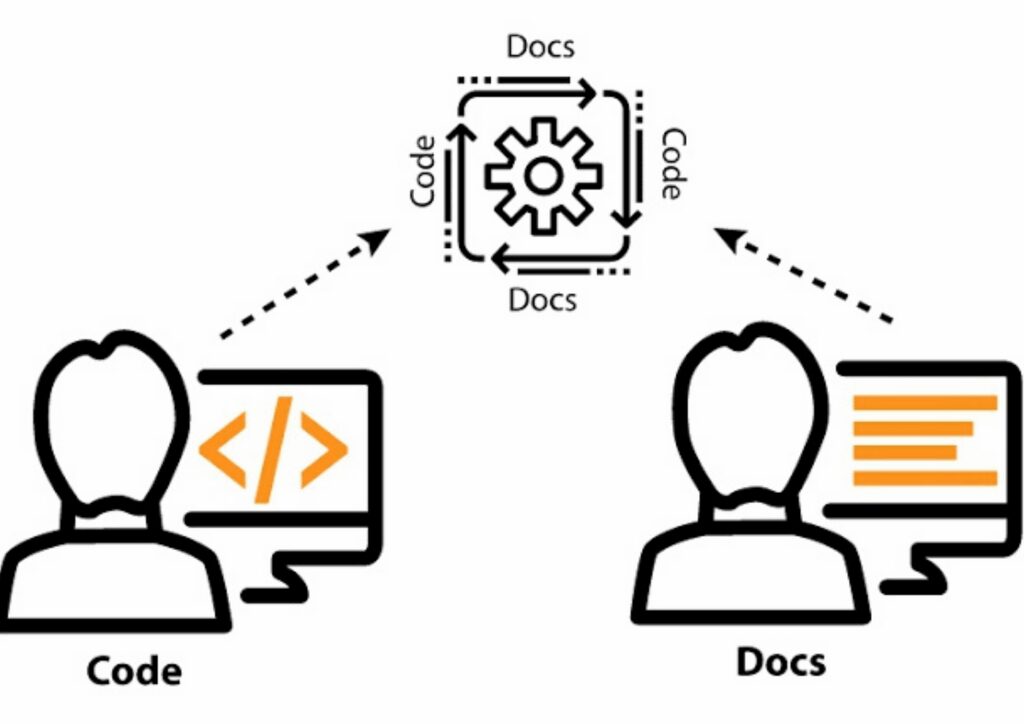
Documentation as Code means writing docs like software code. Teams store documentation in version control systems. They use lightweight markup languages for content. The same tools manage both code and documentation.
This approach brings several key advantages immediately. Documentation stays current with code changes. Review processes catch errors early. Automated pipelines publish updates instantly. Collaboration improves across teams.
The system works like this: developers write docs in Markdown files. These files live in the code repository. CI/CD pipelines process and publish them automatically. Everyone sees changes with each code update.
The Single Source of Truth Philosophy

Projects suffer when information scatters across systems. Wikis, emails, and documents hold pieces of knowledge. Team members waste time finding correct versions. Mistakes happen from outdated references.
Documentation as Code creates one reliable information source. The code repository contains both application logic and explanations. Updates to either trigger synchronization automatically. Teams always reference current materials.
This philosophy eliminates version conflicts completely. New members onboard faster with accurate docs. Decision-making improves with accessible knowledge. Project continuity strengthens over time.
Benefits of Documentation as Code

Adopting Documentation as Code brings measurable improvements. Development teams see positive impacts quickly.
Always Current Documentation
Traditional docs become outdated rapidly. Documentation as Code ties explanations to implementations. Developers update docs when changing features. Review processes catch missing updates.
Better Team Collaboration
Everyone contributes using familiar tools. Developers write technical specifics easily. Writers improve clarity and structure. Reviewers suggest enhancements through pull requests.
Higher Code Quality
Explaining features reveals design flaws. Writing docs forces deeper understanding. Teams spot edge cases earlier. Solutions become more robust naturally.
Automated Quality Checks
CI pipelines verify documentation integrity. Tests check for broken links automatically. Linters enforce consistent formatting. Spell checkers catch typos efficiently.
Industry-Proven Approach
Leading projects use this method successfully. GitLab maintains docs with code perfectly. Kubernetes keeps accurate API references. Stripe syncs documentation instantly.
Implementing Documentation as Code

Transitioning requires careful planning and execution. Follow these steps for smooth adoption.
Start With Small Projects
Choose a limited scope initially. Document one service or module first. Use this pilot to refine processes. Expand gradually after proving value.
Select Appropriate Tools
Git manages version control perfectly. Markdown works for most documentation needs. Static site generators create professional outputs. CI/CD pipelines automate publishing.
Integrate Into Workflows
Require doc updates for every code change. Include docs in pull request reviews. Make documentation part of definition of done. Treat docs as first-class artifacts.
Train Team Members
Explain the new approach clearly. Provide markup language references. Demonstrate review processes. Highlight benefits for each role.
Avoid Common Mistakes
Don’t overcomplicate the initial setup. Maintain focus on content quality. Prevent documentation from becoming secondary. Balance automation with human review.
Continuously Improve
Gather feedback from all users. Refine templates and structures. Add more automation over time. Expand coverage systematically.
Challenges and Solutions
Adoption brings some hurdles initially. Prepare solutions for common issues.
Synchronization Difficulties
Code changes outpace documentation sometimes. Solution: Enforce doc updates in code reviews. Require matching pull requests.
Content Duplication
Comments repeat documentation unnecessarily. Solution: Keep comments technical. Reserve docs for user-focused explanations.
Resistance to Change
Team members prefer old habits. Solution: Demonstrate time savings. Show quality improvements clearly.
Automation Limits
Tools miss contextual errors. Solution: Schedule regular manual reviews. Assign documentation owners.
Maintenance Gaps
Docs drift from implementations. Solution: Make updates part of sprint work. Track documentation tasks.
Real-World Success Cases
Major projects prove the value of Documentation as Code.
GitLab’s Comprehensive Approach
GitLab stores docs in the same repositories. Their CI pipeline publishes changes automatically. The entire team contributes efficiently. Documentation stays perfectly synchronized.
Kubernetes’ Collaborative Model
Kubernetes maintains docs with source code. Hundreds of contributors update content. Automated checks verify accuracy. Users always access current information.
Stripe’s API Documentation
Stripe generates API references from code. Documentation updates deploy instantly. Developers see accurate specifications always. The system prevents outdated examples.
Technical Writers' Evolving Role
Documentation as Code changes writing workflows. Technical specialists adapt successfully.
Writers become documentation engineers now. They master version control systems completely. Markup languages replace word processors. Collaboration happens through pull requests.
Quality focus shifts to clarity and structure. Writers ensure consistent voice and tone. They organize complex information logically. User experience guides all decisions.
Technical writers bridge important gaps effectively. They translate developer knowledge accessibly. User needs shape content presentation. The team produces better documentation together.
Essential Tools for Success
The right toolchain makes implementation smooth.
Version Control Systems
Git manages documentation changes perfectly. GitHub, GitLab, and Bitbucket work well. Teams track history and collaborate easily.
Lightweight Markup Languages
Markdown serves most documentation needs. AsciiDoc handles complex cases better. Both produce clean, structured content.
Static Site Generators
MkDocs creates simple documentation sites. Docusaurus supports larger knowledge bases. Hugo generates fast, responsive outputs.
CI/CD Pipelines
GitHub Actions automate documentation workflows. GitLab CI integrates tightly. CircleCI provides flexible options.
Quality Assurance Tools
Vale checks writing style automatically. Markdown lint enforces formatting rules. Link validators find broken references.
Measuring Success
Track metrics to prove Documentation as Code value.
Accuracy Metrics
Count discrepancies between code and docs. Track reduction over time. Aim for near-zero differences.
Contribution Rates
Measure team participation in docs. More contributors indicate better adoption. Writers should not work alone.
Maintenance Metrics
Track time spent updating documentation. Compare with previous methods. Show efficiency gains clearly.
User Feedback
Survey documentation consumers regularly. Measure satisfaction improvements. Identify remaining pain points.
Future Trends
Documentation as Code continues evolving. New advancements emerge regularly.
AI will assist with content generation soon. Tools will suggest documentation updates automatically. Translation workflows will become more efficient.
Interactive documentation will grow more common. Examples will run in browser sandboxes. Users will test code samples instantly.
Knowledge graphs will connect information better. Semantic search will improve discoverability. Personalized views will adapt to user roles.
Conclusion

Documentation as Code transforms software development. It creates living documentation that evolves with projects. Teams work more efficiently with single sources of truth.
Adoption requires commitment but pays dividends quickly. Progressive Robot helps organizations implement successfully. Our experts guide tool selection and workflow design.