
NFTs have transformed digital ownership by proving authenticity through blockchain technology. Behind every NFT are specific standards that define how they work. The two most important standards are ERC-721 and ERC-1155.
Understanding ERC-721 vs ERC-1155 helps developers choose the right standard for their projects. Each has unique features, benefits, and limitations. This article explores these standards in detail and examines newer alternatives shaping the NFT space.
What Are NFT Standards?
NFT standards are rules that govern how non-fungible tokens function on blockchains. They define how NFTs are created, transferred, and managed. Standards ensure compatibility across wallets, marketplaces, and decentralized applications.
The Ethereum blockchain introduced the most widely used NFT standards. ERC-721 and ERC-1155 are the most prominent. These standards enable developers to build secure and interoperable NFTs.
Without standards, NFTs would not work smoothly across different platforms. They provide a foundation for innovation in digital collectibles, gaming, and decentralized finance.
Overview of ERC-721
ERC-721 was the first major NFT standard on Ethereum. It allows the creation of unique, indivisible tokens. Each ERC-721 token has a distinct identifier, making it one-of-a-kind.
This standard is ideal for digital art and collectibles. It ensures true ownership and scarcity. Smart contracts handle transfers securely without intermediaries. Metadata can include details like name, description, and image links.
However, ERC-721 has drawbacks. Gas fees can be high during minting and trading. Each transaction requires a separate contract call, increasing costs. This makes it less efficient for large-scale projects.
Despite these limitations, ERC-721 remains popular for high-value NFTs. Its simplicity and widespread adoption make it a reliable choice for unique digital assets.
Understanding ERC-1155
ERC-1155 is a more advanced standard that supports both fungible and non-fungible tokens. A single contract can manage multiple token types, reducing gas fees and improving efficiency.
This standard is perfect for gaming and virtual economies. Developers can create interchangeable items like currency alongside unique assets like rare skins. Batch transfers further optimize transaction costs.
ERC-1155 also enhances interoperability. It works seamlessly with wallets and decentralized exchanges. The standard is gaining traction in blockchain gaming platforms like Enjin.
However, ERC-1155 has a steeper learning curve. Its flexibility can lead to misuse if not implemented carefully. Despite this, its efficiency makes it a strong contender in the ERC-721 vs ERC-1155 debate.
ERC-721 vs ERC-1155: Key Differences
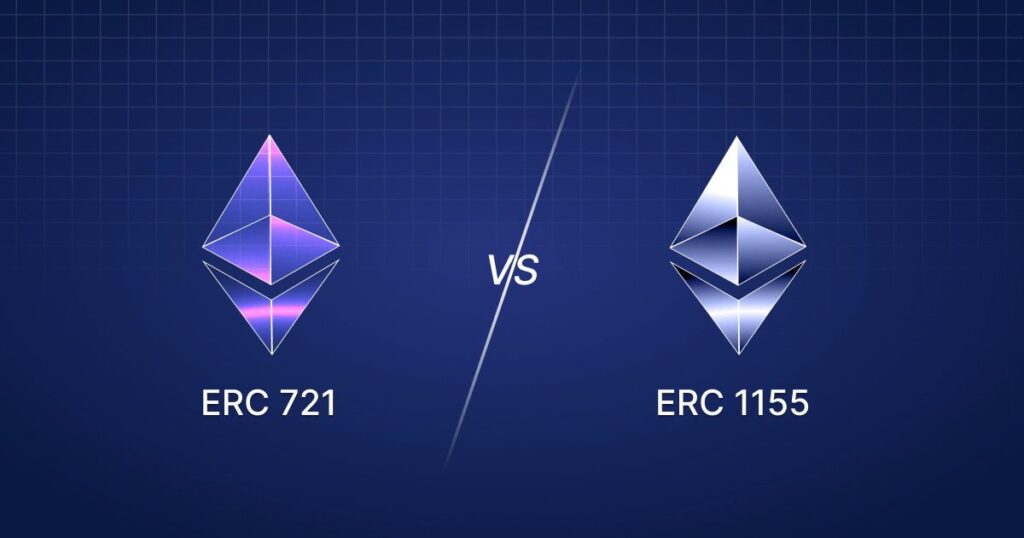
The choice between ERC-721 and ERC-1155 depends on project needs. Here’s a detailed comparison.
Uniqueness and Flexibility
ERC-721 excels in creating truly unique assets. Each token is distinct, making it ideal for digital art and rare collectibles. ERC-1155 offers more flexibility by supporting both unique and interchangeable tokens in one contract.
Gas Efficiency and Scalability
In the ERC-721 vs ERC-1155 comparison, gas efficiency is a major factor. ERC-1155 reduces costs by bundling transactions. This makes it better for projects requiring frequent transfers. ERC-721’s individual transactions can become expensive at scale.
Adoption and Compatibility
ERC-721 is widely supported across NFT marketplaces. Its long history ensures broad compatibility. ERC-1155 is newer but growing fast, especially in gaming. Developers must consider platform support when choosing a standard.
Emerging NFT Standards
Beyond ERC-721 and ERC-1155, new standards are pushing NFT innovation further.
ERC-998: Composable NFTs
ERC-998 allows NFTs to own other NFTs or tokens. This enables complex digital asset hierarchies. It’s useful for gaming inventories or bundled collectibles.
ERC-721A: Improved Efficiency
ERC-721A reduces gas fees for minting multiple NFTs. It’s a modified version of ERC-721 optimized for bulk operations.
EIP-3074: Batch Transactions
EIP-3074 introduces batched transfers to lower Ethereum fees. This could significantly reduce NFT transaction costs in the future.
Choosing the Right NFT Standard

Selecting between ERC-721 vs ERC-1155 involves several considerations.
Project Requirements
For unique, high-value assets, ERC-721 is preferable. For mixed token types and gaming items, ERC-1155 works better.
Cost Considerations
ERC-1155 is more cost-effective for frequent transactions. ERC-721 may be suitable for premium one-time sales.
Ecosystem Support
Check marketplace and wallet compatibility. ERC-721 has broader support, but ERC-1155 is catching up quickly.
Future of NFT Standards
NFT standards will continue evolving. Interoperability between chains will improve. Solutions for high gas fees and scalability are in development.
Hybrid standards may emerge, combining the best of ERC-721 and ERC-1155. The NFT space will keep expanding into gaming, metaverses, and real-world asset tokenization.
Conclusion
The ERC-721 vs ERC-1155 debate highlights different approaches to NFT creation. ERC-721 ensures uniqueness, while ERC-1155 offers flexibility and efficiency. Newer standards address specific needs like composability and lower fees.
Developers must evaluate their project’s requirements before choosing a standard. The right choice ensures optimal performance, cost-efficiency, and compatibility.
Need help with NFT development? Progressive Robot provides expert blockchain solutions. We help you select and implement the perfect standard for your project. Contact us today to get started!